Save 15% on your 1st Autoship learn more

 Email us
 Live Chat
 FAQs
FAQs





Why Dog Snow Boots Are Essential for Winter Paw Protection
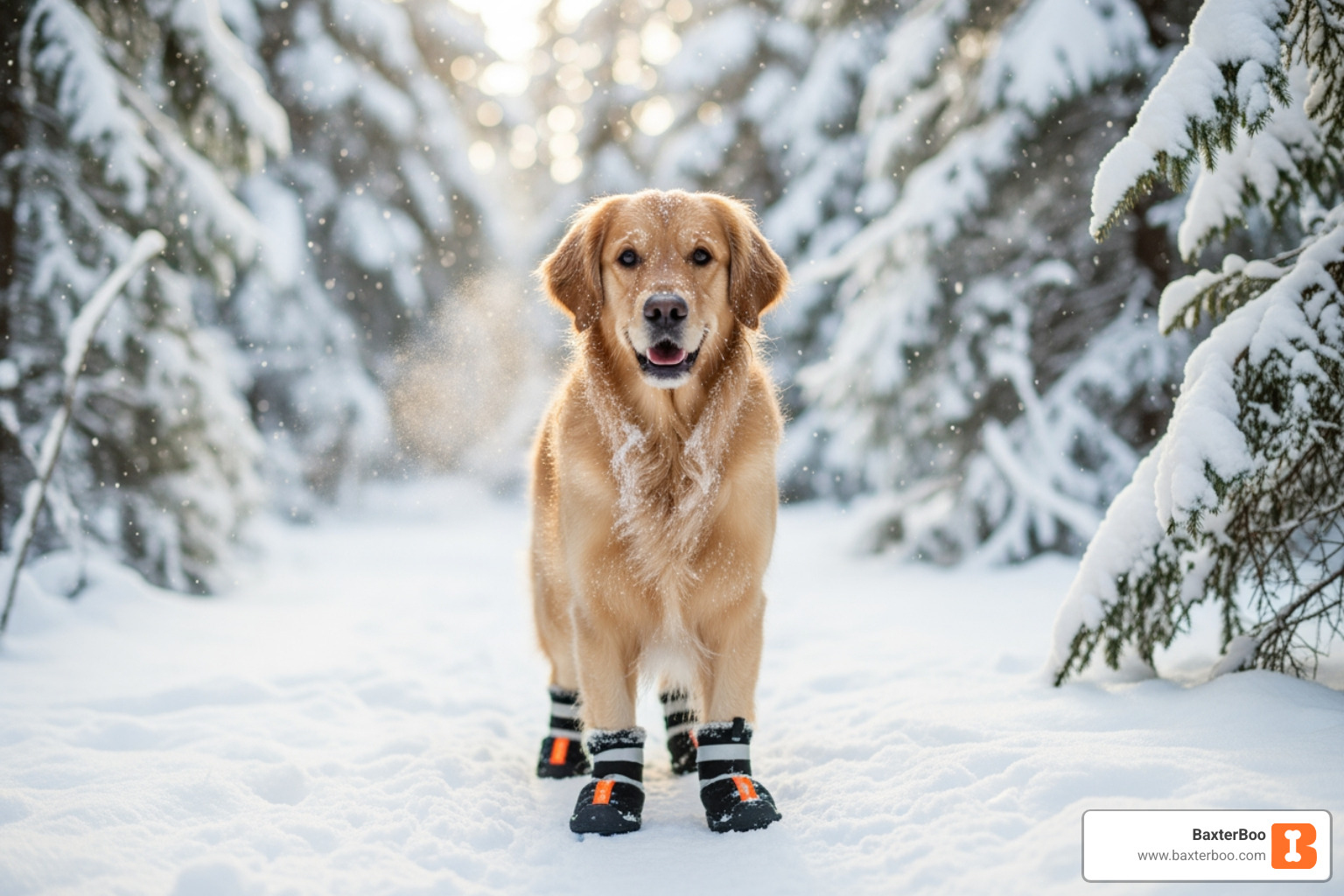
Dog snow boots protect your furry friend's paws from winter's harsh elements. Here's what you need to know:
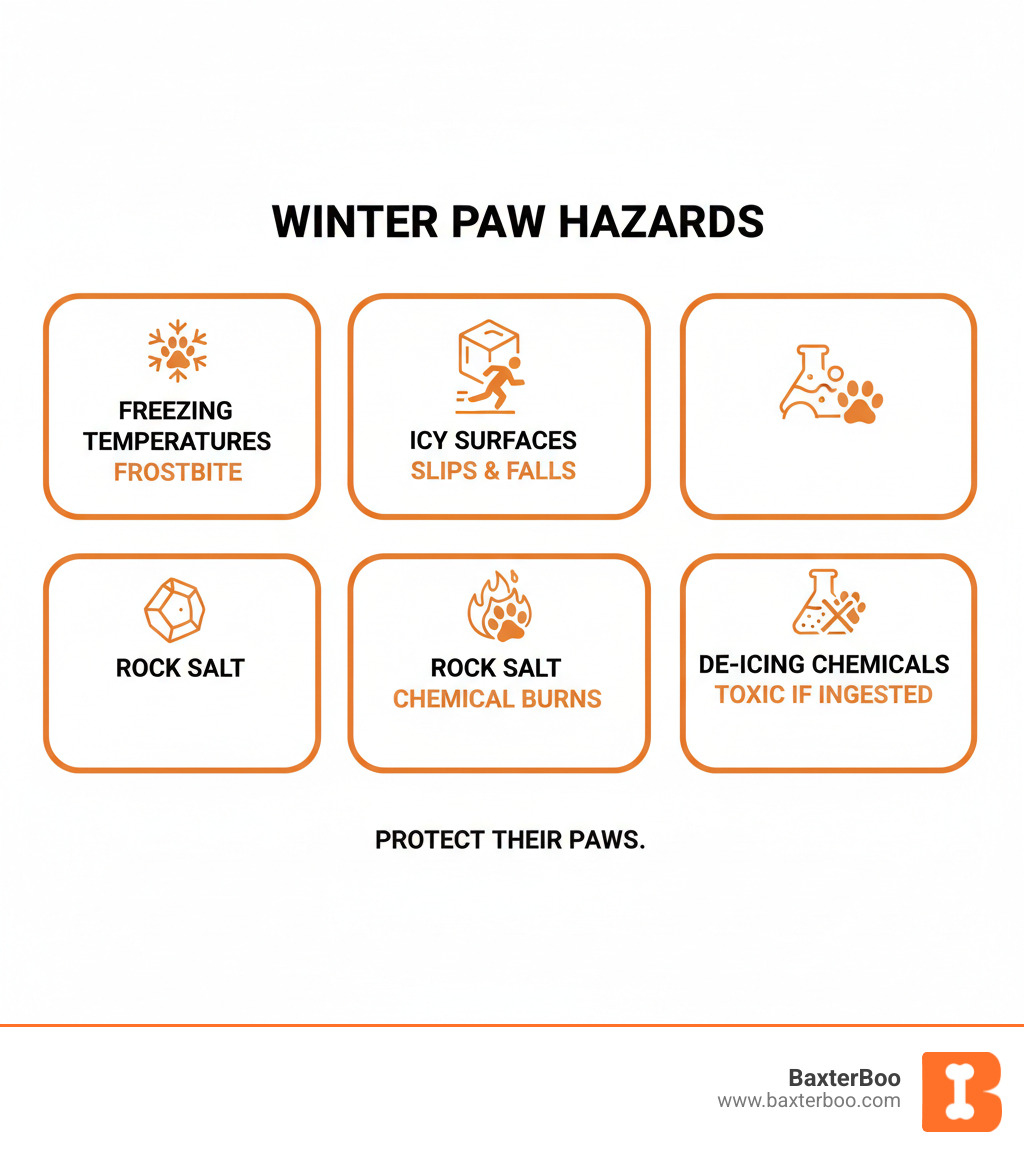
Winter Paw Hazards:
- Cold temperatures can cause frostbite and discomfort
- Ice creates slippery surfaces that risk injury
- Rock salt burns paw pads through chemical reactions
- Chemicals (de-icers) are toxic if licked from paws
Quick Solution: Quality dog snow boots provide a barrier between your dog's paws and dangerous winter surfaces, keeping them warm, safe, and comfortable during cold-weather walks.
Winter walks should be fun for your dog, not painful. But many pet parents don't realize the dangers lurking under the snow. Rock salt is the mineral form of sodium chloride (halite). When applied to roads and sidewalks, it lowers the freezing point of water, which works great for reducing ice. The problem? That chemical reaction causes burns on your dog's paws. Even worse, it's toxic if your dog licks their feet after a walk.
You'll know your dog needs paw protection when they start lifting their paws, stop running, or seem reluctant to walk. These are signs that the cold, ice, or salt is causing discomfort. Left unprotected, paws can develop blisters, cuts, or even frostbite.
The good news? Dog snow boots offer reliable protection. In this guide, we'll walk you through everything you need to know—from choosing the right type of boot to getting your pup comfortable wearing them.
Why Your Dog Needs Paw Protection in Winter
As pet parents, we want our dogs to be happy and healthy year-round. While winter brings beautiful snow, it also hides serious dangers for their paws. Understanding these risks is the first step in keeping their paw pads safe.
Your dog's paws are sensitive to cold. Prolonged exposure isn't just uncomfortable; it can lead to a serious condition called frostbite, which damages paw tissue. Even before that, cold paws can cause your dog to start lifting their paws, limping, or refusing to walk. If your pup does the "boot dance" on a cold sidewalk without boots, it's a clear signal of distress.
Beyond the chill, winter weather often brings icy surfaces. Ice is slippery, increasing the risk of falls and injuries for your dog. Sharp ice can also cut or crack sensitive paw pads, causing pain and potential infection.
Perhaps the most widespread winter threat is rock salt and other chemical de-icers. Spread on sidewalks to melt ice, these substances can cause painful chemical burns on your dog's paw pads. Worse, if your dog licks their paws, ingesting these chemicals can be toxic, leading to vomiting or more serious health problems. This silent threat makes paw protection essential. You can learn more about the chemistry of road salt at the American Chemistry Council.
These hazards are common in urban and suburban areas like our hometown of Vernon Hills, IL, where sidewalks are frequently treated with de-icers. Even a quick stroll can expose your dog's paws to these harmful elements.
Watch for signs of paw discomfort: stopping on walks, lifting paws, whining, or obsessively licking their feet inside. These indicate their paws are suffering. The good news? By providing proper paw protection, like a great pair of dog snow boots, you can prevent these painful experiences and ensure your dog can truly enjoy the winter wonderland safely and comfortably.
A Buyer's Guide to the Best Dog Snow Boots
Choosing the right dog snow boots can feel overwhelming with so many options. We're here to guide you to the perfect pair to keep your furry friend's paws happy and warm on all their winter adventures.
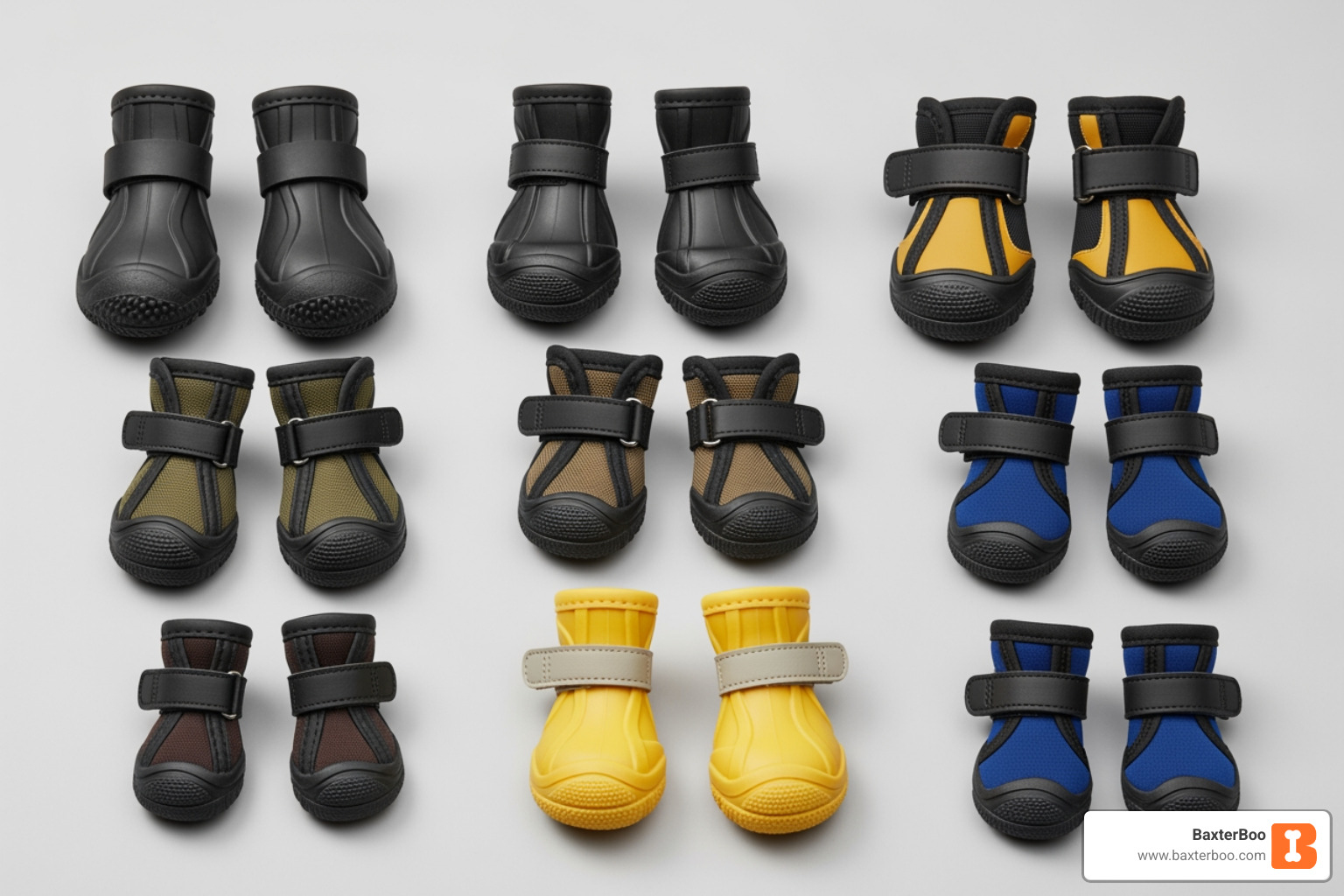
What are the Different Types of Dog Snow Boots?
Just like we have different shoes for different occasions, dog boots also come in various styles designed for specific conditions and activity levels. Understanding these types will make it much easier to pick the best paw protection for your pup.
First up, we have Flexible Rubber Boots. These are lightweight, flexible, and often disposable. They’re inexpensive and waterproof, creating a strong barrier against salt and chemicals. Many dogs adapt quickly because they can still feel the ground, which is important for their balance. However, they can be tricky to put on, offer little insulation, aren't very durable, and may slip off if not sized correctly.
Then there are Soft-Soled Fabric Boots. These prioritize comfort and warmth with a soft, bendable sole and fabric upper. Many are lined with fleece for extra warmth and work well in moderate snow, offering good salt protection. They're generally easy to put on. However, they may not be fully waterproof, and their softer soles offer less traction on ice and are less durable than rugged boots.
For the serious adventurers, we recommend Rugged Hard-Soled Boots. These heavy-duty boots are built to tackle anything winter throws their way. They have durable rubber soles with aggressive tread, offering superior durability, traction, and protection from extreme temperatures and chemicals. Often waterproof, they can be used year-round, even on hot pavement. The main considerations are that their sturdy nature is less flexible, so some dogs need time to adjust, and they tend to be pricier.
Finally, a newer innovation is High-Coverage Leggings. These clever designs combine paw protection with extended coverage up your dog's leg. They're fantastic for preventing snowballs from forming on long-haired dogs' legs and keeping paws and lower legs dry in deeper snow. The higher coverage often provides a more secure fit. The main trade-off is that the full coverage might feel restrictive for some pups, and the fabric isn't always completely waterproof.
Key Features to Look For in Dog Snow Boots
When you're ready to pick out that perfect pair of dog snow boots, paying attention to a few key features will make all the difference in their effectiveness, comfort, and how long they last. Here’s what we suggest keeping an eye out for:
First and foremost, look for Waterproof Materials. This is absolutely non-negotiable for true winter protection. Whether it's a rubber boot or a fabric boot with a special waterproof membrane, keeping paws dry is key to preventing cold, chapping, and even frostbite. Materials like treated nylon, neoprene, or rubberized coatings are great choices.
Next, consider Fleece Lining or Insulation. A soft, warm lining, often made of fleece, provides that crucial extra layer of warmth against the biting cold. This is super helpful for dogs with less fur on their paws or those who are extra sensitive to chilly temperatures. Neoprene, the same material used in wetsuits, is another excellent choice because it helps retain heat even if it gets a little damp and also prevents snow from clumping.
The sole of the boot is incredibly important – it’s where the rubber meets the road (or the snow and ice!). You’ll want Durable Rubber Soles with Tread Patterns. A tough rubber sole with an aggressive, multi-directional tread is vital for excellent traction on slippery surfaces. This kind of grip helps prevent slips and falls, keeping your dog safe from injuries. Some high-quality boots even feature Vibram soles, which are famous for their incredible grip and durability.
A boot is only useful if it stays on, so Secure Straps and Closure Systems are a must. Look for boots with strong, adjustable hook-and-loop (Velcro) straps. Sometimes these are combined with bungee cords or drawstrings for an even better fit. These closures should allow you to get a snug fit around your dog's ankle without being too tight, ensuring the boot stays put whether they’re romping in the snow or just enjoying a leisurely walk.
Finally, with shorter daylight hours in winter, Reflective Trim is a brilliant feature for safety. Reflective accents or trim on dog snow boots significantly boost your dog's visibility during those early morning or late evening outings, making them much safer in low-light conditions.
Are There Alternatives to Dog Boots?
While dog snow boots are truly our top recommendation for the most comprehensive paw protection in winter, we totally get it – some dogs might need a little convincing to wear them at first! Or perhaps you're looking for extra protection, or something for conditions that don't quite warrant full boots. Here are a couple of helpful alternatives:
One fantastic option is Paw Wax. Think of it as a "chapstick for paws"! Products like Musher's Secret are hydrophobic (meaning they repel water) and you apply them directly to your dog’s paw pads. This wax creates a protective barrier, shielding against salt, ice, and minor irritants. It can also be a real lifesaver for long-haired dogs, helping to prevent those annoying snowballs from forming between their toes. While paw wax offers some protection against cold and salt, it won’t provide the same level of insulation or traction as a good pair of boots. However, it's an excellent solution for many situations, especially for lighter snow or just battling sidewalk salt.
Another option, though less common, is Disposable Paw Pads. While these are technically a form of boot, they're often very thin and flexible, sometimes resembling rubber balloons sold in larger packs. They offer basic waterproof protection against salt and chemicals and are super lightweight. They're best suited for short walks in urban areas where salt is the main concern, as they typically don't provide much insulation or significant traction.
These alternatives can be a great starting point, or a helpful addition to your winter paw care routine. But for robust protection against deep snow, slippery ice, extreme cold, and any sharp debris, we still wholeheartedly recommend investing in a quality pair of dog snow boots.
How to Find the Perfect Fit and Get Your Dog On Board
Let's be honest—finding the perfect pair of dog snow boots is only half the battle. Getting your pup to actually wear them? That's where the real adventure begins! But don't worry. With the right measurements and a little patience, you'll have your furry friend walking confidently through winter wonderlands in no time.
How to Correctly Measure for Dog Boots
Here's a secret that will save you from ordering and returning boots multiple times: accurate measurement is absolutely everything. A boot that's too small will pinch and cause discomfort. One that's too large will slip right off during your walk, leaving you hopping on one foot trying to retrieve it from a snowbank (we've all been there!).
The good news is that measuring your dog's paws is surprisingly simple. Start by grabbing a piece of paper, a pen, and a ruler or tape measure. Have your dog stand naturally on a hard, flat surface with their weight evenly distributed—this is crucial because their paw spreads out when they're standing, just like it does when they walk.
Now comes the fun part. Place one of their front paws on the paper and gently press down on the top of the paw to mimic that natural spread. Trace around the entire paw, making sure to include the nails in your outline. Once you've got your tracing, measure both the length (from the tip of the longest nail to the back of the paw pad) and the width at the widest point.
Here's something many pet parents don't realize: you need to measure all four paws, not just one. Dogs often have wider front paws than back paws, especially larger breeds. By measuring all four, you'll know if you need different sizes or a style that accommodates varying paw widths.
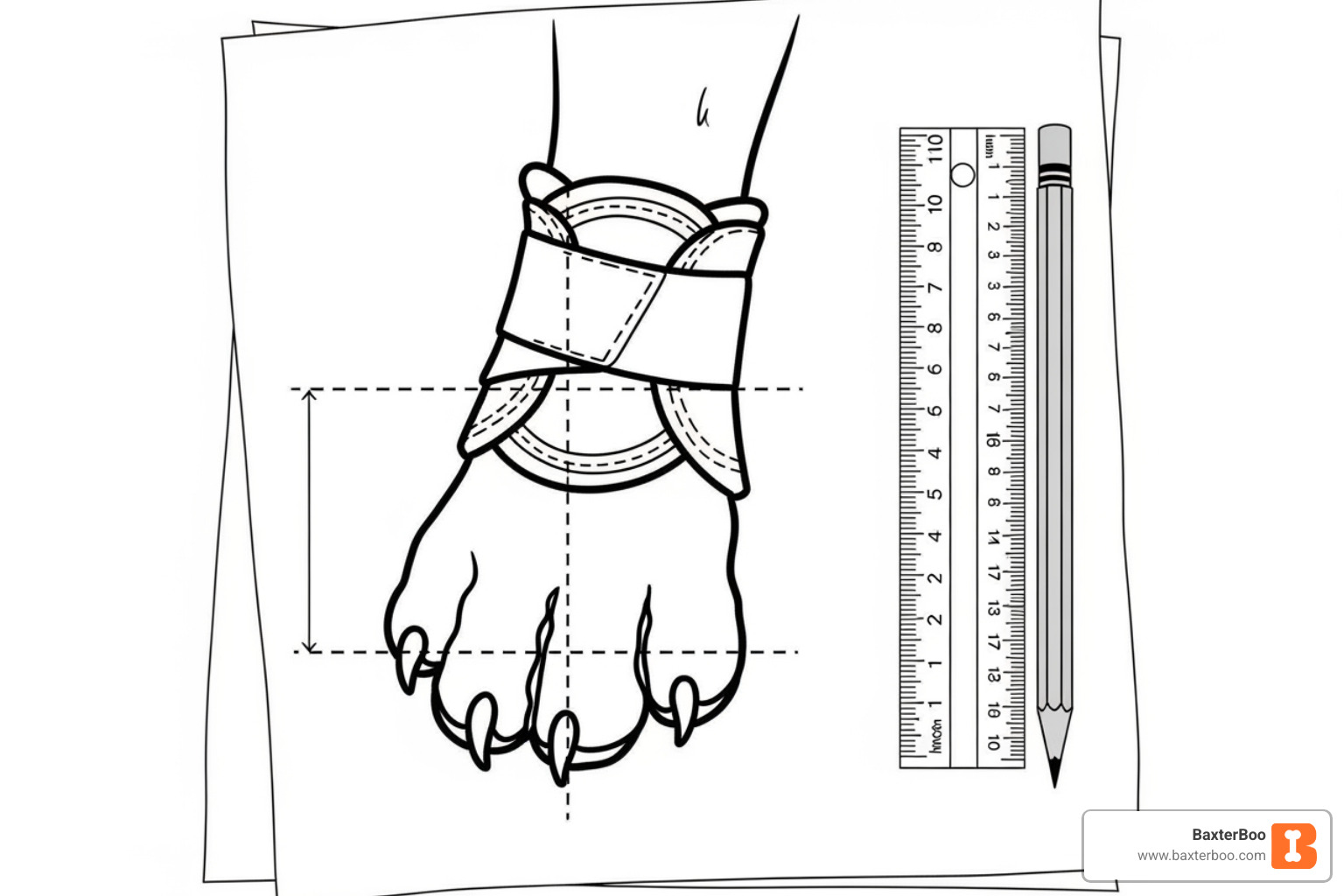
Once you have your measurements, compare them to the size chart provided by the boot manufacturer. Every brand sizes their boots differently, so always check their specific chart. If your dog's measurements fall between sizes, we generally recommend sizing up for comfort—but check what the manufacturer suggests first.
Taking a few extra minutes to measure carefully now will save you so much hassle later. Trust us on this one!
How to Get Your Dog Used to Wearing Dog Snow Boots
Remember the first time you saw a video of a dog wearing boots, doing that hilarious high-stepping prance? It's adorable to watch, but when it's your dog refusing to move or trying to shake the boots off like they're under attack, it's less funny. The good news is that most dogs can learn to love their boots with a gradual, positive approach.
Start by introducing the boots indoors in a calm, relaxed environment. Let your dog sniff them, investigate them, and get comfortable with these strange new objects. Make this a positive experience right from the start by offering treats and praise just for showing interest.
When you're ready to try putting a boot on, keep it quick and upbeat. Slip one boot on a front paw, immediately follow with a high-value treat, and shower them with enthusiastic praise. Don't worry about getting all four boots on right away. Sometimes just getting your dog comfortable with one boot for a few minutes is enough for the first session.
Gradually build up from there. Once they're okay with one boot, try two. When they tolerate two, add the third and fourth. Keep these early sessions short—just a few minutes at a time. The key is making every interaction with the boots a positive one.
Distraction is your friend here. Put the boots on right before something exciting, like mealtime or a walk. Play with their favorite toy while they're wearing the boots. The idea is to help them associate the boots with fun activities rather than focusing on the weird sensation on their paws.
When your dog is comfortable wearing all four boots indoors, it's time for a test run outside. Start with a very short walk—maybe just to the end of the driveway and back. Keep it positive with lots of praise and encouragement. As they get more confident, gradually increase the distance and duration of your walks.
Some dogs adapt in a day or two. Others might need a week or more. Every pup is different, and that's perfectly okay. The important thing is patience and consistency. Before you know it, your dog will be strutting their stuff in their dog snow boots like they were born to wear them!
Tips for a Secure Fit
You've measured carefully and your dog is finally comfortable wearing boots. But there's one more piece to the puzzle: making sure those boots actually stay on during your winter adventures.
The fit should be snug but never tight. When you fasten the straps, you should be able to slide one finger comfortably underneath. This ensures the boot won't slip off while also maintaining good circulation. If your boots have hook-and-loop straps, make sure they're pulled as tight as they'll go and that both sides are lined up evenly. Some boots also feature drawstrings at the top for extra security—use them!
Here's something that catches many pet parents off guard: dewclaws. These small, thumb-like claws on the inside of your dog's legs (usually on the front paws) can sometimes rub against the boot and cause irritation. If you notice your dog seems uncomfortable or if the dewclaw area looks red, try using a self-adhesive wrap like Vet Wrap. Gently wrap it around the dewclaw area—not too tight to restrict circulation, but secure enough to create a protective barrier between the dewclaw and the boot.
Dog socks aren't just adorable—they're actually incredibly practical. A thin sock layer can prevent chafing from the boot material, especially for dogs with sensitive skin. They also add extra warmth and can help boots fit more securely on dogs with slim paws by filling out extra space inside the boot. Think of them as the secret weapon for achieving the perfect fit.
If you're looking for boots engineered to stay put during active winter play, our Salt Sox 2025 Winter Dog Boots Blizzard Black are specifically designed with secure closure systems that keep them in place, even when your pup is romping through deep snow.
With the right fit and a little preparation, you and your furry friend will be ready to tackle whatever winter throws your way!
Frequently Asked Questions about Dog Boots
We get a lot of questions about dog snow boots, and we love helping fellow pet parents steer the wonderful world of paw protection! Here are some of the most common inquiries we receive, answered with your furry friend's comfort in mind.
How many dog boots come in a pack?
This is a really common question, and the answer can vary a bit! Most of the time, dog snow boots are sold in sets of four. This makes perfect sense, right? Most dogs have four paws, so a full set means all their little feet are ready for winter adventures.
However, you might sometimes find brands or specific styles that sell boots in sets of two. This can actually be super helpful! Many dogs, especially larger breeds, have front paws that are a different size – often wider – than their back paws. If your pup is one of them, buying boots in pairs lets you mix and match sizes. This way, you can get the perfect, comfortable fit for both their front and back feet. Always peek at the product description to be sure how many boots you're getting in a pack!
How do you clean dog boots?
Keeping your dog's boots clean is a smart move for both hygiene and making sure they last a long time. The best way to clean them often depends on what they're made of, but we have some general tips that cover most dog snow boots:
For boots with waterproof uppers (think smooth, synthetic materials or PU leather), a simple wipe-down is usually all you need. After a snowy or muddy walk, just grab a damp cloth and gently wipe away any mud, salt, or dirt. No need for a full wash every time!
If your boots are made of fabric or softer materials and get really dirty, some might be safe for the washing machine. If you go this route, always use a gentle cycle with cold water. But before you do, please, please check the manufacturer's care instructions! Harsh washing can sometimes damage those special waterproof coatings or materials.
Don't forget the soles! A small brush, like an old toothbrush, works wonders for scrubbing away any trapped dirt or tiny pebbles from the rubber treads. This helps them keep their fantastic grip.
No matter how you clean them, always let the boots air dry completely before you put them away. Avoid using direct heat, like a radiator or hairdryer, as this can damage the materials and shorten the life of your boots.
Can dog boots be worn in summer too?
You bet they can! While we're big fans of dog snow boots for winter, many dog boots are actually designed for year-round paw protection. The very qualities that shield paws from the cold, ice, and salt in winter can also protect them from summer's unique hazards.
Think about walking on hot pavement in Vernon Hills, IL, or anywhere else on a sunny day. Asphalt can get scorching hot – hot enough to burn your dog's delicate paw pads. Boots create a fantastic barrier, letting your dog walk comfortably on hot sidewalks or even sandy beaches.
They also offer great protection on rough terrain. Whether you're hiking a trail with sharp rocks, thorny bushes, or just walking on abrasive surfaces, durable boots keep paws safe from cuts and scrapes, no matter the season. Boots can even help shield sensitive paws from environmental allergens or irritants they might pick up during spring and summer walks.
When you're choosing boots for warmer weather, just look for options that are labeled "all-season" or "summer" boots. These often focus on being breathable while still giving that robust sole protection. So, investing in a good pair of dog snow boots can truly benefit your dog's paws all year long!
Conclusion
What an adventure we've been on together! As we've journeyed through the ins and outs of winter paw protection, it's clear that the colder months bring both joy and unique challenges for our beloved canine companions. From the biting cold and slippery ice to the hidden dangers of rock salt and de-icing chemicals, their paws face a lot. Protecting those precious paws isn't just about making them comfy; it's truly about keeping them safe and healthy all season long.
This is where dog snow boots shine as a true winter hero for pet parents. They create that vital barrier, letting your dog romp and play in the snow without a worry in the world. We've explored the different styles, from flexible options perfect for quick dashes to rugged designs built for epic outdoor treks. And we've highlighted those important features like waterproof materials, warm linings, durable rubber soles, and secure closures that make all the difference.
While alternatives like paw wax can offer a little extra help, nothing beats a good pair of dog snow boots for all-around defense against winter's toughest elements. We hope our guide has given you the confidence to measure those paws perfectly, introduce the boots with patience and plenty of treats, and ensure a snug, secure fit. With a little effort and the right gear, your furry friend will be confidently navigating snowy sidewalks and icy trails in no time!
Here at BaxterBoo, your pet's wellness is truly at the heart of everything we do. We're committed to offering expertly curated, high-quality products because we believe every dog deserves to enjoy their walks, runs, and playtime, safely and comfortably, no matter the season.
So go ahead, equip your best friend with the protection they need, and let those wonderful winter adventures begin!
Explore our collection of all-terrain dog boots and find the perfect pair to keep those precious paws warm and safe.