
 Save 15% on your 1st Autoship learn more

 Email us
 Live Chat
 FAQs





Introduction
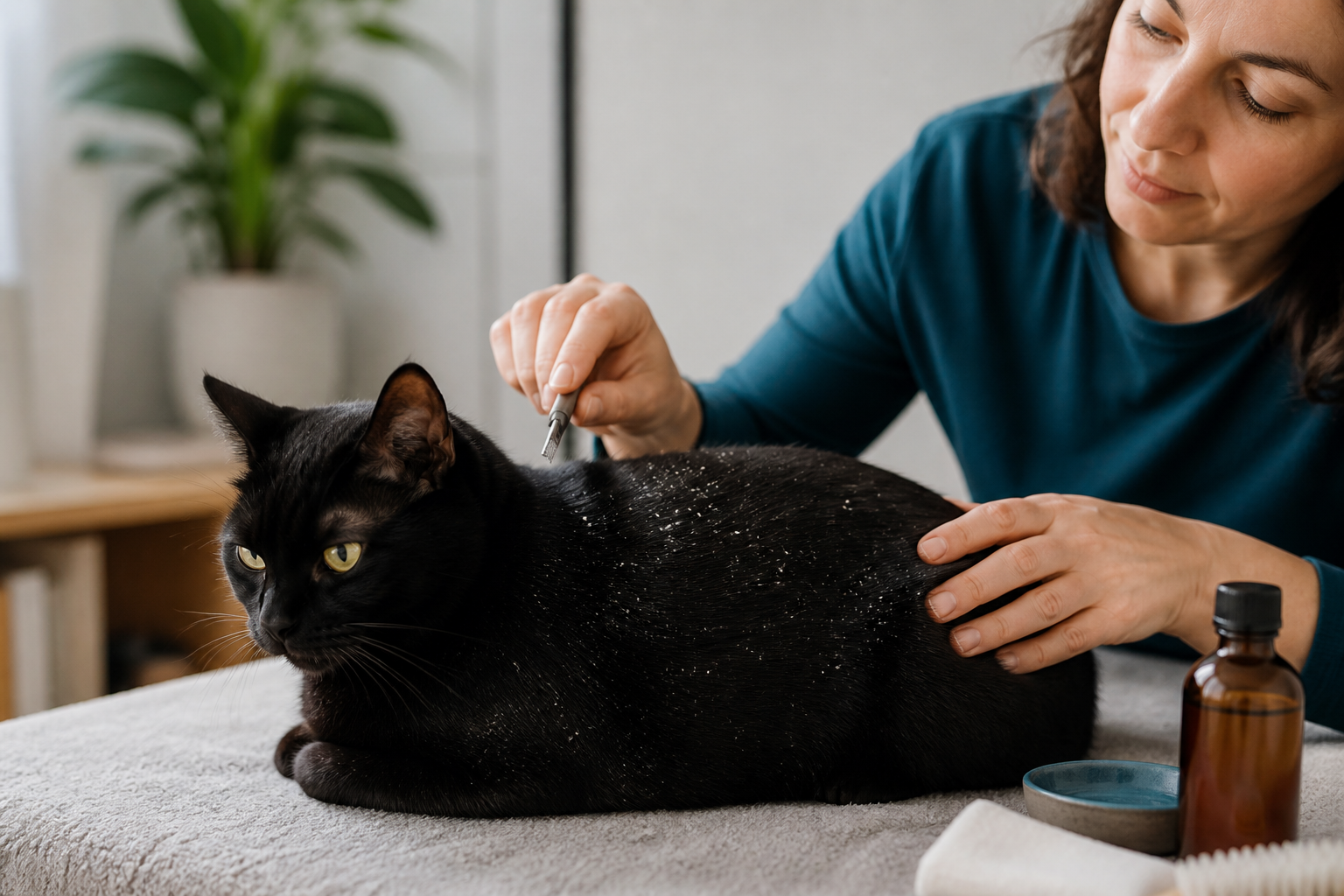
You are petting your black cat when you notice a dusting of white flakes along their spine. On a dark coat, even a little bit of dry skin stands out like fresh snow. While a few flakes might seem like a minor cosmetic issue, they often point to something happening beneath the surface. At BaxterBoo, we know how much you care about keeping your cat’s coat sleek and healthy. This guide covers why your cat might be flaking and how you can restore their shine. From simple grooming changes to nutritional support, there are many ways to help your feline friend. Understanding the root cause is the first step toward a more comfortable pet.
What Exactly Is Cat Dandruff?
Many owners use the terms dander and dandruff interchangeably, but they are different. Dander consists of microscopic skin cells that cats shed naturally. You usually cannot see it with the naked eye. It is a normal part of your cat's biology and a common cause of human allergies.
Dandruff refers to larger, visible flakes of dead skin. These flakes clump together and get caught in the fur. On a black cat, these white or grey specks are especially obvious against the dark hair. This flaking is often a sign that the skin is too dry, too oily, or irritated.
Quick Answer: Cat dandruff is the visible shedding of dead skin cells that clump together in the fur. It is more noticeable on black cats due to the color contrast and often signals dry skin or a grooming issue.
Cat Skin & Coat Care













Why Black Cats Show More Dandruff
The issue is not that black cats are more prone to skin problems than other colors. The reality is simply visual contrast. A white cat with dandruff may go months without being noticed because the flakes blend into the fur. On a black or dark grey cat, every single flake stands out.
This high visibility can be helpful. It allows you to catch skin issues or health changes earlier than owners of light colored pets might. If you see white spots appearing regularly, it is time to look at your cat’s environment and daily routine.
Common Causes of Feline Flaking
Several factors can lead to a dusty coat. Some are simple environmental fixes, while others require a closer look at your cat's health.
Low Humidity and Dry Air
During the winter months, indoor heating strips moisture from the air. This dry environment can cause your cat's skin to lose its natural hydration. Just like humans get itchy, dry skin in the winter, cats experience the same. The skin becomes brittle and starts to flake off in small white specks.
Nutritional Gaps
Skin health starts from the inside. Cats need specific nutrients to maintain a supple skin barrier and a shiny coat. A lack of essential fatty acids like Omega-3 and Omega-6 is a common culprit for dry skin. If their food is low quality or lacks healthy fats, the skin will be the first place you see the results.
Weight and Mobility Issues
If your cat has dandruff primarily on their lower back and near the tail, they might be struggling to reach those spots. Overweight cats often have physical limitations that prevent them from grooming their entire body. Senior cats with arthritis may also find it painful to twist and reach their hindquarters. When a cat stops grooming an area, dead skin cells and natural oils build up, leading to heavy dandruff.
Stress and Anxiety
Cats are sensitive to changes in their home. A new pet, a move, or even a change in your work schedule can cause stress. Stress can impact a cat's immune system and lead to a dull, flaky coat. Some cats may over groom when stressed, while others stop grooming entirely.
Key Takeaway: Dandruff is often a secondary symptom of an environmental or physical issue like low humidity, poor nutrition, or limited mobility.
The Role of Parasites and "Walking Dandruff"
Not all white flakes are dead skin. There is a specific parasite called Cheyletiella mites that looks exactly like dandruff. These mites are small and white. They move around on the skin's surface, which has earned them the nickname "walking dandruff."
If you notice the flakes on your black cat seem to move, or if your cat is scratching excessively, mites could be the cause. This condition is contagious to other pets and requires specific treatment. Our cat pharmacy carries a variety of FDA-approved flea and tick preventatives that can help manage parasites. We partner with Pet's Choice to provide these medications through our online pharmacy for your convenience.
Vet Tip: If your cat is losing hair, has red skin, or the "dandruff" appears to move, consult your veterinarian. These signs often point to parasites or fungal infections like ringworm that require professional diagnosis.
Improving the Coat Through Better Nutrition
What you put in the bowl directly affects the flakes on the fur. High quality protein and healthy fats are the building blocks of healthy skin.
Essential Fatty Acids
Omega-3 and Omega-6 fatty acids are vital. They help strengthen the skin barrier and reduce inflammation. You can find these in premium fish oils or specialized skin and coat supplements. Many owners find that adding a small amount of salmon oil to wet food makes a big difference within a few weeks. For more nutritional support ideas, explore our cat skin and coat health collection.
Hydration and Wet Food
Cats often have a low thirst drive. If they only eat dry kibble, they may live in a state of mild dehydration. This lack of moisture can lead to dry, flaky skin. Try incorporating more wet food into their diet. You can also add a water fountain to encourage them to drink more throughout the day. You can find additional hydration ideas in this guide to improving an indoor and outdoor cat’s quality of life.
Grooming Strategies for Black Cats
Regular grooming is your best defense against dandruff. It removes dead skin cells before they can clump and helps distribute natural oils across the coat. Our cat healthcare category includes products that can support a broader feline wellness routine.
Choosing the Right Brush
For a black cat with dandruff, a soft bristle brush or a fine tooth comb works best. Avoid harsh metal scrapers that might irritate dry skin further. Brushing should be a relaxing experience.
Step 1: Start at the head and work your way down the back. Use gentle, long strokes.
Step 2: Pay extra attention to the base of the tail and the lower back. These are the areas where dandruff most often accumulates.
Step 3: Use a damp cloth or pet-safe grooming wipe after brushing. This picks up the loose flakes you have disturbed so they don't just settle back onto the fur.
Waterless Baths
Most cats hate traditional baths. Forcing a bath can cause immense stress and actually dry out the skin further if you use the wrong soap. Instead, consider a waterless foam shampoo or grooming wipes. These products help moisturize the skin and lift away oils without the trauma of a tub.
When to Consult a Veterinarian
While most dandruff is a minor issue, it can sometimes signal a systemic health problem. If your cat’s dandruff is accompanied by other symptoms, it is time for a checkup.
Conditions like diabetes, hyperthyroidism, and kidney disease can all change the texture of a cat’s skin. A vet can run blood work to rule out these underlying issues. They can also check for fungal infections like ringworm, which can look like flaky skin but is much more serious.
If your vet determines your cat needs a prescription diet for weight management or skin support, we can help. We carry brands like Farmina Vet Life and Royal Canin through our pharmacy partnership. Having a prescription on file with us makes it easy to get the specialized food your cat needs delivered to your door.
Key Takeaway: Persistent dandruff that does not improve with grooming or diet changes deserves a veterinary visit to rule out metabolic diseases.
Environmental Adjustments for Skin Health
Small changes in your home can lead to big improvements in your cat's coat. If you suspect dry air is the cause, try these steps:
- Use a humidifier in the rooms where your cat spends the most time.
- Keep your cat away from direct heat vents or radiators.
- Ensure there are multiple water bowls or fountains throughout the house.
- Wash their bedding regularly to remove trapped dander and dust mites.
Weight Management and Grooming Access
If your black cat is a bit rounder, they may simply be unable to reach their back. Helping them lose weight is a long term solution for dandruff. In the short term, you must act as their primary groomer.
Wiping their back daily with a warm, damp cloth mimics the sensation of a cat's tongue. It stimulates blood flow to the skin and removes the buildup of flakes. As your cat reaches a healthier weight, they will likely take over this job themselves.
Bottom line: Helping an overweight cat reach their "blind spots" is often the quickest way to clear up dandruff on the lower back.
Summary of Home Care for Cat Dandruff
Managing dandruff on a black cat requires a multi-pronged approach. You need to address the immediate flakes while fixing the root cause.
- Brush your cat 3 to 4 times a week to distribute oils.
- Add Omega-3 supplements or high quality wet food to their diet.
- Increase the humidity in your home during dry months.
- Use a damp cloth to help older or overweight cats clean hard-to-reach areas.
- Keep up with regular parasite prevention to avoid "walking dandruff."
We are proud to have served pet owners since 2006 with a handpicked selection of products. Whether you need a better brush or a specialized supplement, we have the experience to help you choose the right tool for your cat. For more guidance on choosing supplements, read our pet supplement guide.
Key Takeaway: Consistency is the most important part of treating cat dandruff. Regular brushing and steady nutrition provide the best results over time.
Conclusion
Seeing dandruff on your black cat can be frustrating, but it is usually a manageable problem. By focusing on hydration, nutrition, and regular grooming, you can help your cat regain a glossy, flake-free coat. Remember that your cat's skin is a reflection of their overall wellness. Keeping them at a healthy weight and providing a stress-free environment does wonders for their fur. If you need support with prescription diets or parasite prevention, our BaxterBoo pharmacy is a great resource. We offer FDA-approved medications and specialized foods to keep your pet healthy. To save on your regular skin care supplies, consider signing up for our Autoship programme to get your favorites delivered on a schedule that works for you.
FAQ
Is it normal for a black cat to have some dandruff?
A few occasional flakes are usually normal, especially during seasonal changes when cats shed their coats. However, if the dandruff is persistent, covers large areas of the body, or is accompanied by itching, it usually indicates an underlying issue like dry skin or poor nutrition. Because black fur provides such a high contrast, you will likely notice even normal levels of skin shedding more easily than on a lighter cat.
Can I use human dandruff shampoo on my cat?
No, you should never use human dandruff shampoo on a cat. Human skin has a different pH level than cat skin, and many human products contain ingredients like zinc or salicylic acid that can be toxic if your cat licks them off. Always use a shampoo specifically formulated for felines or a gentle, pet-safe waterless foam. If your cat has a severe skin condition, your vet may prescribe a medicated shampoo designed for their specific needs.
Does diet really affect how much dandruff my cat has?
Yes, diet is one of the most significant factors in skin health. Cats require a balance of high quality proteins and essential fatty acids to maintain the oily barrier that keeps skin hydrated. If a cat is not getting enough Omega-3 or Omega-6 fats, their skin can become dry and brittle, leading to excessive flaking. Switching to a premium food or adding a fish oil supplement often clears up mild dandruff within a few weeks.
How do I know if my cat's dandruff is actually mites?
Mites, often called "walking dandruff," can look identical to skin flakes at first glance. The main difference is movement; if you look very closely and see the white specks shifting on the fur, it is likely mites. Other signs include intense scratching, red skin, and hair loss in patches. If you suspect mites, you should see a veterinarian for a skin scraping test to get a definitive diagnosis and the correct medication.






- Site & Contents BaxterBoo.com. BaxterBoo is located in the United States.
- Privacy & Security
- Terms of Use
- Accessibility Statement
