Save 15% on your 1st Autoship learn more

 Email us
 Live Chat
 FAQs
FAQs





Introduction
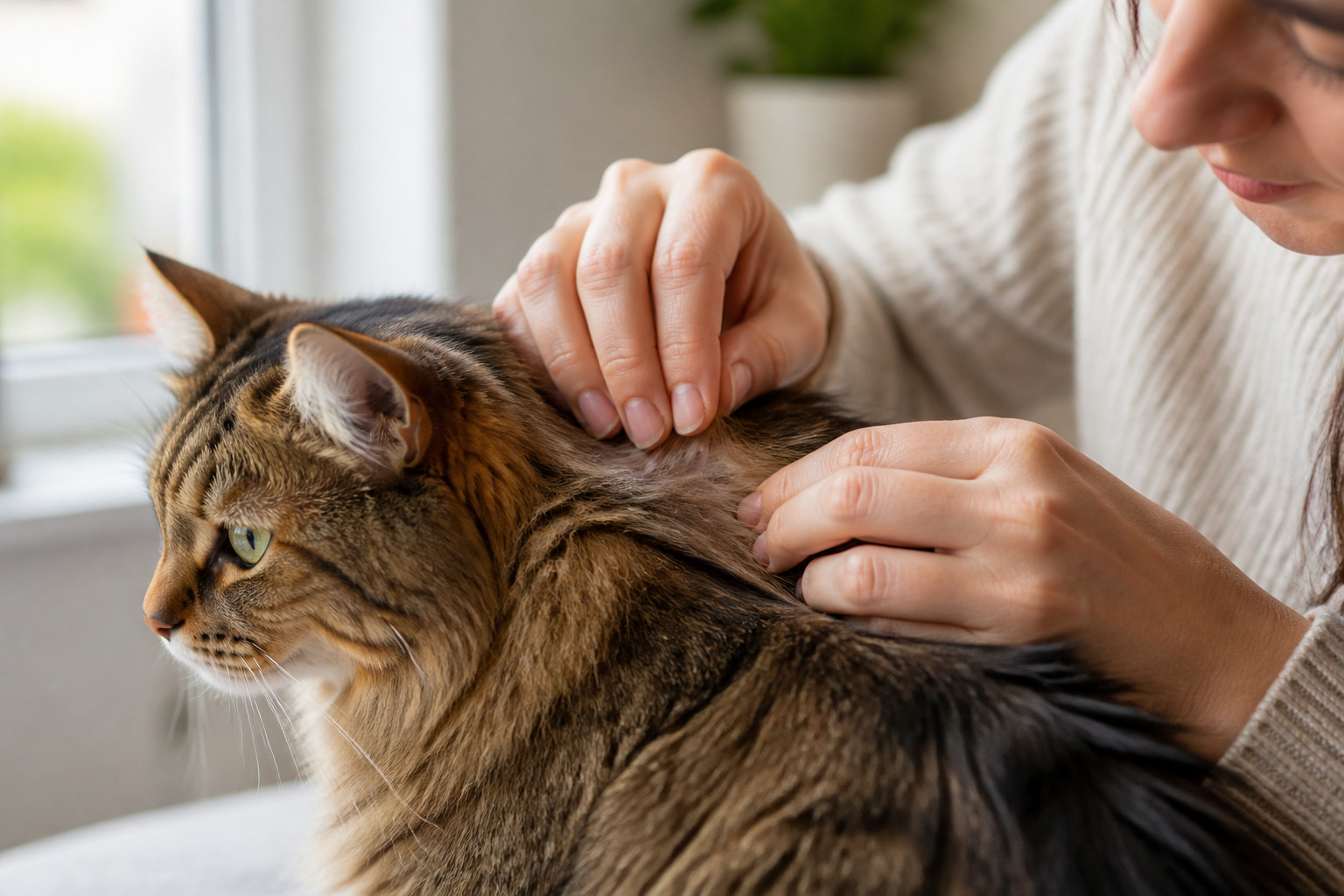
You are petting your cat and notice tiny white flakes scattered across their fur. These flakes are especially visible on darker coats and often cluster near the base of the tail. You might wonder if this is just seasonal dryness or a sign of a health issue. While a few flakes are common, persistent dandruff often signals an underlying problem. At BaxterBoo, we see many pet owners looking for ways to restore their cat's glossy coat. This guide covers why these flakes appear and how you can help your cat find relief. Understanding the difference between normal shedding and medical concerns is the first step toward better skin health. Proper grooming and nutrition can often solve the issue, but some cases require veterinary intervention.
Defining Cat Dandruff
Dandruff is the visible buildup of dead skin cells that have clumped together. All cats shed skin cells as part of a natural renewal process. When the skin is healthy, these cells are microscopic and go unnoticed. This microscopic material is known as dander.
Dandruff is different because the flakes are large enough to see with the naked eye. It can be a sign that skin cells are turning over too quickly. It can also mean that your cat is not grooming effectively. You will typically see these flakes on the surface of the fur or deep near the skin.
Quick Answer: Cat dandruff consists of visible white flakes of dead skin. It differs from dander, which is microscopic and normal for all healthy cats.
Common Causes of Flaky Skin
Several factors can cause your cat to develop dandruff. Identifying the cause is essential for choosing the right treatment.
Environmental Dryness
Low humidity is a frequent culprit. This is especially true during the winter months when indoor heaters run constantly. Dry air pulls moisture from the skin. This leads to irritation and flaking.
Grooming Challenges
Cats are usually expert groomers. If a cat stops grooming, dead skin and natural oils build up. This often happens in senior cats who have arthritis. They may feel too stiff to reach their lower back or tail. Overweight cats also struggle to reach certain spots. If your cat is suddenly looking unkempt, it may be due to physical discomfort. Explore our cat grooming supplies for brushes, combs, shampoos, and other coat-care tools.
Parasites and Infections
External parasites like fleas or mites can cause significant skin irritation. One specific mite, Cheyletiella, is often called walking dandruff. These mites look like moving white specks on the fur. Fungal infections like ringworm or bacterial infections also disrupt the skin barrier.
Nutritional Deficiencies
The skin is the largest organ in a cat's body. It requires a lot of protein and healthy fats to stay supple. A diet low in Omega-3 fatty acids can lead to a dull coat and dry skin. We carry several premium brands like Farmina and Zesty Paws that focus on skin health. You can also browse cat food selected for skin and coat health.
Vet Tip: If your cat has dandruff accompanied by hair loss, redness, or intense itching, schedule a veterinary exam. These symptoms often point to an infection or parasite that needs medical treatment.
When to Consult Your Veterinarian
Most dandruff is a cosmetic issue, but it can sometimes signal internal health problems. Chronic conditions like diabetes, kidney disease, or hyperthyroidism can affect coat quality.
A vet can perform a skin scraping or blood work to rule out these issues. They may also suggest a prescription diet. Our pharmacy carries prescription pet foods and FDA approved medications through our partnership with Pet's Choice. This is a helpful resource if your vet determines the dandruff is caused by a medical condition like an allergy or a hormonal imbalance. For additional skin and coat products, explore our cat healthcare category.
Signs of a More Serious Problem
- Red, inflamed skin under the flakes
- Bald patches or thinning fur
- Excessive licking or biting at the skin
- Oily or foul-smelling fur
- Changes in thirst or appetite
Managing Dandruff at Home
If your vet gives your cat a clean bill of health, you can manage the flakes with a few simple steps.
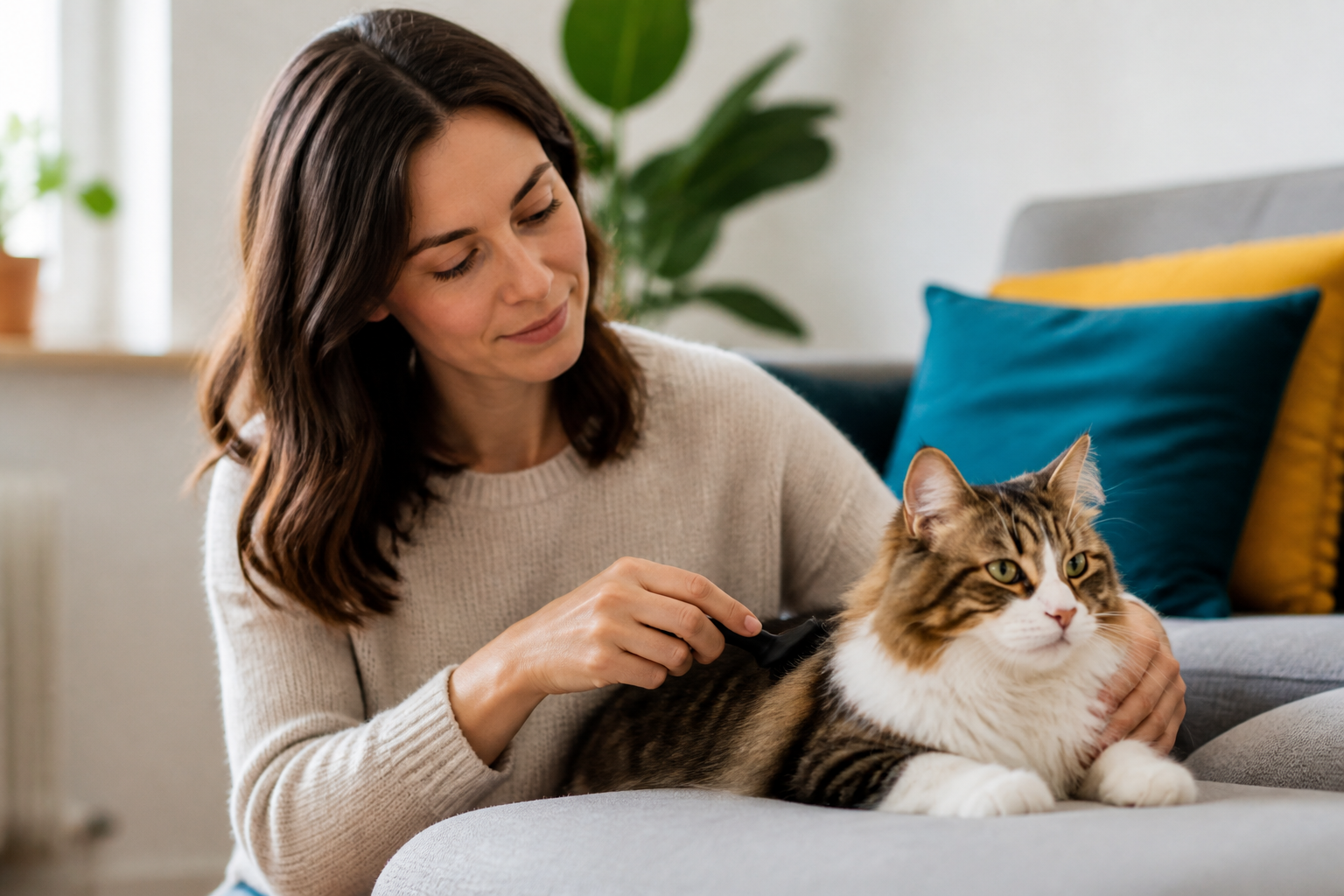
Step 1: Increase grooming frequency. / Brushing removes dead skin cells and loose hair. It also helps distribute natural oils across the entire coat.
Step 2: Improve the diet. / Look for foods rich in Omega-3 and Omega-6 fatty acids. Supplements like fish oil can also support the skin barrier.
Step 3: Manage the environment. / Use a humidifier in the rooms where your cat spends the most time. This adds moisture back into the air and the skin.
Step 4: Use pet-safe topical products. / Never use human dandruff shampoo on a cat. Use a gentle, cat-specific grooming spray or waterless shampoo to hydrate the skin. Waterless grooming options for cats can help with quick cleanups.
Essential Grooming Tools
- Soft Bristle Brush: Good for short-haired cats to distribute oils.
- Slicker Brush: Best for removing loose undercoat hair in long-haired cats.
- Fine-Tooth Comb: Useful for checking for fleas and removing large flakes.
- Humidifier: Helps keep the skin hydrated during dry seasons.
Key Takeaway: Regular brushing and a high-quality diet are the most effective ways to prevent and treat non-medical cat dandruff.
Nutrition and Skin Health
What your cat eats directly impacts their skin. High-quality animal proteins provide the building blocks for skin cells. Fatty acids act as a sealant to keep moisture in the skin.
If you are considering a change in diet, look for brands like Open Farm or Stella and Chewy's. These brands often use transparently sourced ingredients that are gentle on sensitive systems. For cats with severe allergies, your vet might recommend a limited ingredient or prescription diet. You can easily fulfill these prescriptions through the BaxterBoo pharmacy. For more guidance on nutritional support, read our pet supplement guide.
Bottom line: A balanced diet with adequate fatty acids is your cat's best defense against chronic dry skin.
Preventing Parasites
Flea and tick prevention is a vital part of skin care. Even indoor cats can get fleas brought in on your clothing. Flea bites cause inflammation that leads to scratching and dandruff. Browse our cat flea and tick collection for preventive options.
We recommend keeping your cat on a year-round preventive. Brands like Frontline or NexGard are trusted options for many pet owners. If your cat has a flea allergy, even one bite can cause a major flare-up. Using these products consistently prevents the irritation that leads to flaky skin. You can also review our flea and tick prevention guide for an overview of available product types.
For a product specifically listed for cats, consider Catego Topical Flea and Tick Treatment for Cats. Our pharmacy partnership with Pet's Choice makes it easy to stay on top of these essential preventives.
You can learn more about flea collars and parasite protection in our guide to how flea collars work.
Conclusion
Cat dandruff is a common issue that ranges from a simple grooming fix to a sign of an underlying medical need. By paying attention to your cat's coat and behavior, you can catch problems early. Regular brushing and a nutrient-rich diet will keep most cats flake-free. For more persistent cases, we recommend consulting your veterinarian to rule out infections or internal health changes. We are here to support your pet's wellness journey with the right gear and guidance. Visit our cat healthcare section to find tools that make grooming easier for you and your cat.
FAQ
What is the difference between cat dandruff and dander?
Dandruff consists of visible white flakes of dead skin that you can see on the fur. Dander is made of microscopic skin cells that all cats shed naturally. While dandruff can be a sign of a health or grooming issue, dander is a normal biological process.
Can I use my own dandruff shampoo on my cat?
No, you should never use human dandruff shampoo on a pet. These products often contain ingredients like zinc pyrithione or salicylic acid that can be toxic if swallowed during grooming. Always use a shampoo specifically formulated for the pH balance of a cat's skin.
Does my cat have "walking dandruff"?
Walking dandruff is a nickname for the Cheyletiella mite. If you look closely and see the white flakes moving, it is likely a parasite infestation. This condition is highly contagious to other pets and requires a specific treatment from your veterinarian.
How often should I brush my cat to stop dandruff?
For most short-haired cats, brushing once or twice a week is enough to manage skin flakes. Long-haired cats or senior cats with mobility issues may need daily brushing. Consistency is key to distributing natural oils and preventing the buildup of dead skin.