Save 15% on your 1st Autoship learn more

 Email us
 Live Chat
 FAQs
FAQs





Introduction
You are sitting on the sofa during a cold January evening with your cat curled up in your lap. As you stroke their fur, you notice a dusting of white specks that look like tiny snowflakes against their dark coat. This is a common sight for many pet owners when the temperature drops and the heater kicks on. While these flakes are often just a sign of dry winter skin, they can sometimes signal that your cat needs a bit of extra care. At BaxterBoo, we see this often as the seasons change and the air inside our homes becomes dry. This post covers why winter triggers these skin issues, how you can manage them at home, and when those flakes might mean a trip to the vet. Understanding the root cause of flaky skin is the first step toward keeping your feline friend comfortable and itch-free all season long.
Why Cats Get Dandruff in Winter
The primary reason cats experience dandruff during the colder months is a lack of moisture in the air. When we turn on our furnaces to stay warm, the humidity levels inside the house plummet. This dry air pulls moisture away from your cat's skin. Since their skin is their largest organ, it reacts quickly to environmental changes. The skin becomes parched, loses its elasticity, and the top layer begins to flake off.
Winter also changes how cats move and spend their time. Many cats become less active when it is cold, choosing to sleep near heat vents or radiators. Direct exposure to hot, dry air from a vent can localize the drying effect. This often leads to a concentrated patch of dandruff along the lower back or near the base of the tail.
Quick Answer: Cat dandruff in winter is typically caused by low indoor humidity and the drying effects of central heating. Regular brushing and increasing environmental moisture usually resolve mild cases.
Dandruff vs. Dander: What Are You Actually Seeing?
It is easy to confuse cat dandruff with cat dander, but they are not the same thing. Dander consists of microscopic skin cells that every healthy cat sheds naturally. These cells are so small that you cannot see them with the naked eye. Dander is what typically triggers allergies in humans because it floats through the air and settles on furniture.
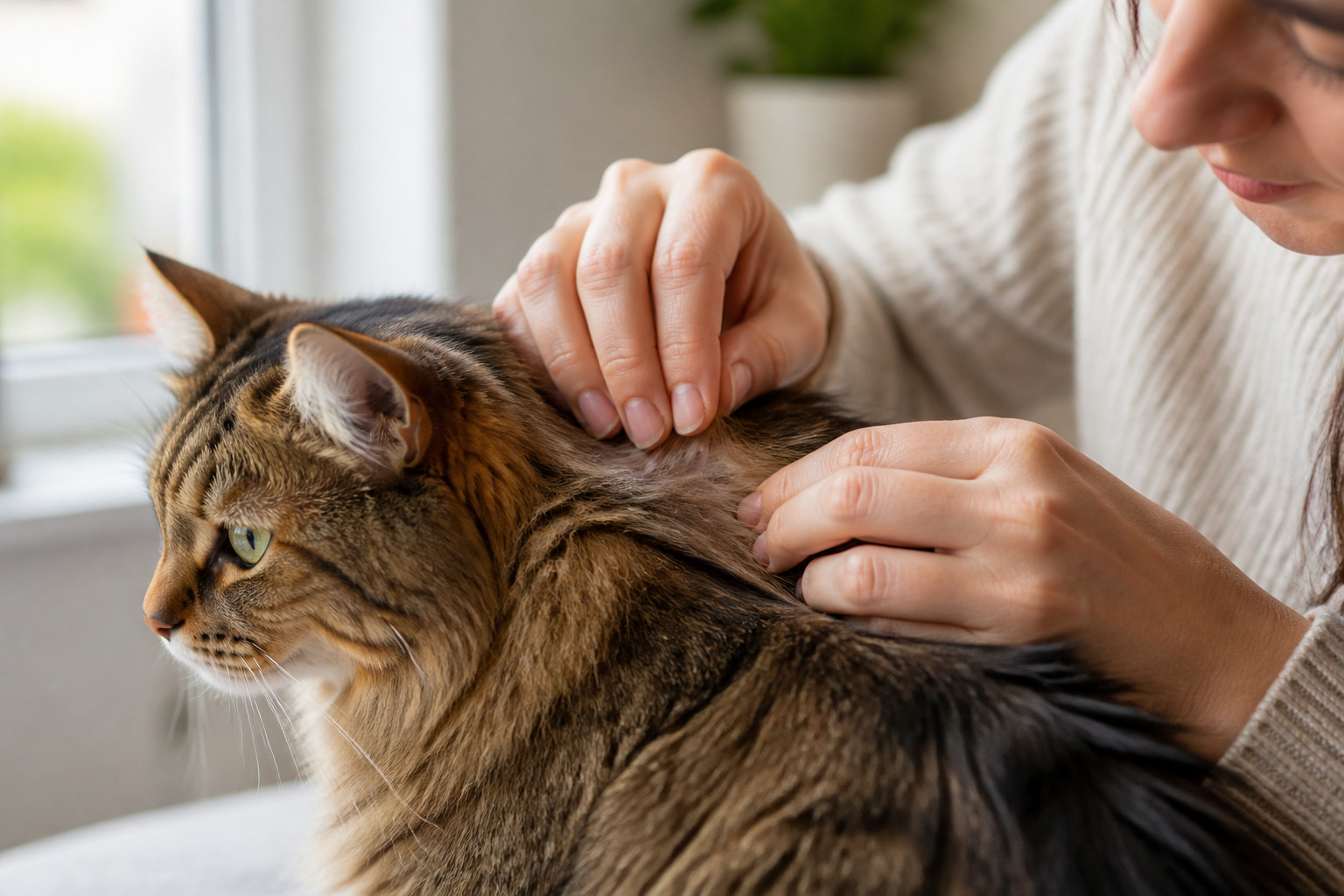
Dandruff is different because the flakes are large enough to be visible. These flakes are clumps of dead skin cells that have shed prematurely or in excess. If you can see white or gray specks on your cat’s fur or on the blankets where they sleep, you are looking at dandruff.
Key Takeaway: All cats have dander as part of a healthy skin cycle, but visible dandruff is a sign that the skin is irritated, dry, or out of balance.
The Role of Grooming in Winter Skin Care
Cats are famous for their grooming habits, but the winter months can make their job harder. A thicker winter coat can trap dead skin cells and loose fur close to the body. If your cat cannot reach certain areas or if the coat is too dense, these cells build up and appear as dandruff.
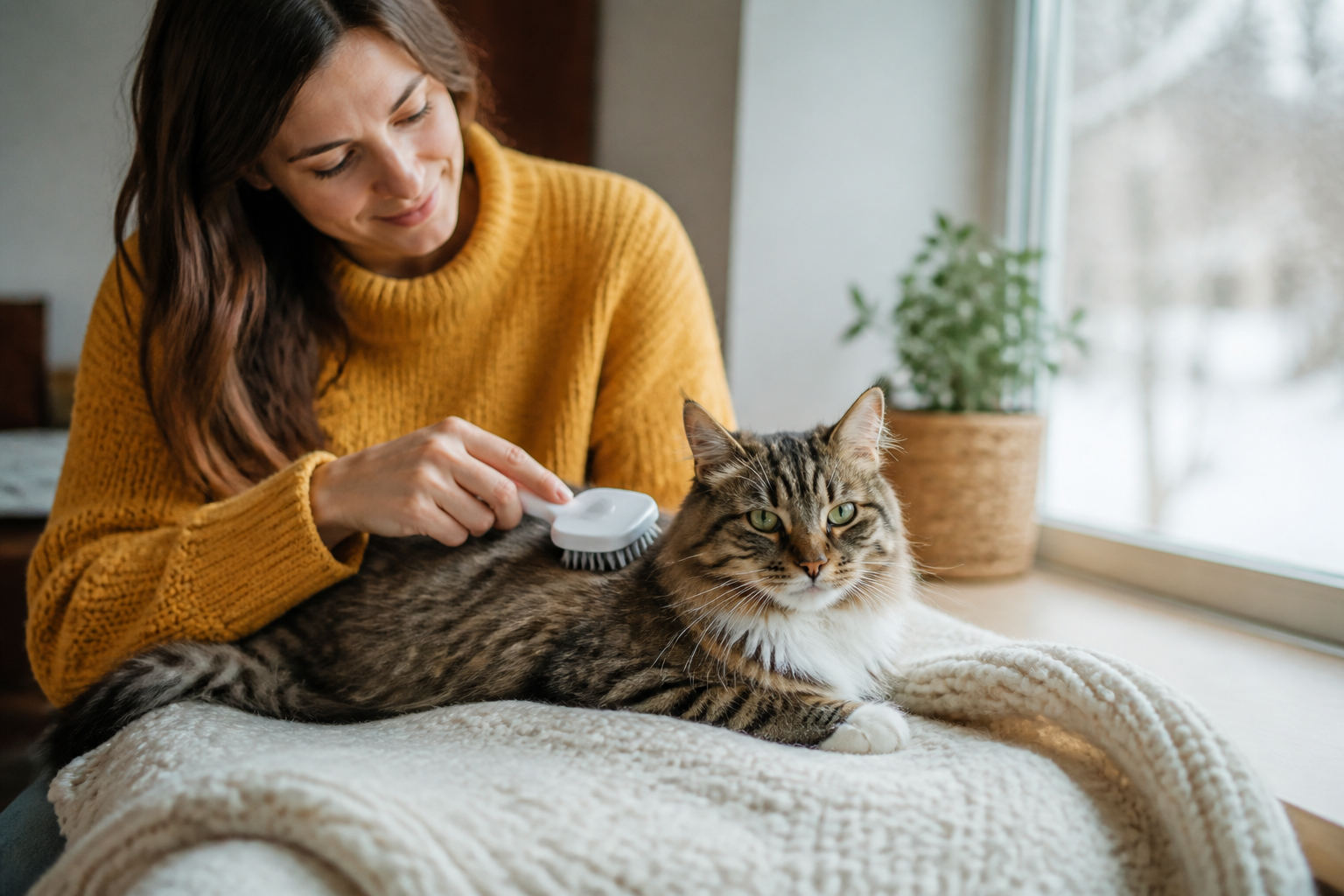
Regular brushing is the most effective way to manage these flakes. Brushing does more than just move the hair around. It stimulates the skin and encourages the production of natural oils. These oils act as a protective barrier that seals in moisture. When you brush your cat, you distribute these oils from the skin down the length of the hair shaft. Explore our cat grooming collection for brushes, combs, shampoos, and other grooming supplies.
Choosing the Right Tools
Different coats require different approaches.
- Short-haired cats: Use a soft bristle brush or a rubber grooming mitt. These tools are gentle on the skin while effectively removing loose flakes.
- Long-haired cats: Use a stainless steel comb or a slicker brush. These help reach through the thick undercoat where dandruff often hides.
- Senior cats: Use extra caution. Older cats may have thinner skin or sensitive joints. A soft brush ensures they enjoy the process without discomfort.
Vet Tip: If your cat has a sudden increase in dandruff along their lower back, it might not be a skin issue. Senior cats with arthritis often stop grooming these hard-to-reach areas because it is painful to twist.
For additional grooming ideas, read how regular grooming supports a cat’s coat and whisker care.
Environmental Solutions for Dry Skin
Since dry air is a major culprit, changing the environment can yield fast results. You do not need to turn off the heat, but you can balance the atmosphere.
Using a humidifier is one of the best things you can do for your cat’s skin and your own. Aim to keep your home's humidity between 30 and 50 percent. If you do not have a humidifier, placing a bowl of water near a safe heat source can add a small amount of moisture back into the room.
You should also look at where your cat sleeps. If their favorite bed is directly on top of a floor vent, try moving it a few feet away. This prevents the hot air from blowing directly onto their coat all night.
Winter Bathing Advice
You might be tempted to give your cat a bath to wash away the flakes. In most cases, this is not a good idea. Water and shampoo can strip away the very oils your cat needs to fight dry skin. If your cat is truly dirty, use a waterless foam shampoo or a damp cloth instead of a full bath. If you must use water, ensure it is lukewarm and use a moisturizing oatmeal-based shampoo specifically for felines. You can also browse waterless and cat-safe grooming options for gentler cleaning solutions.
Nutritional Support for a Healthy Coat
Healthy skin starts from the inside. If your cat's diet is lacking in essential fatty acids, their skin will be the first place to show it. Omega-3 and Omega-6 fatty acids are vital for maintaining the skin's moisture barrier.
During the winter, your cat might benefit from a boost in these nutrients. Many high-quality cat foods already include these, but some cats require a supplement. Fish oil is a popular choice that can be drizzled over their food. Always check with your veterinarian before adding supplements to ensure you are using the correct amount for your cat's weight. Our cat healthcare collection includes supplements and other wellness products for cats.
Hydration and Winter Skin
Hydration is also a factor. Cats have a low thirst drive and often do not drink enough water. In the winter, the air is dry and they may need more fluids than usual. To encourage drinking, consider these steps:
- Switch to wet food or add a splash of water to their kibble.
- Use a pet water fountain, as many cats prefer running water.
- Place multiple water bowls in different areas of the house.
- Offer cat-safe bone broth as a hydrating treat.
Bottom line: Combining internal hydration with external moisture is the most effective way to combat seasonal skin flakes.
For more ideas about encouraging cats to drink, read these tips about cat water fountains and hydration. You can also explore our cat bowls and water fountain selection.
When to Visit the Veterinarian
While most cat dandruff in winter is harmless, it can sometimes be a symptom of a larger health problem. You should monitor your cat for signs that go beyond simple dry skin. If the dandruff is accompanied by red skin, sores, or patches of hair loss, a vet visit is necessary.
Parasites can also mimic dandruff. A specific type of mite called Cheyletiella is often called walking dandruff. These mites look like white flakes, but they move. If you see the "flakes" shifting on your cat's skin, or if your cat is scratching uncontrollably, they need professional treatment.
Systemic Health Issues
Sometimes, a change in coat quality is the first sign of an internal illness. Conditions like diabetes, hyperthyroidism, or kidney disease can all cause a cat's skin to become dry and flaky. If you notice your cat is drinking much more water than usual, losing weight, or acting lethargic, the dandruff might be a secondary symptom.
We carry a variety of supportive products at BaxterBoo, but we always recommend a professional diagnosis for persistent issues. A veterinarian can perform skin scrapings or blood tests to rule out infections or metabolic diseases.
Vet Tip: Never use human dandruff shampoos on your cat. Many contain ingredients like zinc or salicylic acid that are toxic to cats if licked off the fur. Only use products specifically labeled for feline use.
Managing Chronic Conditions and the Pharmacy
If your veterinarian determines that your cat’s dandruff is caused by an underlying condition, they may prescribe a specific treatment plan. This might include prescription diets designed for skin sensitivities or medications to manage allergies.
Our pharmacy carries a wide range of FDA-approved medications and prescription pet foods through our partnership with Pet's Choice. Whether your cat needs a specialized flea preventive to stop allergic dermatitis or a prescription diet like Farmina Vet Life for overall wellness, we can help you get those items delivered to your door. Having access to a dedicated pharmacy makes it easier to stay consistent with the treatments your vet recommends. Browse our cat pharmacy for prescription medications and veterinary products.
A Step-by-Step Winter Skin Routine
Step 1: Inspect the skin.
Check your cat's coat once a week for redness, irritation, or an increase in flakes.
Step 2: Brush daily.
Spend five minutes each day brushing your cat to distribute oils and remove loose fur.
Step 3: Monitor humidity.
Check your home's air quality and use a humidifier if the air feels static or dry.
Step 4: Enhance the bowl.
Add a small amount of warm water or moisture-rich food to their daily meals to boost hydration.
Step 5: Prevent parasites.
Keep your cat on a year-round flea and tick preventive, as indoor heating can keep these pests active even in winter. Shop our cat flea and tick collection for prevention options.
For more background on parasite prevention, read how flea collars work and why prevention matters.
Conclusion
Cat dandruff in winter is a common challenge, but it is manageable with a few simple changes to your routine. By focusing on moisture, regular grooming, and proper nutrition, you can help your cat maintain a shiny, healthy coat even when the weather is at its worst. Remember to keep an eye out for any signs of discomfort or unusual behavior that might require a vet's expertise. At BaxterBoo, we are committed to providing the gear, food, and pharmacy services you need to keep your pets thriving in every season. If you are ready to start a winter wellness routine, our selection of grooming tools and skin supplements is a great place to begin.
Key Takeaway: Winter dandruff is usually an environmental issue that responds well to increased humidity, better hydration, and daily brushing.
FAQ
Is it normal for cats to get more dandruff in the winter?
Yes, it is very common for cats to show more dandruff during the winter months. The combination of cold outdoor air and dry indoor heating strips moisture from their skin, leading to flakiness. As long as the skin is not red or irritated and the cat is acting normally, it is usually just a seasonal issue.
Can I use coconut oil on my cat for dandruff?
While coconut oil is generally safe, it can be very messy and might cause your cat to over-groom. If they lick off a large amount, it could lead to an upset stomach or diarrhea. It is usually more effective to add Omega-3 fatty acids to their diet or use a dedicated feline skin conditioner than to apply oil directly to the fur.
How do I tell the difference between dandruff and fleas?
Dandruff appears as white or gray flakes that look like dry skin. Flea dirt looks like tiny black specks, similar to ground black pepper. If you are unsure, place some of the specks on a wet white paper towel. If they turn reddish-brown, it is flea dirt (digested blood), and you should consult our cat flea and tick collection or your vet for flea treatment.
Does my cat need a bath if they have dandruff?
Most cats do not need a bath to treat dandruff, and bathing can actually make the problem worse by further drying out the skin. Instead of a full bath, focus on daily brushing to distribute natural oils and using a humidifier to add moisture to the air. If a bath is necessary for other reasons, use a moisturizing shampoo designed specifically for cats.