
 Save 15% on your 1st Autoship learn more

 Email us
 Live Chat
 FAQs





Introduction
You run your hand down your cat's back during a quiet moment on the sofa. Instead of the usual smooth fur, you feel a slight grit. You look closer and see a flurry of white flakes clinging to the hair. It looks like a light dusting of snow against their coat. This discovery often leaves owners wondering if it is just a sign of dry winter air or something more concerning. At BaxterBoo, we see this often and know that a flaky coat is usually a signal about your cat's internal health or daily environment. This post covers the common causes of feline dandruff and how you can manage it through grooming and nutrition. We want to help you restore your cat's skin health and overall comfort.
Quick Answer: Cat dandruff is visible white flakes made of dead skin cells that accumulate on the fur. Unlike normal dander, which is microscopic, dandruff often indicates an underlying issue like poor grooming, dry air, or nutritional gaps.
Understanding Cat Dandruff Shedding
It is important to distinguish between normal shedding and clinical dandruff. Every cat sheds skin cells as part of a natural renewal process. These microscopic cells are known as dander. You usually cannot see dander with the naked eye. It is the material that often triggers allergies in humans. Dandruff is different because the skin cells clump together. These flakes become large enough to see. They often get trapped in the fur instead of falling away.
When you notice cat dandruff shedding, you are seeing a breakdown in the skin's natural balance. Healthy skin produces oils that keep the surface supple. When these oils are lacking or overproduced, the skin becomes irritated. This irritation leads to the shedding of larger skin flakes. You might see these flakes all over the body. However, they are most common along the lower back and near the base of the tail.
Key Takeaway: Visible flakes are not a normal part of a cat's coat. They represent an accumulation of dead skin that the cat is not successfully grooming away or that the body is producing too quickly.
Cat Skin & Coat Care













Why Does My Cat Have Dandruff?
Several factors can lead to a flaky coat. Identifying the cause is the first step toward a solution. Some causes are external and easy to fix. Others may require a closer look at your cat's health.
Environmental Factors
Dry air is a common culprit. This is especially true in the winter months. When the heater runs constantly, the humidity in your home drops. This saps moisture from your cat's skin. The skin becomes brittle and starts to flake. You might notice the dandruff increases as the temperature drops outside.
Mobility and Grooming Issues
Cats are famously clean animals. They spend a large portion of their day grooming. This process removes loose hair and dead skin cells. If a cat stops grooming effectively, dandruff builds up. This often happens for two main reasons.
First, obesity can prevent a cat from reaching certain areas. An overweight cat may have a perfectly clean chest but a very flaky lower back. They simply cannot reach the base of their tail to clean it. Second, age and arthritis play a role. If a senior cat feels stiff or painful, they will stop twisting and bending to groom. Dandruff in older cats is frequently a sign of joint discomfort.
For additional feline grooming guidance, explore our cat grooming supplies, including brushes, combs, shampoos, and grooming tools.
Nutritional Gaps
The skin is the largest organ of the body. It requires a lot of energy and nutrients to stay healthy. In fact, a significant portion of a cat's daily protein intake goes toward maintaining their skin and coat. If the diet is low in quality protein or essential fats, the skin is the first place you will see the impact.
Vet Tip: If your cat has dandruff along with weight loss, increased thirst, or changes in appetite, schedule a veterinary exam. These can be signs of internal conditions like diabetes or kidney disease that affect skin health.
Medical Causes of Skin Flakes
While environmental factors are common, sometimes the flakes are a symptom of a medical issue. A vet visit is necessary if the flaking is accompanied by redness, scabbing, or intense itching.
Parasites and Walking Dandruff
Some parasites actually look like dandruff. There is a specific mite called Cheyletiella. It is often referred to as walking dandruff because the mites are white and move around on the skin. This condition is very itchy and contagious. Regular flea and tick preventives often help protect against these mites. Our cat pharmacy carries prescription and preventive options for cats.
For broader prevention information, read how flea collars work and discuss the right product with your veterinarian.
Allergies and Infections
Cats can suffer from skin allergies just like humans. These can be triggered by food ingredients or environmental factors like dust and pollen. When the skin is irritated by an allergy, it may produce more oil or become very dry. Both scenarios lead to flaking. Bacterial or fungal infections like ringworm can also cause scaling and hair loss.
Systemic Health Concerns
Certain internal diseases change the way the skin functions. For example, hyperthyroidism or kidney issues can lead to a dull, flaky coat. The body focuses its resources on vital organs and stops prioritizing skin health. If you see flakes alongside a change in your cat's behavior, it is time for professional advice.
Supporting Skin Health Through Nutrition
What goes into your cat's bowl directly affects the flakes on their back. High-quality nutrition is the foundation of a healthy coat. We carry a variety of premium brands like Farmina, Open Farm, and Stella and Chewy's that focus on whole-food ingredients.
Browse skin and coat cat food options when comparing recipes that fit your cat's dietary needs.
The Role of Essential Fatty Acids
Omega-3 and Omega-6 fatty acids are vital for skin health. These fats help create a moisture barrier on the skin. This barrier keeps hydration in and irritants out. Many standard cat foods may not have high enough levels of these fats for cats with naturally dry skin. Adding a supplement from brands like Zesty Paws or Honest Paws can make a visible difference.
A skin-supporting meal such as Petcurean Go! Skin & Coat Care Wet Cat Food can also provide omega oils as part of a complete feeding routine.
Protein Quality
Cats are obligate carnivores. They need animal-based protein to thrive. If a food uses low-quality fillers, the cat may not get the amino acids needed for skin repair. Look for foods where a specific meat is the first ingredient. This ensures the cat is getting the building blocks for a thick, shiny coat.
- Check the label: Look for salmon oil or flaxseed.
- Avoid fillers: High amounts of corn or soy can sometimes trigger sensitivities.
- Consider wet food: Increased hydration helps the skin from the inside out.
Key Takeaway: A coat that is both flaky and dull usually needs a boost in healthy fats and high-quality animal proteins.
Practical Steps to Manage Shedding and Flakes
Once you have ruled out serious medical issues, you can start a home care routine. Consistency is the key to seeing results.
Establishing a Brushing Routine
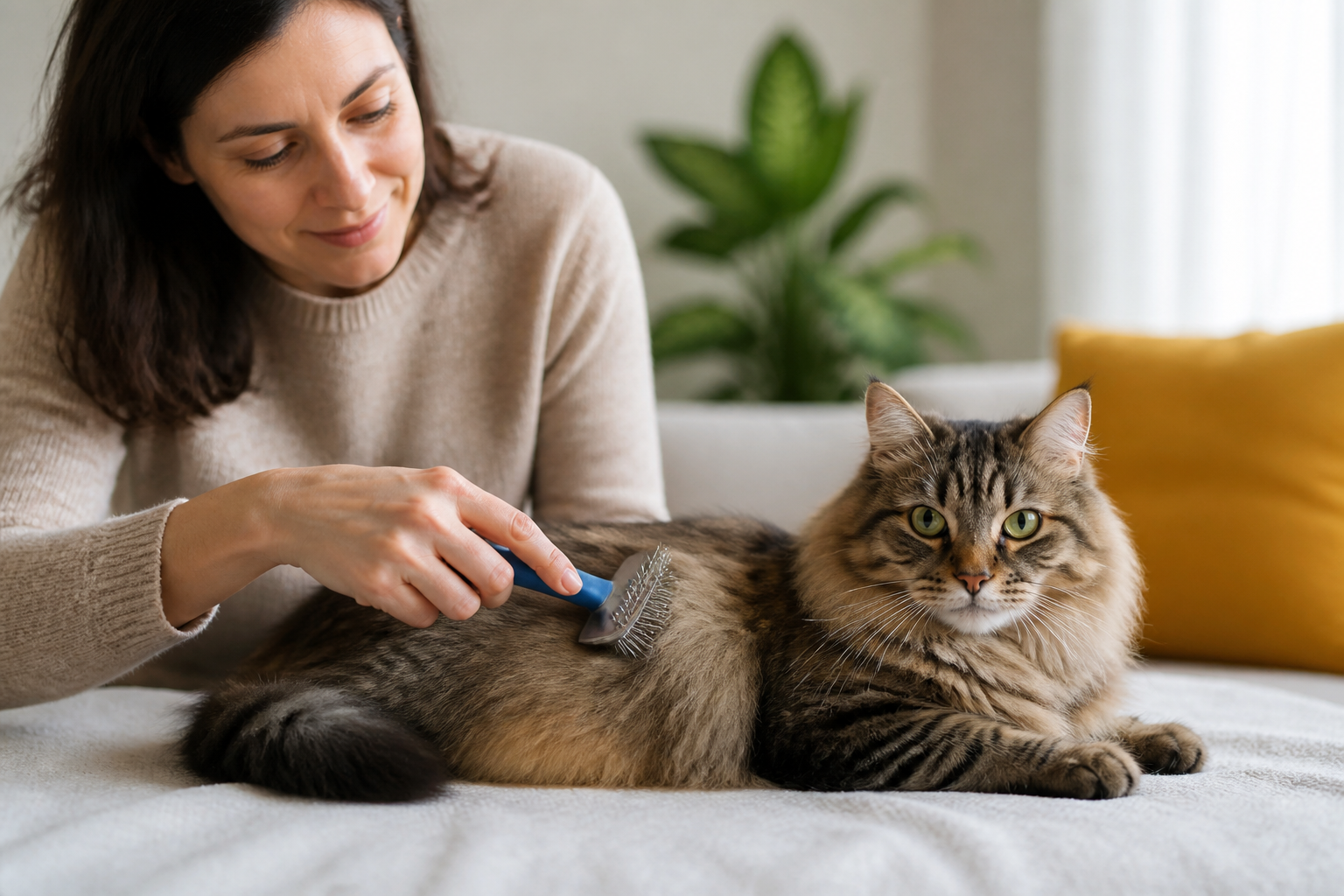
Brushing is the most effective way to manage cat dandruff shedding. It does more than just remove loose fur. Brushing stimulates the skin and distributes natural oils across the coat. This helps to moisturize the skin naturally.
For cats who struggle to groom themselves, you must step in. Use a soft slicker brush or a rubber grooming mitt. These tools are gentle on the skin. Aim for five minutes of brushing every day. Focus on the areas the cat cannot reach. This prevents the dead skin from clumping into visible flakes.
You can also review grooming tips for keeping a cat's whiskers and coat healthy before beginning a new brushing routine.
Improving the Home Environment
If dry air is the problem, a humidifier can help. This is especially useful in the room where your cat sleeps. Keeping the humidity between 40 and 50 percent can prevent the skin from drying out. You should also ensure your cat has multiple sources of fresh water. Hydrated skin is much less likely to flake.
Using Topical Treatments
Sometimes a cat needs a little extra help from the outside. While most cats do not need regular baths, a waterless shampoo or grooming wipe can be helpful. These products often contain soothing ingredients like aloe or oatmeal. They can lift away flakes without the stress of a full bath.
- Step 1: Choose a feline-specific grooming wipe.
- Step 2: Gently wipe the areas with the most visible flakes.
- Step 3: Follow up with a brush to distribute the moisture.
Accessing Specialized Care Through Our Pharmacy
When dandruff is caused by an underlying medical condition, standard grooming may not be enough. Some cats require prescription diets or medications to manage their skin health. This is common for cats with severe allergies or chronic conditions.
We offer a convenient pharmacy service through our partnership with Pet's Choice. This allows you to get FDA-approved medications and prescription pet foods delivered to your door. If your vet prescribes a specific diet like Farmina Vet Life for skin sensitivities, we can help you fulfill that order. This partnership ensures that you have access to the same medications you would find at a clinic but with the convenience of online ordering.
Our pharmacy carries a wide range of treatments for:
- Chronic skin infections
- Prescription allergy management
- Flea and tick preventives
- Prescription-strength supplements
Managing a health condition can be a long-term commitment. Our Autoship programme is a great way to ensure you never run out of the supplies your cat needs. You can save on your first order and earn MVP Gold membership. This makes it easier to keep up with the treatments your vet recommends.
Vet Tip: Never use human dandruff shampoos on your cat. Many contain ingredients like zinc pyrithione or selenium sulfide. These can be toxic to cats if they lick their fur after a bath.
Conclusion
Cat dandruff shedding is more than just a cosmetic nuisance. It is a window into your cat's well-being. Whether the cause is a dry living room or a need for better nutrition, most cases are manageable with the right approach. By combining regular brushing, high-quality food, and a watchful eye, you can help your cat feel comfortable again. Remember that our team is here to support you with expertly curated products and a full-service pharmacy for your more complex needs.
- Start a daily brushing routine to help move natural oils.
- Check your cat's food for high-quality proteins and healthy fats.
- Consult your vet if you see skin redness or behavior changes.
Bottom line: Healthy skin starts with the right balance of environment, nutrition, and consistent care.
If you are ready to upgrade your cat's grooming routine or try a skin-supporting supplement, visit our Cat Health and Wellness section. New customers can even get a $10 reward on their first order of $39 or more when signed in at checkout.
FAQ
Is it normal for my cat to have some dandruff?
A few occasional flakes are usually not a cause for alarm. This is especially true during seasonal changes when the air gets dry. However, if the dandruff is persistent or covers large areas of the body, it often suggests a need for better grooming or a change in diet.
Can I use coconut oil on my cat's dandruff?
While some people use small amounts of coconut oil topically, it can make the fur greasy and attract dirt. It is often more effective to provide healthy fats through their diet. Always check with your vet before applying oils to your cat's skin to ensure they do not have an underlying infection that could be worsened.
Why does my cat only have dandruff on the lower back?
This is the most common spot for dandruff because it is the hardest area for many cats to reach. If a cat is slightly overweight or has a bit of arthritis, they may stop grooming their lower back and tail base. Daily brushing in this specific area can usually clear up the flakes.
How do I know if the flakes are "walking dandruff" mites?
Walking dandruff is caused by the Cheyletiella mite. These flakes will actually seem to move if you watch them closely. This condition is also extremely itchy, causing the cat to scratch or bite at their skin constantly. If you suspect mites, a vet visit is necessary for a skin scraping and proper medication.






- Site & Contents BaxterBoo.com. BaxterBoo is located in the United States.
- Privacy & Security
- Terms of Use
- Accessibility Statement
