Save 15% on your 1st Autoship learn more

 Email us
 Live Chat
 FAQs
FAQs





Introduction
You are relaxing on the sofa when your cat jumps up for a head scratch. As you stroke their back, you notice dozens of tiny white flakes scattered across their dark fur. It looks like a dusting of snow settled right on their spine. This discovery often leaves owners wondering if their pet is simply dirty or if a health issue is brewing. Seeing a dandruff cat is common, but those flakes are usually a signal that something in their environment, diet, or body is out of balance.
At BaxterBoo, we know how much you care about your feline friend’s comfort and appearance. This article covers why these flakes appear, from simple dry air to more complex medical conditions like parasites or allergies. We will explain how to distinguish between normal shedding and problematic scaling. Our goal is to help you restore your cat's coat to its natural, glossy state.
Understanding Feline Dandruff
Dandruff is more than just a cosmetic nuisance. In the veterinary world, this condition is known as seborrhea. It occurs when the sebaceous glands in the skin produce too much or too little oil. This imbalance causes the top layer of skin to shed more rapidly than normal. These dead skin cells, or corneocytes, clump together and become visible to the naked eye.
It is important to distinguish between dandruff and dander. Dander consists of microscopic skin cells that all healthy cats shed as part of their normal biology. You cannot see dander without a microscope. It is the primary cause of human allergies to cats. Dandruff, however, is visible. It looks like white, tan, or gray flecks that cling to the fur or fall off onto your clothes and furniture.
Quick Answer: Cat dandruff is the visible buildup of dead skin cells on a cat's coat. It is often caused by low humidity, poor grooming, or underlying health issues like allergies and parasites.
Common Environmental Triggers
The most common reason for a dandruff cat is environmental. During the winter months, indoor heating systems strip moisture from the air. This dry air pulls moisture out of your cat's skin. Without enough ambient humidity, the skin becomes brittle and starts to flake.
Your cat's lifestyle also plays a role. If they spend a lot of time near a radiator or a sunny window, those specific areas of their body may show more flaking. Unlike humans, cats do not have sweat glands across their bodies to help regulate skin moisture. They rely entirely on their natural oils and the humidity around them.
Seasonal Transitions
Spring and autumn are prime times for coat changes. As cats shed their thick winter undercoat or prepare for cold weather, their skin undergoes a period of high turnover. If the dead hair is not brushed away, it can trap dead skin cells against the body. This creates a layer of irritation that leads to more flaking.
Home Humidity Solutions
If you suspect dry air is the culprit, a humidifier can make a significant difference. Placing one in the room where your cat sleeps helps keep their skin supple. You should also ensure they are drinking enough water. While cats have a low thirst drive, hydration is essential for skin elasticity.
Bottom line: Environmental dryness is a leading cause of mild flaking, especially during winter months when indoor humidity is low.
The Role of Grooming and Mobility
Cats are famously clean animals. They spend a large portion of their waking hours grooming. This process does more than just clean the fur. It spreads natural oils across the skin and removes loose cells. If a cat stops grooming effectively, dandruff is one of the first signs you will see.
Obesity and Hard to Reach Spots
If a cat is overweight, they often lose the flexibility needed to reach their lower back and the base of their tail. This is why you will frequently see a dandruff cat with flakes concentrated along the spine. The skin in these areas becomes stagnant, and oils build up until they become waxy and flaky.
Arthritis and Senior Cats
As cats age, they often develop osteoarthritis. This makes the twisting and contorting required for grooming painful. A senior cat might want to groom but finds it too difficult to reach their hindquarters. If you notice your older cat is looking "scruffy" or has flakes on their rump, it may be time to help them out with daily brushing.
Helping Your Cat Groom
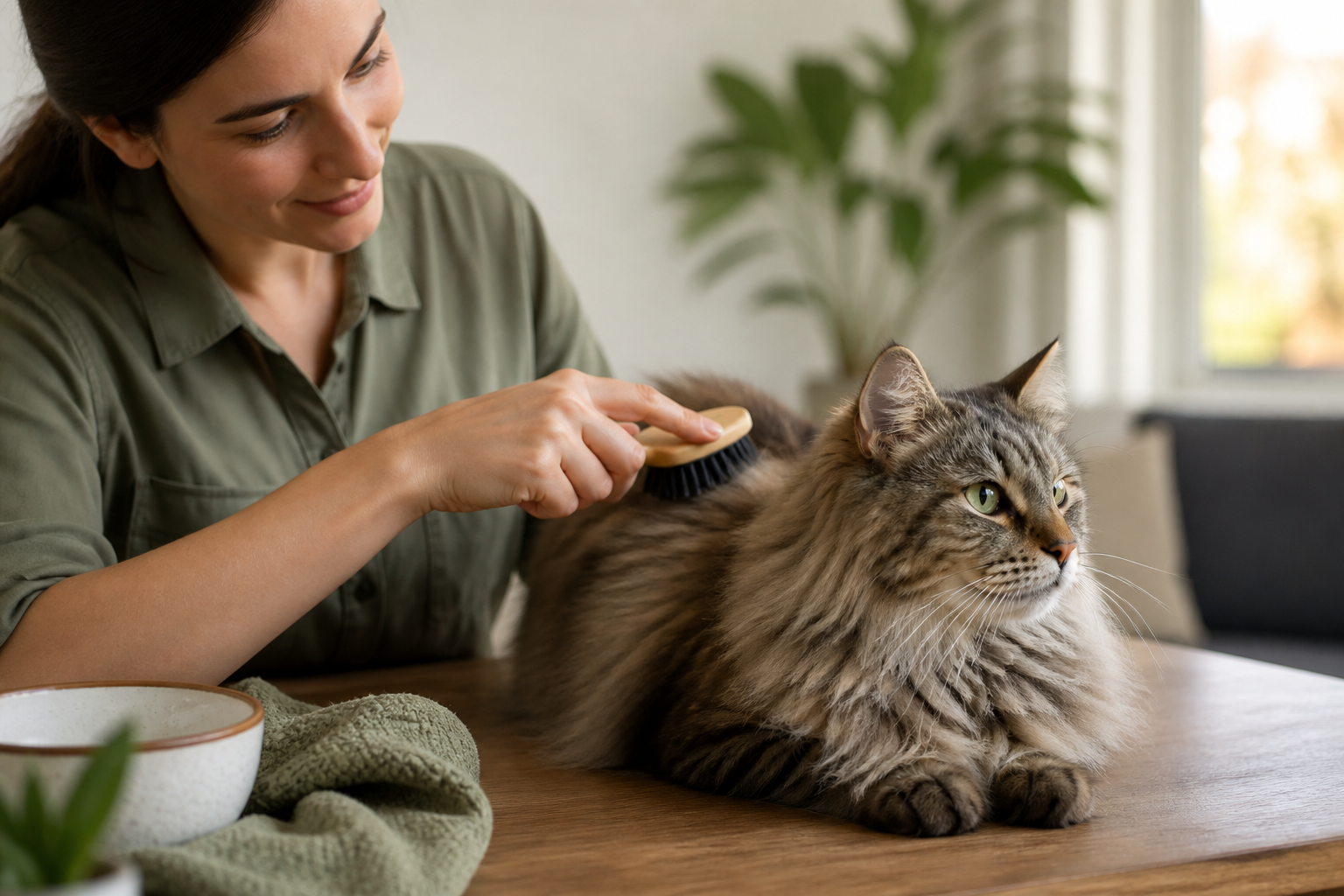
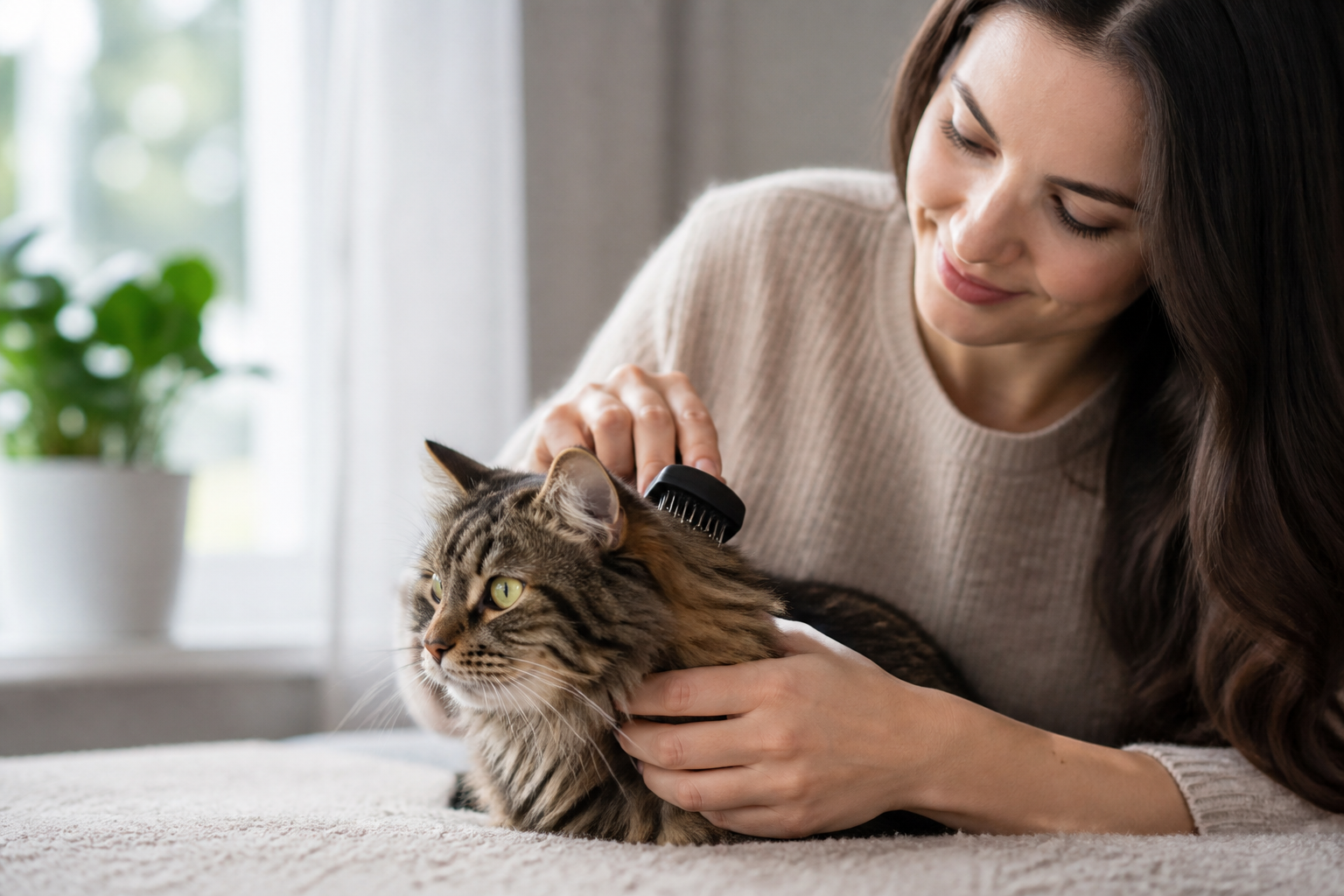
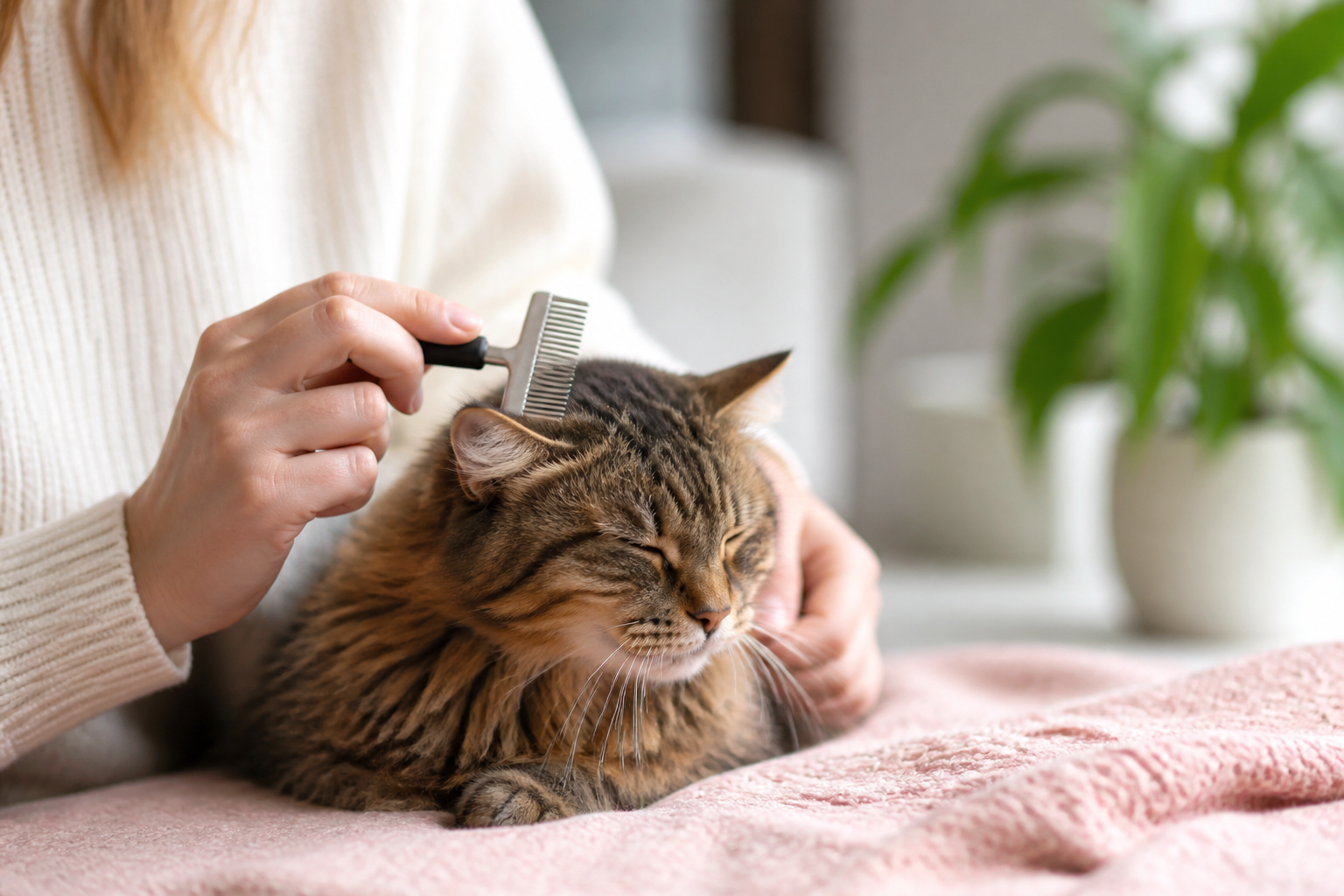
We recommend using a soft-bristled brush or a rubber grooming tool for cats with sensitive skin. Regular sessions help distribute oils and mimic the action of a cat's tongue. For cats that cannot reach their own backs, this human intervention is vital for skin health. You can find brushes, combs, and other tools in our cat grooming collection.
Step 1: Choose a quiet time. / Pick a moment when your cat is relaxed and sleepy to begin grooming.
Step 2: Start gently. / Use a soft brush to stroke the areas where flakes are most visible, usually the lower back.
Step 3: Check for mats. / Carefully untangle any knotted fur, as mats trap moisture and bacteria against the skin.
Step 4: Use grooming wipes. / For cats that cannot be bathed, use feline-specific wipes to remove excess oil and flakes.
A two-sided option such as the U-Groom Combo Brush for Dogs and Cats can help loosen tangles and distribute natural oils through the coat.
Nutritional Influences on Skin Health
A cat's skin is their largest organ. It requires a massive amount of energy and nutrients to maintain. If their diet is lacking in specific components, the skin is often the first place where the deficiency shows up.
Essential Fatty Acids
Omega-3 and Omega-6 fatty acids are the building blocks of healthy skin. They help create the lipid barrier that keeps moisture in and irritants out. Many commercial cat foods contain these, but the processing of kibble can sometimes degrade these delicate oils. If your cat has chronic dry skin, they may benefit from a high-quality fish oil supplement.
A product such as Zesty Paws Wild Alaskan Omega-3 Blend Pollock & Salmon Oil Supplement for Dogs & Cats is one option to discuss with your veterinarian.
Protein Quality
The skin and coat are made almost entirely of protein. If a cat is eating a low-quality diet with poor protein digestibility, they cannot produce healthy skin cells. This leads to a thin, dull coat and frequent flaking. Look for foods that list specific animal proteins as the first ingredient.
Hydration and Skin Elasticity
Cats are notoriously poor drinkers. In the wild, they get most of their moisture from their prey. A diet of strictly dry kibble can lead to mild, chronic dehydration. This shows up as "tented" skin that does not snap back quickly and, eventually, a dandruff cat. Adding wet food to their routine is a simple way to boost hydration from the inside out.
Key Takeaway: Proper nutrition and hydration are the foundation of skin health. Supplements like Omega-3 fatty acids can support the skin's natural moisture barrier.
Parasites: When It Is Not Just Dry Skin
Sometimes, what looks like dandruff is actually alive. Several parasites can cause scaling and flaking in cats. These require specific medical treatments and cannot be solved with brushing alone.
Walking Dandruff (Cheyletiella Mites)
One of the most distinctive conditions is caused by the Cheyletiella mite. These large, white mites move around under the scales of the skin. To the naked eye, it looks like the dandruff is literally walking across the cat’s fur. This condition is highly contagious to other pets and can even cause itchy spots on humans.
Fleas and Flea Dirt
Flea infestations often lead to skin irritation. Cats that are allergic to flea saliva develop intense itching and inflammation. This inflammation speeds up skin cell turnover, resulting in dandruff. You might also see "flea dirt," which looks like small black specks. If you see both white flakes and black specks, fleas are likely the primary problem.
For additional guidance on prevention options, read about the best flea and tick prevention products.
Mange and Other Mites
Ear mites or demodectic mange can also lead to localized flaking. If the dandruff is concentrated around the ears, face, or neck, a parasitic cause is much more likely. These issues require a diagnosis from a veterinarian to ensure the correct medication is used.
Vet Tip: If you notice your cat's dandruff seems to be moving, or if they are scratching uncontrollably, consult your veterinarian immediately. These are signs of parasites like mites or fleas that require prescription-strength treatment.
Medical Conditions and Systemic Disease
When dandruff persists despite good grooming and nutrition, it may be a symptom of an internal health struggle. The skin often reflects the overall health of the body’s internal organs.
Diabetes and Kidney Disease
Conditions like diabetes mellitus and chronic kidney disease affect how a cat's body manages water and nutrients. Dehydration is a common side effect of these illnesses. As the body prioritizes vital organs, the skin is left without enough moisture. This results in a brittle coat and heavy flaking.
Hyperthyroidism
In older cats, an overactive thyroid gland can speed up the body's metabolism. This includes the rate at which skin cells are produced and shed. A cat with hyperthyroidism often has a greasy, unkempt coat with significant dandruff. They may also lose weight despite having a huge appetite.
Fungal and Bacterial Infections
Ringworm is a common fungal infection in cats that causes circular patches of hair loss and heavy scaling. Bacterial infections, or pyoderma, can also cause the skin to crust and flake. These conditions are often itchy and painful for the cat.
Diagnosis and Veterinary Care
Because so many things can cause a dandruff cat, a professional diagnosis is essential. A veterinarian will start with a physical exam and a detailed history of your cat's symptoms. They will look for patterns in where the flakes are located.
Common Diagnostic Tests
- Skin Scraping: The vet gently scrapes the surface of the skin to look for mites under a microscope.
- Fungal Culture: This tests for ringworm or other fungal issues.
- Wood's Lamp Exam: A special ultraviolet light that can identify some types of ringworm.
- Blood Work: This helps identify internal issues like diabetes, hyperthyroidism, or kidney disease.
- Fecal Testing: Some internal parasites can affect skin health by stealing nutrients.
The BaxterBoo Pharmacy Connection
If your veterinarian diagnoses a specific condition, they may prescribe medicated shampoos or oral medications. Our cat pharmacy carries a wide range of prescription treatments through our partnership with Pet's Choice. This includes prescription flea and tick preventives, which are essential for managing "walking dandruff" and flea allergy dermatitis. We also provide prescription diets formulated for cats with sensitive skin or metabolic conditions like kidney disease.
Key Takeaway: Persistent dandruff is a clinical sign that warrants a veterinary visit. A clear diagnosis ensures you are treating the root cause rather than just the symptoms.
Solutions and Home Management
Once your vet has ruled out serious illness, you can take steps at home to manage your cat's skin. Consistency is the most important factor in clearing up flakes.
Specialized Shampoos and Wipes
Bathing a cat is notoriously difficult, but sometimes it is necessary. Medicated shampoos containing salicylic acid or sulfur can help break down excess scales. If a full bath is impossible, look for waterless foam shampoos or grooming wipes. These allow you to clean the skin without the stress of a tub.
For sensitive skin, earthbath® Oatmeal & Aloe Shampoo - Fragrance Free is one available grooming option.
Daily Brushing Routine
For most cats, daily brushing is the most effective way to manage dandruff. It removes the dead cells before they can clump and fall off. It also stimulates blood flow to the skin, which encourages healthy cell growth.
Environmental Adjustments
Keep your home at a comfortable humidity level. Avoid using harsh cleaning chemicals on the surfaces where your cat sleeps. These can act as contact irritants that dry out the skin further. Switch to unscented, pet-safe laundry detergents for their bedding.
Bottom line: A combination of regular grooming, environmental moisture, and appropriate skin products can successfully manage most cases of feline dandruff.
The Impact of Stress on Skin
It may seem strange, but stress can actually lead to a dandruff cat. When a cat is stressed, their body releases cortisol. This hormone can affect the immune system and the health of the skin barrier.
Behavioral Changes
A stressed cat may over-groom one area until it is bald, or they may stop grooming entirely. Both behaviors lead to skin issues. Changes in the household, such as a new pet, a move, or even a change in your work schedule, can trigger these skin reactions.
Creating a Calm Environment
If you suspect stress is the cause, focus on creating a stable routine. Use pheromone diffusers to help your cat feel secure. Ensure they have plenty of vertical space and hiding spots. When a cat feels safe, their grooming habits usually return to normal, and their skin health improves.
Prevention for Long-Term Health
Preventing dandruff is much easier than treating a severe breakout. Incorporate skin health into your cat's regular wellness routine.
- Year-round protection: Use consistent flea and tick prevention to avoid parasite-related skin irritation.
- Weight management: Keep your cat at a lean weight so they can reach all their grooming spots.
- Nutritious diet: Feed a high-quality food rich in animal proteins and essential fats.
- Routine vet visits: Senior cats, in particular, need regular blood work to catch metabolic issues early.
At BaxterBoo, we believe that every pet deserves to feel comfortable in their own skin. By staying observant and proactive, you can keep those pesky white flakes at bay.
Conclusion
Finding flakes on your cat can be worrying, but most cases of dandruff are manageable with the right approach. Whether the cause is dry winter air, a need for a better diet, or an underlying medical condition, there is always a solution. Remember that your cat's skin is a window into their overall wellness. Regular grooming, high-quality nutrition, and a stress-free environment go a long way in maintaining a healthy coat.
If the flakes persist or your cat seems uncomfortable, do not hesitate to reach out to your veterinarian. They can help you determine if your cat needs a prescription diet or a specific medication. We invite you to explore our cat skin and coat care options for grooming tools, supplements, and health products.
Key Takeaway: Managing a dandruff cat requires a holistic look at their environment, diet, and physical mobility. Consistent care leads to a flake-free, happy feline.
FAQ
Is cat dandruff the same as human dandruff?
While they look similar, the underlying causes can differ. Human dandruff is often linked to a specific yeast-like fungus, while cat dandruff is frequently caused by environmental factors, grooming issues, or parasites. You should never use human dandruff shampoos on a cat, as the ingredients can be toxic to them.
Can I use coconut oil to treat my cat's dandruff?
Some owners use a tiny amount of coconut oil topically or in food, but it is not a cure-all. While it provides fats, it can also make the coat greasy and attract more dirt if applied too heavily. It is always better to use a supplement formulated specifically for feline skin or to consult your vet about the best oil for your cat.
Why does my cat only have dandruff on their lower back?
This is the most common spot for flakes because it is the hardest area for a cat to reach. If a cat is senior, arthritic, or overweight, they often stop grooming this specific "lumbosacral" region. Brushing this area daily for them will usually solve the problem.
How can I tell if my cat's dandruff is actually "walking dandruff" mites?
Walking dandruff, or Cheyletiella, often looks like larger flakes that seem to move independently. If you see this, or if your cat is extremely itchy with crusty skin, it is likely mites. A veterinarian can confirm this with a simple skin scrape and provide the necessary parasitic treatment.