
 Save 15% on your 1st Autoship learn more

 Email us
 Live Chat
 FAQs





Introduction
You are relaxing on the couch when your cat jumps up for some attention. As you stroke those distinctive black and white markings, you notice a dusting of white flakes along their back. On a tuxedo cat, dandruff is especially noticeable because of the sharp contrast against the dark patches of their coat. It can be frustrating to see such a dapper cat looking a bit unkempt. At BaxterBoo, we know that a flaky coat is often the first sign that something in your cat's environment or health needs adjustment. This guide will help you identify the causes of feline skin flakes and provide practical steps to restore that signature shine. Understanding the difference between normal shedding and medical skin issues is essential for every cat owner.
Quick Answer: Tuxedo cat dandruff is usually caused by dry air, poor hydration, or an inability to groom properly due to weight or age. While often a cosmetic issue, persistent flaking can indicate parasites or underlying health conditions that require a veterinary consultation.
The Difference Between Dander and Dandruff
It is common to hear the terms dander and dandruff used interchangeably, but they are quite different. Dander consists of microscopic skin cells that all healthy cats shed naturally. You generally cannot see dander with the naked eye. It is the protein found in this dander and in feline saliva that typically triggers allergies in humans.
Dandruff refers to the visible flakes that clump together and stay caught in the fur. When you see white or gray specks on your tuxedo cat's black fur, you are looking at dandruff. This happens when the skin produces too much oil or becomes too dry, causing skin cells to die and flake off in larger visible chunks. While dander is a sign of a normal biological process, dandruff is a sign of an imbalance.
Key Takeaway: Dander is invisible and normal for all cats, while dandruff consists of visible flakes that suggest a need for skin or dietary support.
Cat Skin & Coat Care












Why Tuxedo Cats Make Dandruff So Obvious
The tuxedo pattern is not a specific breed. It is a coat color found in many breeds, including the American Shorthair and the Maine Coon. These cats are famous for their formal appearance, but that high-contrast black fur acts like a dark shirt. Just as a human wearing a black suit will show every speck of dust, a tuxedo cat will show every flake of dry skin.
This visibility can actually be a benefit. Owners of white or cream colored cats might miss early signs of skin irritation or parasites for weeks. As a tuxedo cat owner, you have a built-in early warning system. When those white flakes appear, you can take action immediately before the skin becomes itchy or inflamed.
Common Environmental Causes
The environment inside your home plays a significant role in skin health. This is particularly true during the winter months in the US.
Low Humidity and Indoor Heating
When the temperature drops and the heater turns on, the air inside your home loses moisture. This dry air pulls moisture out of your cat's skin. Over time, the skin loses elasticity and begins to flake. You might notice the dandruff is worse in the areas where your cat likes to nap, especially if they sleep near a heat vent or a sunny window.
Infrequent Grooming Support
Even though cats are famous for their self-cleaning habits, they still need help. If a tuxedo cat has a thick undercoat, dead skin cells can get trapped near the surface of the skin. Without regular brushing to move those cells out and distribute natural oils, the buildup eventually breaks loose as dandruff. For more grooming ideas, explore this guide to caring for your cat’s whiskers and coat.
Seasonal Allergies
Just like humans, cats can react to dust, mold, or pollen. These environmental allergens can cause the skin to become inflamed and dry. If you notice your cat flaking more during specific seasons, it might be an allergic reaction rather than just dry air.
Nutritional Factors and Hydration
What goes into your cat's body is just as important as what you put on their coat. Skin is the largest organ of the body, and it requires specific nutrients to remain supple and healthy.
The Role of Fatty Acids
Omega-3 and Omega-6 fatty acids are essential for maintaining the skin barrier. Omega-6 helps maintain the integrity of the skin, while Omega-3 helps reduce inflammation. If your cat's food is low in these healthy fats, their skin may become brittle. We carry several premium brands like Farmina and Zesty Paws that focus on high-quality fat sources to support skin health.
Dehydration and Skin Elasticity
Cats have a low thirst drive. In the wild, they get most of their moisture from their prey. If your tuxedo cat eats only dry kibble, they may live in a state of mild, chronic dehydration. This shows up very quickly in the skin. Dehydrated skin is more likely to flake and itch. You can explore our cat food selection when comparing higher-moisture meal options.
Vet Tip: If your cat has dandruff, try adding wet food to their diet or using a pet water fountain to encourage more drinking. Proper hydration is often the simplest fix for dry, flaky skin.
When Grooming Becomes Difficult
If you notice dandruff primarily on your cat's lower back or near the base of the tail, it might be a grooming issue. Cats are incredibly flexible, but certain conditions can limit their reach.
Feline Obesity
If a cat carries too much weight, they literally cannot reach certain parts of their body to groom. The lower back is usually the first area to suffer. When a cat cannot groom, the natural oils build up, skin cells die, and dandruff forms.
Arthritis and Senior Care
Senior cats often develop arthritis in their hips and spine. While they may still want to be clean, the act of twisting to reach their back becomes painful. If your older tuxedo cat has sudden dandruff, it is a good idea to talk to your vet about joint support. We offer mobility aids and supplements like Cosequin that can help your senior cat feel comfortable enough to start grooming again.
Effective Grooming Routine
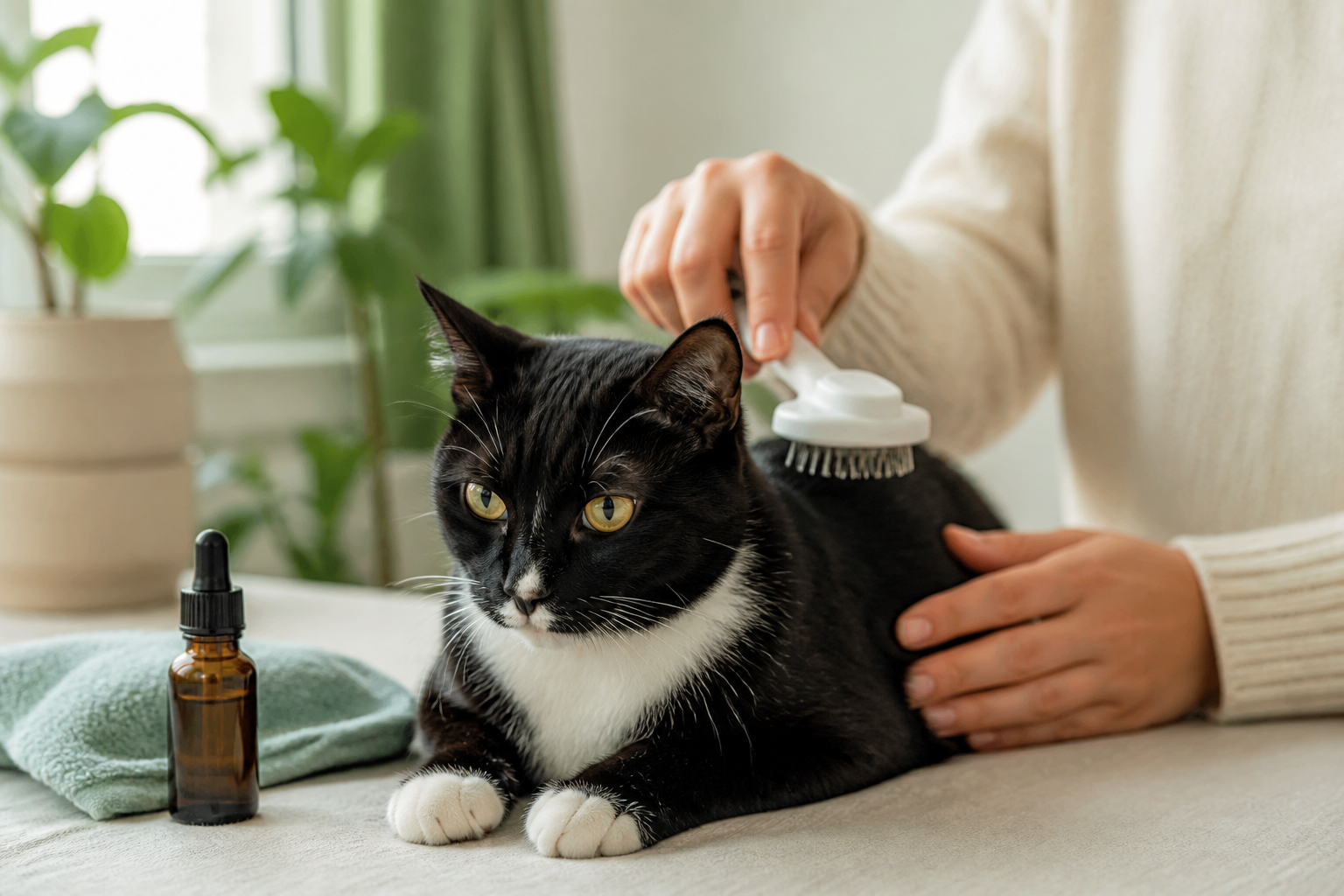
- Step 1: Choose the right tool. For a shorthaired tuxedo cat, a rubber curry brush like those from Kong is excellent for pulling up dead skin.
- Step 2: Brush with the grain of the fur first to remove loose hair.
- Step 3: Use a fine-toothed metal comb to reach the undercoat where flakes are trapped.
- Step 4: Finish with a soft bristle brush to shine the coat and distribute oils.
For additional options, browse our cat grooming supplies.
Medical Concerns: Parasites and Infections
Not all dandruff is just dry skin. Sometimes, the flakes are a sign of something more serious that requires medical intervention.
Walking Dandruff (Cheyletiella Mites)
There is a specific parasite called the Cheyletiella mite that looks exactly like dandruff to the naked eye. If you look closely at the flakes on your cat and they seem to be moving, your cat may have these mites. This condition is highly contagious to other pets and can even cause itchy spots on humans.
Fleas and Fungal Infections
Flea bites can cause a condition called flea allergy dermatitis. This leads to intense itching, redness, and flaking. Additionally, fungal infections like ringworm can cause circular patches of hair loss and heavy dandruff. Both of these require specific medications. You can also read about flea and tick prevention options.
The Role of the Pharmacy
Our pharmacy provides access to FDA-approved treatments for these conditions through our partnership with Pet's Choice. If your veterinarian determines that your tuxedo cat has mites, fleas, or a skin infection, you can have the prescription filled through us. This includes flea and tick preventives like Frontline or NexGard, which are essential for keeping skin clear of parasitic irritation. Visit our cat pharmacy to review available options with your veterinarian’s prescription.
Key Takeaway: If your cat's dandruff is accompanied by intense itching, red skin, or moving flakes, it is time for a veterinary visit to rule out parasites.
Supporting Your Cat Through Diet
Choosing the right food can make a massive difference in how your cat's coat looks. Look for recipes that prioritize whole proteins and include specified fat sources.
Wet Food vs. Dry Food
Increasing the amount of wet food in your cat's diet is one of the most effective ways to combat dandruff. Brands like Tiki Cat or Fussie Cat offer high-moisture options that mimic a cat's natural diet. If your cat is strictly a kibble eater, consider adding a hydration topper or a splash of bone broth specifically formulated for pets.
Prescription Diets
For cats with severe skin sensitivities, a veterinarian might prescribe a specialized diet. These foods often use hydrolyzed proteins that are less likely to trigger an immune response. Our pharmacy carries prescription diets from brands like Royal Canin and Farmina Vet Life, which are designed specifically for cats with chronic skin or digestive issues.
Bottom line: Quality nutrition and high moisture intake are the foundations of a flake-free coat.
Practical Steps for Home Care
Beyond diet and medicine, there are several things you can do around the house to help your tuxedo cat stay comfortable.
Use a Humidifier
During the winter, running a humidifier in the room where your cat sleeps can prevent their skin from drying out. Aim to keep the humidity between 30 and 50 percent for optimal skin health for both you and your pet.
Water Fountains
Because cats prefer running water, a fountain can significantly increase their daily water intake. This improved hydration helps the skin stay elastic and healthy from the inside out. For more ideas, read these tips for encouraging indoor and outdoor cats to drink more water.
Regular Brushing
Make brushing a part of your daily routine. For a tuxedo cat, a quick five-minute session every evening can prevent the buildup of dead skin. It also serves as a great bonding time and allows you to check for any new lumps, bumps, or parasites.
Essential Grooming Checklist
- Check for "walking" flakes that might indicate mites.
- Monitor for redness or hair loss.
- Add a daily Omega-3 supplement.
- Increase moisture through wet food or fountains.
- Brush daily to distribute natural oils.
Skin Supplements and Topical Care
If a better diet and grooming are not quite enough, supplements can provide an extra boost.
Omega Fatty Acid Supplements
Products like Honest Paws or Zesty Paws offer salmon oil or krill oil that can be pumped directly onto your cat's food. These oils are rich in EPA and DHA, which help soothe itchy skin and improve the shine of that black tuxedo fur.
Waterless Shampoos and Wipes
Most cats are not fans of traditional baths. Fortunately, you can use grooming wipes or waterless foam shampoos to help lift dandruff off the coat without the stress of a tub. Look for formulas that include aloe or oatmeal to soothe the skin while removing flakes. Browse our cat grooming collection for brushes, shampoos, wipes, and other grooming tools.
Vet Tip: Never use human dandruff shampoos on a cat. Many contain ingredients like zinc or salicylic acid that can be toxic if your cat licks their fur after the bath. Only use products specifically labeled for feline use.
Managing Stress and Skin Health
It might seem strange, but stress can actually cause dandruff in cats. When a cat is stressed, their body can trigger a "telogen effluvium," which is a fancy way of saying they shed their hair and skin cells more rapidly.
If your tuxedo cat is prone to anxiety, you might notice a "puff" of dandruff appear almost instantly during a vet visit or when a guest arrives. This is due to the sudden contraction of tiny muscles in the skin called arrector pili. While this temporary flaking is not a medical emergency, chronic stress can lead to over-grooming or under-grooming, both of which affect the coat. Calming aids like those from Jackson Galaxy can help manage the underlying anxiety.
Summary of Tuxedo Cat Coat Care
Maintaining the sharp look of a tuxedo cat requires a proactive approach to skin health. By focusing on hydration, high-quality nutrition, and regular grooming, you can keep those white flakes at bay. Remember that while most dandruff is caused by environmental factors, you should always keep an eye out for signs of more serious issues.
- Dandruff is highly visible on dark fur but serves as a helpful early warning.
- Dry air and dehydration are the most common culprits.
- Regular brushing is necessary to move natural skin oils.
- Obesity and arthritis can prevent a cat from grooming their own back.
- Persistent flakes or itching require a vet's diagnosis to rule out parasites.
If you are ready to start a new skin care routine for your cat, we recommend looking into our Autoship programme. It is a great way to ensure you never run out of the wet food or supplements that keep your tuxedo cat's coat looking its best. You can also browse our pharmacy for cats for flea preventives and prescription skin diets to keep your pet healthy year-round.
FAQ
Why does my tuxedo cat have white flakes on their back?
This is feline dandruff, which is often caused by dry skin or an inability to groom that specific area. Because of the dark color of a tuxedo cat's fur, these flakes are much more visible than they would be on a lighter-colored cat. Common causes include low humidity, a diet low in fatty acids, or even the cat being slightly overweight.
Is cat dandruff the same as dander?
No, dander is microscopic skin cells that all cats shed as part of a healthy biological process. Dandruff consists of larger, visible flakes that indicate the skin is too dry or oily. While you cannot see dander, you can easily see dandruff against a dark coat.
Can I use human dandruff shampoo on my cat?
You should never use human dandruff shampoos on your cat because many contain chemicals like coal tar or salicylic acid that are toxic to felines. Always use a shampoo specifically formulated for cats, or better yet, use waterless grooming wipes to remove flakes safely. If the dandruff is severe, consult your veterinarian for a safe medicated option.
How can I stop my cat's skin from flaking?
Start by increasing their hydration with wet food and a water fountain. You should also add an Omega-3 supplement to their diet and brush them daily to remove dead skin and distribute natural oils. If the flaking continues or the skin looks red and irritated, schedule a vet visit to check for parasites or allergies.






- Site & Contents BaxterBoo.com. BaxterBoo is located in the United States.
- Privacy & Security
- Terms of Use
- Accessibility Statement
