Save 15% on your 1st Autoship learn more

 Email us
 Live Chat
 FAQs
FAQs





Introduction
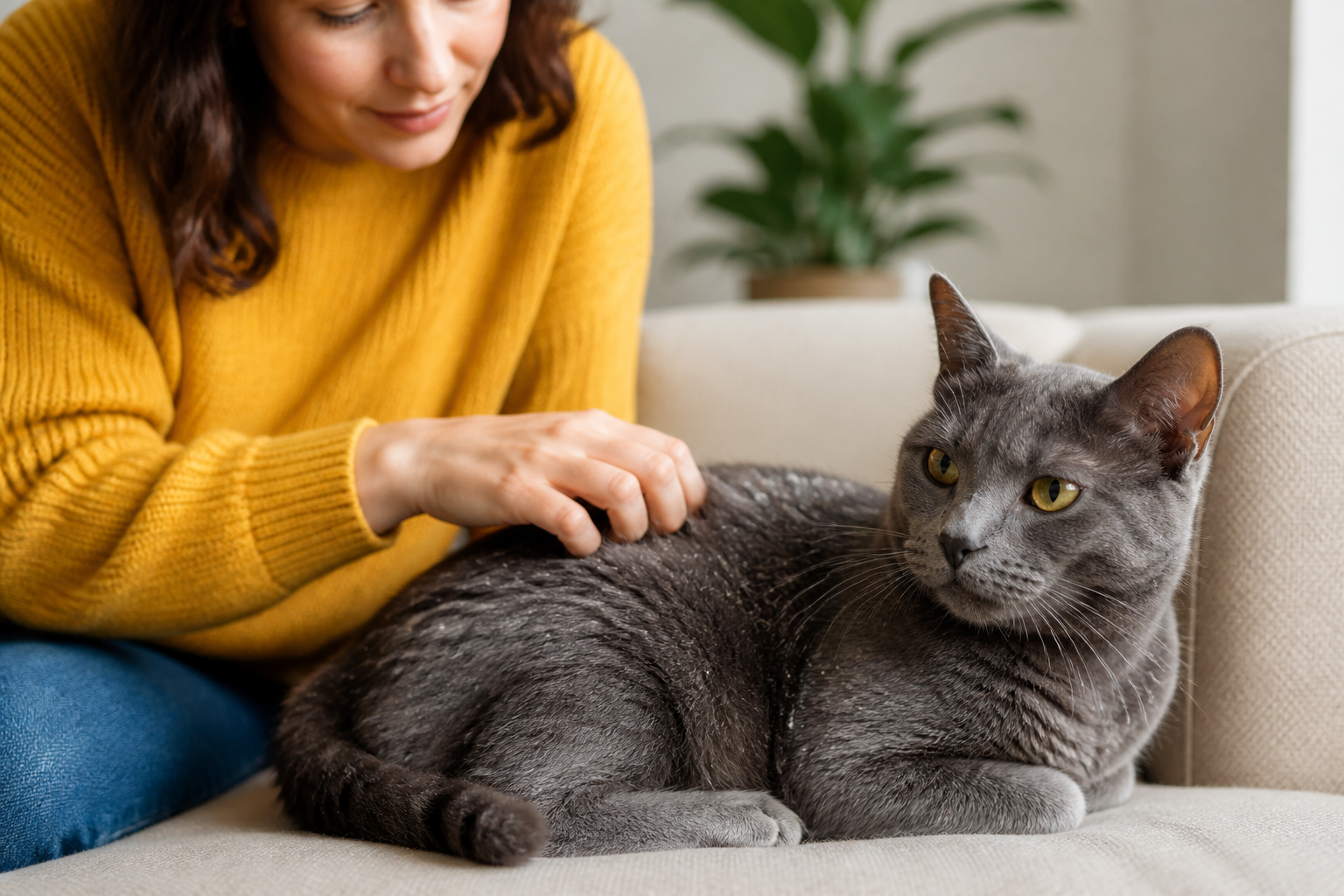
You reach down to give your cat a scratch along their lower back, and instead of just soft fur, you notice a dusting of white flakes. It looks like a light sprinkle of salt or snow scattered across their coat. At BaxterBoo, we know how unsettling it is to realize your feline friend is dealing with skin issues. While a few flakes might seem minor, they are often a signal that your cat needs a little extra care or a veterinary checkup. This article covers the most common reasons for feline flakes and how you can help your cat feel comfortable again. Understanding why your cat has dry skin dandruff is the first step toward returning their coat to its natural, glossy state.
Quick Answer: Cat dandruff is a visible buildup of dead skin cells that flake off and settle in the fur. It is usually caused by environmental factors, a lack of grooming, or underlying health issues like allergies and parasites.
Understanding the Difference Between Dandruff and Dander
It is easy to get these two terms confused, but they mean very different things for your cat. Dander is a completely normal part of being a cat. It consists of microscopic skin cells that shed naturally as the skin renews itself. You cannot see dander with the naked eye, though it is the primary cause of allergies for humans.
Dandruff is different because it is visible. These are larger flakes of dead skin that have clumped together. When you see these flakes, it means the skin is shedding faster than normal or the cat is not removing the cells through grooming. Healthy cats are usually excellent at keeping their fur clean. If you see white flecks, the natural balance of their skin or their grooming routine has been interrupted.
Common Signs to Look For
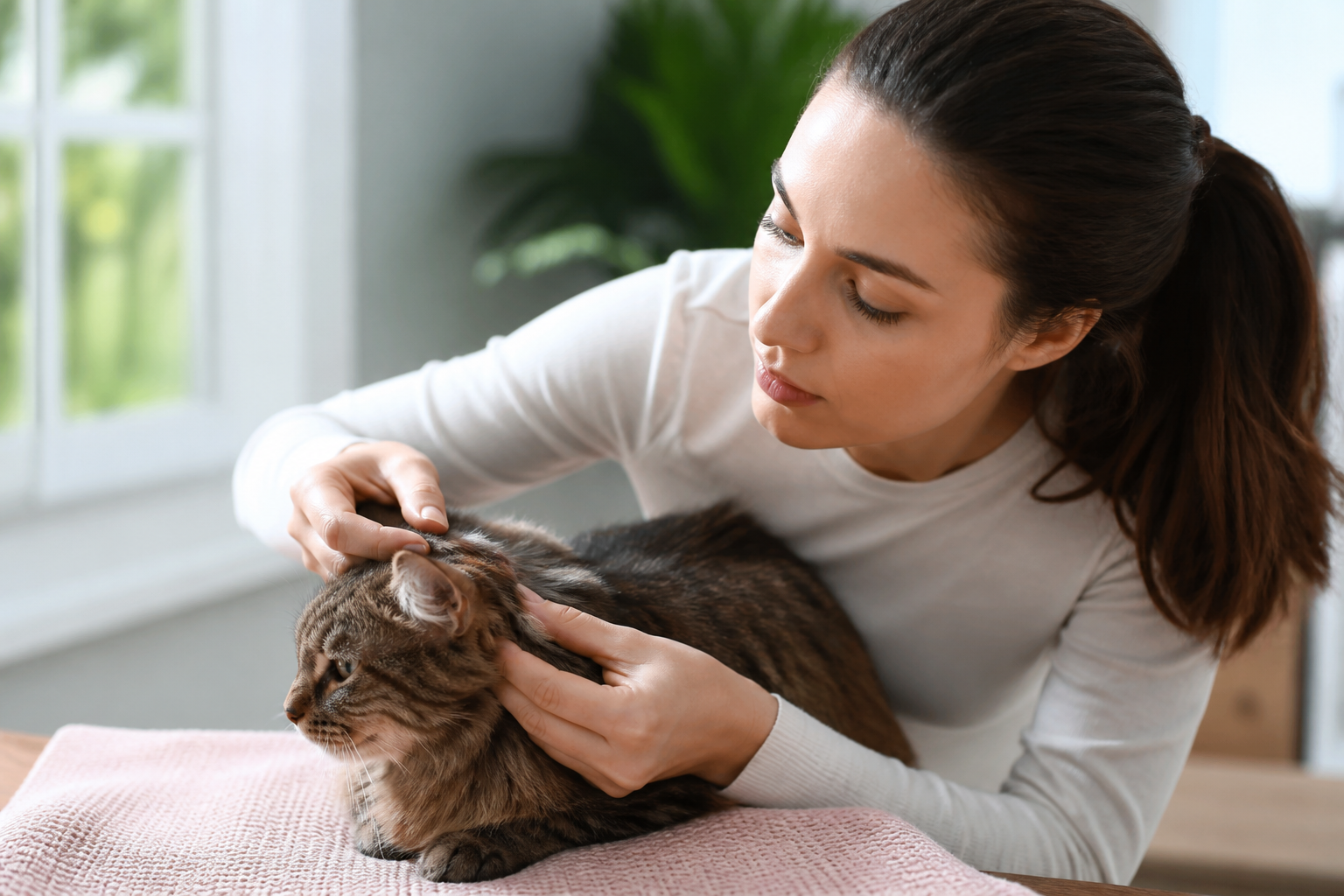
Dandruff is often accompanied by other changes in the skin and coat. You might notice your cat is itchier than usual. They might spend more time scratching their ears or biting at the base of their tail. In some cases, the fur might look greasy or feel coarse.
If you see redness, small bumps, or patches of missing hair, the situation is more than just dry skin. These are signs of irritation that need professional attention. Always check the skin beneath the flakes to see if it looks inflamed or broken.
Key Takeaway: While dander is invisible and normal, dandruff consists of visible flakes that indicate an underlying issue with skin health or grooming.
Why Your Cat Has Dry Skin Dandruff
There is rarely just one reason for flaky skin. Several factors often work together to cause the problem. We see many cats whose skin changes with the seasons or as they get older.
Environmental Factors and Low Humidity
The air inside your home plays a huge role in skin health. This is especially true during the winter months. When you turn on the heater, the humidity levels in your home drop. This dry air pulls moisture out of your cat's skin.
The skin becomes brittle and less elastic. This leads to the characteristic white flakes you see on their back. If your cat loves to sleep near a heater vent or a fireplace, they are even more likely to develop localized dry spots. Using a humidifier in the rooms where your cat spends the most time can make a significant difference.
The Role of Nutrition
Skin is the largest organ in a cat's body. It requires a lot of nutrients to stay healthy. If a cat's diet is missing essential fatty acids, the skin is often the first place you will see a problem. Omega-3 and Omega-6 fatty acids are vital for maintaining the moisture barrier of the skin.
Many budget-friendly cat foods may not have high enough levels of these healthy fats. Sometimes, a cat might need a supplement to boost their intake. We carry several high-quality skin and coat supplements for cats that provide these essential oils.
Grooming Challenges
Cats are famous for their grooming habits. They spend a large portion of their waking hours cleaning themselves. This process removes dead skin cells before they can build up into dandruff. If a cat stops grooming effectively, dandruff appears almost immediately.
This is common in senior cats or cats with mobility issues. If a cat has arthritis, reaching their lower back or the base of their tail becomes painful. Similarly, overweight cats often struggle to reach certain areas of their body. In these cases, the dandruff is a symptom of a physical limitation rather than a primary skin disease.
Vet Tip: If your cat suddenly stops grooming or seems stiff when trying to reach their back, consult your veterinarian. These can be early signs of arthritis or dental pain that require medical management.
Health Conditions That Cause Flaking
Sometimes the cause of dandruff is more than just dry air or a missed grooming session. Several medical conditions can cause the skin to flake excessively.
Parasites and Walking Dandruff
External parasites are a common culprit. Fleas are the most frequent offenders. Even if you do not see fleas, your cat might be allergic to flea saliva. A single bite can cause a massive skin reaction that leads to flaking and redness.
There is also a specific mite called Cheyletiella. This condition is often nicknamed "walking dandruff." The mites are white and can be seen moving under the skin flakes. This is highly contagious between pets and can even affect humans.
Allergies and Infections
Cats can have allergies just like people. They can be allergic to ingredients in their food, pollen in the air, or even dust in the house. Allergies cause inflammation in the skin. This inflammation speeds up the rate at which skin cells die and shed.
Bacterial or fungal infections like ringworm can also cause scaly, flaky skin. Ringworm often appears as circular patches of hair loss with crusty edges. This is a serious condition that requires specific medication from a vet.
Systemic Diseases
Conditions like diabetes, hyperthyroidism, or kidney disease can affect the quality of a cat's coat. These diseases change the way the body processes nutrients and hydrates the skin. If your cat has dandruff along with increased thirst, weight loss, or changes in appetite, it is time for a blood panel at the vet.
Bottom line: Dandruff can be a surface-level issue, but it can also be a red flag for internal health problems or parasites.
The Importance of the Pharmacy at BaxterBoo
When dandruff is caused by an underlying medical condition, simple brushing is not enough. You need targeted treatments to solve the root of the problem. Our pet pharmacy for cats offers a direct way to get the FDA-approved medications your cat needs. We partner with Pet's Choice to provide prescription diets and medications that are essential for long-term health management.
If your vet determines that fleas or mites are the cause, you will need a high-quality preventive. We carry brands like Frontline and NexGard through our pharmacy. For cats with severe allergies or chronic skin conditions, your vet might prescribe a specific therapeutic diet. These foods are formulated to support the skin barrier and reduce inflammation. Having access to a pharmacy within our store makes it easier to keep your cat's treatment on schedule.
Practical Steps to Manage Dandruff at Home
Once you have ruled out serious medical issues with your vet, you can take several practical steps to help your cat.
Establish a Regular Grooming Routine
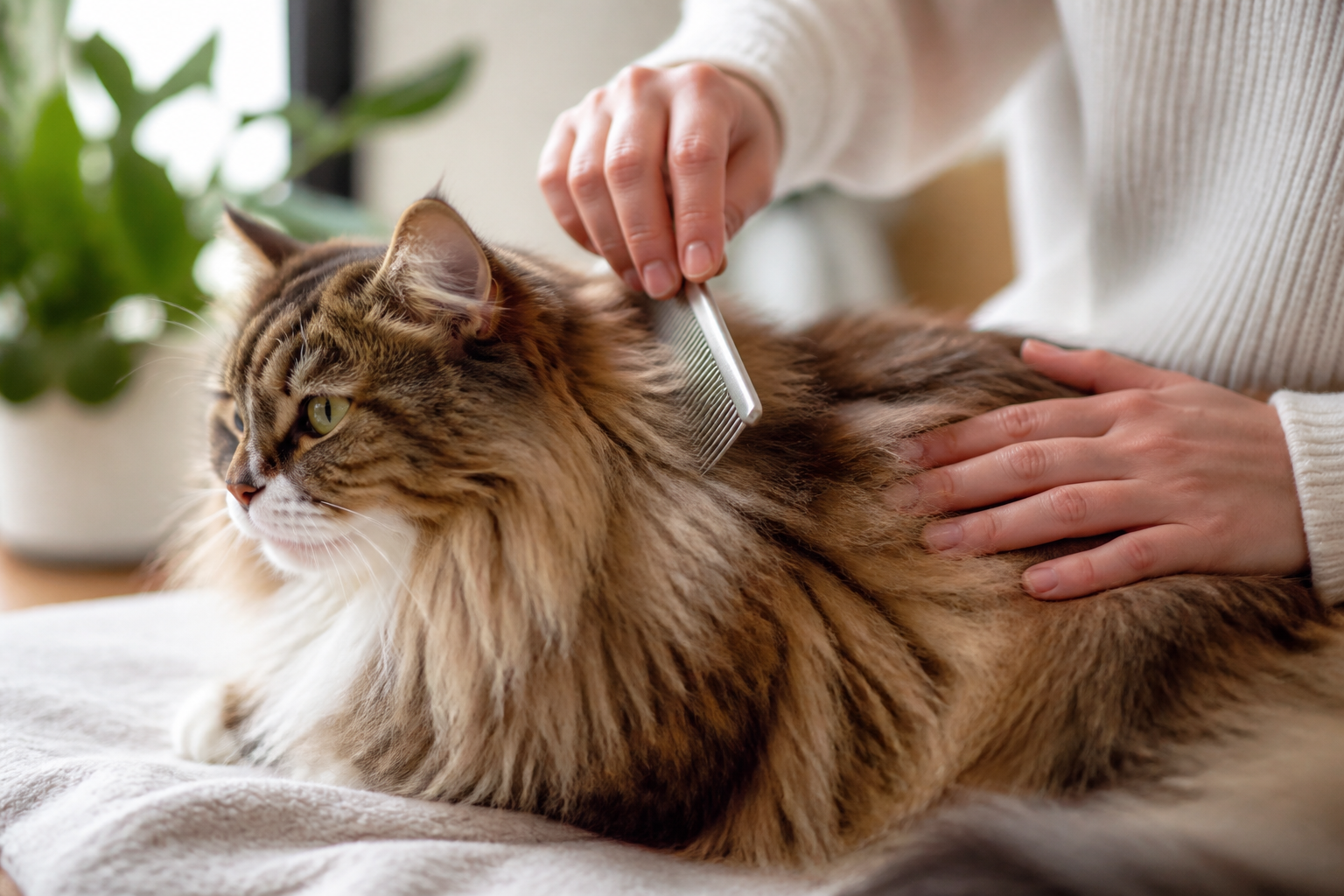
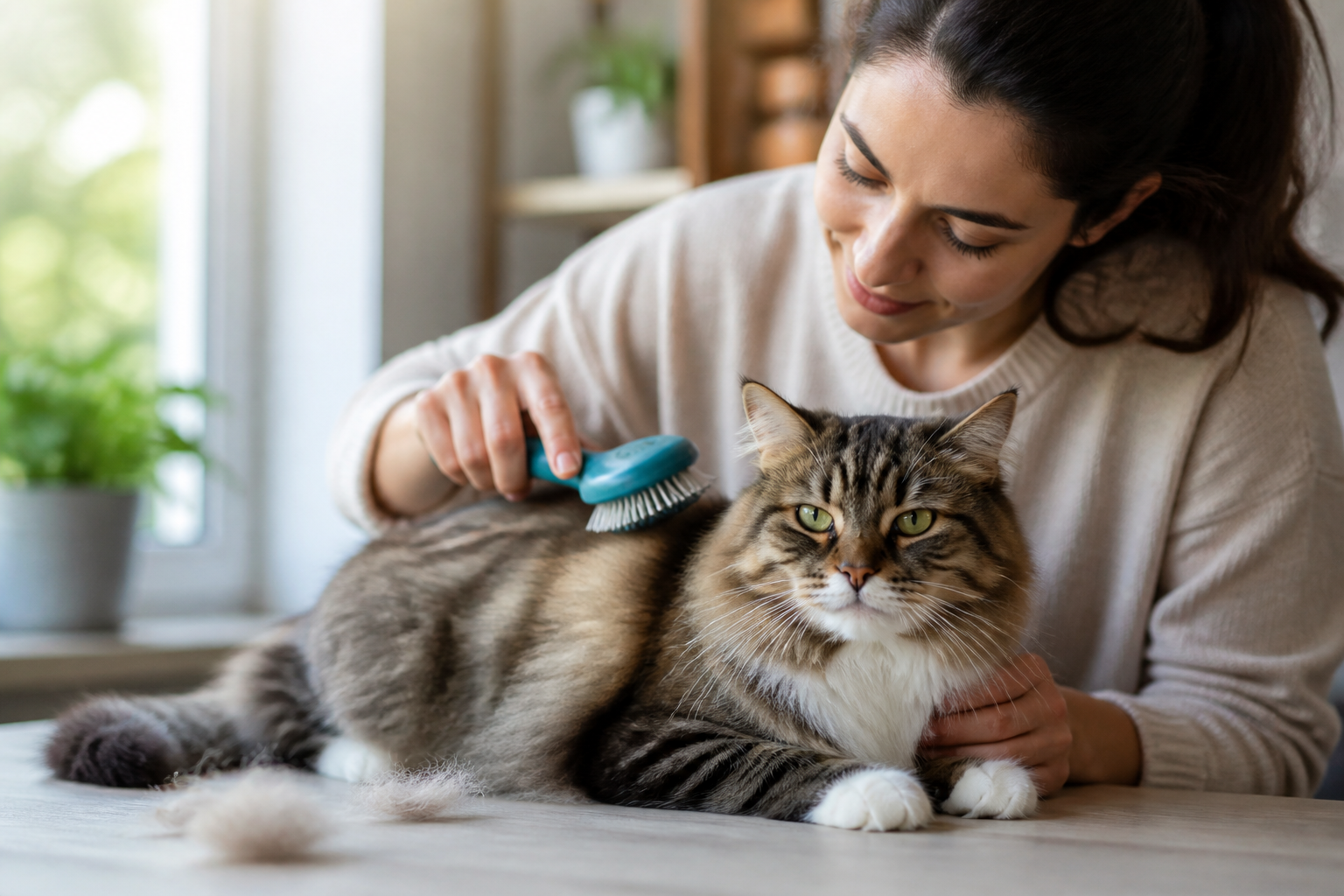
If your cat cannot groom themselves, you must step in. Brushing does more than just remove flakes. It stimulates the skin and helps distribute natural oils across the fur. This keeps the coat hydrated and shiny.
Step 1: Choose the right tool. A soft bristle brush is great for short-haired cats. For long-haired cats or those with thick undercoats, a stainless steel comb or a slicker brush works best.
Step 2: Start with short sessions. Many cats are sensitive about being brushed, especially if their skin is already dry and tender. Keep sessions to five minutes and use treats to create a positive association.
Step 3: Focus on the problem areas. Pay extra attention to the lower back and the base of the tail. These are the most common spots for dandruff to accumulate.
Step 4: Be gentle. Do not tug on mats or brush too hard. You want to remove the dead cells without irritating the skin further.
For additional tools, explore our cat grooming supplies.
Improve the Diet and Add Supplements
Look at the ingredient label on your cat's food. High-quality animal proteins should be at the top of the list. If you suspect the diet is lacking, talk to your vet about adding a fish oil supplement. These are rich in Omega-3 fatty acids.
Most cats enjoy the taste of fish oil, so it is easy to mix into their wet food. It can take four to six weeks of consistent supplementation before you see a visible change in the coat. Patience is key when you are working on skin health from the inside out.
Use a Humidifier
If your skin feels dry in the winter, your cat’s skin likely feels the same way. Placing a humidifier near your cat's favorite sleeping spot can provide immediate relief. Aim to keep the humidity in your home between 40% and 50%. This prevents the skin from becoming brittle and reduces the amount of flaking.
| Solution | Primary Benefit | Best For |
|---|---|---|
| Regular Brushing | Removes dead cells and spreads natural oils | All cats, especially seniors |
| Omega-3 Supplements | Hydrates skin from the inside out | Cats with chronic dry skin |
| Humidifiers | Adds moisture to the air | Winter months and dry climates |
| Flea Prevention | Eliminates parasite-related irritation | Every cat, including indoor-only |
| Prescription Diets | Formulated for specific health needs | Cats with allergies or systemic disease |
Key Takeaway: A combination of external grooming, internal nutrition, and environmental control is the most effective way to manage non-medical dandruff.
When to See a Veterinarian
While we all want to help our pets at home, some situations require a professional. You should never try to treat a serious skin condition with over-the-counter products without a diagnosis.
You should schedule a vet visit if you notice:
- The dandruff is accompanied by intense itching or biting at the skin.
- You see sores, scabs, or red, angry-looking skin.
- There are large patches of hair loss.
- The cat’s behavior has changed, such as becoming lethargic or hiding.
- You see physical signs of parasites like fleas or mites.
A veterinarian can perform a skin scraping or a fungal culture. These tests identify exactly what is happening at a microscopic level. They might also suggest blood work to rule out conditions like hyperthyroidism. Getting a clear diagnosis early can save your cat from weeks of discomfort.
Vet Tip: Never use human dandruff shampoos on your cat. Many of these contain ingredients like zinc or salicylic acid that can be toxic if your cat licks them off their fur. Only use products specifically labeled for feline use or recommended by your vet.
Managing Your Own Allergies
Many people search for cat dandruff solutions because they are suffering from allergies. Remember that it is actually the dander (the microscopic skin cells) and the saliva proteins that cause your sneezing. When a cat has a lot of dandruff, they are shedding more of those allergens into the environment.
By managing your cat's dry skin, you are also helping yourself. A healthy, hydrated coat sheds less. Regular brushing removes the allergens in a controlled way so they do not end up on your furniture or in your carpets. Using a damp cloth to wipe your cat down after brushing can also help trap those tiny particles.
Specialized Care for Senior Cats
Senior cats deserve special mention when it comes to skin health. As cats age, their skin becomes thinner and less oily. Their immune systems might not be as strong, making them more susceptible to fungal infections.
If your senior cat has dry skin dandruff, look at their lifestyle. Are they drinking enough water? Dehydration is a common cause of poor skin quality in older pets. You might consider adding more wet food to their diet or using a pet water fountain to encourage drinking.
Also, consider their comfort during grooming. If they have joint pain, a traditional brush might feel scratchy. Use a grooming glove instead. This allows you to pet them while gently removing loose fur and flakes. It is a much more soothing experience for a cat with sensitive joints.
The Role of Stress in Skin Health
It might sound surprising, but stress can actually lead to dandruff in cats. When a cat is stressed, their body produces higher levels of cortisol. This can affect their immune system and the health of their skin.
Some cats react to stress by over-grooming, which can irritate the skin. Others might stop grooming altogether. If you have recently moved, added a new pet, or changed your schedule, your cat's flakes might be a physical manifestation of their anxiety. Along with skin care, providing a stable environment and plenty of enrichment can help.
Summary of Relief Strategies
Helping a cat with dry skin is a multi-step process. You cannot just fix the flakes without addressing the reason they are there.
- Check the environment: Use a humidifier to fight dry winter air.
- Evaluate the diet: Ensure they are getting high-quality protein and Omega fatty acids.
- Help with grooming: Brush your cat regularly to distribute oils and remove buildup.
- Watch for parasites: Keep up with year-round flea and tick prevention through our pharmacy.
- Consult the experts: See a vet for any redness, hair loss, or behavioral changes.
For more information about parasite prevention, read our guide to the best flea and tick prevention products.
Bottom line: Effective dandruff management requires a balance of proper nutrition, consistent grooming, and professional medical care when necessary.
Conclusion
Seeing your cat struggle with dry skin dandruff is tough, but most cases are manageable with the right approach. By focusing on hydration, nutrition, and regular grooming, you can help your cat feel like themselves again. Whether the solution is as simple as a new brush or as involved as a prescription diet from our pharmacy, taking action now prevents minor irritation from becoming a major problem. We are here to support you with the expert-curated products and pharmacy services needed to keep your cat's coat shining. For more support, consider setting up an Autoship for your favorite skin and coat supplements to ensure your cat never misses a dose of healthy fats.
FAQ
Is cat dandruff the same as fleas?
No, dandruff is made of white skin flakes, while flea "dirt" looks like small black or brown specks. Flea eggs are also small and white, but they are oval-shaped and do not flake off the skin like dandruff does. If you see white flakes alongside tiny black specks, your cat likely has both dry skin and a flea infestation.
Can I give my cat a bath to get rid of dandruff?
While a bath can wash away existing flakes, it often makes the underlying dry skin worse by stripping away natural oils. If you must bathe your cat, use a moisturizing shampoo specifically formulated for cats and avoid hot water. It is usually better to focus on brushing and nutrition rather than frequent bathing.
Why does my cat only have dandruff on their lower back?
The lower back and base of the tail are the hardest areas for a cat to reach, especially if they have arthritis or are overweight. When a cat cannot groom these spots, dead skin cells and natural oils build up, leading to visible dandruff. Targeted brushing in these specific areas can help clear the flakes.
Should I be worried if my cat has white flakes in their fur?
A few occasional flakes are usually not a cause for alarm, especially in dry weather. However, if the dandruff is persistent, covers a large area, or is accompanied by itching, redness, or hair loss, you should consult a vet. It could be a sign of an underlying health condition like allergies, parasites, or a hormonal imbalance.