Save 15% on your 1st Autoship learn more

 Email us
 Live Chat
 FAQs
FAQs





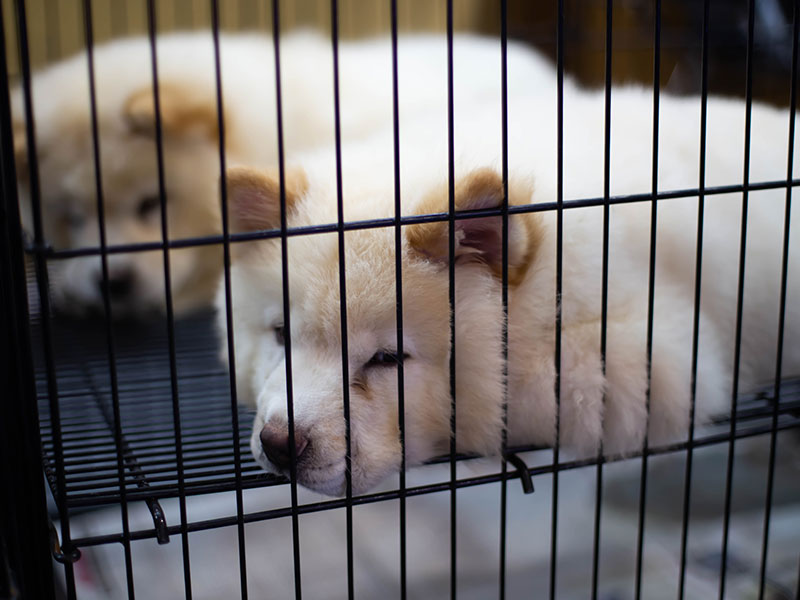
All dogs deserve loving families who provide healthy food, stimulating toys , shelter , safety, health care, and everything they need to live long and happy lives. Unfortunately, many dogs are born and some live out most of their lives in nightmare scenarios because of puppy mills.
Certain dog breeds or cross-breeds tend to be very popular, so much so that some people are willing to pay hundreds or even thousands of dollars to have them. Puppy mills are a way that disreputable breeders capitalize on the demand. Puppy mills treat dogs like a commodity or a cash crop instead of animals with intelligence and feelings. Hundreds of female dogs are kept for breeding purposes under deplorable conditions. Upon birth, the puppies are often removed from the mother too early. Puppy mills are terribly inhumane, but fortunately, there are things you can do to stop them.
What Are the Dangers of Puppy Mills?
Female dogs used for breeding in puppy mills are often housed in overcrowded cages. When these are outside, they offer no protection from the weather, and when they are inside, the dogs do not have access to fresh air. The breeding dogs often receive no veterinary care and may be dehydrated or malnourished due to a lack of access to clean water or food. The dogs often live in their own filth and receive very little contact with humans. After giving birth to a litter, the mother dogs do not receive much recovery time before they are bred again. They are often killed once they are no longer able to produce puppies.
The puppies themselves don't fare much better. People who operate puppy mills don't screen for genetic diseases before breeding the dogs, so the puppies may be at risk for developing debilitating conditions such as hip dysplasia when they are older. Not only that, but the puppies are often exposed to infectious diseases due to the conditions they are born into. As a result, they may have urinary issues, skin disorders, distemper, parvovirus, or intestinal parasites when they leave the facility and go up for sale.
There are risks to the people who buy the puppies too, many of whom do so in ignorance of their origins. People who want to buy a specific breed may find that the dog's credentials have been falsified, so that the dog they end up with may not be what they wanted. Worse yet, because puppies born in mills are separated from their mothers so early and denied human contact, they are not socialized. Therefore, they often have behavioral problems, such as anxiety, fear, or aggression.
Where Are Puppies From Mills Sold?
Puppy mills usually do not sell to prospective pet owners directly. Instead, they work with some sort of broker or go-between who puts the puppies up for sale elsewhere. Sometimes they set up temporary stands at festivals, fairs, or along roadsides. Passersby find the sweet furry faces difficult to resist, and if anyone does raise suspicions, the brokers can pack up quickly and escape, only to set up elsewhere.
Puppy mills and their brokers have also leveraged the power of the internet to great effect. They take out online classified ads on sites such as eBay or Craigslist or they set up a website that presents a respectable-looking online front.
However, sales of animals from puppy mills also take place in settings that seem completely legitimate. If you ever see puppies for sale at a pet store, chances are they came from a mill. As awareness of the industry grows, many pet stores no longer sell puppies. However, be wary of any pet store that sells puppies but claims not to buy from puppy mills. This can be misleading as the store may buy from a middleman or broker rather than directly from the mill, disguising the puppies' origins.
What Can You Do About Puppy Mills?
If you witness inhumane conditions at a breeding facility yourself, you can file a complaint with the United States Department of Agriculture or call the U.S. Humane Society tip line at 1-877-MILL-TIP to report it. Unfortunately, the facility may not be illegal under the Animal Welfare Act, the federal law that regulates dog breeding. State or local laws may impose higher standards, however.
The reason that puppy mills persist is that they are still profitable. Now that you know the places where puppies from mills often end up for sale, you can avoid buying dogs from those places. If you would like to add a pet to your family, it is much better to adopt one from a shelter if possible.
If there is some reason why you have to buy a dog, buy only from a breeder and make sure you do your homework first to be sure he or she is responsible and reputable. The following are red flags associated with dishonest breeders:
-
Don't offer guarantees to take the dog back if there is a problem
-
Don't ask buyers a lot of questions
-
Prevent buyers from seeing where the dogs are kept
-
Offer puppies for sale at less than six weeks old
-
Offer many different breeds or designer hybrids
Puppy mills thrive on the public's ignorance of their operations, so another thing you can do is educate others. If you have friends or family members who are thinking about buying a dog, warn them about the dangers of puppy mills. Ask your representatives in local, state, or federal government to pass stricter laws against the inhumane conditions in many facilities.
The problem of puppy mills is significant, with 500,000 dogs being kept for breeding in 10,000 operating mills and over two million puppies being sold every year. However, with vigilance and education, those numbers can be reduced down to zero.