
 Save 15% on your 1st Autoship learn more

 Email us
 Live Chat
 FAQs



Introduction
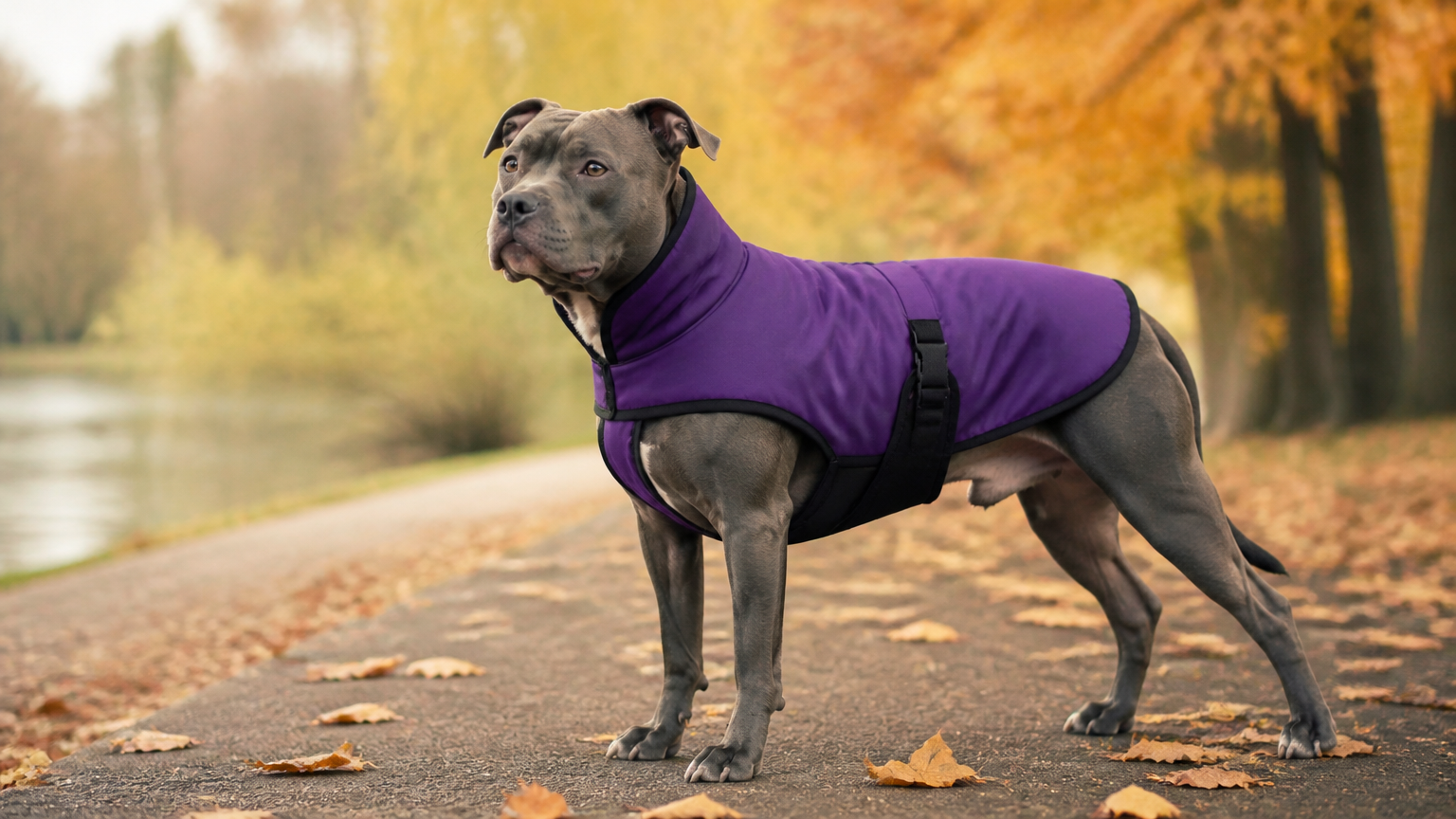
A coat that fits your pit bull’s back can still pinch across the chest or slide sideways on a walk. That makes shopping by weight or a size label alone frustrating. Many pit bull-type dogs have broad shoulders and short fur, so a comfortable jacket needs room to move as well as coverage against the weather.
At BaxterBoo, we suggest starting with three measurements: chest, neck and back length. Then match the coat’s material to the conditions you actually walk in. A lightweight fleece, a raincoat and an insulated winter jacket each solve a different problem. The best choice is one that fits your individual dog and keeps them comfortable without restricting movement.
Does Your Pit Bull Need a Coat?
Many pit bull-type dogs have short, smooth fur. Some appreciate an extra layer on chilly or wet walks, though comfort varies from dog to dog. Wind, rain, age, health and how long your dog is outside can all affect what they need.
Watch your dog rather than relying on a single temperature. Shivering, lifting paws, slowing down or wanting to turn home can be signs that the outing is uncomfortable. Head inside, warm your dog gradually and dry them if they’re wet. If shivering continues or your dog seems unwell, call your veterinarian.
A coat does not make every cold-weather outing safe. On particularly unpleasant days, shorter trips may be more comfortable than one long walk, even with a jacket.
Puppies, senior dogs and dogs with health concerns may have different needs from a healthy adult. Ask your veterinarian for guidance if you’re unsure how your dog handles the cold.
Dog Coats


How to Measure a Pit Bull for a Dog Coat
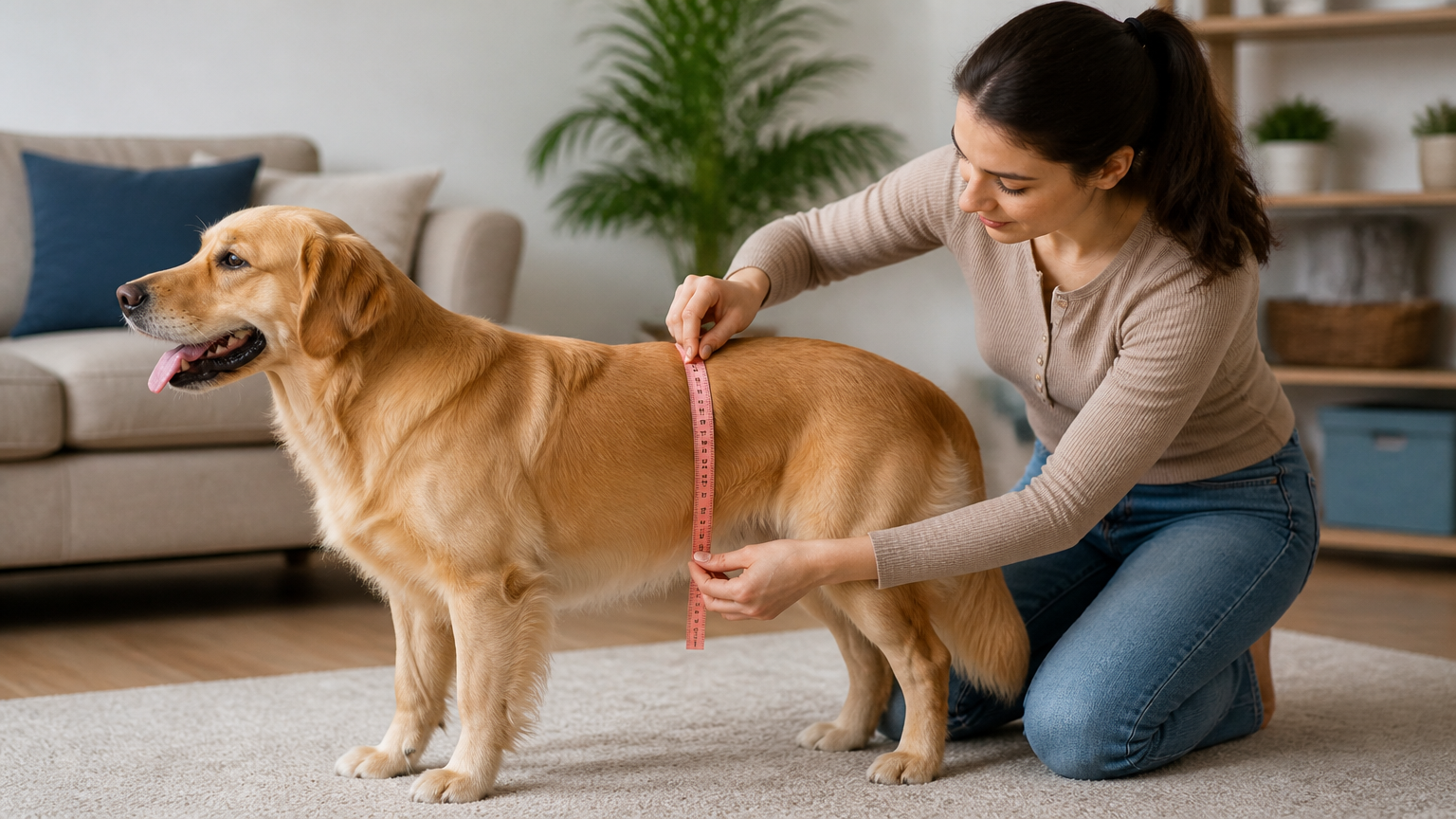
Use a soft measuring tape while your dog is standing in a relaxed position. Keep the tape close to the body without pulling it tight, and record each measurement in inches.
Step 1: Measure the chest. Wrap the tape around the widest part of your dog’s rib cage, usually just behind the front legs. This is especially useful for finding a coat that closes comfortably around a broad chest.
Step 2: Measure the neck. Measure around the base of the neck, where the coat’s neckline will sit. A wide neck opening can make a pullover easier to put on, but it should not hang so loosely that the coat shifts.
Step 3: Measure the back. Measure from the base of the neck to the base of the tail. Do not include the tail. The coat should cover the back without interfering with the tail or bathroom breaks.
Step 4: Compare the measurements with the coat’s chart. Check the chart for the specific garment, because size labels vary between designs. Look at the chest and neck ranges as well as the listed back length.
If your dog’s measurements fall into different sizes, don’t assume the largest size will solve the problem. A coat sized up for the chest may be much too long or loose elsewhere. Look for another cut with a wider chest, adjustable closures or a better range for your dog’s proportions.
For example, a hypothetical dog with a 28-inch chest and a 16-inch back needs both dimensions considered. A coat with enough chest room but a 22-inch back may bunch over the rear. A shorter coat that only fits a 24-inch chest is not a good tradeoff either.
Before ordering, check these details:
- Chest range: Your dog’s measurement should fit within the garment’s stated range.
- Neck opening: Check that it can go on comfortably or opens with a closure.
- Back length: Look for coverage that stops before the tail and allows bathroom breaks.
- Adjustment: Check where straps or closures adjust, not just whether the listing says “adjustable.”
Growing puppies may need to be measured again before their next coat purchase. Weight can help narrow a search, but it cannot tell you whether a jacket will fit your dog’s chest and shoulders.
Choose a Coat for the Weather
Start with the conditions your dog encounters most often. A coat that works for a dry, chilly evening may not be the right choice for a wet winter walk.
| Coat type | Useful for | What to check |
|---|---|---|
| Fleece or sweater | Dry, cool walks and light indoor warmth | Whether the fabric stretches comfortably around the chest and neck |
| Insulated jacket | Colder walks when your dog needs more warmth | Coverage, lining thickness and freedom around the shoulders |
| Raincoat | Wet weather when warmth is less of a concern | How much of the back and chest it covers and how the closures fit |
| Insulated raincoat | Cold, wet conditions | Both the warmth of the lining and the manufacturer’s description of the outer shell |
Fleece and sweaters
A fleece can be a practical choice when your dog needs a light layer but a thick jacket would be too much. Soft fabric and stretch can make dressing easier, particularly for dogs with broad shoulders.
Check the arm openings carefully. If they pull into the armpits when your dog walks, try a different cut rather than hoping the fabric will loosen.
Winter jackets
For colder outings, look for an insulated jacket that covers the back and provides room through the chest. A belly panel can add coverage, but it should leave enough space for your dog to move and relieve themselves.
A bulky coat is not automatically the best choice. Your dog should still be able to walk, sit, turn and lower their head comfortably. If the jacket makes ordinary movement awkward, a different shape may work better.
Raincoats
A raincoat can reduce how wet your dog gets on a rainy walk. Check the description: water-resistant fabric can handle some moisture, while a product described as waterproof is intended for more substantial water protection. Closures, seams and the amount of coverage also affect how much of your dog gets wet.
A thin raincoat may not add much warmth. For cold rain, consider an insulated raincoat or a separate layer underneath, provided both pieces fit comfortably together.
If you layer garments, check the fit again with both on. Extra fabric can tighten a previously comfortable chest opening or interfere with the harness.
Check the Fit Before Your First Walk
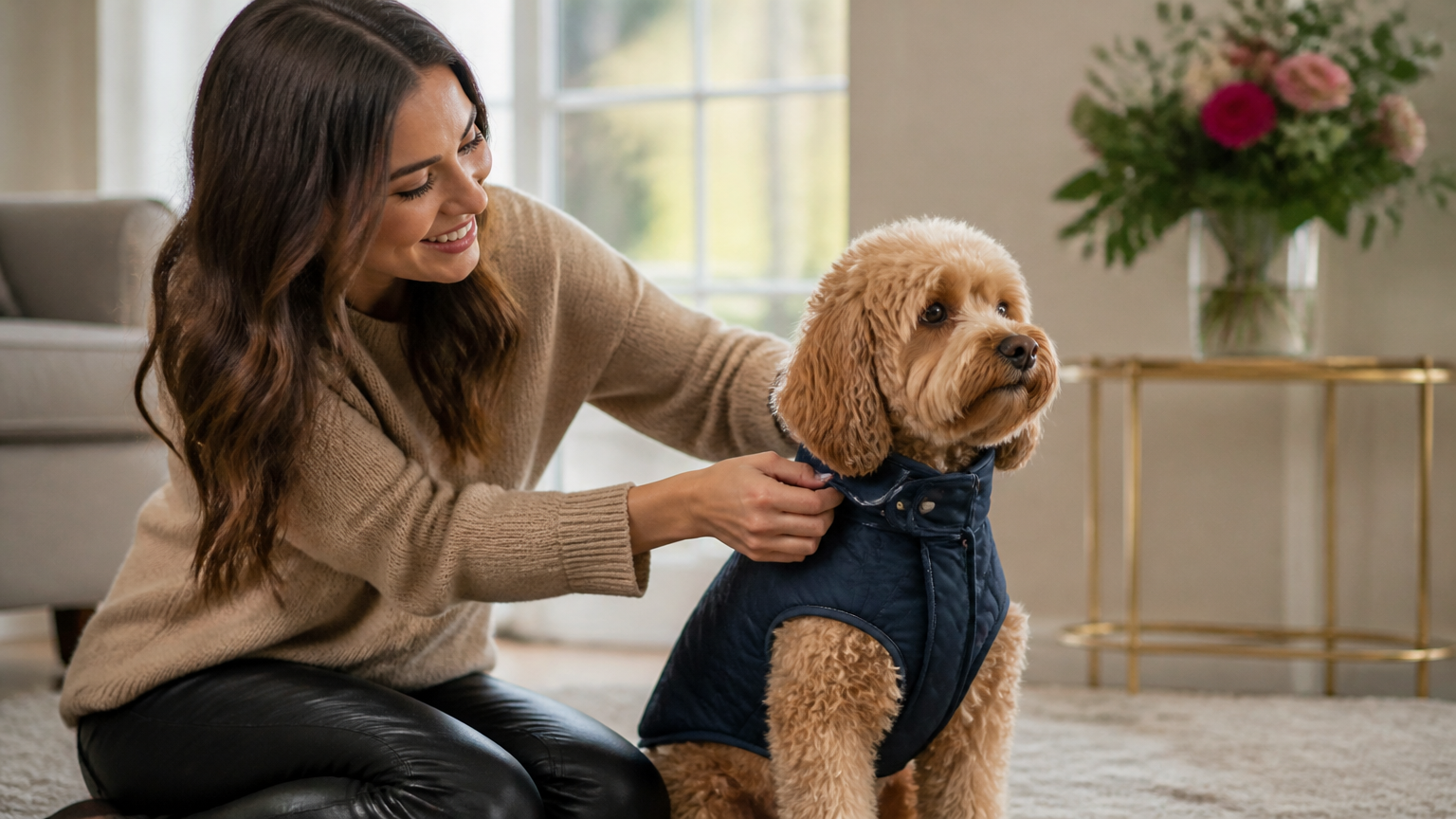
Try the coat indoors while your dog is calm. Fasten it according to the manufacturer’s instructions, then let your dog walk a few steps, sit and turn around.
Look for these signs of a good fit:
- The neckline sits comfortably without pressing on the throat.
- The chest closes without pulling tightly across the shoulders.
- The front leg openings do not rub into the armpits.
- The coat stays in place without twisting or dragging.
- Your dog can move and use the bathroom without the fabric getting in the way.
You should be able to check beneath the closures without forcing your fingers under them. If a strap digs in, the fabric bunches or your dog’s gait changes, readjust the coat. If you can’t correct the problem, choose a different size or style.
Also watch for a coat that is too loose. A dangling belly strap can catch on objects, and a jacket that slides sideways can expose one side of the body or rub during a walk.
Make room for the harness
Before choosing a coat, consider where your dog’s leash attaches. Some jackets have an opening for a back-clip harness. Others may work better with a harness worn over the coat.
Try your usual harness and coat together. The leash should attach securely without pulling the jacket into your dog’s neck or shoulders. If you use a front-clip harness, check that the jacket does not block the attachment point.
Adjust the harness for the layers underneath it, and check its fit again when you remove the coat. The coat is clothing, not a substitute for a properly fitted collar or harness.
Coats for French Bulldogs and Other Bulldogs
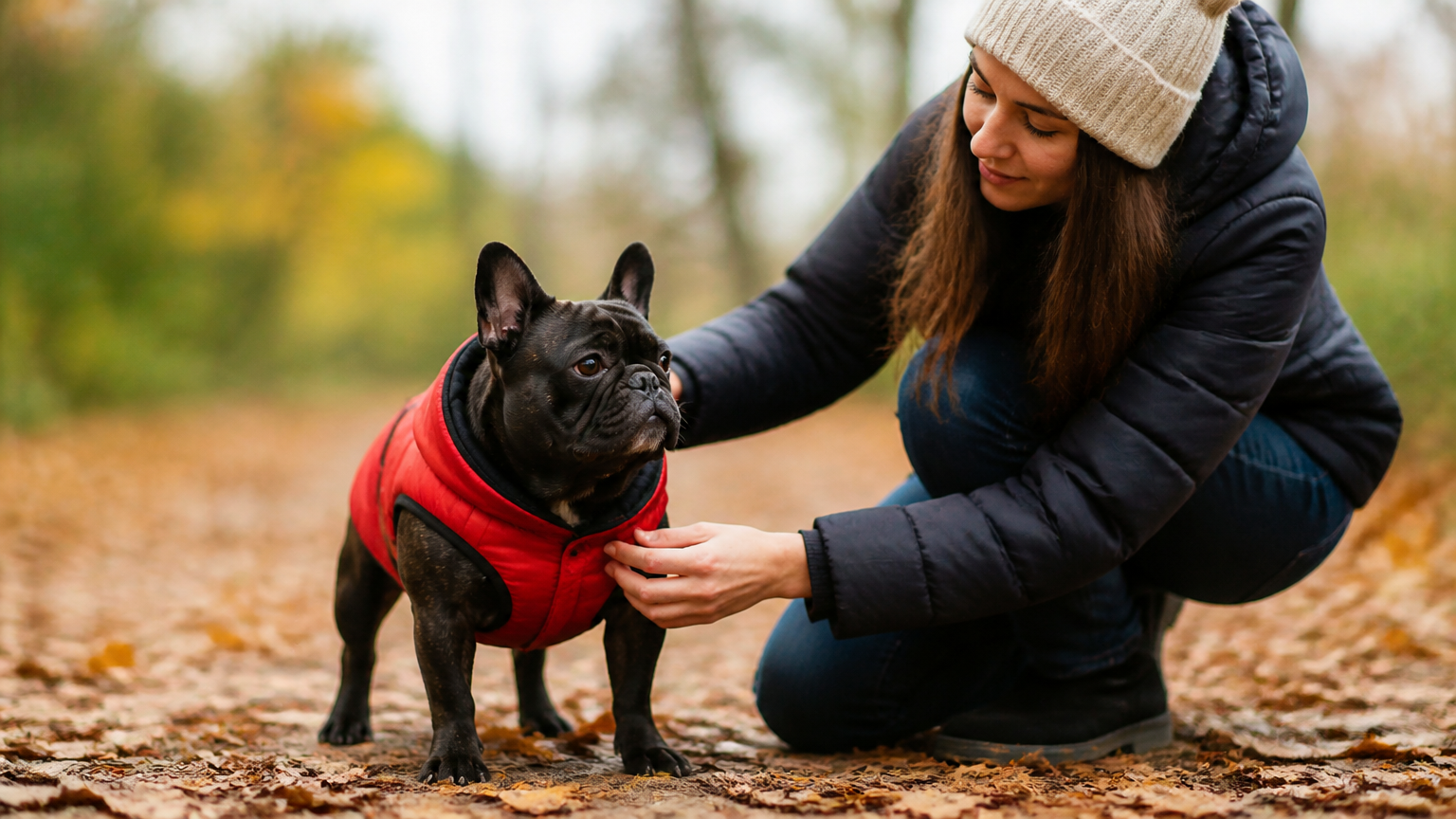
A coat marketed for pit bulls may also mention French Bulldogs or English Bulldogs. These are different dogs, and a shared “bully breed” label does not mean they need the same size or cut.
French Bulldogs often need a shorter back length than a larger pit bull-type dog, while still needing room through the chest and neck. Measure your individual dog and compare all three dimensions with the garment chart. English Bulldogs can also benefit from a generous chest opening and adjustable closures, but their measurements should guide the choice.
For short-nosed dogs, avoid a coat that presses on the throat, and watch closely for discomfort or overheating. Remove the coat and move your dog to a comfortable area if they seem too warm. Contact a veterinarian promptly if your dog has breathing difficulty.
Vet Tip: Ask your veterinarian about clothing and outdoor activity if your French Bulldog or Bulldog has breathing concerns or struggles in warm weather.
Help Your Dog Get Used to Wearing a Coat
Some dogs accept a jacket immediately. Others need a little time, especially if the coat goes over their head or has straps near their legs.
Start by letting your dog sniff the coat. Reward calm interest with a small treat, then briefly place the garment over their back before fastening it. Keep early sessions short and end before your dog becomes uncomfortable.
Next, fasten the coat and let your dog move around indoors under supervision. Check for rubbing or awkward movement before trying a short outdoor walk. An open-front or wrap style may be easier for a dog who dislikes having clothing pulled over their head.
If your dog freezes, struggles or tries repeatedly to remove the coat, take it off and slow down. Check the fit first. A reluctant response may mean the garment feels uncomfortable, not that your dog needs more practice.
Keep the Coat Clean and Ready to Wear
After a wet walk, remove the coat and check the fabric underneath. Let the garment dry before putting it away, and dry your dog if needed. A damp coat left on indoors can be uncomfortable.
Follow the care label when washing. Close hook-and-loop fasteners before laundering if the instructions allow it, and check straps and stitching for wear. A clean, intact coat is easier to fit and less likely to leave loose pieces for your dog to chew.
Remove the jacket when it is no longer needed, especially indoors. Supervise your dog while they wear it, and check their skin after use for rubbed areas or irritation.
Conclusion
A good pit bull coat starts with your dog’s measurements, not a breed label. Choose the fabric for your weather, then make sure the finished fit works with your dog’s movement and walking gear.
- Measure the chest, neck and back before comparing sizes.
- Pick a fleece, raincoat or insulated jacket for the conditions you expect.
- Check the fit again with your usual harness and any added layer.
Next step: Explore the dog clothing category at BaxterBoo with your dog’s measurements in hand.
FAQ
What size coat does a pit bull need?
There is no single coat size for every pit bull-type dog. Measure your dog’s chest, neck and back, then compare those numbers with the chart for the specific coat. If the dimensions fall across different sizes, look for a cut that accommodates their proportions.
Should a pit bull wear a coat in winter?
Some pit bull-type dogs are more comfortable wearing a coat during cold walks, especially in wind or wet weather. Watch your dog’s behavior and choose a layer that fits without restricting movement. A coat is not a reason to keep a dog outside when they are uncomfortable.
Can a French Bulldog wear the same coat as a pit bull?
Possibly, but the dogs may need different sizes or cuts. A French Bulldog may need a shorter back while still requiring room at the chest and neck. Measure your dog rather than relying on the breed names in a product description.
Can my dog wear a coat over a harness?
Some coats are designed to accommodate a harness underneath, while others work better with the harness over the coat. Check that you can attach the leash securely and that neither piece pulls or rubs. Readjust the harness when your dog is wearing different layers.


- Site & Contents BaxterBoo.com. BaxterBoo is located in the United States.
- Privacy & Security
- Terms of Use
- Accessibility Statement
