
 Save 15% on your 1st Autoship learn more

 Email us
 Live Chat
 FAQs
FAQs





Introduction
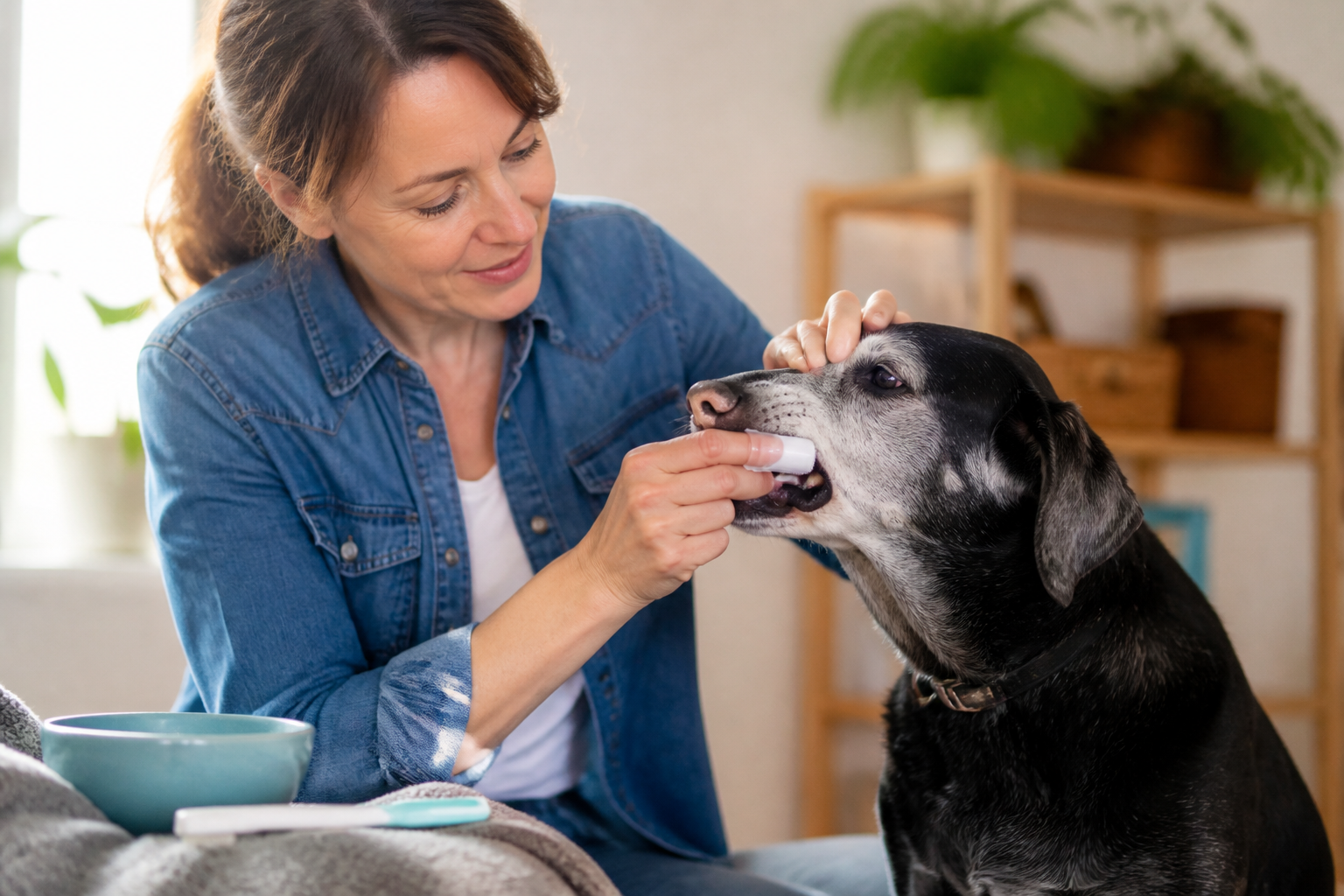
You might notice a bit of gray around your dog's muzzle and realize their breath has become noticeably stronger lately. Those pearly whites they had as a puppy may now look yellow or brown near the gum line. At BaxterBoo, we know that senior dogs require a gentler touch and more frequent attention to their oral health. This guide covers safe brushing techniques, effective dental alternatives, and when it is time to seek professional help. Keeping a senior dog's mouth clean is one of the best ways to support their overall health and comfort in their golden years. A proactive approach to dental care can help your old dog stay happy and active for longer.
Quick Answer: Clean an old dog's teeth using a soft-bristled brush and enzyme-based dog toothpaste. If brushing is too stressful, use dental wipes, water additives, or prescription dental diets recommended by your vet. Regular professional cleanings are still necessary to remove hardened tartar that brushing cannot reach.
Why Dental Care Matters for Senior Dogs
Dental health is about more than just fresh breath. As dogs age, their immune systems may not be as robust as they once were. This makes them more susceptible to the bacteria that thrive in an unclean mouth. When plaque and tartar build up, they can lead to periodontal disease. This condition causes inflammation and infection in the gums and the structures that hold the teeth in place.
The danger of dental disease goes beyond the mouth. Bacteria from infected gums can enter the bloodstream. From there, it can travel to vital organs like the heart, liver, and kidneys. In senior dogs, these organs may already be facing age-related changes. Preventing dental infections helps reduce the overall strain on their bodies.
Proper dental care also ensures your dog can continue to eat comfortably. Dental pain is often hidden by dogs. They may chew on one side of their mouth or drop food without you noticing. A clean, pain-free mouth allows them to maintain their weight and get the nutrition they need to stay strong. For additional guidance, read these pet dental care tips.
Assessing Your Old Dog's Oral Health
Before you start a new cleaning routine, take a close look at your dog's mouth. You should do this in a well-lit area when your dog is relaxed. Gently lift their lips to see the molars in the back. These teeth are often where the most buildup occurs.
Look for these signs of dental issues:
- Red or swollen gums that bleed easily
- Persistent bad breath that does not go away after eating
- Thick brown or yellow crust on the teeth
- Loose or missing teeth
- Excessive drooling or pawing at the mouth
- Blood left on chew toys or in the water bowl
If you see these signs, your dog may already have advanced dental disease. Brushing can be painful for a dog with sore gums. You should address any existing infections or pain before starting a rigorous home cleaning habit. You can also review these warning signs of dental disease in dogs.
Vet Tip: Senior dogs often have underlying conditions like kidney or heart disease that make dental infections more dangerous. Always consult your veterinarian before starting a new dental routine if your dog has red gums, loose teeth, or significant bleeding. They can also help determine if your pet is a candidate for professional cleaning under anesthesia.
Choosing the Right Tools for an Older Dog
A senior dog's mouth is often more sensitive than a younger dog's mouth. You cannot use human products on your pet. Human toothpaste contains ingredients like xylitol that are toxic to dogs. It also contains foaming agents that can upset their stomachs since they cannot spit it out. Explore our dog dental care selection for brushing supplies and other oral-care options.
Enzyme-Based Toothpaste
Look for a toothpaste specifically formulated for dogs. These often come in flavors like poultry, beef, or peanut butter. This makes the experience more like a treat. Enzyme-based pastes are helpful because they work to break down plaque even if you cannot reach every single spot. One option is Virbac C.E.T. Enzymatic Pet Toothpaste for Dogs and Cats - Poultry.
Soft-Bristled Brushes
A soft-bristled brush is essential for aging gums. You can find brushes with long handles that help you reach the back molars. If your dog is small or has a very sensitive mouth, a finger brush might be a better choice. Finger brushes are made of soft silicone and fit over your fingertip. This gives you more control and a better feel for how much pressure you are applying.
Dental Wipes
If your dog is completely resistant to a brush, dental wipes are a great middle ground. They are pre-moistened with cleaning agents. You simply wrap a wipe around your finger and rub the surface of the teeth. This removes the film of plaque before it can harden into tartar. HICC PET Dental Finger Wipes for Cats & Dogs - Mint are one brush-free option.
A Step-by-Step Guide to Brushing Senior Teeth
It is never too late to start brushing, but you must move slowly. An older dog has established habits and may be suspicious of new routines. Your goal is to make the process calm and positive.
Step 1: The Taste Test
Put a small amount of dog toothpaste on your finger. Let your dog lick it off. Do this for a few days without trying to touch their mouth. You want them to associate the paste with a tasty reward.
Step 2: Getting Used to Touch
Once they like the paste, begin rubbing your finger along their gums and teeth. Start with the front teeth and move toward the back. Do this for only 30 seconds at a time. Reward them with praise or a small treat afterward.
Step 3: Introducing the Brush
Apply a small amount of paste to the brush or finger brush. Let them lick it off the bristles first. Then, gently lift the lip and brush one or two teeth in a circular motion. Focus on the outside surface of the teeth where the lip meets the gum.
Step 4: The Full Clean
Gradually increase the number of teeth you brush each day. You do not need to brush the inside of the teeth. A dog's tongue usually does a good job of keeping the inside surfaces clean. Aim for a full minute of brushing once a day.
Key Takeaway: Consistency is more important than perfection. Brushing for 30 seconds every day is much more effective than doing a deep clean once a month.
Alternatives for Dogs Who Hate Brushing
Some senior dogs simply will not tolerate a toothbrush. This can happen if they have cognitive decline or if they have had bad experiences in the past. If your dog gets stressed, do not force the issue. Stress can be hard on an older dog's heart.
We carry a variety of items at BaxterBoo that can help maintain oral health without a brush. Water additives are a simple option. You add a small amount to their daily water bowl. These additives contain enzymes that help kill bacteria and freshen breath. OxyFresh Pet Dental Water Additive is designed for a simple water-based routine.
Dental chews are another popular tool. Brands like Greenies or WHIMZEES are designed to scrub the teeth as the dog chews. For a senior dog, make sure the chew is not too hard. Their teeth may be more brittle than they used to be. Avoid real bones or very hard nylon toys, as these can cause tooth fractures. Browse our dental chews for dogs for additional options, including senior-appropriate choices.
Dental sprays can also be effective. You spray them directly onto the teeth and gums. These are useful for dogs who do not drink much water or who are picky about the taste of additives. For more ideas, see our guide to the best dental chews for dogs.
Nutrition and Dietary Support
What your dog eats plays a role in their oral health. Many people believe that dry kibble cleans teeth better than wet food. While the crunch can help a little, most kibble is too small to provide significant scrubbing action. Some specialized dental diets are made with a larger, fibrous kibble. This kibble is designed to stay in contact with the tooth longer before it breaks.
A well-balanced diet supports the immune system and gum health. Look for foods that include antioxidants and minerals like zinc. These nutrients help maintain the integrity of the gum tissue. If your senior dog has already lost several teeth, they may need a softer diet. You can soften high-quality dry food with warm water or a low-sodium broth.
Professional Cleaning and Veterinary Guidance
Home care is a way to maintain health, but it cannot remove tartar that has already hardened. Tartar is like concrete. Once it forms, it requires professional scaling to remove. Many owners worry about putting a senior dog under anesthesia for a cleaning.
Modern veterinary medicine has made anesthesia much safer for older pets. Your vet will perform blood work first to check organ function. They will also monitor your dog's heart and oxygen levels throughout the procedure. For some dogs, the risk of a chronic infection is much higher than the risk of the procedure itself. For more information about warning signs and professional care, review this dog dental health resource.
Our pharmacy carries FDA-approved medications and prescription pet foods through our partnership with Pet's Choice. If your veterinarian prescribes a specific dental diet or an antibiotic for a gum infection, you can often find those through our pet pharmacy. Using a prescription dental diet can significantly slow down the return of plaque after a professional cleaning.
Bottom line: Home cleaning is a preventative tool, but professional veterinary care is necessary to treat established dental disease and tartar buildup.
Senior Dog Dental Care Checklist
To keep your older dog's mouth in top shape, follow this routine:
- Daily: Brush teeth with dog-safe toothpaste or use a dental wipe.
- Daily: Provide a senior-appropriate dental chew or treat.
- Daily: Use a water additive to reduce bacteria in the mouth.
- Weekly: Check the mouth for redness, swelling, or new odors.
- Bi-Annually: Visit the vet for a wellness exam and a dental check-up.
Creating a Stress-Free Environment
Senior dogs often thrive on routine. Try to clean their teeth at the same time every day. Many owners find that doing it after an evening walk or before bedtime works best. Make sure the area is quiet and calm. If you are stressed, your dog will pick up on that energy and become anxious.
If your dog has joint pain, be careful how you position them. Do not force them to sit or stand in a way that is uncomfortable. You might find it easier to brush their teeth while they are lying down on their favorite bed. Use plenty of positive reinforcement. A few kind words and a gentle pat can make a big difference in how they view the cleaning process.
Conclusion
Caring for an old dog's teeth is an essential part of senior pet ownership. By keeping their mouth clean, you are protecting their heart, kidneys, and overall comfort. Whether you use a traditional brush, dental wipes, or specialized treats, the effort you put in today will pay off in your dog's quality of life. Remember to start slowly and keep the experience positive. If you notice any signs of pain or advanced decay, visit your veterinarian for a professional assessment. You can visit us at BaxterBoo to find the right supplies, from soft brushes to dental-friendly treats. Sign up for our MVP Rewards programme to earn back on your dental care purchases and keep your senior dog smiling throughout their golden years.
FAQ
Is it too late to start brushing my 10-year-old dog's teeth?
It is never too late to start a dental routine, but you must be more cautious with an older dog. Start by getting a veterinary check-up to ensure there are no painful infections or loose teeth. Once you have a clean bill of health, introduce the brush slowly to help them adjust to the new sensation.
Can I use baking soda to clean my dog's teeth?
Baking soda is not recommended for cleaning a dog's teeth. It has a high alkaline content that can upset a dog's stomach if swallowed in large amounts. It also lacks the enzymes found in pet-specific toothpaste that help break down plaque and the appealing flavors that make dogs cooperate.
How often should I clean my senior dog's teeth?
Ideally, you should brush your senior dog's teeth every single day. Plaque can turn into hardened tartar in as little as 24 to 48 hours. If daily brushing is not possible, try to do it at least three times a week and supplement with dental chews or water additives.
Why does my old dog have bad breath even though I brush their teeth?
Persistent bad breath in an older dog can be a sign of deep-seated periodontal disease, an abscessed tooth, or even internal health issues like kidney disease. If brushing does not improve the smell, it is time for a veterinary exam. There may be tartar under the gum line that only a professional cleaning can reach.






