Save 15% on your 1st Autoship learn more

 Email us
 Live Chat
 FAQs
FAQs





Introduction
You are relaxing on the sofa with your cat when you notice small white flakes scattered across their glossy fur. As you stroke their back, more of these tiny specks appear, especially near the base of the tail. This is a common sight for many pet owners, yet it often brings up concerns about skin health and comfort. While a few flakes might seem like a minor cosmetic issue, they often signal that your cat's skin needs a little extra attention.
At BaxterBoo, we know that a healthy coat starts from the inside out. We have spent years helping pet parents find the right solutions for everything from seasonal dryness to chronic skin sensitivities. This post covers why these flakes appear and how you can use grooming, nutrition, and environmental changes to help. Our goal is to provide you with the steps needed to reduce cat dandruff and return your pet's coat to its natural shine.
Understanding Cat Dandruff vs. Dander
It is important to distinguish between dandruff and dander. Every cat produces dander. These are microscopic skin cells that shed naturally as part of the normal skin renewal process. You cannot see dander with the naked eye, but it is often what triggers allergies in humans.
Dandruff is different because the flakes are large enough to see. It occurs when the skin is irritated, dry, or producing too much oil. When these dead skin cells clump together, they form the white or yellowish flakes you see on the fur.
You should also look out for flea dirt. This is often mistaken for dandruff, but the two look very different. While dandruff is white or pale, flea dirt looks like tiny grains of black pepper. If you see black specks, your cat likely has a flea issue rather than simple dry skin. For related prevention guidance, read how flea collars work.
Quick Answer: Cat dandruff is a visible buildup of dead skin cells caused by dry skin, poor grooming, or underlying health issues. You can typically reduce it by improving your cat’s hydration, adding Omega-3 fatty acids to their diet, and maintaining a regular brushing schedule.
Common Causes of Feline Skin Flakes
To effectively reduce cat dandruff, you must first identify why it is happening. Cats are generally excellent at grooming themselves, so visible flakes often mean something has disrupted their natural process.
Environmental Factors and Humidity
Low humidity is one of the most frequent causes of dry skin in pets. This is especially common during the winter months when home heating systems strip moisture from the air. Just as your own skin might feel tight and itchy in the winter, your cat’s skin reacts to the dry environment.
Nutrition and Hydration
Cats have a low thirst drive. In the wild, they get most of their moisture from their prey. If your cat eats only dry kibble, they may be in a state of mild, chronic dehydration. This lack of moisture often shows up first as dull fur and flaky skin.
The quality of the food also matters. Skin requires specific nutrients to remain supple and produce protective oils. A diet lacking in essential fatty acids is a primary driver of poor skin health. Explore our wet cat food selection when adding more moisture to your cat’s meals.
Mobility and Weight Issues
If your cat is overweight, they may physically struggle to reach certain parts of their body. You will often see dandruff concentrate on the lower back and the base of the tail in heavier cats. Similarly, senior cats with arthritis may find it painful to twist and groom those hard to reach areas. When a cat stops grooming, dead skin and loose hair build up quickly.
Underlying Medical Conditions
Sometimes, dandruff is a symptom of a larger health concern. Conditions like hyperthyroidism, diabetes, or kidney disease can change the quality of a cat's skin. Parasites are another concern. A specific type of mite causes cheyletiellosis, which is frequently called walking dandruff because the mites move under the skin scales.
Vet Tip: If your cat has dandruff accompanied by redness, intense itching, hair loss, or a change in appetite, consult your veterinarian. They can rule out medical conditions like mites or fungal infections that require specific treatments.
Improving Hydration to Support Skin Health
The first step to reduce cat dandruff often happens at the water bowl. Increasing your cat’s water intake helps hydrate the skin from the inside.
Switch to Wet Food
Dry kibble typically contains only about 10 percent water. In contrast, canned foods like Tiki Cat or Fussie Cat often contain 75 percent or more moisture. Transitioning at least one meal a day to wet food can make a significant difference in skin elasticity.
Use a Water Fountain
Many cats prefer running water over a stagnant bowl. A pet fountain encourages more frequent drinking by keeping the water oxygenated and appealing. If your cat is a picky drinker, try adding a small amount of tuna water or plain bone broth to their bowl to entice them.
Hydration Checklist
- Provide multiple water stations throughout your home.
- Clean water bowls daily to prevent bacterial buildup.
- Consider adding a splash of water or a commercial topper to dry kibble.
- Monitor your cat's drinking habits to ensure they are staying hydrated.
The Role of Essential Fatty Acids
Nutrition is the foundation of a healthy coat. If your cat’s food is missing key fats, their skin cannot maintain its moisture barrier.
Omega-3 and Omega-6
Omega-3 fatty acids are known for their anti-inflammatory properties. They help soothe irritated skin and reduce the redness associated with dandruff. Many premium brands we carry, such as Farmina and Orijen, include these fats in their recipes.
Supplements
If you do not want to switch foods, you can add a supplement to their current meals. Fish oil, such as salmon or pollock oil, is highly effective. These supplements provide a concentrated dose of DHA and EPA. You can find these in our cat healthcare collection, where brands like Zesty Paws offer easy to use pump bottles or chewable treats.
Key Takeaway: A diet rich in Omega-3 fatty acids strengthens the skin’s natural barrier, preventing moisture loss and reducing the formation of dandruff flakes.
Developing a Grooming Routine
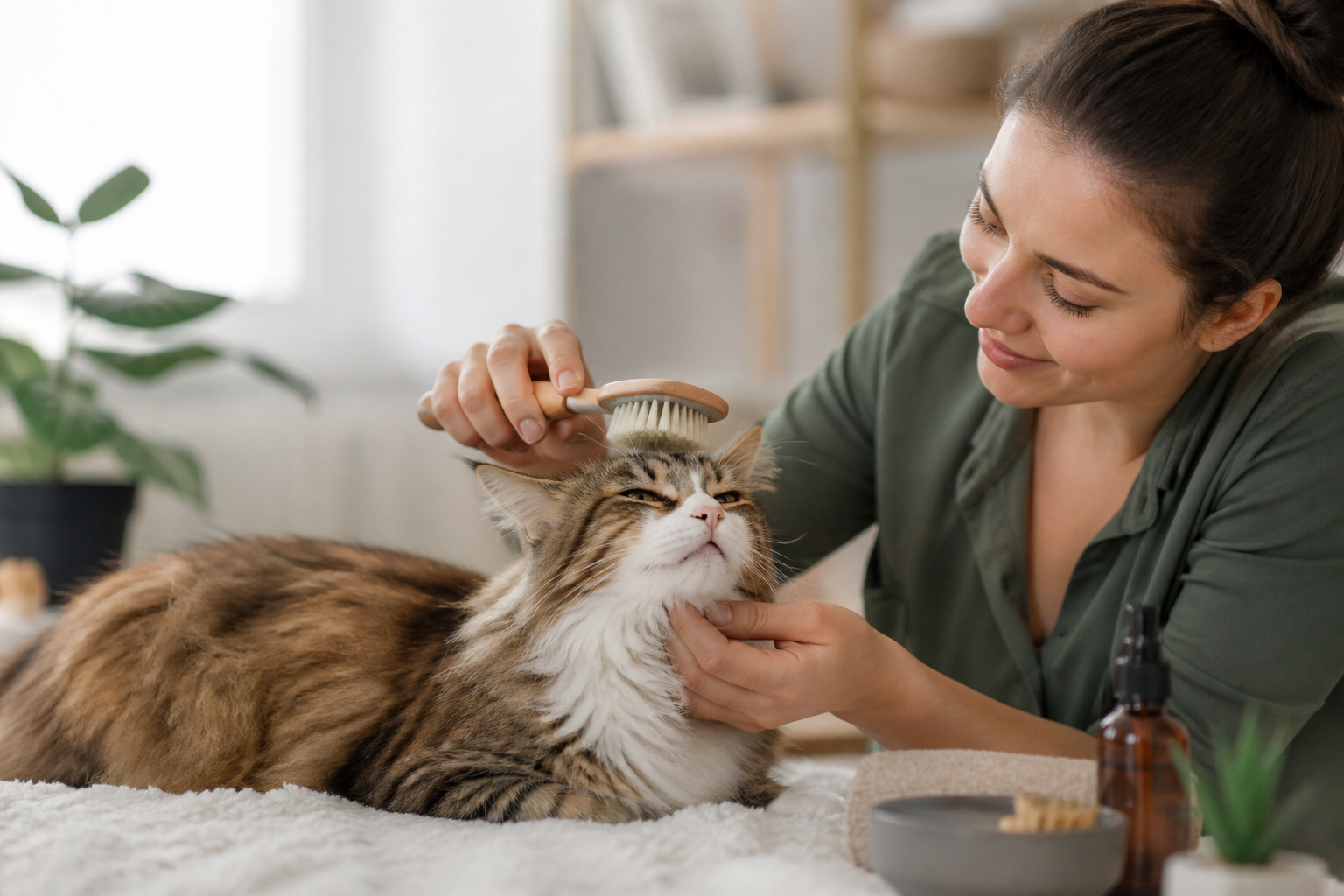
Regular grooming is essential to reduce cat dandruff, especially for cats that cannot groom themselves perfectly. Brushing does more than just remove loose hair. It stimulates blood flow to the skin and helps distribute natural oils across the entire coat. You can find suitable brushes and grooming tools in our cat grooming supplies.
Choose the Right Tools
The tool you use depends on your cat's coat type.
- Short-haired cats: A soft bristle brush or a rubber grooming mitt works well to lift away dead skin.
- Long-haired cats: A slicker brush or a long-toothed comb is necessary to reach through the undercoat and prevent mats.
- Sensitive cats: If your cat finds brushing stressful, start with a very soft brush and keep sessions short.
Should You Bathe Your Cat?
Most cats do not need regular baths. In fact, bathing too often can strip away the oils that protect the skin, making dandruff worse. However, if your cat has a greasy coat or a fungal infection, a medicated shampoo may be necessary. Use only shampoos formulated specifically for cats. Human shampoos have a different pH balance and can cause severe irritation to feline skin.
Managing the Home Environment
Your home’s air quality plays a direct role in your cat’s skin health. If the air is too dry, no amount of brushing will completely solve the problem.
Use a Humidifier
Placing a humidifier in the rooms where your cat spends the most time can provide immediate relief. Aim for a humidity level between 30 and 50 percent. This helps keep the skin from drying out and can also reduce static electricity in their fur.
Clean Bedding Regularly
Dandruff flakes and dander can accumulate in your cat's favorite sleeping spots. Wash their bedding in hot water using a fragrance-free, pet-safe detergent. This removes old skin cells and potential allergens that could be irritating their skin.
When to Use the BaxterBoo Pharmacy
If your vet determines that your cat's dandruff is caused by an underlying condition, you may need more than just a new brush. Our pet pharmacy provides a convenient way to access prescription medications and prescription diets.
Through our partnership with Pet's Choice, we offer a range of products to address health-related skin issues. This includes:
- Prescription flea and tick preventives to stop parasitic irritation.
- Medicated shampoos for fungal or bacterial skin infections.
- Prescription diets formulated for cats with severe food allergies or sensitivities.
- Treatments for endocrine disorders like hyperthyroidism that affect coat quality.
If your veterinarian writes a prescription, you can fulfill it directly through us. This ensures your pet gets the exact care they need to manage chronic conditions that lead to flaky skin.
Step-by-Step Plan to Clear Flakes
If you want to reduce cat dandruff effectively, follow this organized approach.
Step 1: Inspect the skin. / Check for redness, sores, or black specks that indicate fleas. If the skin looks broken or inflamed, call your vet before starting home treatments.
Step 2: Increase moisture. / Switch to a high-quality wet food and ensure your cat has access to fresh, flowing water.
Step 3: Add a supplement. / Introduce an Omega-3 fish oil supplement to their daily meal. Start with a small amount and gradually increase to the recommended dose.
Step 4: Establish a brushing schedule. / Brush your cat for five to ten minutes every day. Focus on the areas where flakes are most prominent, like the lower back.
Step 5: Adjust the environment. / Run a humidifier during dry months and switch to non-toxic, scent-free cleaning products in your home.
Bottom line: Consistent grooming combined with improved hydration and nutrition is the most effective way to eliminate common cat dandruff.
Addressing Weight and Mobility
As mentioned earlier, an inability to reach certain areas is a major factor in dandruff buildup. If your cat is struggling with their weight, helping them slim down will improve their ability to self-groom.
We carry weight management formulas from brands like Royal Canin and Farmina Vet Life. These foods are designed to help cats feel full while consuming fewer calories. You can also encourage activity through play. Using interactive toys like those from Kong can get your cat moving, which helps with weight loss and joint flexibility.
For senior cats with stiff joints, consider mobility supplements. Ingredients like glucosamine and chondroitin can help your cat feel more comfortable during their daily grooming routine. When they can move freely, they are more likely to keep their own coat clean and flake-free.
Summary of Best Practices
Reducing cat dandruff takes patience. It often takes three to four weeks of dietary changes before you see a visible improvement in the coat.
- Prioritize moisture: Use wet food and water fountains to keep the skin hydrated.
- Daily brushing: Remove dead skin and distribute oils manually.
- Nutritional support: Use fish oil or high-quality food rich in fatty acids.
- Monitor health: Watch for signs of parasites or illness and consult a vet when necessary.
Our Autoship program is a great way to ensure you never run out of the food or supplements your cat needs for their skin health. You can save on every order and even earn rewards through our MVP Rewards program.
Conclusion
Cat dandruff is usually a manageable issue that responds well to better hydration, targeted nutrition, and regular grooming. By identifying the root cause, whether it is dry winter air or a lack of fatty acids, you can take practical steps to restore your cat's comfort. Remember that your cat’s coat is a reflection of their internal health. A shiny, flake-free coat means your pet is well-hydrated and properly nourished.
If home remedies do not solve the problem, your veterinarian is your best resource for a diagnosis. For those who need prescription support, the pharmacy at BaxterBoo is here to help with professional-grade solutions. Take the first step today by checking our selection of premium wet foods and Omega-3 supplements to give your cat the relief they deserve.
FAQ
Is cat dandruff the same as dander?
No, these are two different things. Dander consists of microscopic skin cells that all cats shed naturally as part of a healthy skin cycle. Dandruff refers to the visible white flakes that accumulate in the fur when the skin is dry or irritated.
Can I use human dandruff shampoo on my cat?
You should never use human shampoo on a cat. The pH level of human skin is different from that of a cat, and many human shampoos contain ingredients that are toxic to felines. Always choose a soap-free shampoo specifically formulated for cats to avoid further drying out their skin.
How long does it take for cat dandruff to go away?
If the dandruff is caused by diet or environmental factors, it usually takes about three to six weeks to see a significant improvement. This is because it takes time for new, healthy skin cells to grow and for the natural oils to replenish the coat.
Should I be worried if my cat has a lot of dandruff?
While a small amount of dandruff is often normal, a sudden increase can be a concern. If the flakes are accompanied by symptoms like thinning hair, scabs, or constant scratching, it may indicate a medical issue like mites or an allergy. In these cases, it is best to visit your veterinarian for a checkup.