
 Save 15% on your 1st Autoship learn more

 Email us
 Live Chat
 FAQs
FAQs





Introduction
You lean in for a pup kiss and notice something new. Your dog’s breath has moved past the typical "dog breath" into something much sharper. You lift their lip and see a thick layer of yellow-brown buildup near the gums. These are the moments when pet owners realize that a standard toothbrushing session at home might not be enough. At BaxterBoo, we talk to owners every day who are nervous about professional dental cleanings but want to do what is best for their pets. This article explains the clinical process of a veterinary dental cleaning from start to finish. We will look at why anesthesia is used, what the tools actually do, and how the recovery process works. Understanding these steps helps you feel confident as you partner with your vet to manage your dog's oral health.
Quick Answer: A veterinary dental cleaning involves several professional steps. The vet performs an oral exam and X-rays while the dog is under general anesthesia. They then use specialized tools to scale plaque and tartar from above and below the gumline before polishing the teeth to prevent future buildup.
The Importance of Professional Assessment
A professional cleaning is much more than a cosmetic scrub. It is a medical procedure meant to treat and prevent periodontal disease. When you take your dog in for their appointment, the process begins long before the first tool touches a tooth.
The first step is a physical examination while your dog is still awake. Your veterinarian will look for obvious signs of trouble like loose teeth, swollen gums, or oral masses. They will also check your dog’s heart and lungs. This is a vital safety check to ensure your pet is a good candidate for the procedure.
Most clinics require pre-anesthetic blood work. This test checks kidney and liver function to make sure your dog can safely process the anesthesia. Even if your dog seems perfectly healthy, these tests can catch underlying issues that might change how the vet approaches the procedure. It is a standard part of modern veterinary care designed to minimize risk. For additional background on warning signs, read what to know about bad teeth in dogs.
Key Takeaway: A veterinary dental cleaning is a medical treatment for periodontal disease, not just a way to whiten teeth.
Why General Anesthesia Is the Standard
The biggest question most owners have is why anesthesia is necessary. Many people feel anxious about "putting their dog under" for a cleaning. However, anesthesia is what makes a thorough and safe cleaning possible.
First, anesthesia allows for a stress-free experience. A dog will not sit still while a vibrating ultrasonic scaler moves under their gumline. If a dog moves suddenly while a vet is using a sharp tool, it could lead to severe injury. Anesthesia ensures the dog remains perfectly still and feels no pain or anxiety.
Second, anesthesia allows for the use of a breathing tube. This tube protects the airway. During a cleaning, a lot of water and bacteria are sprayed into the mouth. The tube prevents this debris from being inhaled into the lungs, which could cause pneumonia.
Finally, you simply cannot clean under the gumline on an awake dog. Most dental disease happens where you cannot see it. Without anesthesia, a vet can only scrape the visible parts of the teeth. This is often called anesthesia-free cleaning. While it makes the teeth look better, it leaves the dangerous bacteria behind under the gums. You can learn more from our guide to professional pet dental care tips.
Vet Tip: If you are worried about anesthesia, ask your vet about their monitoring protocols. Modern veterinary clinics use advanced equipment to track heart rate, oxygen levels, and blood pressure throughout the entire procedure.
Step 1: Charting and Oral Examination
Once your dog is safely anesthetized and monitored, the real work begins. The vet or a specialized technician starts with a tooth-by-tooth exam. Dogs have 42 teeth, and each one needs individual attention.
The vet uses a dental probe to measure the depth of the "pockets" around each tooth. In a healthy mouth, the gums fit tightly against the tooth. If there is disease, the gums pull away, creating a pocket where bacteria hide. The vet records these measurements on a dental chart, much like a human dentist does.
They also look for:
- Fractured or chipped teeth
- Exposed roots
- Discolored teeth that might indicate a dead nerve
- Mobile or loose teeth
- Oral tumors or growths
Step 2: Dental Radiographs (X-rays)
You cannot truly know what is happening in a dog’s mouth by looking at the surface. About 60 percent of a dog’s tooth structure is hidden below the gumline. This is why dental X-rays are a critical part of a professional cleaning.
X-rays allow the vet to see the tooth roots and the surrounding bone. They can find hidden abscesses, bone loss, and jaw fractures that are invisible to the naked eye. Sometimes a tooth looks perfectly white and healthy on the outside, but the X-ray shows a massive infection at the root.
Identifying these problems early can prevent chronic pain for your dog. If a vet finds a hidden issue, they can address it during the same session rather than waiting for the dog to show signs of pain later.
Step 3: Scaling Above and Below the Gumline
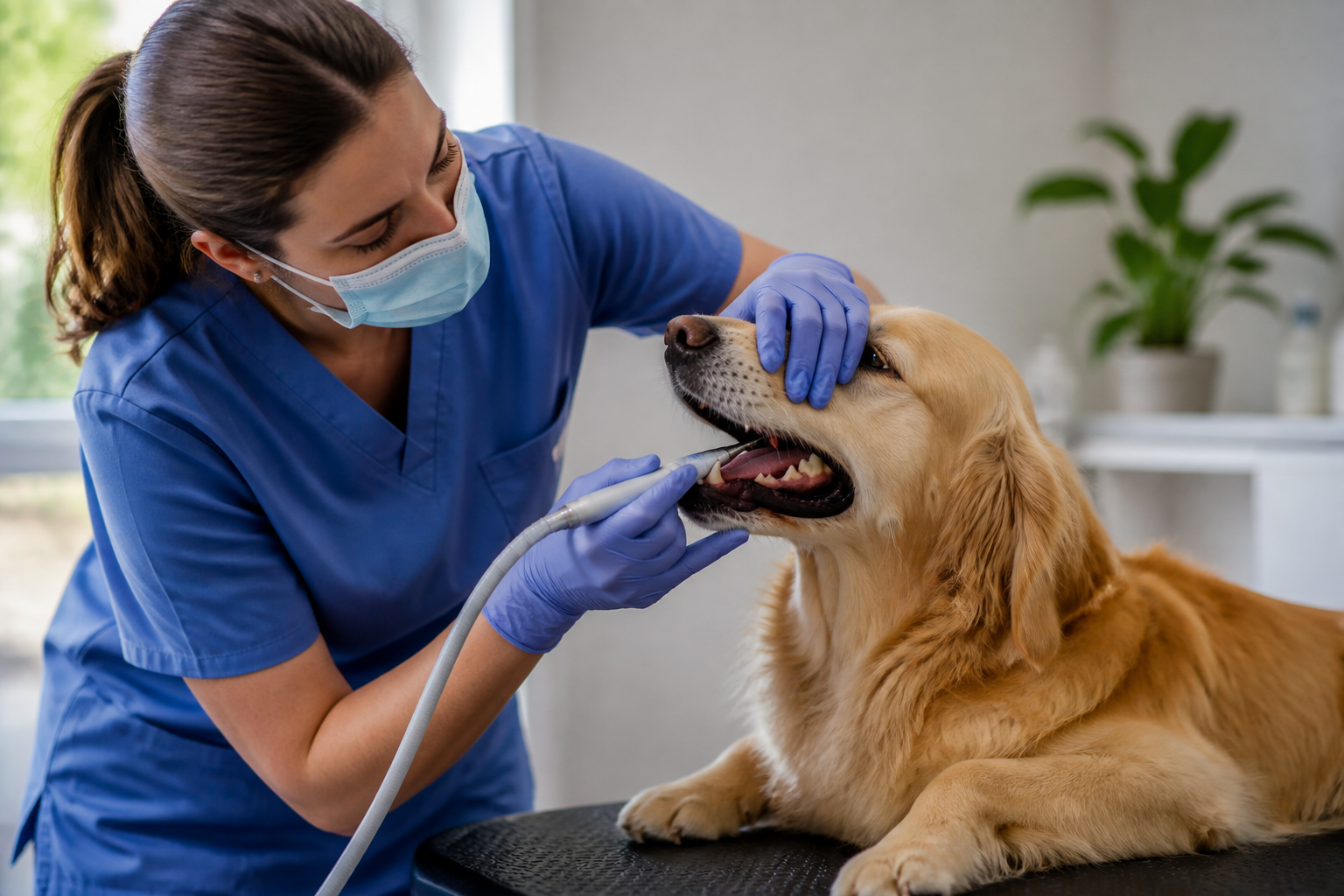
After the exam and X-rays, it is time for the actual cleaning. This process is called scaling. Most vets use an ultrasonic scaler. This tool uses high-frequency vibrations to shatter and remove large pieces of tartar. It also sprays a constant stream of water to keep the tooth cool and wash away debris.
The most important part of this step is subgingival scaling. This means cleaning the area between the tooth and the gum. Tartar in this area is what causes the most damage to the structures holding the tooth in place. After the ultrasonic scaling, the vet may use hand instruments to fine-tune the cleaning and ensure every bit of tartar is gone. For at-home support between appointments, explore our dog dental care category.
Step 4: Polishing the Enamel
Scaling leaves the teeth clean, but the process creates microscopic scratches on the enamel. If those scratches are left alone, they provide a perfect "rough" surface for new plaque to grab onto. This would cause tartar to build up even faster than before.
To prevent this, the vet polishes the teeth. They use a slow-speed handpiece with a soft rubber cup and a special polishing paste. This smooths out the enamel, making it much harder for bacteria to stick to the surface. After polishing, the mouth is rinsed thoroughly to remove any remaining paste or debris.
Bottom line: Scaling removes the problem, but polishing prevents the problem from returning quickly.
Addressing Extractions and Oral Surgery
Sometimes, a cleaning reveals that a tooth is too damaged to save. This is common in older dogs or breeds prone to dental issues, such as Pugs or Yorkies. If a tooth has significant bone loss around the root or is severely fractured, the vet may recommend an extraction.
Extracting a tooth in a dog is a surgical procedure. The vet often uses local anesthesia, similar to a "numbed" jaw at a human dentist, to block pain in that specific area. They then carefully remove the tooth and may use dissolvable sutures to close the gum tissue.
If your dog needs extractions, they may require specialized care afterward. This often includes antibiotics or pain medications. Our pet pharmacy provides access to FDA-approved medications through our partnership with Pet's Choice. If your vet writes a prescription for post-operative care, we can help you fulfill that order conveniently.
The Recovery Process
Most dogs wake up from anesthesia fairly quickly. They are monitored in a quiet, warm area until they are standing and alert. When you pick your dog up, they may be a little groggy or "out of sorts" for the first 12 to 24 hours.
Your vet will provide specific discharge instructions. These usually include:
- Feeding a soft diet for a few days, especially if extractions were performed.
- Monitoring the gumline for any redness or unusual discharge.
- Administering any prescribed medications for pain or infection.
- Restricting heavy exercise for a day or two.
If your dog had extractions, you might notice a tiny bit of blood-tinged saliva for the first day. This is normal. However, if you see active bleeding or if your dog seems to be in significant distress, you should contact your veterinarian immediately.
Maintaining Results at Home
A professional cleaning provides a clean slate. However, plaque begins to form again within just six hours of the procedure. Without a home care routine, the tartar will return.
The best way to maintain those professional results is through daily brushing. Use a toothbrush designed for dogs and toothpaste that is safe for them to swallow. Never use human toothpaste. It contains ingredients like xylitol or high levels of salt that can be toxic to dogs.
In addition to brushing, you can use other tools to support oral health:
- Dental Chews: High-quality options like Greenies Dental Dog Chew - Fresh are designed to scrape plaque away as the dog chews.
- Water Additives: These can help reduce the bacteria load in the mouth.
- Dental Diets: Some prescription diets, such as Farmina Vet Life, are formulated specifically to help manage dental health.
- Chew Toys: Rubber or nylon toys with textures can help massage the gums.
At BaxterBoo, we offer a wide range of these preventive tools. If you use dental treats or specific foods regularly, our Autoship programme is a great way to ensure you never run out while saving on every order. Plus, every purchase earns you points toward our MVP Rewards program.
Understanding the Cost of Care
Owners are often surprised by the price of a dental cleaning. It can range from several hundred dollars to over a thousand if extractions are needed. It is helpful to remember what is included in that price. You are paying for a team of professionals, specialized anesthesia equipment, X-ray technology, and surgical tools.
A "cheap" cleaning often cuts corners on safety, such as skipping the X-rays or the blood work. These are the very things that make the procedure safe and effective. Investing in a thorough cleaning every year or two can actually save you money in the long run. It is much cheaper to clean a tooth than it is to surgically extract a diseased one later.
Key Takeaway: Regular cleanings are a long-term investment in your dog’s comfort and overall health, as dental infections can eventually impact the heart and kidneys.
Specific Needs for Different Breeds
Not every dog needs a cleaning on the same schedule. Breed and size play a huge role in oral health.
Small dogs often have crowded mouths. They have the same 42 teeth as a large dog but much less room for them. This crowding creates tiny gaps where food and bacteria get trapped easily. Small breeds and brachycephalic (flat-faced) breeds like French Bulldogs often need professional cleanings once a year starting at a young age.
Large dogs may be able to go 18 to 24 months between cleanings if they have good chewing habits and a home brushing routine. However, they are more prone to fractured teeth from chewing on hard objects like rocks or thick bones. Every dog should have their mouth checked by a vet at least once a year during their regular wellness exam.
Summary of the Dental Cleaning Workflow
To help you visualize the day of the appointment, here is the general flow of the procedure:
- Drop-off and Exam: The vet performs a final check and takes the blood sample.
- Induction: The dog is given a sedative and then placed under general anesthesia with a breathing tube.
- X-rays and Probing: The team looks for hidden disease and charts the health of every tooth.
- Scaling: Tartar is removed from all surfaces, including under the gumline.
- Surgery (if needed): Any diseased or broken teeth are extracted.
- Polishing and Rinse: The enamel is smoothed, and the mouth is cleaned.
- Recovery: The anesthesia is turned off, and the dog is monitored until they are awake.
Vet Tip: Always ensure your vet has a way to reach you during the procedure. If they find an unexpected issue on an X-ray, they will need your permission to perform an extraction while the dog is already under anesthesia.
Conclusion
Professional dental cleanings are a cornerstone of modern pet care. While the idea of anesthesia can be intimidating, the process is a highly controlled medical procedure that addresses the root causes of bad breath and oral pain. By removing tartar from under the gumline and identifying hidden issues with X-rays, your vet can prevent serious health complications. At BaxterBoo, we want to help you maintain those professional results at home. Whether you need a starter kit for brushing or a recurring supply of dental treats through our Autoship program, we have the tools you need to keep your dog's smile healthy. For dogs who need specific dental diets or medications after their visit, remember that our pharmacy is here to help with all your prescription needs.
FAQ
How long does a professional dog teeth cleaning take?
A routine cleaning usually takes between 45 and 90 minutes. If the vet finds several teeth that need to be extracted or if the tartar buildup is very heavy, the procedure can take longer. This time includes the cleaning itself, the X-rays, and the time needed to safely induce and monitor anesthesia.
Is it safe to clean a senior dog's teeth under anesthesia?
Yes, it is generally safe as long as the vet performs a thorough pre-anesthetic screening. Age is not a disease, but senior dogs are more likely to have underlying issues with their kidneys or heart. By running blood work and perhaps an EKG beforehand, the vet can tailor the anesthesia protocol to be as safe as possible for an older pet.
Can I just use a dental scaler at home instead of going to the vet?
You should never use a metal dental scaler on your dog at home. It is very easy to slip and slice the gums or damage the delicate enamel of the teeth. Furthermore, scaling an awake dog only removes the visible tartar and does nothing to help the disease hiding under the gumline where it matters most.
How often should my dog have their teeth professionally cleaned?
Most veterinarians recommend a professional cleaning once a year for small and medium breeds. Large breeds may be able to wait every two years if their teeth look good during annual exams. Your vet will give you a specific recommendation based on your dog's breed, age, and how much tartar they tend to accumulate.






