
 Save 15% on your 1st Autoship learn more

 Email us
 Live Chat
 FAQs
FAQs





Introduction
You are finishing up a grooming session at home and notice your dog has a bit of "dragon breath." You remember seeing a DIY tip online about using baking soda to scrub away plaque. It sounds like a cheap and easy fix. However, before you reach for that orange box in your pantry, it is important to know if it is actually safe for your pet. At BaxterBoo, we see many owners looking for practical ways to manage dental health between professional cleanings. While baking soda is a common household staple, it is not the ideal solution for canine oral care. This post covers why baking soda can be risky, what you should use instead, and how to build a dental routine your dog might actually enjoy. We want to help you keep those puppy kisses fresh without causing a stomach ache.
The Problem With Baking Soda for Dogs
Baking soda is also known as sodium bicarbonate. It is a common ingredient in human toothpaste because it is abrasive and helps scrub away stains. While it is technically non-toxic in very small amounts, using it as a primary tooth cleaner for your dog presents several issues. Dogs do not know how to spit. Whatever you put in their mouth will be swallowed.
The biggest concern is the high alkaline content of baking soda. A dog's stomach is naturally very acidic to help them process proteins and bone material. When a dog swallows a significant amount of baking soda, it can neutralize that stomach acid. This lead to digestive upset, gas, and discomfort. In large quantities, it can even cause electrolyte imbalances.
Another hurdle is the taste. Most dogs find the salty, bitter flavor of baking soda quite unpleasant. If you use something that tastes bad, your dog will quickly learn to hide when they see the toothbrush. Successful dental care relies on cooperation. Starting with a substance your dog hates makes the process much harder for both of you.
Quick Answer: You should generally avoid using baking soda to clean your dog's teeth. It is highly alkaline and can upset their stomach if swallowed. Professional dog toothpaste is safer and more effective.
Why Dog Toothpaste is the Gold Standard
If you visit our warehouse or browse our site, you will see a variety of toothpaste options made specifically for pets. These formulas are designed with the canine mouth in mind. Unlike human products, they are safe to swallow and come in flavors that dogs actually find delicious.
The secret to these pastes is often enzymes. Enzymatic toothpastes, such as those from Virbac or Vetoquinol, do more than just scrub the surface. They contain proteins that help break down the biofilm where bacteria live. This helps reduce plaque even if you cannot reach every single corner of the mouth with the brush.
Flavor is the other major advantage. Most pet pastes come in flavors like poultry, beef, or peanut butter. This turns the brushing session into a treat rather than a chore. When your dog looks forward to the taste of the toothpaste, they are much more likely to sit still and let you work.
For a specific option, consider Virbac C.E.T. Enzymatic Pet Toothpaste for Dogs and Cats - Poultry.
Comparing Toothpaste Options
| Feature | Baking Soda | Dog Toothpaste |
|---|---|---|
| Safety | Risky if swallowed | 100% safe to swallow |
| Flavor | Salty and bitter | Poultry, Beef, or Mint |
| Cleaning Action | Abrasive only | Enzymatic and abrasive |
| pH Balance | Highly alkaline | Formulated for dogs |
The Dangers of Human Toothpaste
If you run out of dog toothpaste, you might be tempted to grab your own tube. This is a dangerous mistake. Many human toothpastes contain xylitol, which is a common sugar substitute. Xylitol is extremely toxic to dogs. Even a small amount can cause a rapid drop in blood sugar and liver failure.
Human toothpaste also contains fluoride. While fluoride is great for human enamel, it is toxic to dogs if swallowed in the amounts found in a typical brushing session. Stick to products formulated specifically for animals to keep your pet safe.
Key Takeaway: Never use human toothpaste on a pet. The ingredients like xylitol and fluoride are dangerous for their internal organs.
Choosing the Right Tools for the Job
The brush you choose is just as important as the paste. A standard human toothbrush is often too hard and can damage a dog's sensitive gums. You have several better options available.
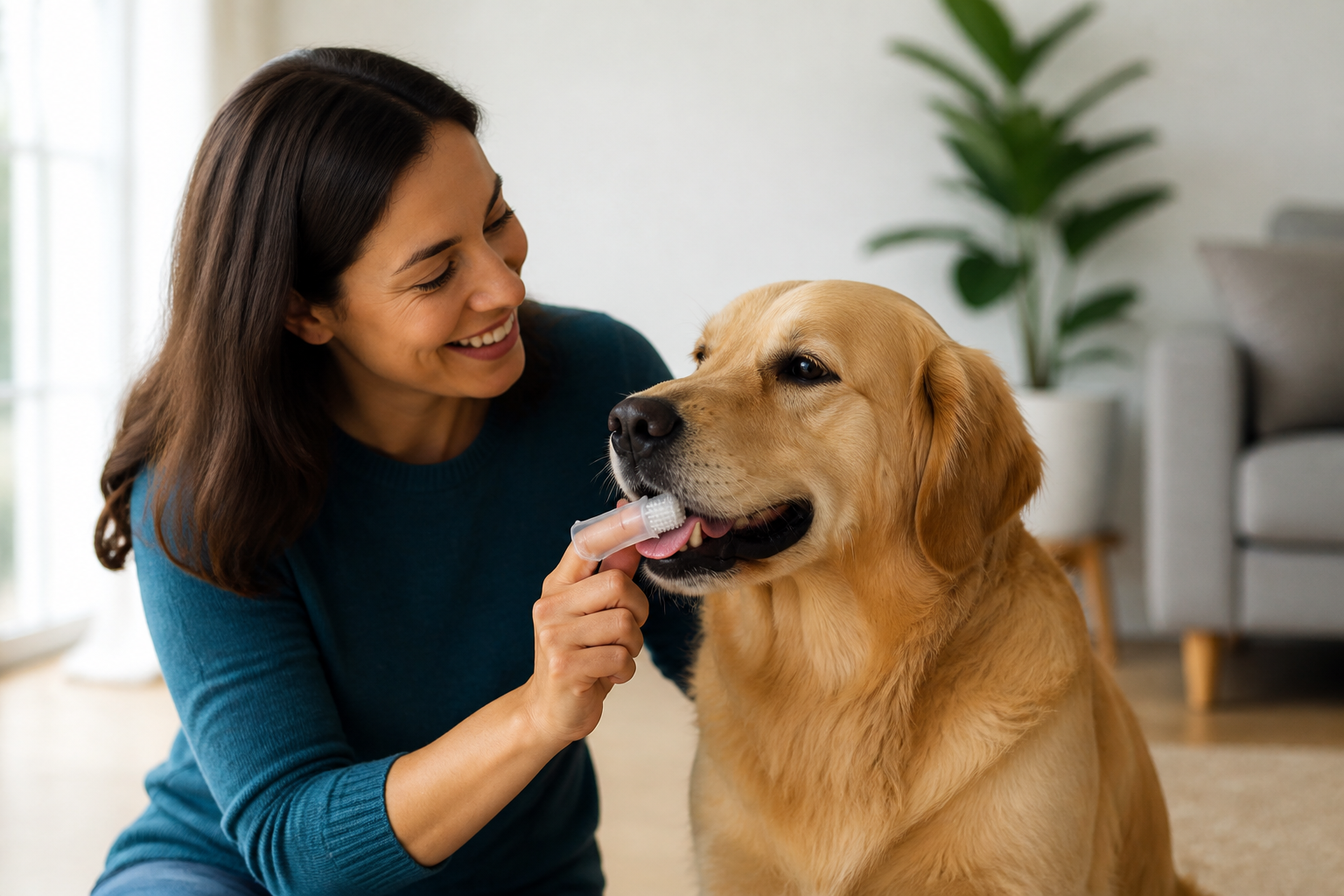
- Finger Brushes: These are small, silicone caps that fit over your pointer finger. They have soft nubs that allow you to feel exactly where you are cleaning. These are excellent for puppies or dogs that are nervous about a long-handled brush.
- Double-Headed Brushes: These brushes have two sets of bristles that wrap around the tooth. They allow you to clean the front and back of the tooth at the same time. This can cut your brushing time in half.
- Soft-Bristled Pet Brushes: These look like human brushes but have much softer bristles and angled heads. They are great for reaching the large molars in the back of the mouth.
At BaxterBoo, we carry a wide range of these tools in our Medical and Mobility section. Selecting the right size for your dog's mouth ensures they stay comfortable during the process. You can also browse our dog grooming supplies for pet-friendly brushing tools.
Step-by-Step Training for Brushing
Most dogs do not naturally enjoy having someone poke around in their mouth. You need to build trust through a slow training process. This might take a few weeks, but the results are worth it.
Step 1: Start with handling. Spend a few days just lifting your dog's lips and touching their teeth with your bare finger. Give them a treat every time they let you do this.
Step 2: Introduce the flavor. Put a small dab of dog-safe toothpaste on your finger and let them lick it off. Do this for a few days until they get excited when they see the tube.
Step 3: The finger rub. Put some paste on your finger and gently rub it against their front teeth. Keep the session very short, around ten seconds.
Step 4: Introduce the brush. Let them sniff and lick the brush first. Then, try brushing just the front teeth in a circular motion.
Step 5: Work toward the back. Gradually increase the time you spend brushing. Focus on the outside of the teeth, as this is where most tartar builds up.
For additional guidance, read our tips for building a consistent pet dental care routine.
Vet Tip: If your dog's gums bleed during brushing, it may be a sign of gingivitis. Consult your veterinarian for a professional oral exam to ensure there are no underlying infections or painful teeth.
Alternatives to Brushing
We know that some dogs simply will not tolerate a toothbrush. If you find yourself in a daily wrestling match, it might be time to try other methods. While brushing is the most effective way to remove plaque, these alternatives can help support oral health. Explore our dog dental care collection for toothpaste, chews, water additives, and other oral-care products.
Dental Chews and Treats
Products like Greenies or dental sticks are designed to be abrasive. As your dog chews, the texture of the treat scrapes against the tooth surface. This helps mechanically remove plaque before it hardens into tartar. These treats often contain ingredients that help freshen breath as well.
Dental Toys
Rubber toys with deep ridges or nubs can also help. When a dog chews on a textured Kong or similar toy, it massages the gums and cleans the base of the teeth. You can even smear a little enzymatic toothpaste inside the grooves of a toy to make it more effective.
Water Additives
Water additives are a low-effort way to fight bacteria. You simply add a capful to your dog's water bowl. These solutions contain safe antimicrobial agents that help reduce the bacterial load in the mouth throughout the day.
Understanding Plaque vs. Tartar
It is helpful to understand what you are actually fighting. Plaque is a soft, sticky film of bacteria that forms on the teeth within hours of eating. At this stage, it is easy to remove with a brush or a chew.
If plaque is not removed, it reacts with the minerals in your dog's saliva. Within 48 to 72 hours, it hardens into tartar, also known as calculus. Once plaque has turned into tartar, it is like concrete. You cannot brush it off. Only a professional veterinary cleaning with specialized tools can remove tartar.
Regular home care is about stopping that transition. By brushing daily or using dental chews, you keep the plaque from ever becoming permanent tartar.
For more information about warning signs, read how to recognize dental disease in dogs.
Key Takeaway: You have about a 48-hour window to remove plaque before it hardens. This is why consistency is more important than the length of each brushing session.
The Role of Diet in Dental Health
What your dog eats every day matters. While wet food is often more palatable, it does not provide any mechanical cleaning for the teeth. In fact, soft food can often get stuck in the gum line and contribute to decay.
Dry kibble provides some scraping action, but many dogs swallow their kibble whole. There are specific prescription dental diets designed with a larger, fibrous kibble structure. These do not shatter when bitten. Instead, the tooth sinks into the kibble, which scrubs the surface all the way to the gum line.
If your vet recommends a specific dental diet like Royal Canin Dental or Farmina Vet Life, you can find these through the BaxterBoo pharmacy. We partner with Pet's Choice to provide FDA-approved prescription foods and medications for chronic health needs.
Signs of Dental Disease to Watch For
Even with the best home care, problems can arise. You should check your dog's mouth once a week for any changes. If you notice any of the following, it is time to schedule a visit with your veterinarian.
- Extreme Bad Breath: While "dog breath" is normal, a truly foul, rotting smell usually indicates an infection.
- Red or Swollen Gums: Healthy gums should be a light pink. Redness along the tooth line is a sign of inflammation.
- Difficulty Eating: If your dog drops food or only chews on one side, they may have a painful tooth.
- Discolored Teeth: Yellow or brown buildup near the gums is a clear sign of tartar.
- Loose or Missing Teeth: This often indicates advanced periodontal disease that has affected the bone.
Vet Tip: Dental disease is not just about the mouth. Bacteria from infected gums can enter the bloodstream and cause damage to the heart, liver, and kidneys. Maintaining oral health is a key part of your dog's overall longevity.
Natural Support for Fresh Breath
If you are looking for natural ways to support your dog's oral health beyond the brush, there are a few safe options. These do not replace the need for mechanical cleaning but can help with odor and gum health.
- Coconut Oil: It has natural antimicrobial properties. You can rub a small amount on your dog's gums or let them lick it as a treat. It usually tastes much better to them than baking soda.
- Fresh Parsley: Chopping a bit of fresh parsley into their food can help neutralize odors. It is a natural breath freshener that is safe for most dogs.
- Crunchy Vegetables: Raw carrots or apple slices (without seeds) provide a safe, crunchy way to scrub teeth. They are low in calories and high in fiber.
Creating a Sustainable Routine
The best dental plan is the one you actually stick to. Do not feel guilty if you cannot brush every single day. Start by aiming for three times a week. This is often enough to stay ahead of the plaque-to-tartar transition.
Keep your supplies in a place where you will see them. If the toothpaste is hidden in a drawer, you will likely forget to use it. Many owners find it easiest to brush right after the final walk of the evening or while the dog is relaxing on the couch.
Remember to use positive reinforcement. Your dog should associate dental time with praise and rewards. Over time, many dogs will see the toothbrush and come running because they know a tasty poultry-flavored treat is coming.
Bottom line: Skip the baking soda and invest in a quality enzymatic pet toothpaste and a soft brush for the safest, most effective results.
Why Quality Gear Matters
When you choose products for your dog, quality counts. Cheap brushes can have sharp plastic edges that scratch the mouth. Sub-par toothpaste might contain artificial colors or sweeteners that are not ideal for your pet's long-term health.
At BaxterBoo, we handpick every product we carry. We look for brands with a history of safety and effectiveness. Whether you are looking for a basic finger brush or a professional-grade dental kit, we want to make sure you have tools that work.
If you are looking to save on your regular dental supplies, consider our Autoship programme. You can set up recurring deliveries of toothpaste and dental chews so you never run out. Plus, you get savings on your first order and a free MVP Gold membership, which helps you earn rewards on every purchase.
You can also explore the MVP Rewards programme to learn more about available membership benefits.
Final Thoughts on Baking Soda and Safety
While baking soda is a great tool for cleaning your kitchen sink, it is not the right choice for your dog's mouth. The risks of stomach upset and the unpleasant taste make it more of a headache than a help. By choosing a vet-approved toothpaste and a soft brush, you are making a much better investment in your dog's health.
Consistent home care can save you hundreds of dollars in veterinary costs over your dog's lifetime. More importantly, it keeps your pet comfortable and prevents the pain associated with dental disease. If you are unsure which brush or paste is right for your dog's size and breed, our team is always here to help you find the right fit.
Check out our dog dental care products to get started on a safer, more effective routine today.
FAQ
Is baking soda toxic if my dog licks a little bit?
A small lick of baking soda is generally not toxic, but you should not use it as a regular toothpaste. If your dog swallows a large amount, it can cause significant stomach upset and throw off their body's pH balance. It is always safer to use a product formulated specifically for dogs.
Can I use a human toothbrush on my dog?
You can use a human toothbrush if it has very soft bristles, but a dedicated pet toothbrush is usually a better choice. Pet brushes are angled to reach the back molars and often have softer bristles to protect sensitive canine gums. Finger brushes are also a great alternative for smaller dogs or puppies.
How do I know if my dog needs a professional cleaning?
If you see thick brown or yellow buildup on the teeth that does not come off with brushing, your dog likely has tartar. Other signs include persistent bad breath, bleeding gums, or loose teeth. Your veterinarian can perform an oral exam and let you know if a professional cleaning under anesthesia is necessary.
What if my dog hates the taste of dog toothpaste?
If your dog dislikes a specific flavor, try a different one. Most brands offer poultry, beef, malt, and mint options. You can also try using a bit of coconut oil on the brush first to get them used to the sensation before introducing an enzymatic paste again.






