
 Save 15% on your 1st Autoship learn more

 Email us
 Live Chat
 FAQs
FAQs





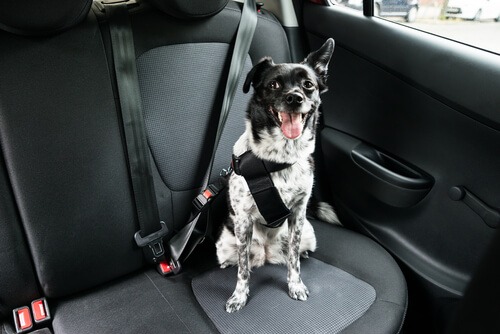
If you are taking your furry friend along for the ride with you, around the corner or a long road trip, it is important to properly secure your pooch. In fact, some states require it and may fine you should your dog be hurt in an accident due to improper restraints. To protect both you and your pup, there are a number of different restraint options to choose from. Depending upon the size and temperament of your dog, any of the available choices may work.
Seatbelts or Harnesses
There are a variety of doggy seatbelts and harness options. Some seatbelts connect and work with the regular car seatbelt, while others operate as their own belt and connect directly to the clip. This can be a good option for a dog that is even-tempered and able to sit still in the seat. If your pup likes to roam, a harness may be a more comfortable option. The harness usually still connects to the seat belt, but usually sits around the shoulders, providing a more snug fit, while still allowing some wiggle room, in case your dog wants to peer out the window.
Keep in mind that if the harness has too much give it can be dangerous in the case of an accident. Especially if your dog is larger, the harness may not keep them in place, but rather make your pup into a projectile object, which can be dangerous for all occupants of the vehicle. In addition, some seatbelt restraints may not be as effective if the clips are easy to disengage. In such cases, dogs may accidentally press them and escape from the restraint, leaving them free to roam the vehicle.
Booster Seats
Booster seats are beneficial for smaller dogs. Just like for a child, the booster sit helps the dog to sit up higher, which can be perfect for pups or small dogs that enjoy peering out of the window. Also similar to regular booster seats, if they do not come with their own restraint, it may be necessary to buy an accompanying safety harness or belt to secure your pup for the ride. Otherwise, the dog may easily slip off or be thrown out of the seat at a quick stop or an unforeseen accident.
Carrier
Though carriers are usually used for airline travel, they may also be a great option for anxious or extremely active dogs, as well as those not fully potty trained. These carriers can most safely be stored on the floor behind the front seat. If the carrier is too large for this area, you may place it in the back compartment, but avoid strapping it in and be mindful of “crumple zones” of your vehicle. The carrier should be large enough for the dog to walk and turn around in. Make sure that the carrier is well ventilated for your pup’s comfort. You may also consider adding a comfortable doggy bed or blankets to make it more inviting. Try to get your dog accustomed to the carrier before your trip, by leaving the door open for him to explore, and occasionally feeding him and giving him treats inside the unit. If you select this option on longer trips, stay mindful of your pooch and allow for stretch and potty breaks.
Barrier
A barrier is a restraint option that provides your dog with the most space to move around. This can be quite useful on long trips, so that your pup can stretch its legs without you having to stop as often. There are various barrier options available, and you want to select the right one. Whichever option you go with, make sure that it connects properly in your vehicle and complies with RTA standards. Also, keep in mind that though it provides the greatest amount of convenience, it does little to secure your pet in case of an accident, so your pup is at greater risk should an incident occur.
Truck Bed Safety
Many times, you may see a dog riding in the back of a truck bed. For well-trained, non-skittish dogs, this could be a viable option. However, there are additional safety measures that you should account for. Some sort of restraint is still necessary, even if you are not worried about your pup jumping out. In the case of an accident, you do not want to chance your dog falling out or being thrown out. Therefore, some type of restraint is a good idea. If you choose a leash or harness, make sure that it is not too long, otherwise your dog could end up hanging if thrown from the vehicle. Also, ensure that there are no large objects in the truck bed with your dog that can move around and injure him. If you are in a sunny area, try to provide sun protection for your pooch, especially for a long trip.
General Safety
Unless your pup is in a carrier, traveling in the front seat can be dangerous. In the case of an accident where the airbags deploy, your dog can be seriously injured, or accidently injure you. Therefore, it is a general rule to try to keep your furry friend in the back seat. However, if there is no other option, a harness that is firmly anchored with little give is probably the best option.
If your pup gets anxious or car sick, there are a few options that you have. Blocking off his ability to see out the window can help to reduce nausea and possibly some anxiety. However, if your pup is anxious due to previous bad car experiences, then you may need to train your pup by providing treats as they get in the car, and taking short test trips around your neighborhood, gradually extending the length of travel.
Riding in the car can be a joy for many dogs, especially if they enjoy the destination. Make sure that your pup has a safe and stress free experience by employing the proper restraint device. It may take time to find the best restraint option for you and your pet, but their safety is definitely worth it.






