Save 15% on your 1st Autoship learn more

 Email us
 Live Chat
 FAQs
FAQs





Introduction
You are petting your cat and notice a dusting of white specks on their dark fur. At first, you might think it is just dust or litter, but the flakes keep appearing. This is a common sight for many pet owners, especially during the dry winter months or as a cat enters their senior years. While it might seem like a simple cosmetic issue, flaky skin is often a signal from the body that something else needs attention. At BaxterBoo, we know that your cat’s coat is a reflection of their overall wellness. This post covers the different types of shampoos available for feline dandruff, how to identify the cause of the flakes, and when a bath is the right solution. Our goal is to help you restore your cat’s coat to its natural, glossy state while keeping them comfortable.
Quick Answer: The best shampoo for cat dandruff is a pH-balanced, soap-free formula containing soothing ingredients like colloidal oatmeal or aloe vera. If the dandruff is caused by a medical condition like a fungal infection, you will likely need a medicated shampoo prescribed through a pharmacy.
Understanding Feline Dandruff and Flaky Skin
Dandruff in cats is technically known as seborrhea. It happens when the sebaceous glands in the skin produce too much sebum, or when the skin cells renew themselves too quickly. This results in the visible white flakes you see on the fur. In some cats, the skin feels very dry and tight. In others, the skin may actually feel greasy or oily to the touch.
It is important to distinguish between occasional dry skin and chronic dandruff. Occasional flakes might appear if the humidity in your home drops or if your cat has not been grooming as thoroughly as usual. Chronic dandruff is persistent and often comes with other signs of irritation. You might notice your cat scratching more often or see patches of redness under the fur.
Key Takeaway: Feline dandruff is a symptom rather than a disease itself. Identifying whether the skin is dry or oily will help you choose the right product for their needs.
Common Causes of Flakes in Cats
Before you reach for a bottle of shampoo, you need to understand why the flakes are there. Treating the symptom without addressing the cause usually means the dandruff will return.
Environmental and Lifestyle Factors
Low humidity is one of the most frequent causes of dry skin. When the heater runs in the winter, it strips moisture from the air and your cat’s skin. Diet also plays a massive role. If a cat is not getting enough Omega-3 fatty acids, their skin can become brittle. We often suggest supplements from brands like Zesty Paws to help support skin health from the inside out.
Mobility and Grooming Issues
Cats are famous for their grooming habits, but they can struggle to reach certain spots as they age. Senior cats with arthritis or overweight cats often have a buildup of dandruff on their lower back and near the base of the tail. If they cannot reach these areas to spread their natural skin oils, the skin becomes dry and the dead cells accumulate.
Medical Conditions and Parasites
Some types of dandruff are actually caused by external factors. Walking dandruff is a nickname for a specific type of mite called Cheyletiella. These mites look like moving flakes of skin. Other issues like ringworm, which is a fungal infection, or flea allergy dermatitis can also cause significant flaking and irritation.
Vet Tip: If your cat has dandruff along with hair loss, sores, or an unusual odor, schedule a visit with your veterinarian. These are often signs of an underlying infection or parasite that a standard grooming shampoo cannot fix.
What to Look for in a Cat Dandruff Shampoo
The feline skin barrier is incredibly delicate. It is much thinner than human skin and has a different pH level. This is why you must never use human dandruff shampoos on a cat. Many human products contain ingredients like zinc pyrithione or high levels of salicylic acid that can be toxic or severely irritating to cats.
For more options, browse our cat grooming collection, which includes shampoos, brushes, wipes, and other coat-care products.
Soothing Ingredients
For general dry skin, look for “soap-free” or “hypoallergenic” on the label. These formulas clean without stripping away the natural oils the skin needs.
- Colloidal Oatmeal: This is a gold standard for soothing itchy, dry skin. It creates a protective barrier that helps lock in moisture.
- Aloe Vera: Known for its cooling properties, aloe helps reduce redness and irritation.
- Vitamin E: This antioxidant supports skin cell health and promotes a shiny coat.
- Glycerin: A humectant that draws moisture into the skin.
Ingredients for Oily Dandruff
If your cat’s skin feels greasy, they may need a “keratolytic” ingredient. These help break down the excess oil and remove the buildup of dead skin cells. Salicylic acid is sometimes used in very low, cat-safe concentrations for this purpose, but it should only be used under veterinary guidance or in products specifically formulated for felines.
Avoiding Harsh Chemicals
Read the back of the bottle carefully. Avoid shampoos that contain synthetic fragrances, dyes, or parabens. Cats are meticulous groomers. Anything you put on their skin will eventually be ingested when they lick themselves after the bath. Stick to clean, simple ingredient lists that focus on moisture.
The Role of Medicated Shampoos
Sometimes, an over-the-counter grooming shampoo is not enough. If your vet diagnoses a bacterial or fungal infection, they may recommend a medicated treatment. These products contain active ingredients like chlorhexidine or miconazole.
Our cat skin and coat care collection includes products designed for different coat and skin-care needs. Our pharmacy offers access to FDA-approved medications and prescription pet foods through our partnership with Pet’s Choice. This includes medicated shampoos that treat the root cause of skin infections. If your cat requires a specialized prescription diet to manage allergies, such as Farmina Vet Life, our pharmacy can help fulfill those needs. Using a medicated shampoo as directed by a professional ensures that you are killing the infection rather than just washing away the flakes.
Key Takeaway: Medicated shampoos are therapeutic tools. They should be used for the specific duration recommended by your vet to prevent the recurrence of skin issues.
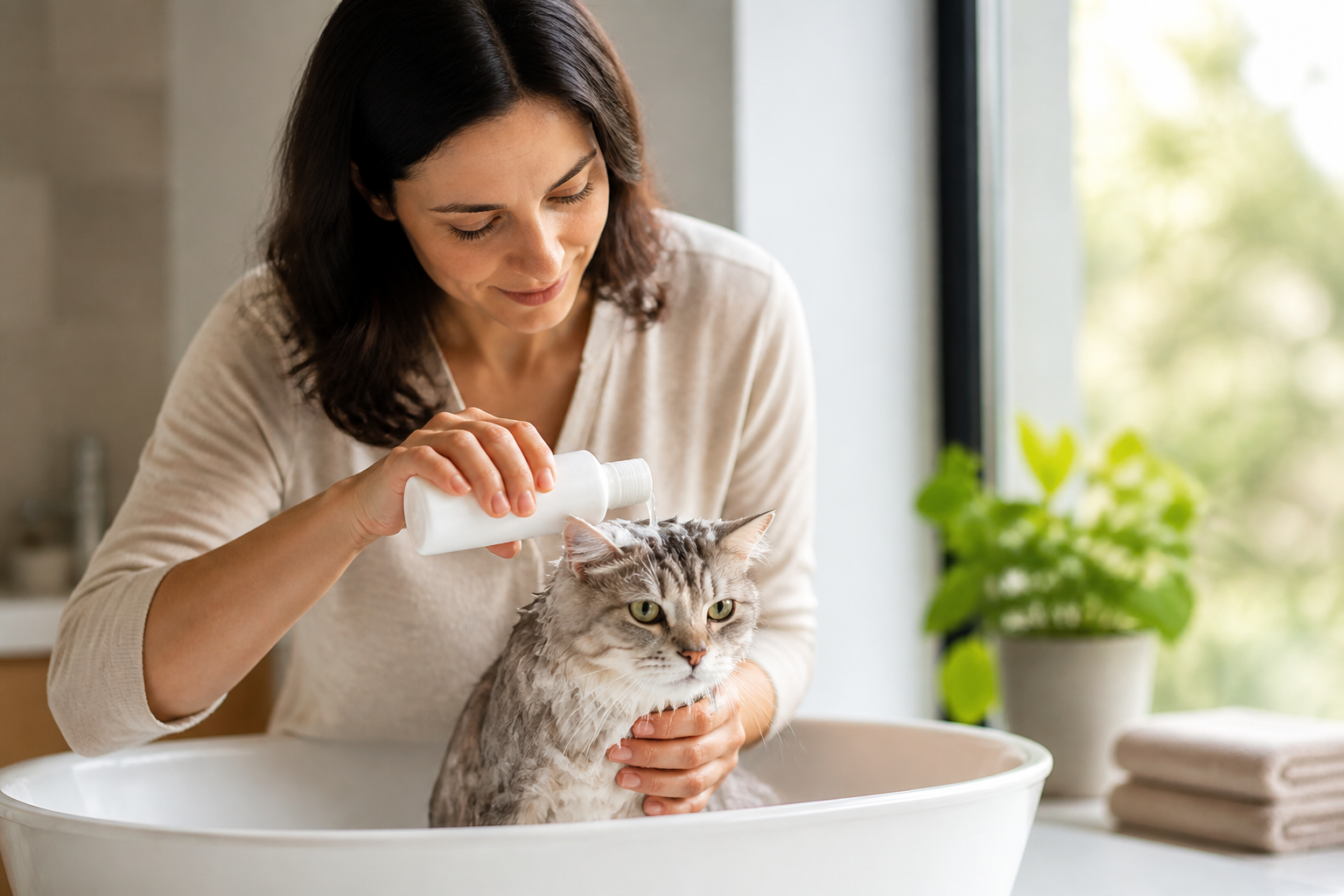
How to Bathe a Cat with Dandruff
Most cats do not enjoy water, so the process should be as quick and calm as possible. If your cat is highly stressed by water, you might consider a waterless shampoo or grooming foam. Vet’s Best Dry Clean Waterless Cat Bath allows you to massage the cleaning agents into the fur and towel them off without a full soak.
Step 1: Brush the coat thoroughly. / Brushing removes loose fur and breaks up mats. This allows the shampoo to actually reach the skin where the dandruff is forming.
Step 2: Prepare the space. / Place a rubber mat or a towel in the bottom of the sink or tub. This gives your cat grip and prevents them from slipping, which reduces their anxiety.
Step 3: Use lukewarm water. / Water that is too hot will further dry out the skin and cause discomfort. Use a gentle spray or a pitcher to wet the fur, avoiding the face and ears.
Step 4: Massage and rinse. / Apply the shampoo and work it into a light lather. Focus on the areas with the most flakes. Rinse thoroughly until the water runs clear. Any soap left behind will cause more itching and flaking once it dries.
Step 5: Dry gently. / Pat the cat dry with a soft towel. Avoid using a hair dryer on a high heat setting, as this can zap the moisture right back out of the skin you just treated.
Supporting Skin Health Beyond the Bath
A shampoo can treat the surface, but long-term skin health starts from within. Regular grooming with a soft-bristled brush is the best way to prevent dandruff from returning. Brushing stimulates the skin and helps distribute natural oils across the entire body.
For additional grooming guidance, read Why Do Cats Need Whiskers?, which also discusses gentle brushing and keeping sensitive areas clean.
Dietary support is the next pillar of skin health. We carry several premium brands like Orijen, Acana, and Stella and Chewy’s in our cat food collection that focus on high-quality proteins and healthy fats. If your cat has a sensitive stomach or food allergies that manifest as skin problems, switching to a limited-ingredient diet like those from The Honest Kitchen may help.
Finally, keep an eye on your home environment. Using a humidifier during the winter can make a massive difference for both you and your cat. Ensure your cat always has access to fresh, clean water to stay hydrated.
Bottom line: A combination of the right shampoo, regular brushing, and a nutrient-rich diet is the most effective way to eliminate cat dandruff.
Summary of Dandruff Management
Managing cat dandruff is about more than just a quick wash. It requires looking at your cat’s environment, their ability to groom, and their nutritional intake. While a moisturizing shampoo provides immediate relief for dry flakes, persistent issues should always be discussed with a vet to rule out parasites or internal health problems.
- Choose soap-free, hypoallergenic shampoos for dry skin.
- Ensure the product is specifically formulated for the pH of feline skin.
- Brush your cat daily to move oils and remove dead skin cells.
- Consider our pet pharmacy for medicated shampoos if an infection is present.
- Supplement the diet with Omega fatty acids to support the skin barrier.
If you are dealing with a stubborn skin condition, our pharmacy is a great resource for the medications your vet might prescribe. We provide a convenient way to get the treatments your cat needs to feel their best.
FAQ
Can I use my own dandruff shampoo on my cat?
No, you should never use human dandruff shampoo on a cat. Human skin is more acidic than cat skin, and our shampoos often contain chemicals like coal tar or high levels of zinc that are toxic to felines. Using human products can lead to chemical burns, severe irritation, or poisoning if the cat licks their fur.
How often should I bathe a cat with dandruff?
Most cats do not need frequent baths, even with dandruff. Once every 4 to 6 weeks is usually enough for a cat with dry skin. Bathing too often can actually strip away the natural oils and make the dandruff worse. If you are using a medicated shampoo from a vet, follow their specific schedule for the best results.
Does brushing really help with cat dandruff?
Yes, regular brushing is one of the most effective ways to manage mild dandruff. It acts as a manual exfoliant, removing dead skin cells before they can clump into visible flakes. It also stimulates blood flow to the skin and helps spread the cat’s natural sebum, which acts as a built-in moisturizer for their coat.
Is cat dandruff ever an emergency?
Dandruff itself is rarely an emergency, but it can be a sign of a serious condition. If your cat’s skin is bleeding, oozing, or if they have large areas of complete hair loss, you should contact a vet immediately. Additionally, if the “dandruff” appears to be moving, it is likely a parasite infestation that needs prompt medical treatment.