
 Save 15% on your 1st Autoship learn more

 Email us
 Live Chat
 FAQs
FAQs





Introduction
You are relaxing on the couch when your dog leans in for a friendly nuzzle. Suddenly, you are hit with a wave of breath so strong it makes you recoil. Many pet owners assume that "dog breath" is just a natural part of owning a canine. At BaxterBoo, we know that bad breath is actually one of the first signs that your dog needs a dental intervention. If you are wondering whether you should be cleaning those pearly whites, the answer is a definitive yes. Dental disease is one of the most common health issues seen by veterinarians today. It can lead to pain, tooth loss, and even systemic infections that affect the heart and kidneys. This post will cover why dental care is vital, how to do it at home, and when it is time to seek professional help.
Quick Answer: Yes, you should clean your dog’s teeth regularly. Just like humans, dogs develop plaque and tartar that can lead to painful gum disease and serious health complications if left untreated.
Why Dental Hygiene Is Mandatory for Dogs
Most dogs do not show obvious signs of dental pain until a problem is quite advanced. They are experts at hiding discomfort because of their survival instincts. By the time a dog stops eating or starts pawing at its mouth, the dental disease has often reached a severe stage. Plaque begins to form on teeth just hours after a meal. If it is not brushed away, it combines with minerals in the saliva to become tartar. Tartar is the hard, brownish substance you might see near the gumline.
Once tartar forms, it provides a perfect surface for more bacteria to grow. This leads to gingivitis, which is inflammation of the gums. You might notice a thin red line where the teeth meet the gums. If this continues, it turns into periodontal disease. This condition destroys the bone and tissues that hold the teeth in place. At this point, the damage is often irreversible without surgery or extractions.
The bacteria found in an infected mouth do not stay there. They can enter the bloodstream through the inflamed gum tissue. Once in the blood, these bacteria can travel to the heart, liver, and kidneys. This can cause micro-abscesses and long-term organ damage. Keeping the mouth clean is not just about fresh breath. It is a fundamental part of maintaining your dog's overall longevity and quality of life.
For additional guidance on warning signs, read our guide to recognizing bad teeth in dogs.
The Practical Benefits of Regular Cleaning
Cleaning your dog's teeth provides immediate and long-term advantages. The most obvious benefit is the improvement in breath quality. While no dog will have minty-fresh breath, it should not be offensive. Regular cleaning removes the bacteria that produce those foul-smelling gases.
Another major benefit is cost savings. Professional dental cleanings at a veterinary clinic can be expensive. They often require blood work, anesthesia, and sometimes X-rays or extractions. While some professional care is usually necessary during a dog's life, home care can reduce the frequency of these visits. It also lowers the risk that your dog will need expensive oral surgery.
Finally, a clean mouth means a more comfortable dog. Dental pain can make a dog irritable or lethargic. You might find that your senior dog seems "younger" or more energetic after their dental health improves. They can chew their toys and eat their food without the constant throb of infected gums.
Key Takeaway: Oral health is a window into a dog's overall physical condition. Preventing plaque buildup protects the heart and kidneys while saving you money on emergency vet bills.
How to Clean Your Dog's Teeth at Home
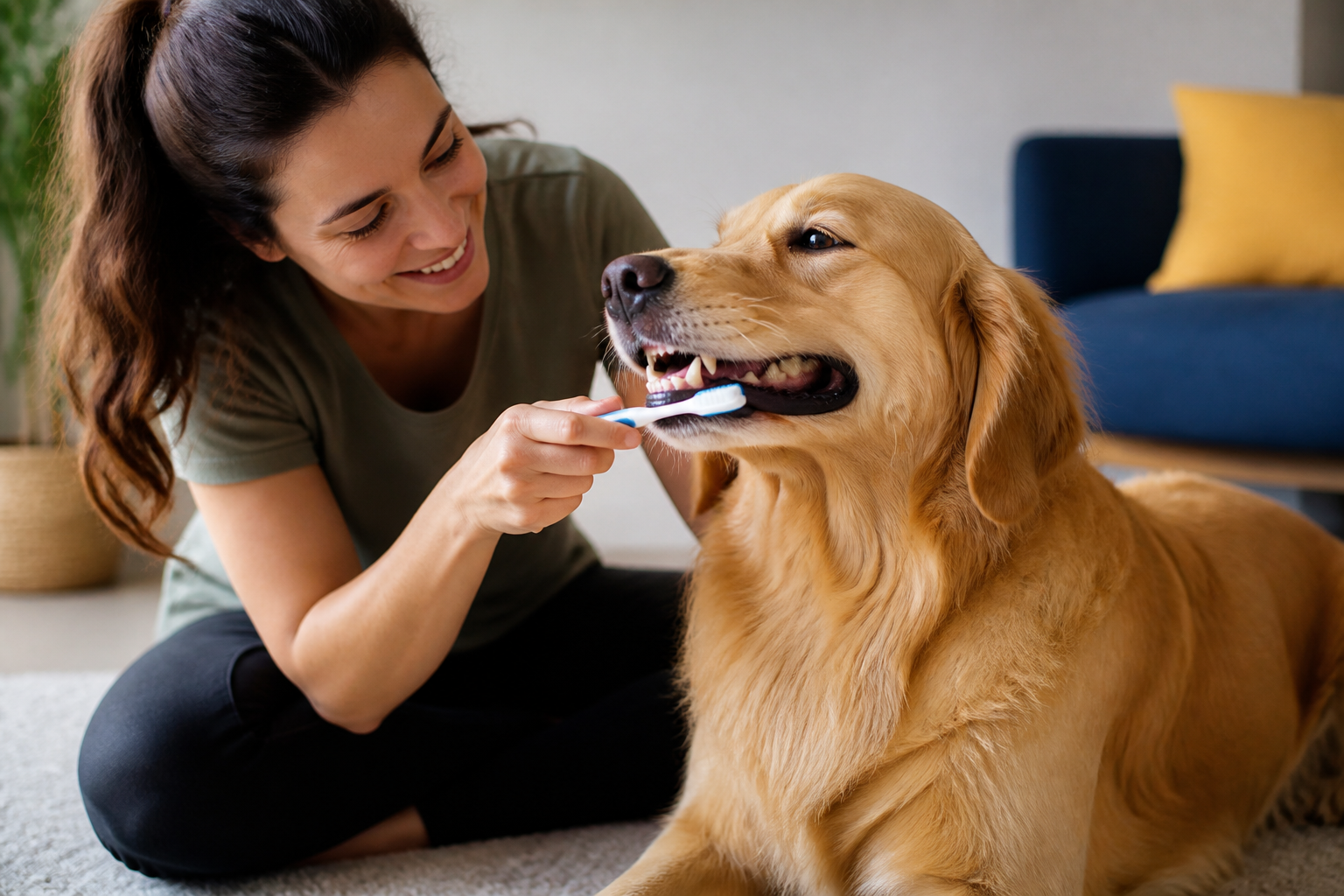
Brushing is the gold standard for home dental care. It is the most effective way to remove plaque before it hardens into tartar. You do not need to spend an hour on it. Even a quick session a few times a week makes a huge difference.
For more ideas on building a consistent routine, explore these pet dental care tips.
Choosing the Right Tools
Never use human toothpaste for your dog. Human toothpaste contains foaming agents and often includes xylitol. Xylitol is a sweetener that is highly toxic to dogs even in small amounts. Instead, use a toothpaste specifically formulated for pets. These come in flavors like poultry, beef, or peanut butter to make the experience more enjoyable for the dog.
For the brush, you have options. A standard pet toothbrush with a long handle helps you reach the back molars. A finger brush is a small rubber cap with bristles that fits over your index finger. This is often better for dogs who are nervous about having things in their mouths.
The Brushing Process
Step 1: Introduce the paste. / Let your dog lick a small amount of pet toothpaste off your finger. This builds a positive association with the flavor.
Step 2: Touch the mouth. / Gently lift your dog's lips and rub your finger along their gums. Do this for a few days until they are comfortable with the contact.
Step 3: Use the brush. / Apply a small amount of paste to the brush. Focus on the outside surfaces of the teeth where the lips touch. You do not usually need to brush the inside surfaces.
Step 4: Keep it short. / Start with just a few teeth and gradually work your way around the whole mouth. Reward your dog with a treat or praise afterward.
Vet Tip: If you notice your dog's gums bleeding significantly during brushing, or if they seem to be in sharp pain, stop immediately. These are signs of active infection or advanced gum disease. Schedule a veterinary exam to assess the health of the teeth before continuing an at-home routine.
Dental Chews and Functional Toys
Not every dog will tolerate a toothbrush right away. While brushing is best, dental chews and toys are helpful secondary tools. These items work through mechanical abrasion. As your dog chews, the texture of the treat scrapes against the surface of the tooth.
You can find additional options in our dog dental care category.
Look for chews that are specifically designed for dental health. Many of these products contain ingredients that help break down plaque chemically as well. However, be mindful of the calorie count. Dental treats can be high in calories, so you may need to adjust your dog's daily meal portions to prevent weight gain.
Toys can also help. Rubbery toys with nubs or ridges are great for massaging the gums and scraping the teeth. Avoid toys that are too hard, such as natural bones, antlers, or heavy nylon bones. If a toy is hard enough that you cannot indent it with your thumbnail, it is hard enough to fracture a dog's tooth. Fractured teeth are painful and almost always require professional extraction.
Checklist for Choosing Dental Products
- Look for the VOHC (Veterinary Oral Health Council) seal of approval.
- Ensure the size is appropriate for your dog to prevent choking.
- Check that the texture is firm but has some "give" to avoid tooth breakage.
- Avoid products with high sugar or artificial filler content.
The Role of Diet in Dental Health
What your dog eats can influence how quickly plaque builds up. There is a common myth that all dry kibble cleans teeth simply because it is crunchy. Most standard kibble actually shatters as soon as the tooth hits it, providing very little cleaning action.
Specific dental diets are different. These kibbles are usually much larger and have a fibrous texture that does not shatter. The tooth sinks into the kibble, allowing the fibers to scrub the tooth surface. We often see these diets recommended for dogs who are prone to rapid tartar buildup.
For broader guidance on nutrition and supplements at different ages, read this life-stage pet nutrition guide.
Our pharmacy carries several prescription dental diets through our partnership with Pet's Choice. These specialized foods are formulated to provide complete nutrition while actively fighting plaque and tartar. If your vet recommends a specific prescription diet for your dog's oral health, you can easily manage those refills through our pet pharmacy.
Water Additives and Oral Rinses
For dogs that are difficult to handle, water additives can be a helpful addition to the routine. These are tasteless or lightly flavored liquids that you add to your dog's daily water bowl. They contain enzymes or antiseptic ingredients that help reduce the bacterial load in the mouth.
Oral rinses work similarly but are applied directly to the gums. These are useful if your dog has a minor gum irritation. While these products are not as effective as physical brushing, they are a great "better than nothing" option for pets that do not allow their mouths to be touched. They work best when used in combination with dental chews.
Bottom line: While chews and additives help, they should be viewed as supplements to brushing rather than total replacements.
Professional Veterinary Dental Cleanings
Even with perfect home care, most dogs will eventually need a professional cleaning. A veterinarian can reach areas that you cannot. Specifically, they can clean the space below the gumline. This is where the most damaging bacteria live.
The Importance of Anesthesia
Many owners are nervous about anesthesia. You might see advertisements for "anesthesia-free" dental cleanings. While these may make the teeth look white, they are largely cosmetic. A dog that is awake will not allow a vet to scrape under the gums or take X-rays.
Anesthesia allows the veterinarian to perform a thorough exam without stressing the dog. They can check for "pockets" in the gums, take dental X-rays to look at the roots, and perform extractions if a tooth is dead or rotting. Modern anesthesia is very safe. Your vet will likely perform blood work beforehand to ensure your dog is a good candidate for the procedure.
Professional Cleaning Steps
- Pre-anesthetic blood work and physical exam.
- General anesthesia and monitoring of vital signs.
- Full mouth X-rays to identify hidden problems.
- Scaling to remove tartar above and below the gumline.
- Polishing to smooth the tooth surface and slow future plaque growth.
- Recovery and a post-op plan for home care.
Recognizing Signs of Dental Trouble
It is important to check your dog's mouth once a week. This helps you catch problems before they become emergencies. Some signs are obvious, while others are more subtle. If you notice any of the following, a trip to the vet is necessary.
Bad breath is the most common indicator. While "doggy breath" is normal, a truly foul, rotting, or metallic smell is not. This usually points to a high bacterial load or an infected tooth.
You should also look for discolored teeth. Healthy teeth should be white or slightly off-white. Yellow or brown buildup indicates tartar. If a tooth looks grey or purple, it might be "dead" inside, usually due to a previous trauma or a deep infection.
Physical changes in the mouth are also red flags. This includes swollen, red, or bleeding gums. You might also see small bumps on the gums, which could be abscesses. If your dog starts dropping food, chewing on only one side of their mouth, or loses interest in their favorite hard toys, they are likely in pain.
Key Takeaway: Don't wait for your dog to stop eating. By that time, they have likely been in pain for weeks or months.
Starting a Routine with Puppies
The best time to start dental care is when your dog is a puppy. Puppies are generally more accepting of new sensations. If you make mouth handling a normal part of their day, they will not fight it when they are adults.
For puppy-focused supplies and care essentials, visit our puppy collection.
Start by touching their muzzle and lifting their lips while they are calm. Give them a tiny treat for staying still. Once they have their adult teeth, usually around six months of age, you can begin regular brushing. Starting early helps you build a bond of trust. It also allows you to monitor the transition from baby teeth to adult teeth. Sometimes baby teeth do not fall out on their own. These "retained" teeth can cause crowding and lead to rapid dental decay if they are not removed by a vet.
Managing Dental Health as Your Dog Ages
Senior dogs require more frequent dental monitoring. As dogs age, their immune systems change, and the wear and tear on their teeth adds up. Smaller breeds are particularly prone to dental issues because their teeth are often crowded into small jaws.
For seniors with existing health conditions, dental care is even more critical. A dog with heart disease or diabetes can have their condition worsened by a chronic mouth infection. We recommend twice-yearly exams for senior pets to keep a close eye on their oral health.
If your senior dog needs ongoing medication for dental pain or infections, the BaxterBoo pharmacy can help. Our partnership with Pet's Choice allows us to provide FDA-approved medications and prescription diets directly to your door. We understand that managing a senior dog's health can be a lot to juggle. Our Autoship programme is a great way to ensure you never run out of the dental chews or medications your senior dog needs to stay comfortable.
Choosing the Best Products at BaxterBoo
At BaxterBoo, we have been helping pet owners care for their companions since 2006. We carry over 500 trusted brands because we believe every pet has unique needs. Whether you need a soft-bristled brush for a puppy or a specific enzymatic toothpaste for a picky eater, we have handpicked our inventory to include only high-quality options.
Our team knows that dental care can feel like a chore. That is why we focus on providing products that make the process easier. From dental treats that dogs think are cookies to water additives that do the work for you, we want to help you find a routine that fits your lifestyle. When you shop with us, you can also earn rewards through the MVP Rewards programme, making it easier to stay consistent with your dog's health needs.
Summary of At-Home Care
Maintaining your dog's teeth does not have to be an all-or-nothing endeavor. Even small steps provide protection. If you cannot brush every day, aim for three times a week. Use dental chews on the days you don't brush. Check your dog's mouth regularly so you know what "normal" looks like.
Consistency is more important than perfection. Your dog might not let you brush every tooth the first time. That is okay. Spend thirty seconds on the front teeth and try again tomorrow. Over time, your dog will get used to the routine, and you will both benefit from the results.
Bottom line: A proactive approach to dental health is one of the best ways to ensure your dog lives a long, happy, and pain-free life.
FAQ
How often should I brush my dog's teeth?
Ideally, you should brush your dog's teeth every day to remove plaque before it hardens. If a daily routine is not possible, aiming for three times a week is still very beneficial. Consistency is key because plaque can turn into tartar in as little as 24 to 48 hours.
Can I use human toothpaste on my dog?
No, you should never use human toothpaste for your pet. It often contains ingredients like xylitol, which is highly toxic to dogs, and foaming agents that can upset their stomach when swallowed. Always use a toothpaste specifically formulated for dogs in flavors they enjoy.
Are dental chews as good as brushing?
While dental chews are helpful for scraping away some plaque, they are not a replacement for brushing. Chews usually only clean the tips of the teeth and may miss the gumline where most bacteria thrive. Think of chews as a supplement to a regular brushing routine rather than a total substitute.
How do I know if my dog has dental pain?
Dogs are very good at hiding pain, but look for signs like bad breath, excessive drooling, or red gums. You might also notice them dropping food while eating, pawing at their face, or becoming unusually grumpy. If you see yellow-brown buildup on the teeth, it is time for a veterinary checkup.






