
 Save 15% on your 1st Autoship learn more

 Email us
 Live Chat
 FAQs
FAQs





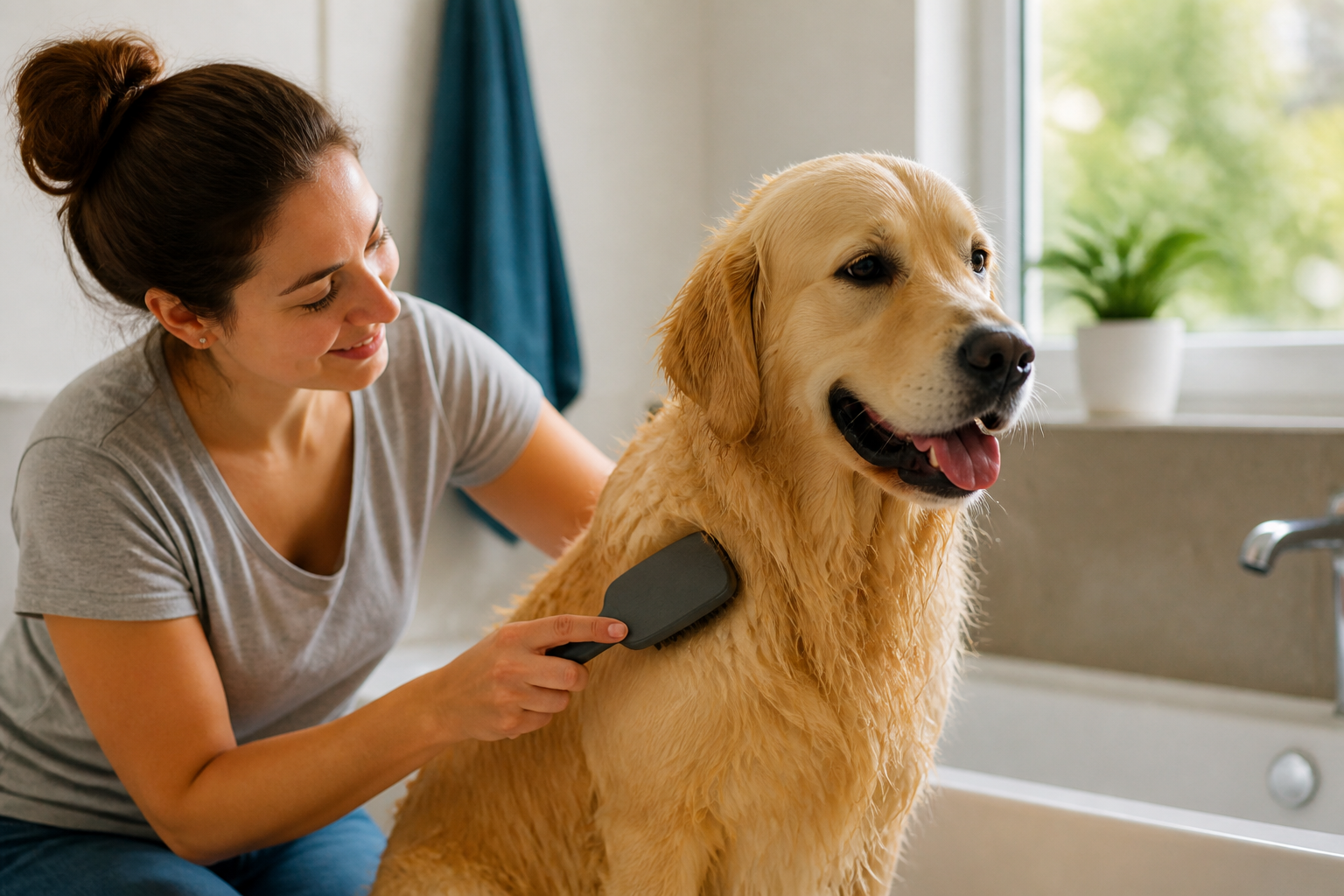
Introduction
You are standing at the bathtub with a muddy pup and a bottle of shampoo. It is tempting to get the water running and start scrubbing as quickly as possible. However, taking five minutes to pick up a brush before the first drop of water touches the coat can save you hours of frustration later. At BaxterBoo, we have helped thousands of pet owners navigate the complexities of home grooming. We know that the order of your routine is just as important as the products you use. This post covers exactly why you should brush before the bath, how water affects different coat types, and the best techniques to keep your dog comfortable. Brushing before bathing is the single most effective way to prevent painful mats and ensure a deep, thorough clean.
The Science of Water and Tangles
When a dog’s coat gets wet, the structure of the individual hair shafts changes. Moisture causes the hair to swell and the outer cuticle to expand. If those hairs are already tangled or knotted, the water acts like a glue. It causes the fibers to tighten against each other. This is especially true for dogs with curly, wavy, or double coats.
Once a small knot becomes wet, it often turns into a tight mat that is nearly impossible to remove without scissors. By brushing while the coat is dry, you remove loose fur and debris that would otherwise clump together in the tub. This allows the shampoo to actually reach the skin instead of just sitting on top of a layer of trapped dirt and shed hair.
Quick Answer: Yes, you should almost always brush your dog before bathing. Water causes existing tangles to shrink and tighten, making them much harder to remove once the coat is wet or dry.
Why Brushing Wet Fur Is Risky
It might seem easier to brush through a wet coat, similar to how humans comb their hair after a shower. For dogs, the opposite is usually true. Wet hair is more elastic and prone to stretching. When you pull a brush through wet fur, you risk overstretching the hair until it snaps. This leads to a damaged, frizzy coat that will tangle even faster in the future.
Furthermore, a dog's skin is more sensitive when it is wet. The warm water opens the pores and makes the skin more susceptible to irritation. If you are tugging at knots on a wet dog, you are much more likely to cause "brush burn" or skin abrasions. Brushing the coat while it is dry is far gentler on your dog and protects the integrity of their fur.
The Problem with Circular Scrubbing
Many owners make the mistake of scrubbing their dog in a circular motion during the bath. While this feels like it would get the dog cleaner, it actually creates new tangles. Imagine taking a handful of yarn and rubbing it in circles. You end up with a knotted mess.
Instead of scrubbing, you should massage the shampoo into the coat using downward motions. Follow the natural direction of the hair growth. This keeps the hair shafts aligned. If you have already brushed the dog before the bath, the shampoo will glide through the fur much more easily.
Key Takeaway: Brushing a dry coat prevents the "cementing" effect that water has on tangles. It protects the skin from irritation and the hair from breakage during the grooming process.
Essential Tools for Pre-Bath Preparation
To get the best results, you need the right tools for your dog’s specific coat type. Using the wrong brush can be ineffective or even uncomfortable for your pet. We carry a wide variety of expertly curated tools in our dog grooming collection to help you prepare for bath day.
Slicker Brushes
The slicker brush is the workhorse of dog grooming. It features fine, short wires close together on a flat or curved surface. These are ideal for removing loose hair and breaking up small surface tangles. Use this on medium to long-haired dogs, as well as those with curly coats like Poodles or Doodles.
Stainless Steel Combs
A high quality metal comb is your best diagnostic tool. After you think you have finished brushing with a slicker brush, run a comb through the coat. If the comb catches, there is a hidden tangle that needs attention. This is often called "the comb test." It is the only way to be 100 percent sure that your dog is ready for the tub.
Undercoat Rakes
For double coated breeds like Huskies, Golden Retrievers, or German Shepherds, an undercoat rake is necessary. These tools reach through the topcoat to pull out the "dead" undercoat that causes heavy shedding. If you skip this step before bathing, you will end up with a bathtub full of fur and a dog that stays damp for hours.
Vet Tip: If you notice your dog has extreme matting that reaches the skin, do not attempt to brush it out or bathe the dog at home. Tight mats can trap moisture against the skin and lead to painful infections or hot spots. In these cases, consult a professional groomer or your veterinarian to discuss a safe "clip down."
Step-by-Step Pre-Bath Routine
Consistency is the secret to a stress-free bath. Follow these steps every time you prepare for a grooming session.
Step 1: Perform a visual inspection. / Check for any obvious mats, burrs, or sticky debris in the coat.
Step 2: Start with the slicker brush. / Work in sections from the head to the tail, paying close attention to high friction areas like the armpits and behind the ears.
Step 3: Use the undercoat rake if applicable. / For heavy shedders, spend extra time removing the loose fluff that accumulates near the base of the tail and along the haunches.
Step 4: Conduct the comb test. / Run a metal comb through the entire coat to ensure there are no lingering knots.
Step 5: Check the skin and ears. / Look for redness, lumps, or signs of fleas. If you see signs of skin irritation or persistent itching, our pharmacy offers FDA-approved treatments through our partnership with Pet's Choice.
Handling Different Coat Types
Not every dog requires the same amount of prep work. Understanding your dog’s specific needs will help you decide how much time to spend on the pre-bath brush.
Short-Haired Breeds
Dogs like Labradors, Boxers, and Beagles still need a pre-bath brush. While they do not get mats, they shed a significant amount of "needle hair." Using a rubber curry brush in the tub or a bristle brush before the bath will remove this loose hair. This prevents it from clogging your drain and reduces the amount of hair that ends up on your furniture once the dog is dry.
Long-Haired and Silky Coats
Breeds like Yorkies, Shih Tzus, and Malteses have hair that is very similar to human hair. It tangles easily and can break if handled roughly. For these dogs, a light spray of detangling solution before brushing can help the brush glide through without snapping the delicate strands.
Double-Coated Breeds
The double coat is designed to be weather-resistant. If you do not brush a double-coated dog before the bath, the water may never actually reach the skin. The thick undercoat acts like a sponge, soaking up the water but preventing the shampoo from cleaning the lower layers. Thoroughly raking the coat ensures the water and soap can do their jobs.
| Coat Type | Primary Tool | Pre-Bath Effort | Common Issues |
|---|---|---|---|
| Short/Sleek | Rubber Curry Brush | Low | Heavy shedding, skin oils |
| Long/Silky | Pin Brush & Comb | High | Tangles, breakage |
| Curly/Wavy | Slicker Brush | Very High | Tight mats, trapped debris |
| Double Coat | Undercoat Rake | High | Compaction, slow drying |
The Role of Conditioners and Detanglers
While brushing should happen before the bath, products used during the bath can help with the final result. Using a high-quality dog conditioner helps to smooth the hair cuticle. This makes the post-bath brush much easier.
If you encounter a particularly stubborn knot during your pre-bath check, do not force it. You can apply a small amount of leave-in conditioner or detangling spray directly to the knot. Let it sit for a few minutes before gently working it apart with your fingers or the end of a comb. This "spot treating" prevents the need for heavy tugging.
Bottom line: Pre-bath brushing is about preparation and prevention, while conditioning is about maintenance and finishing.
Managing Skin Health During Grooming
Grooming is the best time to check your dog's overall skin health. As you move the hair aside with your brush, you have a clear view of the skin surface. You may find things that are normally hidden by a thick coat.
If you notice your dog has dry, flaky skin or red, itchy patches, your choice of shampoo matters. We recommend gentle formulas for sensitive skin. However, if the irritation is severe or won't go away, it may be time for a prescription solution. Our pharmacy carries medicated shampoos and allergy medications that are FDA-approved. Through our partnership with Pet's Choice, you can easily manage these health needs alongside your regular pet supplies.
Ear Care Precautions
Another common mistake during bathing is getting water inside the ear canals. This can lead to painful ear infections. Before you start the water, consider placing a large cotton ball gently in the opening of each ear. This acts as a barrier. If your dog already has a history of ear issues, talk to your vet about prescription ear cleansers available through our pharmacy to keep the canals dry and healthy.
Vet Tip: Never stick a cotton swab deep into your dog's ear canal. Only clean the parts you can see. If you notice a foul smell, dark discharge, or constant head shaking, skip the bath and schedule a vet visit immediately to check for an infection.
Post-Bath: The Final Brush
Even though you brushed before the bath, the job is not quite done. Once your dog is out of the tub, you need to dry them thoroughly. For many dogs, air drying is fine, but for thick or curly coats, a blow dryer on a cool setting is better.
As the coat dries, the hair will naturally want to clump back together. This is the time for your final finishing brush. Once the coat is 100 percent dry, run the slicker brush and comb through one last time. This "fluffs" the coat and removes any hair that was loosened during the washing process. It also ensures that no new tangles formed while the dog was damp.
The Importance of Drying Completely
Leaving a dog with a thick undercoat damp can lead to a condition called "hot spots" or acute moist dermatitis. This happens when moisture is trapped against the skin, causing a rapid bacterial overgrowth. This is why brushing and drying go hand-in-hand. You cannot effectively dry a matted coat, and you cannot effectively brush a soaking wet one.
Key Takeaway: The grooming process is a sandwich. It starts with a brush, has a bath in the middle, and ends with another brush.
Making Grooming a Positive Experience
Many dogs find the sensation of brushing or the sound of water stressful. If your dog is anxious, do not try to do everything at once. You can brush your dog in the morning and wait until the afternoon for the bath. This breaks up the sensory input and prevents your dog from becoming overwhelmed.
Use plenty of treats and positive reinforcement. If your dog enjoys being brushed, they are more likely to tolerate the bath that follows. If you find yourself struggling with a dog that is terrified of the tub, focus on short, calm sessions. You might spend a week just brushing them in the bathroom without ever turning on the water.
When to Call a Professional
There are times when home grooming is not the safest option. Professional groomers have specialized equipment, such as high-velocity dryers and hydraulic tables, that make the process safer for difficult coats.
Consider a professional if:
- The coat is "pelted" (mats are solid against the skin).
- Your dog becomes aggressive or extremely fearful during brushing.
- You are unable to dry the coat completely at home.
- The dog has a skin condition that requires professional-grade medicated soaking.
Professional groomers are experts at the "brush first" rule. They know that a beautiful haircut starts with a perfectly prepped, clean, and tangle-free coat.
Conclusion
Brushing your dog before bathing is more than just a suggestion. It is a fundamental step in maintaining a healthy coat and a happy pet. By removing tangles while they are dry, you prevent the painful tightening that happens when fur meets water. Our team at BaxterBoo wants your home grooming sessions to be as efficient and successful as possible. Whether you are using a slicker brush to prep a Poodle or an undercoat rake for a Husky, starting with a dry coat is the way to go. If your grooming sessions reveal skin issues or persistent itching, remember that our pharmacy is here to help with FDA-approved medications and prescription diets. Grab your favorite brush, take your time, and enjoy this bonding experience with your dog.
Bottom line: A tangle-free bath is a shorter, easier, and more comfortable bath for everyone involved.
FAQ
Can I brush my dog while they are covered in shampoo?
While some rubber brushes are designed for use in the tub to help massage the skin, you should generally avoid heavy brushing during the shampoo phase. The main goal in the tub is cleaning, and excessive brushing can lead to tangles if the coat is not already smooth. Always do your heavy detangling before the water starts.
What happens if I forget to brush before the bath?
If you forget and realize the coat is tangled once it is wet, do not panic. Apply a generous amount of conditioner and try to gently separate the knots with your fingers. Avoid tugging with a brush while the hair is wet. Let the dog dry completely after the bath, then use a detangling spray and a slicker brush to carefully work through the knots.
Is it okay to air dry my dog after brushing and bathing?
Air drying is fine for short-haired breeds, but it can be risky for dogs with very thick or long hair. Moisture trapped in a dense undercoat can lead to skin irritation or a musty smell. If you choose to air dry, make sure you are in a warm, draft-free area and continue to brush the coat periodically as it dries to prevent clumping.
How often should I brush my dog if I am not bathing them?
You should brush your dog much more often than you bathe them. Most dogs benefit from a good brushing two to three times a week. Long-haired or curly-coated breeds may need daily attention to prevent mats from forming. Frequent brushing reduces the amount of work you have to do on bath day and keeps shedding under control.






