
 Save 15% on your 1st Autoship learn more

 Email us
 Live Chat
 FAQs
FAQs





Introduction
You are sitting on the sofa after a long day and notice a small tumbleweed of fur rolling across the hardwood floor. Perhaps you reach down to pet your dog and feel a stubborn knot behind their ear that was not there yesterday. These moments often lead pet owners to wonder how often they should actually pick up a brush. While many people think of grooming as a monthly chore or a trip to the professional, the reality of coat care happens at home. At BaxterBoo, we see every type of coat come through our doors, from the sleekest Pointers to the fluffiest Newfoundlands. We know that the answer to how often you should brush depends entirely on your dog's specific needs. This guide explains how to determine the right schedule for your pet and why those extra minutes of grooming can impact their overall health.
Quick Answer: Most dogs benefit from brushing two to three times per week. However, dogs with silky, long, or curly coats often require daily brushing to prevent painful mats and tangles from forming.
Understanding Your Dog's Coat Type
Not all fur is created equal. The biological makeup of your dog's coat dictates how often the brush needs to come out of the drawer. Some coats are designed to repel water and dirt. Others are prone to trapping debris and loose hair. Understanding which category your dog falls into is the first step in creating a manageable routine.
Smooth and Short Coats
Smooth coated dogs like Boxers, Pointers, and Dalmatians have the lowest maintenance needs. Their hair is short and lies close to the body. You might think they do not need brushing at all, but they still shed dead skin cells and hair. Brushing these dogs once or twice a week is usually plenty.
Short coats are slightly different. Dogs like Beagles and Labrador Retrievers have a bit more length and a denser feel. These breeds tend to be heavy shedders. Brushing them at least once a week helps capture loose hair before it ends up on your furniture. Using a rubber curry brush or a bristle brush on these dogs also helps distribute natural skin oils.
Double and Heavy Coats
Double coated dogs have two layers of protection. The soft undercoat provides insulation. The tougher outer coat protects against weather and debris. German Shepherds, Samoyeds, and Siberian Huskies are famous for their thick double coats. These dogs need brushing at least three times a week. During shedding season, daily brushing is often necessary to manage the sheer volume of fur they lose.
Heavy coats are a variation often seen in Newfoundlands, Chow Chows, and Pekingese. These coats are dense and long. They require a commitment of two to three sessions per week. If you skip a week, the undercoat can quickly become a solid mass of felted hair. This is uncomfortable for the dog and can trap moisture against the skin.
Silky and Drop Coats
Silky coats are found on breeds like Cocker Spaniels and English Setters. Their hair is fine and grows long. These dogs require frequent attention. If possible, you should brush a silky coated dog daily. Their fine hair tangles easily, especially in high friction areas like the armpits and behind the ears.
Drop coats belong to dogs like Yorkshire Terriers and Maltese. This hair is very similar to human hair and does not stop growing. It does not shed in the traditional sense, but it tangles almost immediately. Daily brushing is essential for these breeds. Without it, the hair will wrap around itself and form tight knots that are difficult to remove without clippers.
Curly and Wire Coats
Poodles, Bichons, and Portuguese Water Dogs have curly coats. These dogs are often called non-shedding, but that is a bit of a myth. The hair they lose gets trapped within the curls instead of falling to the ground. Because of this, regular brushing is vital. If you do not brush a curly coat frequently, the trapped dead hair causes severe matting. For more ideas, read our guide on how to groom a dog with curly hair.
Wire coated dogs like Airedale Terriers and Schnauzers have a rough, bristly outer coat. They also have a softer undercoat. These breeds need weekly brushing to remove dead hair and keep the coat from looking dull. While they do not need daily care, a quick once over with a slicker brush a few times a week keeps them looking sharp.
The Hidden Health Benefits of Daily Brushing
Brushing is about much more than just looking good. It is a fundamental part of your dog's health and wellness routine. When you brush your dog, you are performing a mini physical exam every single time. This is the best way to catch small issues before they become expensive or painful problems.
Daily brushing allows you to feel for new lumps, bumps, or skin irregularities. You will notice if a certain area is tender or if there is a sudden change in skin temperature. For senior dogs, this is especially important for monitoring the growth of fatty tumors or other age related skin changes.
This routine also helps with pest detection. It is much easier to find a tiny tick or a few flea dirt specks when you are parting the hair with a comb. Our flea and tick collection includes combs, shampoos, sprays, and preventive treatments. Finding a pest early means you can start treatment immediately and prevent an infestation in your home.
Vet Tip: If you notice persistent redness, odd odors, or bald patches while brushing, contact your veterinarian. These can be signs of allergies, infections, or underlying health issues that need professional attention.
Choosing the Right Tools for Your Routine
You cannot do a good job without the right equipment. Using the wrong brush can be ineffective or even cause skin irritation. We stock a wide variety of tools to match every coat type through our dog grooming collection.
- Bristle Brushes: These are best for smooth and short coats. They remove surface dust and distribute oils.
- Slicker Brushes: These have fine wire bristles. They are the workhorses of the grooming world. They are perfect for removing tangles and mats in medium to long hair.
- Pin Brushes: These look like human hairbrushes but have rounded tips. They are ideal for silky coats and long hair that is already tangle free.
- Undercoat Rakes: These reach through the topcoat to pull out dead hair from the undercoat. They are essential for double coated breeds like Huskies.
- Rubber Curry Brushes: These are great for short haired dogs. They massage the skin and pull out loose hair during a bath or a quick grooming session.
Key Takeaway: Match your tool to your dog's coat. A slicker brush is great for tangles, while a bristle brush is better for shine and smooth coats.
How to Handle Mats and Tangles Safely
Mats are not just an aesthetic issue. They pull on the skin and can cause bruising or sores. They also trap moisture, which leads to fungal or bacterial infections. If you find a mat while brushing, do not reach for the scissors immediately. Cutting mats out with scissors is dangerous because it is hard to tell where the hair ends and the skin begins.
Instead, start by applying a detangling spray to the area. Use your fingers to gently pull the mat apart from the edges. Once it is loosened, use the end of a metal comb to pick at the knot. Work from the tip of the hair down toward the skin. If the mat is tight against the skin, consider an ergonomic dematting tool or visit a professional groomer.
Common Areas for Mats
- Behind the ears
- In the armpits
- Between the toes
- Around the tail base
- Under the collar or harness
Bottom line: Never pull or yank on a mat, as this causes pain and makes your dog fear the grooming process.
Creating a Brushing Habit
If your dog hides the moment they see a brush, you have to change their perspective. Grooming should be a bonding experience, not a battle. The key is to start slow and use plenty of positive reinforcement.
Step 1: Introduce the brush. Let your dog sniff the tool. Place a treat on top of it. Do this for a few days without actually brushing them.
Step 2: Start with short sessions. Brush for only thirty seconds. Focus on an area they enjoy being touched, like their back or chest. Give them a high value treat immediately after.
Step 3: Gradually increase the time. Add one minute to the session every day. If they become restless, stop before they get upset. You want to end every session on a positive note.
Step 4: Move to sensitive areas. Slowly work your way toward the legs, tail, and face. These areas are more sensitive, so be extra gentle and use plenty of praise.
The Role of Nutrition in Coat Health
What goes into your dog's body shows up on their coat. A dull, brittle, or excessively shedding coat can sometimes be a sign of nutritional gaps. High quality proteins and healthy fats are the building points of strong hair. Omega-3 and Omega-6 fatty acids are particularly important for maintaining skin elasticity and a glossy shine.
If you find that your dog's coat is dry despite regular brushing, you might consider a supplement. Our dog skin and coat care selection includes supplements designed to support hair growth and reduce itching. Always check with your vet before starting a new supplement, especially if your dog has known allergies.
Managing Seasonal Shedding
Most dogs "blow their coat" twice a year, usually in the spring and autumn. This is a massive shedding event where the dog swaps their seasonal undercoat. During these times, even a short haired dog might need daily brushing.
Using an undercoat rake during these periods can reduce the amount of fur in your home by up to ninety percent. It also helps the dog regulate their body temperature more effectively. If you do not remove that dead undercoat, it sits like a heavy blanket, making it harder for your dog to stay cool in the summer or dry in the winter. For additional seasonal shedding guidance, read how Australian Shepherds shed.
Brushing and the Human-Dog Bond
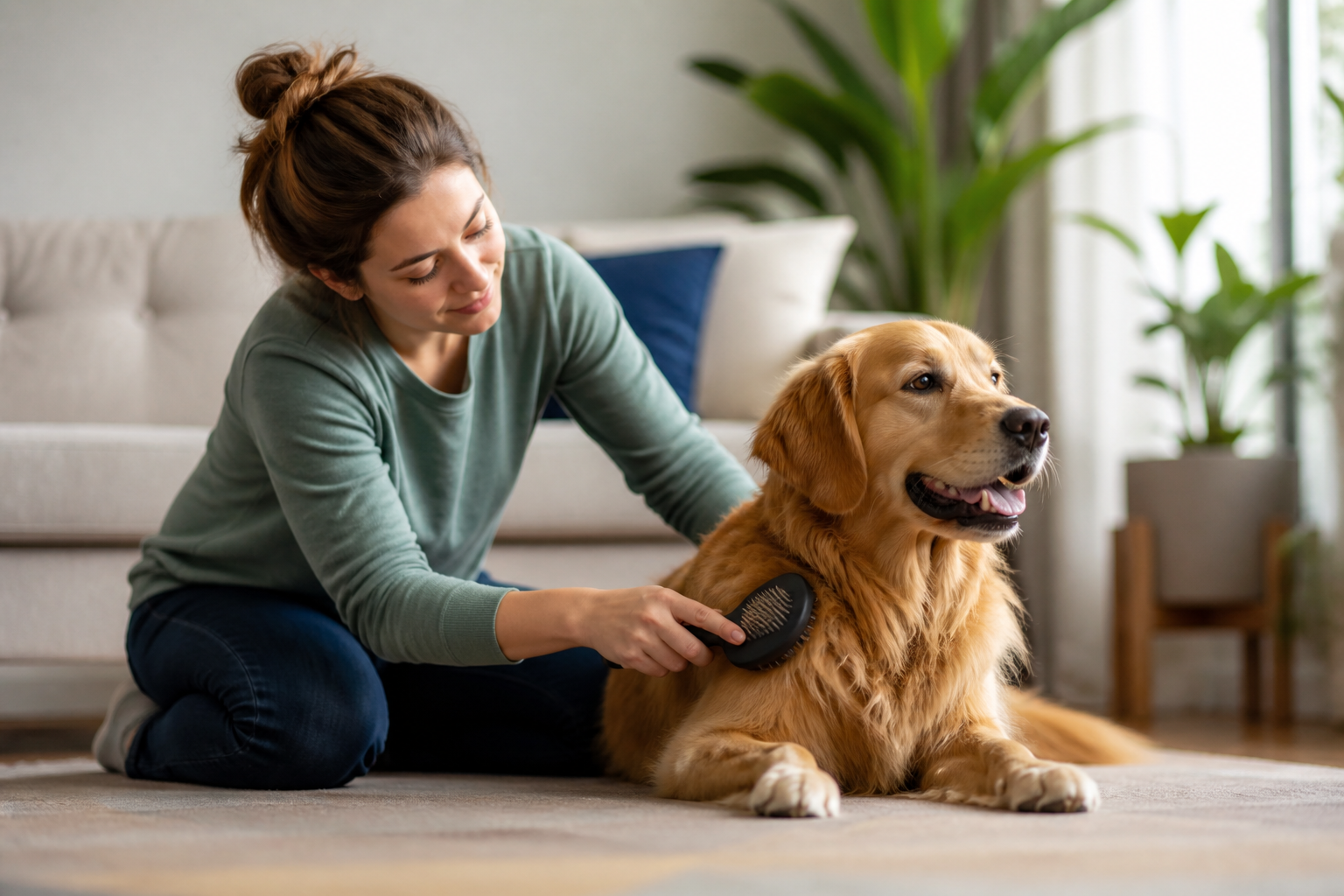
There is a psychological benefit to regular grooming that many owners overlook. Brushing is a form of social grooming that mimics how dogs interact in a pack. It lowers cortisol levels in both the human and the dog. It is a quiet, focused time where you can connect with your pet without the distraction of toys or training.
Many owners find that a nightly five minute brush becomes their dog's favorite part of the day. It signals that it is time to wind down. For an anxious dog, the repetitive motion of the brush can be very soothing.
When to Seek Professional Help
Regular at-home brushing is vital, but it does not replace the need for professional grooming for certain breeds. A professional can handle deep cleaning, sanitary trims, and nail clipping. They also have high powered dryers that can blow out loose undercoat hair that a home brush might miss.
If your dog is severely matted, has extremely sensitive skin, or becomes aggressive during grooming, a professional is the safest option. They have the experience and equipment to handle these situations without causing injury to the pet.
Conclusion
Whether you should brush your dog daily depends on their coat type, but every dog benefits from more frequent grooming. For silky or curly breeds, daily care is the only way to prevent painful mats. For short haired dogs, a few times a week keeps the skin healthy and the shedding under control. Regular brushing is a simple way to monitor your dog's health and strengthen your bond. We are here to help you find the right tools and supplies to make grooming a success. Check out our dog brushes and combs to find the perfect brush for your dog's coat, or look into the MVP Rewards programme to earn points on every grooming tool and treat you purchase.
FAQ
Does daily brushing stop my dog from shedding?
Brushing does not stop the biological process of shedding, but it controls where the hair goes. By brushing daily, you remove loose hair directly from the coat before it can fall onto your floors or clothes. It also helps remove the dead hair that can get trapped in the coat and cause tangles.
Can I brush my dog too much?
It is possible to irritate the skin if you use too much pressure or the wrong type of brush. This is often called "brush burn" and appears as red, sensitive skin. To avoid this, use light strokes and ensure you are using a brush suited for your dog's specific coat length and texture.
What should I do if my dog hates being brushed?
Start with very short sessions and use high value treats to create a positive association. Begin by just touching them with the back of the brush and rewarding them. Slowly build up to actual brushing over several weeks, and never force the process if they are showing signs of extreme stress.
Do short haired dogs really need to be brushed?
Yes, short haired dogs still shed and produce skin oils. Brushing once or twice a week removes dead hair and distributes those oils across the skin, which prevents dryness and keeps the coat shiny. It also serves as an important time to check for ticks, fleas, or skin lumps.






