
 Save 15% on your 1st Autoship learn more

 Email us
 Live Chat
 FAQs
FAQs





Introduction
You are relaxing on the sofa when your little companion jumps up to give you a lick, and the smell is enough to make you turn away. That "dog breath" is more than just a social hurdle. For small breeds like Yorkies, Chihuahuas, and Pugs, it is often the first sign of plaque buildup that can lead to serious health issues. Because small dogs have crowded mouths where food particles hide easily, their dental care requires a specific approach. At BaxterBoo, we know that many owners feel overwhelmed by the thought of brushing a tiny, wiggly dog's teeth. This post covers everything from choosing the right sized tools to making the process a stress free part of your daily routine. Mastering these simple habits now can prevent painful dental disease and keep your dog's spirit bright.
Why Small Breed Dental Care is Different
Small dogs face unique challenges when it comes to oral health. While a large dog has plenty of space between its teeth, a small breed often has the same number of teeth squeezed into a much smaller jaw. This crowding creates tiny crevices where hair, food, and bacteria get trapped. This is especially true for brachycephalic or flat faced breeds. Their jaw alignment may be irregular, which means their teeth do not naturally "self clean" through chewing the way they would in a standard snout.
The smaller jawbone also means there is less bone structure to support the teeth. If a small dog develops gum disease, the infection can reach the bone much faster than it would in a larger animal. This often leads to loose teeth and the need for extractions much earlier in life. Understanding this anatomical reality helps you realize why daily care is a necessity rather than an option for your little friend.
Quick Answer: Clean a small dog's teeth by using a finger brush or a small-head toothbrush with enzymatic pet toothpaste. Aim for daily brushing and supplement with dental wipes, water additives, and small-sized dental chews to manage plaque.
Selecting the Right Tools for Small Mouths
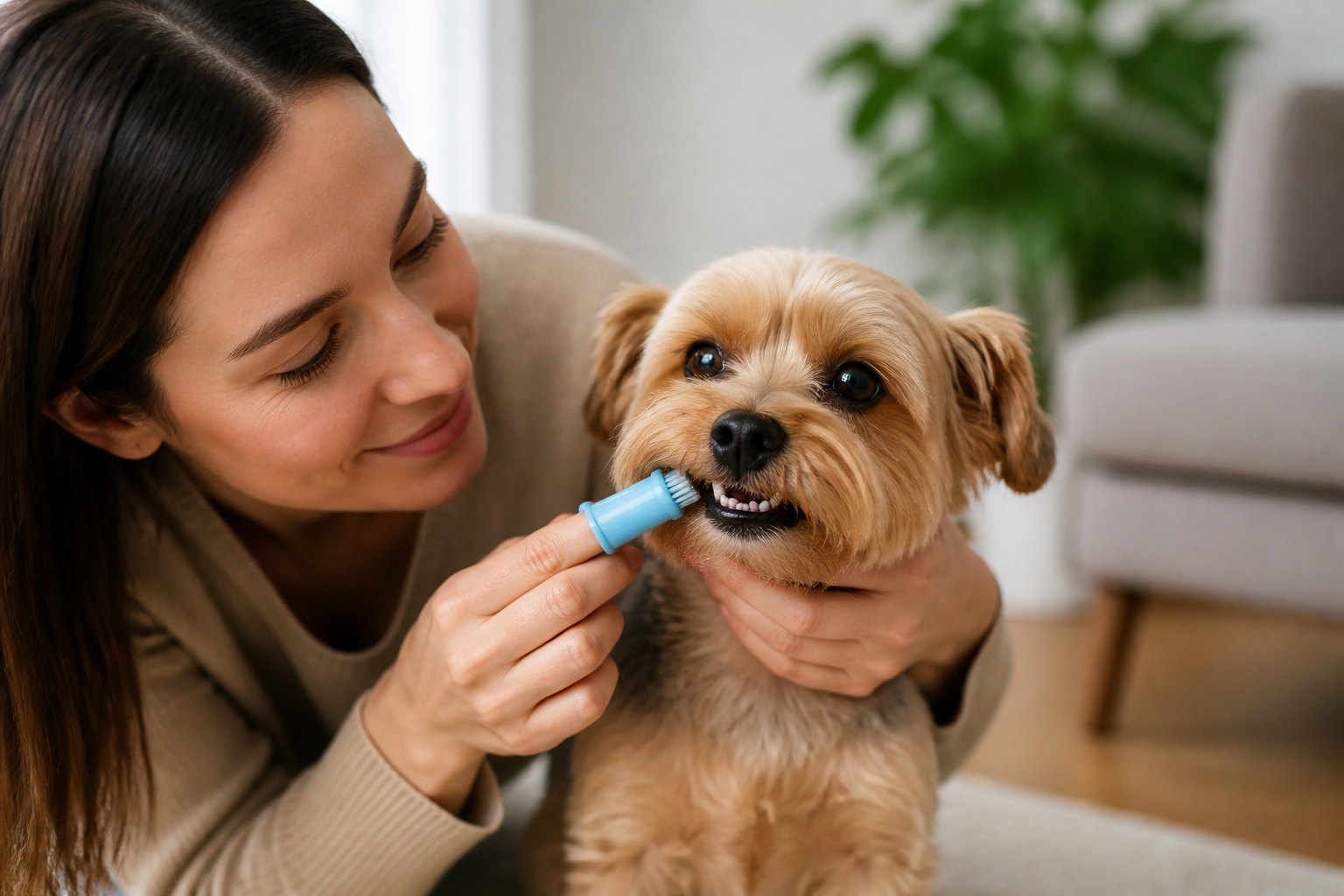
Using a standard sized toothbrush on a small dog is like trying to use a hairbrush to clean your own teeth. It is bulky, uncomfortable, and will likely make your dog resist the process. For dogs under 15 pounds, a finger brush is often the best starting point. These silicone sleeves fit over your index finger and allow you to feel exactly where you are brushing. This tactile feedback is helpful when navigating a tiny mouth.
If your dog is comfortable with a handle, look for an ultra-soft toothbrush designed specifically for toy breeds or even cats. The head should be small enough to reach the back molars without stretching the corners of the mouth. The toothpaste you choose is even more important than the brush. Never use human toothpaste because it contains fluoride and xylitol, both of which are toxic to dogs. Enzymatic dog toothpaste is designed to be swallowed and uses proteins to break down plaque chemically. Browse our dog dental care collection to find brushes, toothpaste, wipes, and other oral-care supplies.
Essential Dental Shopping List
- Silicone finger brushes or ultra-soft small head toothbrushes
- Enzymatic toothpaste in flavors like poultry or beef
- Dental wipes for quick touch ups
- Small or "teenie" sized dental chews
- Water additives to reduce oral bacteria
A Step by Step Guide to Brushing
Success with a small dog depends on patience and positive reinforcement. You cannot force a five pound dog into submission without creating a lifetime of fear. Instead, make the process a game that involves plenty of rewards.
Step 1: Introduce the flavor. / Put a small dab of enzymatic toothpaste on your finger and let your dog lick it off. Do this for a few days until they get excited when they see the tube.
Step 2: Get them used to touch. / While your dog is relaxed in your lap, gently lift their lip and rub your bare finger along their gums. Keep it brief and follow up with a high value treat.
Step 3: Introduce the brush. / Add toothpaste to your finger brush or toothbrush. Let them lick the paste off the bristles first so they associate the tool with a good taste.
Step 4: Start brushing the front. / Lift the lip and use gentle circular motions on the outside of the front teeth. You do not need to worry about the inside of the teeth yet as the tongue helps keep that area cleaner.
Step 5: Move to the back. / Gradually work your way toward the back molars over several sessions. This is where most plaque accumulates, so take your time to ensure you reach the very back of the jaw.
Key Takeaway: Consistency is more important than perfection. Brushing for 30 seconds every day is more effective at preventing tartar than a five minute session once a month.
For additional guidance on building a brushing habit, read our pet dental care tips.
Alternatives for Wiggling Dogs
Some dogs simply will not tolerate a toothbrush regardless of how much training you do. If your dog becomes highly stressed, you can still manage their oral hygiene through other methods. Dental wipes are a fantastic middle ground. These are textured pads pre soaked with cleaning agents. You simply wrap one around your finger and swipe it over the tooth surfaces. It is less intrusive than a brush but still provides the mechanical action needed to remove film.
Water additives and dental gels are also useful tools in your kit. Additives are tasteless liquids you pour into your dog's water bowl to help kill bacteria and freshen breath. Gels can be applied to the gums and work with the dog's saliva to coat the teeth. While these do not replace the physical scrubbing of a brush, they are excellent supplements for a comprehensive dental plan. Explore our dental and breath care supplies for options such as dental gels and water additives.
The Role of Diet and Dental Chews
What your dog eats significantly impacts their dental health. While the debate between wet and dry food continues, many veterinarians suggest that high quality kibble can provide a slight abrasive effect. However, standard kibble often crumbles too quickly to do much cleaning. There are specialized dental diets available that use a specific fiber matrix to scrub the tooth as the dog bites down.
Dental chews like Greenies or specialized rawhide alternatives are specifically designed to encourage prolonged chewing. When choosing a chew for a small dog, size is the most important factor. A chew that is too large can be a choking hazard or provide too many calories. A chew that is too small might be swallowed whole, defeating the purpose of the mechanical cleaning action. Always supervise your dog while they are enjoying a dental treat to ensure they are chewing safely. You can compare our Greenies products when looking for size-appropriate dental chews.
Vet Tip: If you notice persistent bad breath, bleeding gums, or a sudden change in eating habits, schedule a veterinary exam immediately. These can be signs of deep infection or a fractured tooth that requires professional intervention.
Recognizing the Signs of Dental Trouble
You should perform a "flip the lip" check once a week to look for changes in your dog's mouth. Healthy gums should be a vibrant pink, not red or white. The teeth should be white or off-white without a thick layer of brown or yellow buildup.
Common warning signs include:
- Red, swollen, or bleeding gums
- Heavy brown tartar near the gumline
- Persistent foul breath that does not improve after brushing
- Pawing at the mouth or face
- Dropping food while eating or refusing dry kibble
- Loose or missing teeth
If you see these signs, at home brushing is no longer enough. You likely need a professional cleaning to remove the tartar that has hardened into calculus. We carry a wide range of supportive care items in our dog healthcare category to help dogs recovering from dental procedures or managing chronic oral sensitivity.
For more warning signs to discuss with your veterinarian, see our guide to signs of dental disease in dogs.
Professional Care and the Pharmacy
Even the best at home routine cannot replace professional veterinary dental cleanings. Vets can see what is happening beneath the gumline using dental X-rays, which is where most periodontal disease hides. During a professional cleaning, your vet will scale and polish the teeth while your dog is under anesthesia, ensuring a thorough and pain free experience.
For dogs with advanced dental needs or chronic infections, our pharmacy offers access to FDA-approved medications and prescription diets through our partnership with Pet's Choice. Whether your vet prescribes a specialized dental food like Royal Canin Dental or Farmina Vet Life, or needs an antibiotic to clear up a gum infection, we can help fulfill those needs. Managing a small dog's dental health often requires this combination of daily at home care and professional medical support. Browse our dog treats and dental chews for supportive options to use as directed by your veterinarian.
Bottom line: A proactive dental routine combined with regular veterinary checkups can add years to your small dog's life by preventing systemic infections.
Creating a Positive Dental Routine
The goal is to make dental care a non-event for your dog. If you are tense and frustrated, your dog will pick up on that energy and become more resistant. Try to pair brushing with a time of day when your dog is naturally calm, such as after a long walk or right before bed. Always end the session on a high note with praise or a favorite toy.
Remember that small dogs are prone to weight gain, so if you are using treats to reward brushing, adjust their meal portions accordingly. You can also use a tiny bit of their regular wet food as a "toothpaste" if they are particularly picky, gradually transitioning to the enzymatic paste once they accept the brush.
Training Tips for Success
If your dog is particularly head shy, start by rewarding them just for letting you touch their muzzle. Use a "start and stop" method. Brush for three seconds, stop and give a tiny treat, then brush for another three seconds. This teaches the dog that the "intrusion" is temporary and results in a reward. Over several weeks, you can slowly increase the duration of the brushing segments until you can do the whole mouth in one go.
Keep your equipment handy so you do not have to go searching for it. If the toothbrush and paste are sitting right next to the leashes or their food bin, you are much more likely to remember to use them. At BaxterBoo, we believe that small habits lead to big results in pet health. A minute of your time each day can save your dog from the discomfort of dental disease and keep their wagging tail and fresh kisses coming for years to come. Find tools suited to smaller mouths in our dog grooming supplies.
Conclusion
Caring for a small dog's teeth is an essential part of being a responsible owner. By choosing the right tools, like small finger brushes and enzymatic pastes, you can effectively manage plaque before it hardens into tartar. While brushing is the most effective method, using dental wipes, chews, and water additives provides a great safety net for wiggly pets. If you notice signs of redness or heavy buildup, always consult your veterinarian for a professional assessment.
Key Takeaways for Small Dog Dental Health:
- Use breed-specific tools like finger brushes to navigate crowded mouths safely.
- Always use enzymatic dog toothpaste and never human products.
- Incorporate dental chews and water additives to supplement daily brushing.
- Monitor your dog's mouth weekly for signs of redness or bleeding.
The best way to stay consistent is to keep your supplies stocked and ready. You can find everything you need in our dental care category, and with our Autoship programme, you can ensure you never run out of your dog's favorite dental treats or toothpaste.
FAQ
How often should I clean my small dog's teeth?
Ideally, you should brush your dog's teeth every day to prevent the buildup of plaque, which can harden into tartar within 24 to 48 hours. If daily brushing is not possible, aim for at least three times a week and supplement with dental wipes or chews on the off days. Consistency is the key to preventing long term dental disease and expensive veterinary extractions.
Is it safe to use a human toothbrush on a small dog?
While you can technically use a very soft, child-sized human toothbrush, a brush designed specifically for dogs is usually a better choice. Pet toothbrushes often have angled heads or finger-mounted designs that make it much easier to reach the tight spaces in a small dog's mouth. Most importantly, never use human toothpaste, as ingredients like xylitol and fluoride are toxic to dogs.
My dog's gums bleed a little when I brush. Is this normal?
Minor bleeding can occur if your dog has early-stage gingivitis or if you are using too much pressure. However, persistent or heavy bleeding is a sign of more advanced gum disease and should be evaluated by a veterinarian immediately. If the gums are red and inflamed, stop brushing and seek professional advice to ensure you aren't causing your pet unnecessary pain.
Do dental chews really work for small dogs?
Dental chews are an excellent supplement to brushing because they provide mechanical scrubbing as your dog chews. They are especially effective for reaching the back molars where plaque often hides. For small dogs, it is vital to choose the correct size to ensure the chew is effective and does not add too many calories to their daily diet.






