
 Save 15% on your 1st Autoship learn more

 Email us
 Live Chat
 FAQs
FAQs





Introduction
You are relaxing on the couch when your dog leans in for a friendly lick. Instead of a sweet moment, you are met with breath that could clear a room. This is a common experience for many pet owners. It often signals that plaque and tartar have started to take over your dog's mouth. At BaxterBoo, we see many owners who feel overwhelmed by the idea of brushing a dog's teeth. It can feel like a chore that your dog simply will not tolerate. However, dental hygiene is a vital part of keeping your pet healthy and comfortable for years to come. This post covers how to build a brushing routine and explore effective alternatives for picky pets. Maintaining those pearly whites is easier than you think when you have the right approach.
Quick Answer: Cleaning your dog's teeth at home involves a mix of daily brushing and supplemental tools like dental chews or water additives. Brushing with dog-safe toothpaste is the most effective way to remove plaque before it hardens into tartar.
Why At-Home Dental Care is Essential
Most dogs show some sign of dental disease by the time they are three years old. This happens because bacteria and food particles create a sticky film called plaque. If you do not remove plaque within a day or two, it reacts with minerals in the saliva. This process turns soft plaque into hard tartar. You can easily brush away plaque at home. However, once it becomes tartar, only a veterinarian can safely remove it using professional tools. Explore our dog dental care collection for tools that can support a consistent routine.
Ignoring dental health can lead to more than just smelly breath. Advanced dental disease can cause painful infections and tooth loss. In some cases, bacteria from the mouth enter the bloodstream. This can lead to issues with the heart, liver, and kidneys. Regular care at home acts as a first line of defense. It keeps your dog's mouth clean and helps you spot problems before they become expensive emergencies.
Vet Tip: Schedule a professional dental exam at least once a year. Your vet can check for issues under the gumline that are not visible during home cleaning.
Essential Supplies for Home Cleaning
Before you start, you need the right tools. Never use human dental products on your dog. Human toothpaste often contains fluoride or xylitol. Xylitol is a sweetener that is highly toxic to dogs even in small amounts. It can cause a rapid drop in blood sugar and liver failure.
Choose a toothpaste made specifically for dogs. These come in flavors like poultry, beef, or peanut butter to make the experience more enjoyable. You also need a proper brush. You can choose a standard pet toothbrush with a long handle. This helps you reach the back molars. Alternatively, a finger brush fits over your fingertip. This often provides better control and feels less intimidating for sensitive dogs. You can compare options in our dental and breath care selection.
How to Clean Your Dog's Teeth at Home: A Step-by-Step Guide
The goal is to make brushing a positive experience. If you rush the process, your dog may become fearful. Follow these steps to build a successful routine.
Step 1: Get your dog comfortable.
Choose a quiet time when your dog is relaxed. Start by gently rubbing your finger along their gums and teeth. Do this for a minute or two over several days. This gets them used to having your hands near their mouth.
Step 2: Introduce the toothpaste.
Let your dog lick a small amount of dog-safe toothpaste off your finger. Most dogs love the taste and will begin to associate the routine with a treat. Once they enjoy the flavor, rub a little toothpaste directly onto their teeth with your finger.
Step 3: Introduce the toothbrush.
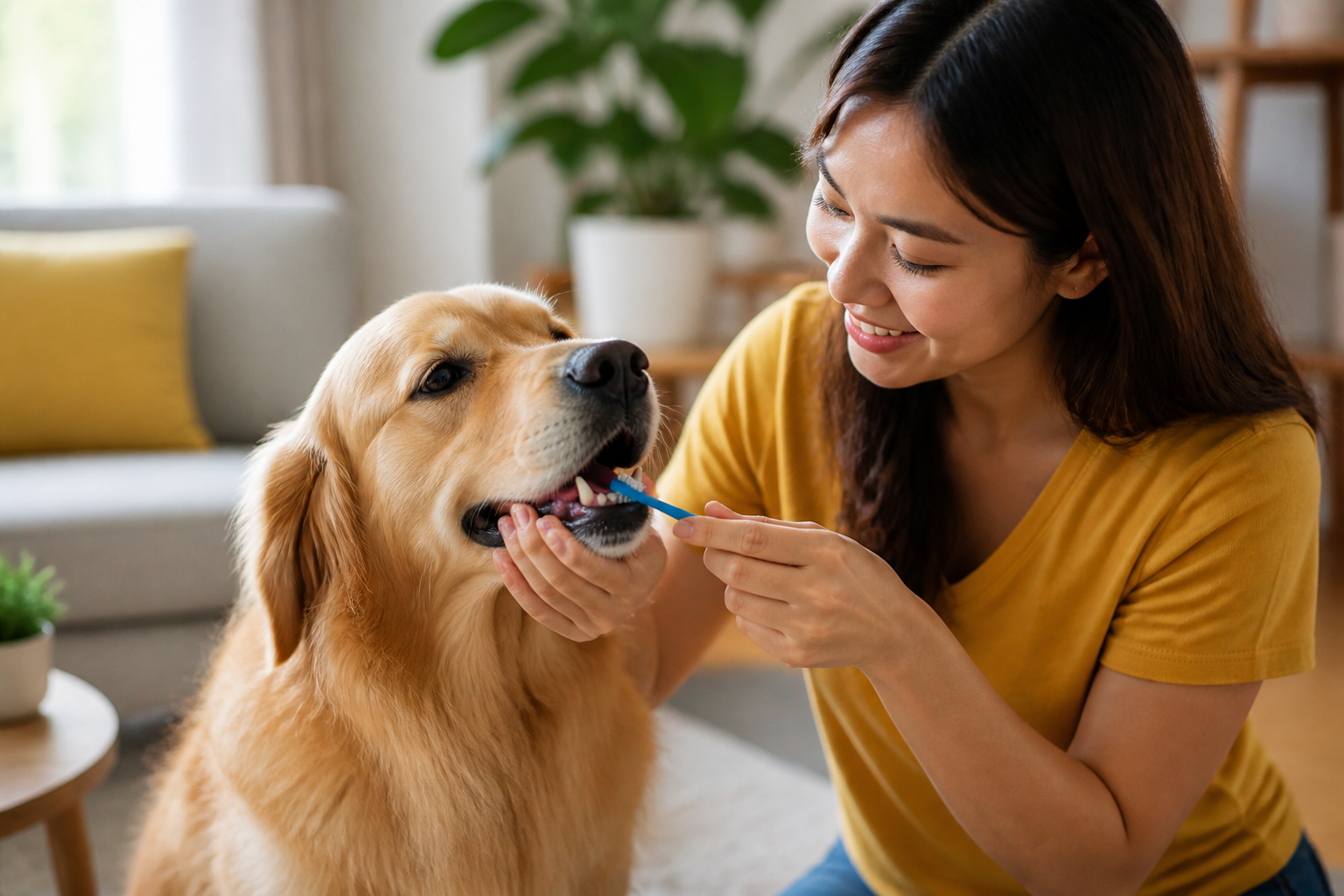
Apply a small amount of toothpaste to the brush. Let your dog sniff and lick the bristles. This helps them understand that the brush is not a threat. Gently lift the upper lip and touch the brush to the large canine teeth.
Step 4: Use gentle circular motions.
Start brushing the outside surfaces of the teeth. You do not need to worry about the inside surfaces near the tongue. A dog's tongue generally does a good job of keeping those areas clean. Focus on the gumline where plaque tends to hide. Aim for a 45-degree angle toward the gums.
Step 5: Reward and praise.
Always end the session on a high note. Offer a small treat or extra praise once you finish. This reinforces that brushing is a good thing. Even if you only brush two teeth today, it is a great start.
Bottom line: Consistency is more important than perfection when you first start a brushing routine.
For additional guidance on introducing oral care gradually, read these pet dental care tips.
Dealing with a Difficult Dog
Not every dog will sit still for a toothbrush. If your dog struggles or tries to nip, stop immediately. You can try using a soft cloth or a dental wipe instead of a brush. These are less invasive but still provide the friction needed to remove plaque. You can also try "petting" their face and slowly moving your hand toward their mouth during normal cuddle time.
If your dog remains highly stressed, do not force the issue. Forcing a dog can lead to a breakdown in trust. In these cases, focus on alternative cleaning methods. You can always try to reintroduce the brush slowly after a few weeks of using wipes or gels. Dental wipes and oral care products can be useful options during this transition.
Effective Alternatives to Brushing
If brushing is not an option, you can still support your dog's oral health. We carry a wide variety of supplemental tools at BaxterBoo to help keep plaque at bay. These methods work best when used daily.
Dental Chews and Treats
Dental chews are designed to be abrasive. As your dog chews, the treat scrapes against the surface of the teeth. This mechanical action helps rub away soft plaque. Some treats, like Greenies, are formulated to be highly digestible while providing a deep clean. Look for products with the Veterinary Oral Health Council (VOHC) seal. This seal confirms the product has met specific standards for reducing plaque or tartar. Browse our selection of Greenies products for dental chew options.
Water Additives
Water additives are a simple solution for busy owners. You simply add a small amount of the liquid to your dog's water bowl. These products contain enzymes or ingredients that kill bacteria in the mouth. This helps freshen breath and prevents plaque from sticking to the teeth. It is a great "passive" way to maintain oral hygiene.
Dental Toys
Toys with ridges or nubby textures can help clean teeth during playtime. Rubber toys like those from Kong are excellent for this. As your dog gnaws on the toy, the textures massage the gums and scrape the teeth. You can even put a little dog toothpaste inside the grooves of the toy to increase the cleaning power. See our KONG dog toy selection for dental toy choices.
Dental Powders
These are supplements you sprinkle directly onto your dog's food. Many are made from natural sea kelp. When digested, the ingredients enter the saliva and work to soften existing tartar. This makes it easier to remove during future brushings or professional cleanings. You can find powder-based options in our dental supplements category.
| Method | Effort Level | Effectiveness | Best For |
|---|---|---|---|
| Brushing | High | Excellent | All dogs who tolerate handling |
| Dental Chews | Low | Good | Dogs who love to chew |
| Water Additives | Very Low | Moderate | Picky dogs or busy owners |
| Dental Wipes | Moderate | Good | Dogs afraid of toothbrushes |
Key Takeaway: Using multiple methods together, such as dental chews and water additives, provides the best protection when brushing is not possible.
Signs of Dental Problems
Even with the best home care, problems can arise. You should check your dog's mouth once a week for any changes. Look for the following warning signs that may indicate a need for professional help.
- Persistent Bad Breath: While "dog breath" is normal, a truly foul or rotting smell is a sign of infection.
- Red or Bleeding Gums: Gums should be a healthy pink. Redness along the teeth indicates inflammation or gingivitis.
- Yellow or Brown Deposits: This is hardened tartar. You cannot brush this away at home.
- Changes in Eating Habits: If your dog drops food or avoids hard kibble, they may have a painful tooth.
- Excessive Drooling: Sudden drooling can be a sign of oral pain or an abscess.
- Loose or Broken Teeth: These require immediate veterinary attention to prevent deep infections.
If you notice any of these signs, please consult your veterinarian. They can perform a full exam and determine if a professional cleaning is necessary. For a closer look at warning signs, read what to know about bad teeth in dogs.
The Role of Diet in Dental Health
What your dog eats can impact their teeth. Some owners find that dry kibble provides a slight cleaning effect. The crunchy texture helps scrape the teeth as they eat. However, many dogs swallow kibble whole, which limits this benefit.
There are specialized dental diets available that are designed specifically to clean teeth. These kibbles are usually larger and have a fibrous structure. They do not shatter immediately when bitten. Instead, the tooth sinks into the kibble, allowing the fibers to scrub the surface. Our pharmacy carries several prescription dental diets, such as Royal Canin Dental or Farmina Vet Life, through our partnership with Pet's Choice. These diets require a prescription from your vet but are highly effective for dogs prone to rapid tartar buildup.
Vet Tip: Avoid giving your dog very hard items like real bones, antlers, or hooves. These can be harder than the tooth enamel and often lead to painful tooth fractures.
Professional Cleaning vs. At-Home Care
It is important to understand that home cleaning is a preventive measure. It is not a cure for existing dental disease. Once tartar has formed, it sits under the gumline where a brush cannot reach. A professional cleaning at a veterinary clinic is performed under general anesthesia. This allows the vet to safely scale and polish every tooth surface.
During a professional cleaning, your vet may also take dental X-rays. This is the only way to see what is happening with the roots of the teeth. Many painful conditions, like root abscesses or bone loss, are invisible to the naked eye. At-home care helps extend the time between these professional visits and keeps your dog's mouth healthy in the long run.
Managing Dental Health in Senior Dogs
As dogs age, their dental needs often increase. Senior dogs may have thinner enamel or underlying health issues that make them more prone to infections. If you have a senior dog, be extra vigilant about their oral care.
If your senior dog has lost teeth, they may find it difficult to use hard dental chews. In these cases, focus on dental gels or water additives. Always talk to your vet before starting a new routine for an older pet. They can ensure the methods you choose are safe for your dog's specific health status.
Creating a Dental Care Schedule
The best way to succeed with at-home cleaning is to make it a habit. Try to link the dental routine to an existing habit. For example, you could brush your dog's teeth right after you finish your own morning routine. Or, give a dental chew every evening when you sit down to watch television.
- Daily: Brushing or using dental wipes.
- Daily: Adding a dental solution to the water bowl.
- 3–4 times a week: Offering a VOHC-approved dental chew.
- Weekly: Inspecting the mouth for redness, swelling, or broken teeth.
- Annually: Professional dental exam with your veterinarian.
Key Takeaway: Small, daily actions are far more effective than an occasional deep cleaning session when it comes to preventing dental disease.
Conclusion
Keeping your dog's teeth clean at home does not have to be a struggle. Whether you use a toothbrush, dental wipes, or tasty chews, every bit of effort helps protect your pet from pain and illness. At BaxterBoo, we are committed to providing the tools you need to keep those smiles bright and healthy. Start slowly and keep the sessions positive. Your dog will thank you with fresher breath and a happier, healthier life.
For pets with specific dental needs, remember that our pharmacy offers prescription diets and medications through Pet's Choice. You can also join the MVP Rewards programme to earn points on all your dental care supplies.
FAQ
Can I use baking soda to clean my dog's teeth?
It is best to avoid using baking soda regularly. While it is not strictly toxic, it has a high alkaline content and a salty taste that most dogs dislike. If swallowed in large amounts, it can upset a dog's stomach or disturb their electrolyte balance. Stick to a formulated dog toothpaste that is safe to swallow and tastes much better to your pet.
How often should I brush my dog's teeth at home?
Ideally, you should brush your dog's teeth every day. Plaque begins to turn into hard tartar within 24 to 48 hours. If daily brushing is not possible, aim for at least three times a week. Any amount of brushing is better than none, but consistency is the key to preventing the need for frequent professional cleanings.
My dog's gums bleed a little when I brush. Should I stop?
A small amount of bleeding can happen if your dog has mild gingivitis or if you are using too much pressure. However, you should not ignore it. If the bleeding is persistent or heavy, it is a sign that the gums are inflamed and sensitive. You should see your veterinarian to rule out more advanced gum disease before continuing with a firm brushing routine.
Are dental chews enough to keep teeth clean without brushing?
While dental chews are a great supplement, they are rarely enough on their own. Chews primarily clean the chewing surfaces of the teeth and may miss the gumline where most disease starts. Brushing remains the gold standard because it allows you to target specific areas and remove plaque manually. Think of chews as a helpful addition to a routine rather than a total replacement for brushing.






