Save 15% on your 1st Autoship learn more

 Email us
 Live Chat
 FAQs
FAQs





Introduction
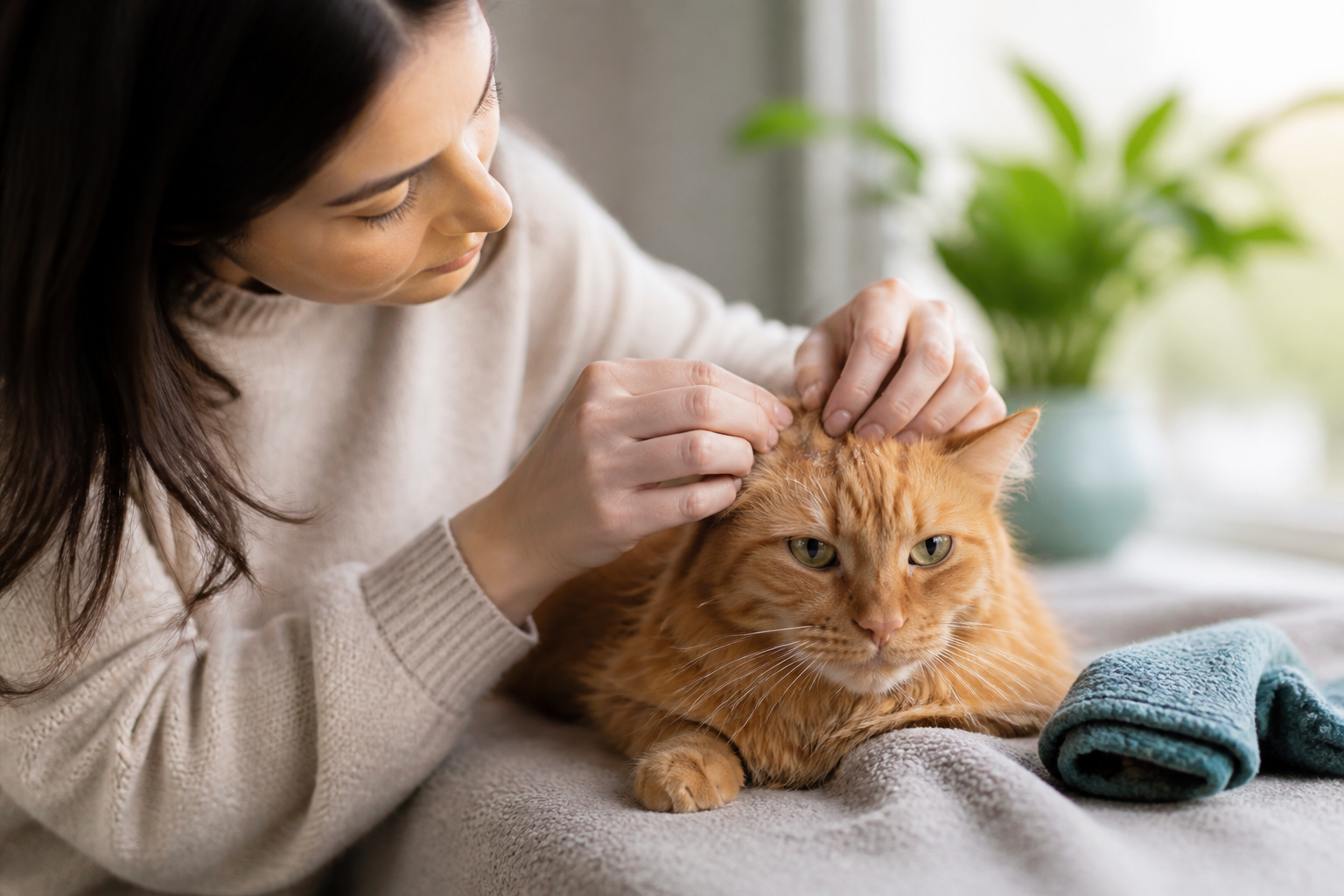
You are petting your cat and notice a dusting of white specks along their lower back. At first, you might think it is just dust or perhaps some spilled salt. When you look closer, you realize those flakes are actually coming from your pet's skin. This is a common sight for many owners, but it can be a sign that your cat needs a little extra help with their skin health. At BaxterBoo, we know that a shiny, healthy coat starts from the inside out. We have spent years helping pet parents navigate everything from seasonal allergies to grooming challenges. This guide will walk you through the most effective solutions for cat dandruff, including environmental changes, nutritional upgrades, and when it is time to visit the veterinarian.
Quick Answer: Cat dandruff is typically caused by dry air, poor grooming habits, or nutritional deficiencies. Solutions include daily brushing, adding omega fatty acids to their diet, and using a humidifier to keep skin hydrated.
Understanding Cat Dandruff versus Dander
It is important to know exactly what you are looking at when you see flakes. All cats produce dander. Dander consists of microscopic skin cells that shed naturally as part of the normal skin renewal process. Because these cells are so small, you usually cannot see them with the naked eye. Dander is what often triggers allergies in humans, but it is a perfectly normal part of being a cat.
Dandruff is different. These are larger, visible flakes of dead skin that have clumped together. If you can see white or gray specks on your cat's fur or on the places where they sleep, you are dealing with dandruff. While a few flakes might not be a medical emergency, a significant amount of dandruff usually means the skin is irritated, too dry, or too oily.
Identifying the Flakes
- White or Gray Flakes: Usually indicate dry skin or a lack of grooming.
- Yellow or Greasy Flakes: Can point to an overproduction of skin oils or a seborrheic condition.
- Black Specks: This is often not dandruff at all, but "flea dirt," which is a sign of a parasite infestation.
Common Environmental Causes
The air inside your home plays a massive role in your cat's skin health. During the winter months, indoor heating systems strip moisture from the air. This can cause a cat's skin to become brittle and flaky. If you notice the dandruff increases when the heater turns on, the environment is likely the primary culprit.
Low humidity does more than just cause flakes. It can make the skin itchy, leading to over-grooming. When a cat licks themselves too much, they can actually cause more irritation. This creates a cycle of dry skin and inflammation that is hard to break without intervention.
Using a Humidifier
One of the simplest solutions for cat dandruff caused by dry air is adding moisture back into the room. A small humidifier placed near your cat's favorite sleeping spot can make a world of difference. Aim to keep your home's humidity level between 40 and 50 percent. This helps keep the skin's moisture barrier intact.
Stress and Skin Health
Cats are sensitive creatures. Changes in the household, such as a new pet, a move, or even a change in your work schedule, can cause stress. Stress often manifests physically in cats as skin issues. You might notice your cat suddenly develops flakes or starts "flicking" their skin. Providing a calm environment and consistent routine can help settle their nervous system and their skin.
Key Takeaway: Environmental factors like low humidity and stress are top contributors to dry, flaky skin. Managing the air quality in your home is a simple first step in reducing dandruff.
Nutritional Solutions for Skin Health
What your cat eats is the foundation of their skin and coat health. The skin is the body's largest organ, and it requires a significant amount of protein and healthy fats to stay supple. If a cat's diet is lacking in essential fatty acids, the skin is often the first place you will see signs of trouble.
The Power of Omega Fatty Acids
Omega-3 and Omega-6 fatty acids are crucial for maintaining the skin's lipid barrier. This barrier prevents moisture from escaping. We carry several supplements, such as those from Zesty Paws or Honest Paws, that are specifically formulated to support feline skin. Adding a high-quality fish oil or a specialized skin supplement can often clear up mild dandruff within a few weeks. Explore our cat healthcare selection for supplements and other wellness products.
Hydration and Wet Food
Cats have a low thirst drive. In the wild, they get most of their moisture from their prey. If your cat eats only dry kibble, they may be in a state of mild, chronic dehydration. Dehydrated cats often have "tented" skin and visible dandruff.
Transitioning your cat to a diet that includes wet food can significantly improve their hydration. Brands like Tiki Cat, Fussie Cat, and Weruva offer high-moisture options that cats love. If your cat is a "kibble addict," try adding a bit of water or plain bone broth to their dry food to increase their fluid intake. You can compare moisture-rich options in our wet cat food collection.
Step 1: Evaluate the current diet
Check the label of your cat food. Look for high-quality animal proteins and named fat sources. Avoid foods with excessive fillers that do not provide nutritional value for the skin.
Step 2: Introduce moisture
Start by offering a small amount of wet food once a day. This increases daily water intake without forcing the cat to drink more from their bowl.
Step 3: Add a supplement
Introduce an omega-3 supplement slowly. Start with a half dose to ensure it does not upset their stomach, then move to the full recommended amount.
Grooming Habits and Physical Limitations
Grooming is a full-time job for most cats. They spend a large portion of their waking hours cleaning their fur and removing dead skin cells. If you see an accumulation of flakes, it often means the cat is not grooming effectively.
Obesity and Accessibility
One of the most common reasons for cat dandruff is weight. If a cat is overweight, they simply cannot reach certain parts of their body. You will often see a thick strip of dandruff and matted fur along the lower back and the base of the tail. This is because the cat cannot twist far enough to clean those areas.
Arthritis in Senior Cats
As cats age, they often develop arthritis. Jumping and twisting become painful. If grooming their back causes discomfort, they will stop doing it. If you have a senior cat with sudden dandruff, it might not be a skin problem at all, but a mobility issue.
Vet Tip: If your cat has stopped grooming or seems stiff when moving, consult your veterinarian. They can check for arthritis or other underlying pain. Managing pain is often the first step in getting a senior cat's coat back in shape.
Professional Grooming and Home Brushing
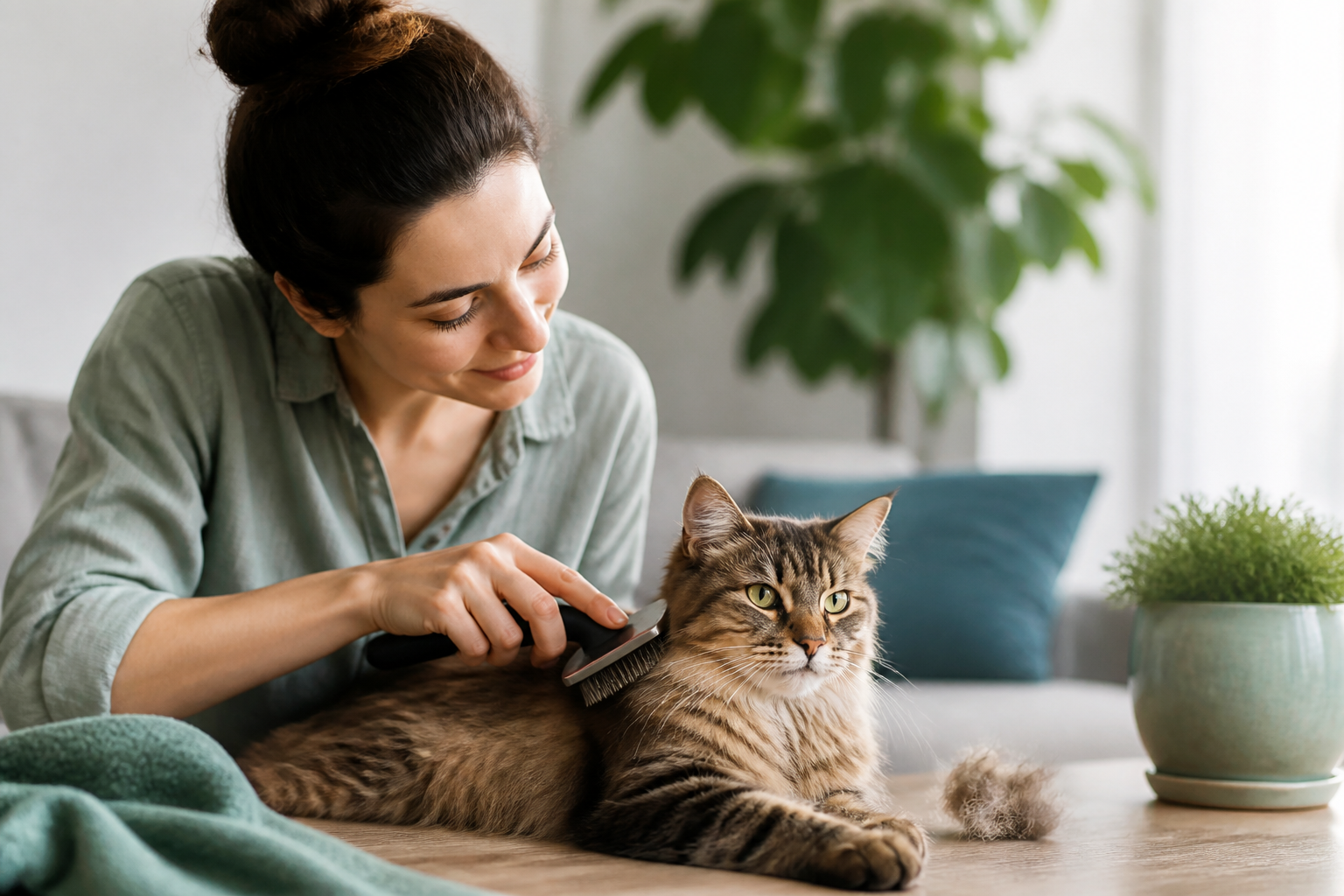
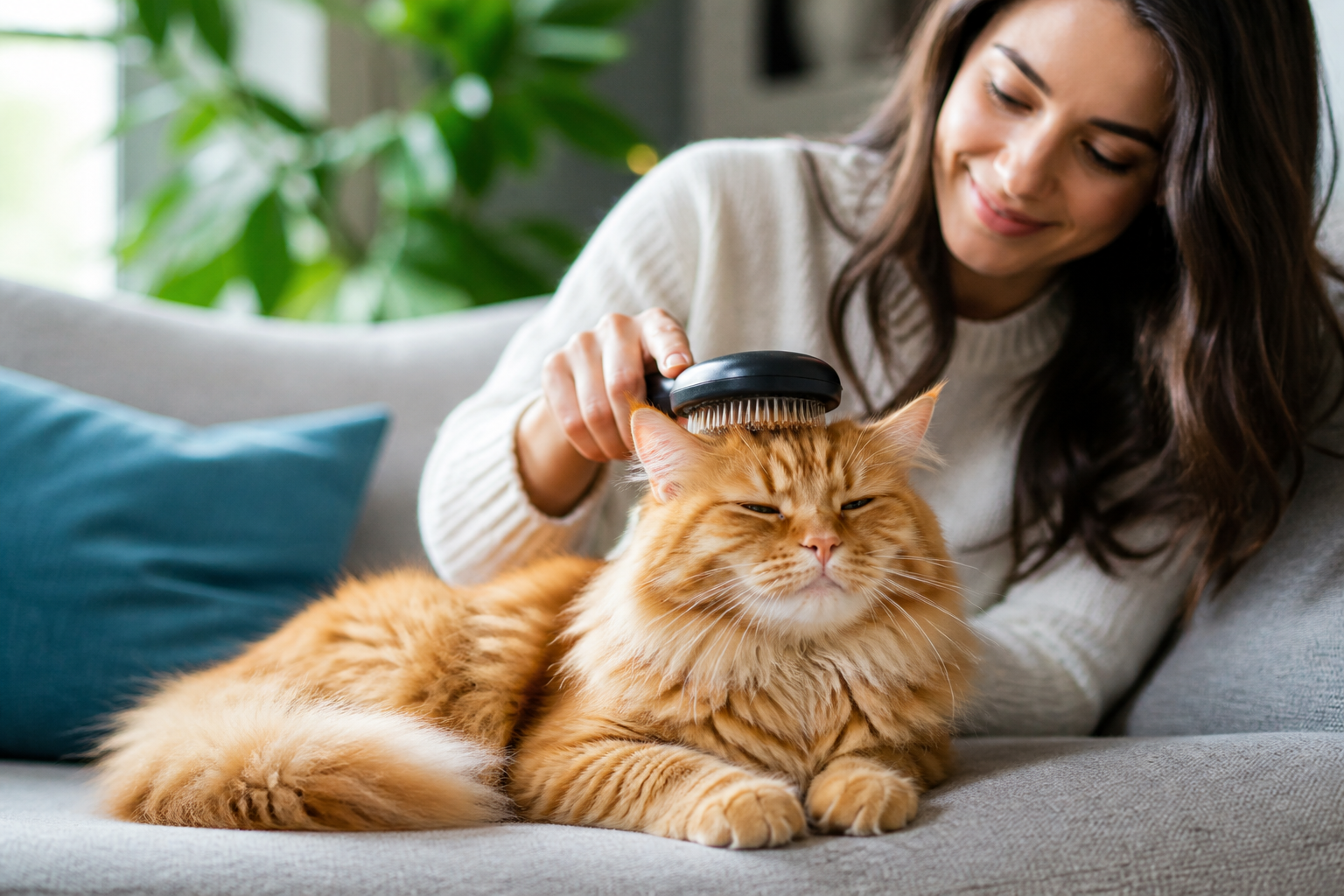
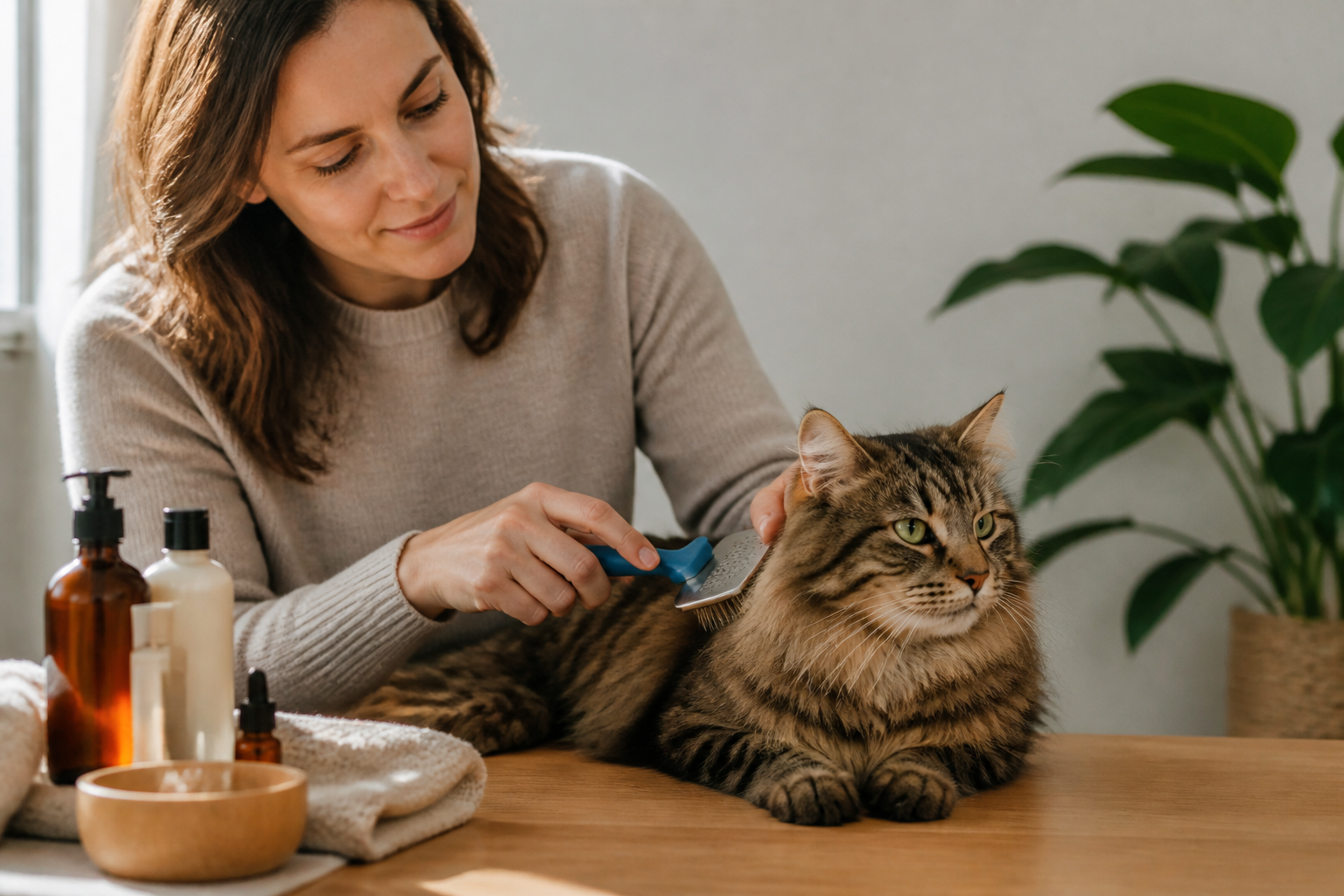
If your cat cannot groom themselves, you must take over the job. Regular brushing is one of the most effective solutions for cat dandruff. It removes dead skin cells before they can clump into flakes and distributes the natural oils produced by the skin across the entire coat. For more grooming ideas, read how to care for your cat's whiskers during grooming.
Choosing the Right Tools
Not all brushes are created equal. For dandruff, you want a tool that reaches the skin without being abrasive. Our cat grooming supplies include brushes, combs, shampoos, and other coat-care tools.
- Silicone Brushes: These are excellent for massage and removing loose hair. They are very gentle on sensitive skin.
- Slicker Brushes: Good for removing trapped dander in the undercoat, but use a soft touch.
- Fine-Toothed Combs: These are great for "flea combing" and checking for parasites while removing flakes.
To Bathe or Not to Bathe?
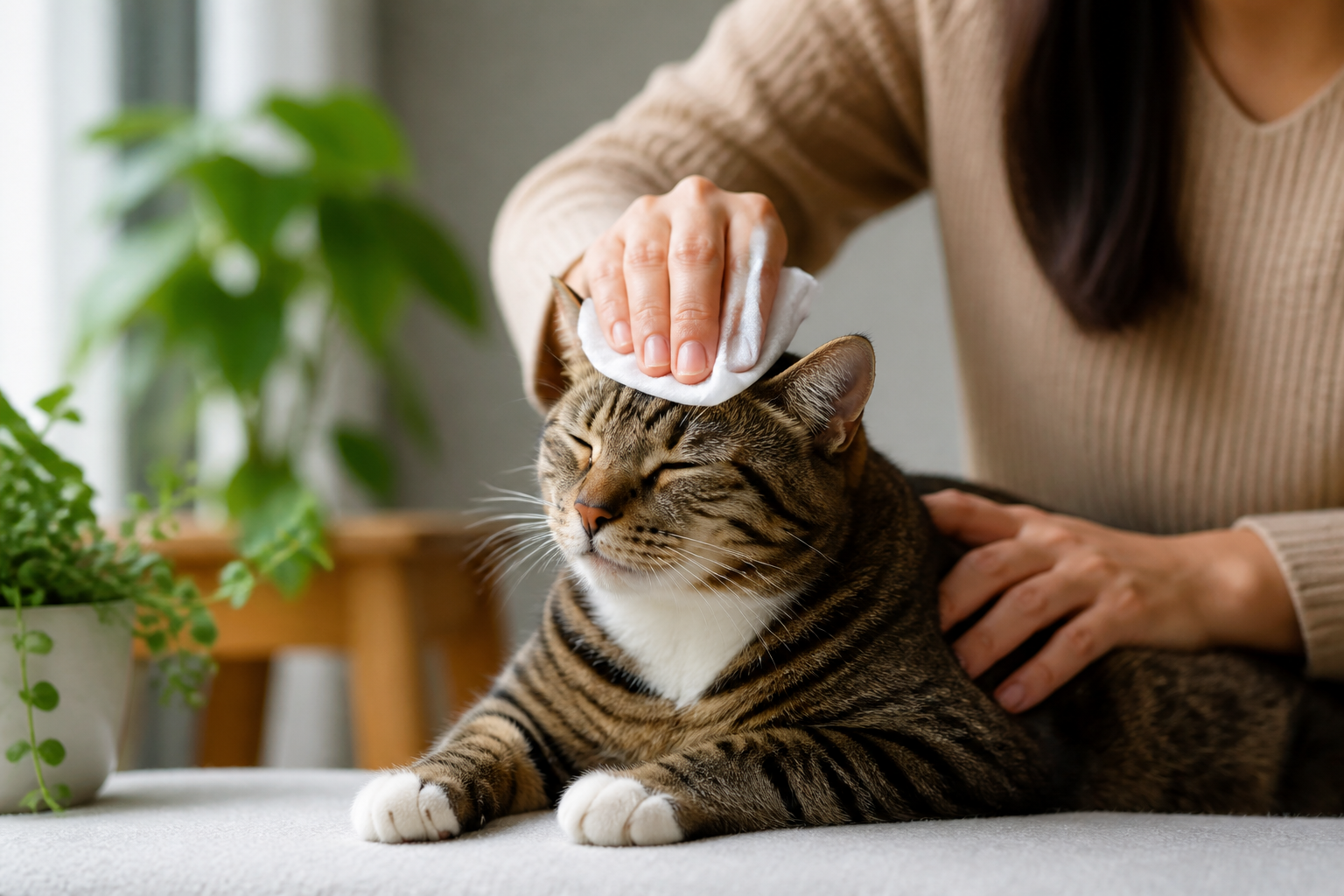
Most cats do not need regular baths. In fact, bathing a cat too often can strip away the oils they need, making dandruff worse. However, if your cat's skin is very greasy or if they have a fungal infection, a therapeutic bath might be necessary. Always use a shampoo specifically formulated for cats. Human shampoos have the wrong pH balance and can cause severe irritation.
| Solution Type | Best For | Frequency |
|---|---|---|
| Daily Brushing | All cats with dandruff | Once a day |
| Humidifier | Winter months/Dry climates | Constant use |
| Omega Supplements | Chronic dry skin | Daily with food |
| Wet Food | Dehydration-related flakes | At least once daily |
| Vet-Prescribed Diet | Obesity or Allergies | As directed |
When Dandruff Signals a Medical Issue
Sometimes, dandruff is a symptom of something happening deep inside the body. If you have improved the diet, added a humidifier, and started a brushing routine but the flakes remain, it is time for a professional opinion.
Parasites and "Walking Dandruff"
There is a specific mite called Cheyletiella that causes a condition known as "walking dandruff." To the naked eye, the mites look like large flakes of skin, but if you watch closely, you can actually see the "flakes" moving. This is highly contagious to other pets and can even cause itchy spots on humans. This requires specific medical treatment to eradicate.
Systemic Diseases
Conditions like diabetes, hyperthyroidism, and kidney disease can all affect the quality of a cat's skin. These diseases change the way the body processes nutrients and maintains hydration. A sudden change in coat quality, especially when combined with increased thirst or changes in appetite, warrants a blood panel at the vet's office.
The BaxterBoo Pharmacy Connection
If your veterinarian determines that your cat's dandruff is caused by a medical condition or a parasite, you may need prescription intervention. Our cat pharmacy provides prescription medications and veterinary diet options. Whether your cat needs prescription-strength flea and tick prevention like NexGard or a specific medicated shampoo, we can help. We also carry prescription pet foods, including the Farmina Vet Life range, which can help manage weight or specific internal health issues that lead to poor coat quality.
Bottom line: While most dandruff is a minor grooming or environmental issue, persistent flaking can be a sign of internal illness or parasites that require veterinary diagnosis.
Transitioning to a Flake-Free Routine
Consistency is key when dealing with skin issues. You will not see results overnight. It takes time for the skin to heal and for a new, healthy coat to grow in. If you are introducing new supplements or foods, give it at least four to six weeks before deciding if the change is working.
Creating a Weekly Schedule
- Monday - Sunday: Brush for five minutes.
- Daily: Check water bowls and ensure wet food is offered.
- Bi-Weekly: Clean the humidifier to prevent mold growth.
- Monthly: Administer flea and tick preventives.
Managing your cat's weight is also a long-term goal. If obesity is the cause of the dandruff, work with your vet on a calorie-controlled diet. We offer several weight management formulas that provide high protein to keep your cat satisfied while helping them shed the extra pounds that prevent them from grooming. For recurring food and supplement orders, consider our Autoship programme.
Allergy Management
Just like humans, cats can be allergic to things in their environment or their food. Food allergies often show up as skin irritation, particularly around the head and neck. If your cat is not just flaky but also has red skin or small scabs, they may be reacting to an ingredient in their food.
Environmental allergies can include reactions to dust, mold, or even the scent of certain laundry detergents. If you suspect an allergy, try switching to unscented cleaners and a dust-free litter. Sometimes, the "solution" is simply removing the irritant from the cat's daily life.
The Importance of Flea and Tick Prevention
Even indoor cats are at risk for parasites. A single flea can cause an allergic reaction known as Flea Allergy Dermatitis. This leads to intense itching, hair loss, and significant dandruff.
Using a regular preventive is one of the easiest ways to rule out parasites as a cause of skin trouble. We carry trusted brands like Frontline and NexGard that provide consistent protection. Keeping your cat on a year-round preventive ensures that a stray flea brought in on your clothes doesn't turn into a skin crisis for your cat. See how flea collars work when comparing prevention options.
Key Takeaway: Regular parasite prevention is a fundamental part of skin health. Even if you do not see fleas, they could be the hidden cause of your cat's flaky skin.
Summary of Solutions
Solving cat dandruff usually requires a multi-pronged approach. You need to address the immediate flakes through grooming, the underlying skin health through nutrition, and the environment through humidity control.
- Increase Hydration: Switch to wet food and provide fresh water daily.
- Support the Skin Barrier: Use fish oil supplements or skin-focused treats.
- Assist with Grooming: Brush daily, especially in hard-to-reach areas.
- Control the Air: Use a humidifier during dry seasons.
- Monitor for Illness: Watch for changes in behavior, thirst, or weight.
By staying proactive, you can ensure your cat remains comfortable and their coat stays sleek and shiny. At BaxterBoo, we are committed to providing the products and the knowledge you need to keep your feline friends at their best. Our team handpicks every item we carry because we want only the best for your pets.
If your cat's dandruff persists despite these home care steps, please schedule a visit with your veterinarian. They can provide a definitive diagnosis and help you access necessary medications through our pharmacy. Whether you are looking for a new brush, a high-quality food like Acana or Orijen, or a specialized supplement, we have the expert-curated selection to help your cat thrive.
FAQ
Can I use human dandruff shampoo on my cat? No, you should never use human shampoo on a cat. Human skin has a different pH level than feline skin, and many human shampoos contain ingredients that are toxic to cats if licked off. Always use a soap-free, pH-balanced shampoo designed specifically for felines to avoid causing further irritation or chemical burns.
How long does it take for cat dandruff to go away? It typically takes about four to six weeks to see a significant change in your cat's skin and coat. This is because the skin cells need time to cycle through and the new, healthier hair needs time to grow. Consistency with brushing and supplements is vital during this period to see the best results.
Is cat dandruff contagious to humans or other pets? Simple dandruff caused by dry skin or poor grooming is not contagious. However, if the dandruff is actually "walking dandruff" caused by Cheyletiella mites, it is highly contagious to other dogs, cats, and even humans. If you suspect mites or see the flakes moving, keep the affected pet away from others and see a vet immediately.
Can a change in cat litter cause dandruff? While litter usually affects the paws or causes respiratory issues, a very dusty clay litter can settle on a cat's coat and skin. This can lead to dryness and irritation that looks like dandruff. Switching to a low-dust or natural litter like those made from corn or paper can sometimes help improve skin health if your cat is sensitive.