
 Save 15% on your 1st Autoship learn more

 Email us
 Live Chat
 FAQs
FAQs





Introduction
You lean in for a morning nuzzle from your favorite pup only to be met with a puff of breath that smells more like a swamp than a best friend. While we often joke about "dog breath," persistent odor is usually the first sign that bacteria are making themselves at home in your dog’s mouth. At BaxterBoo, we know that dental care is one of the most overlooked aspects of pet ownership. It is not just about a fresh-smelling smile. Proper oral hygiene can actually extend your dog's life by several years. This post covers exactly how often you need to brush at home, when to schedule professional cleanings, and the tools you need to keep those pearly whites healthy. Consistent home care combined with annual veterinary visits is the only way to prevent painful periodontal disease.
How Often to Brush Your Dog’s Teeth at Home
The gold standard for at-home dental care is daily brushing. Just like humans, dogs develop a biofilm of plaque on their teeth every time they eat. Plaque is a sticky substance filled with bacteria. If it is not physically rubbed away, it reacts with the minerals in your dog’s saliva and hardens into tartar, also known as calculus. This hardening process happens surprisingly fast.
Plaque can start to mineralize into tartar in as little as 48 to 72 hours. Once plaque turns into tartar, you cannot remove it with a toothbrush at home. Only a professional veterinary cleaning with specialized scaling tools can get it off. This is why brushing once a week, while better than nothing, is usually not enough to prevent long-term buildup. If your schedule is tight, aim for at least three times a week to stay ahead of the mineralization cycle.
Quick Answer: You should ideally brush your dog's teeth every single day. If daily brushing is not possible, aim for at least three times per week to prevent plaque from hardening into permanent tartar.
Why Small Breeds Need More Frequent Care
If you have a Yorkie, Chihuahua, or Pug, you need to be even more vigilant. Small and toy breeds are notorious for dental problems because they have the same number of teeth as a large dog but much smaller mouths. This leads to crowding.
Crowded teeth create tiny pockets where food and hair get trapped, making them breeding grounds for bacteria. Small dogs also tend to live longer than giant breeds, meaning their teeth have to last through more years of wear and tear. Owners of small dogs should make daily brushing a non-negotiable part of their routine.
For additional guidance on recognizing oral health problems, read our guide to warning signs of bad teeth in dogs.
Understanding the Professional Dental Cleaning Schedule
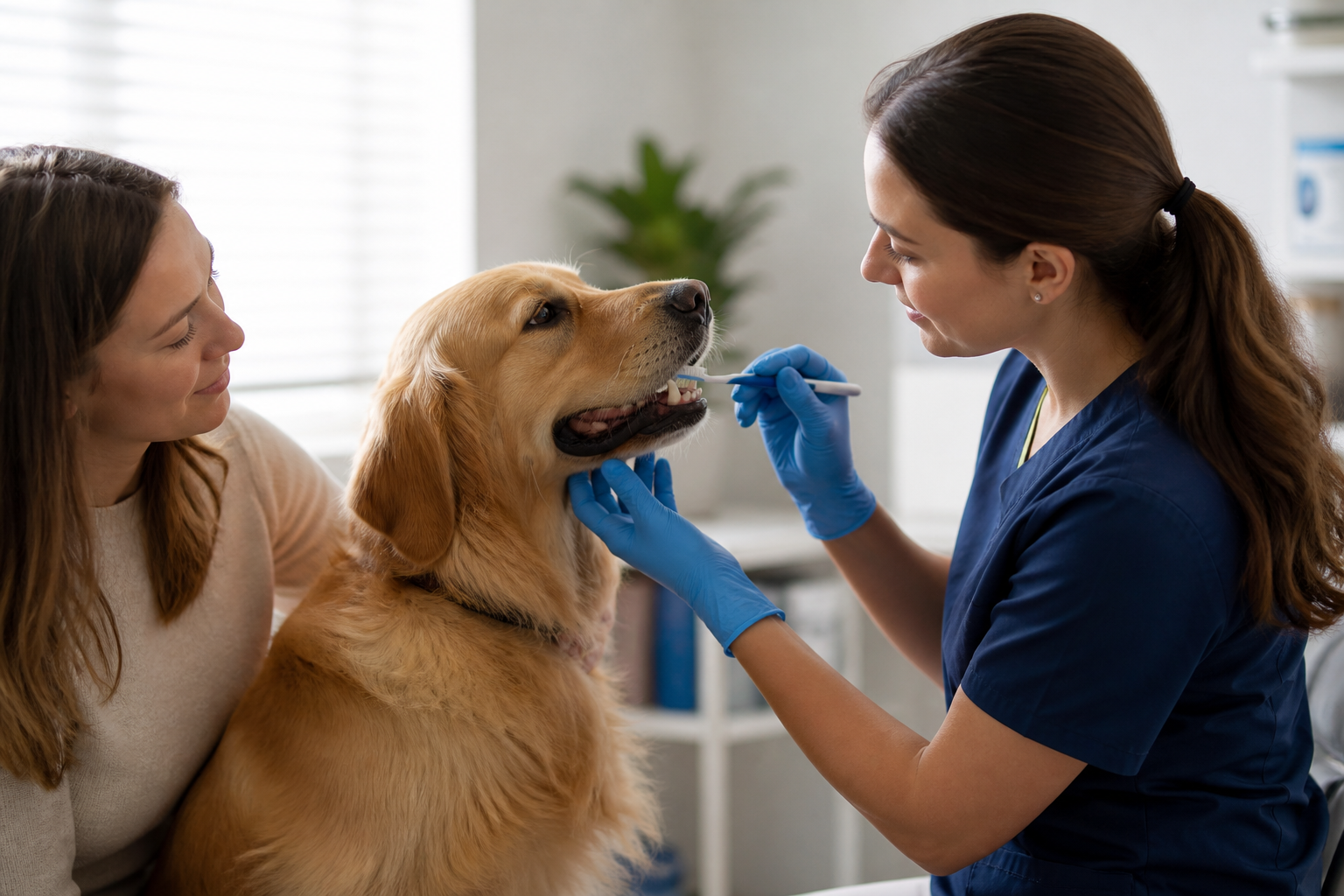
Most adult dogs need a professional dental cleaning once a year. This procedure is often called a COHAT, which stands for Comprehensive Oral Assessment and Treatment. It is much more than a simple cleaning. During a COHAT, your veterinarian scales the teeth above and below the gumline, polishes the enamel, and performs a tooth-by-tooth exam.
For some dogs, once a year might not be enough. Your veterinarian might recommend a cleaning every six months if your dog has:
- A history of rapid tartar buildup
- Misaligned or crowded teeth
- Pre-existing gingivitis or early-stage periodontal disease
- A "pushed-in" face (brachycephalic) that causes breathing and dental issues
Vet Tip: Always schedule a professional dental exam if you notice red gums, loose teeth, or if your dog stops chewing on their favorite toys. Early intervention can save teeth that might otherwise need to be extracted.
The Role of Anesthesia in Cleanings
A proper professional cleaning must be performed under general anesthesia. You may see businesses offering anesthesia-free dental cleanings, but these are mostly cosmetic. Anesthesia-free cleanings only remove the tartar you can see. They do not allow the technician to clean under the gumline, which is where the most dangerous bacteria live.
Without anesthesia, a vet cannot take dental X-rays. Since more than 60 percent of a dog’s tooth structure is hidden under the gums, X-rays are the only way to find painful abscesses or rotting roots. While anesthesia always carries a small risk, modern veterinary protocols involve blood work and constant monitoring to keep your pet safe. The risk of untreated dental infection spreading to the heart or kidneys is often much higher than the risk of the procedure itself.
For more general brushing and cleaning guidance, see these pet dental care tips.
Signs Your Dog Needs a Cleaning Right Away
Sometimes you cannot wait for the annual checkup. Dental disease progresses through four stages, and catching it at stage one or two can prevent permanent bone loss in the jaw. If you notice any of the following, make an appointment with your vet immediately:
- Foul Breath: A mild "doggy" smell is normal, but a pungent, rot-like odor indicates infection.
- Bleeding Gums: You might see blood on a chew toy or in the water bowl.
- Discolored Teeth: Healthy teeth are white. Yellow or brown buildup near the gumline is tartar.
- Change in Eating Habits: If your dog drops food, chews on only one side, or avoids hard kibble, they may be in pain.
- Pawing at the Face: This is a common sign of a toothache or a stuck piece of debris.
Key Takeaway: Oral health is a direct window into your dog's systemic health. Bacteria from the mouth can enter the bloodstream and cause irreversible damage to the heart, liver, and kidneys.
Essential Tools for Your Dog’s Dental Routine
To be successful at home, you need the right gear. Never use human toothpaste on a dog. Human toothpaste contains foaming agents that are meant to be spit out, not swallowed. Many human brands also contain xylitol, an artificial sweetener that is highly toxic to dogs.
Choosing the Right Toothpaste
Pet-specific toothpaste is formulated to be swallowed and comes in flavors like poultry, beef, or peanut butter. These toothpastes often contain enzymes that help break down plaque even after you stop brushing. We carry several enzymatic options that make the process more like a treat and less like a chore.
Browse our dog dental care collection for pet toothpaste, oral gels, dental chews, and other supplies.
Picking a Toothbrush
You have a few options based on your dog’s comfort level:
- Finger Brushes: These are small silicone caps that fit over your pointer finger. They are great for puppies or dogs who are nervous about long objects in their mouths.
- Double-Headed Brushes: These allow you to clean the top and sides of the teeth at the same time, which cuts down your brushing time.
- Soft-Bristled Human Brushes: A soft, small-headed child’s toothbrush can work in a pinch for medium to large dogs.
How to Start a Brushing Routine
If your dog is not used to having their mouth touched, you cannot just jump in with a brush. You need to build trust through a slow introduction.
- Step 1: Get them used to the taste. Put a small dab of pet toothpaste on your finger and let them lick it off. Do this for a few days until they get excited when they see the tube.
- Step 2: Touch the teeth. While they lick the paste, gently rub your finger along their gums and teeth. This gets them used to the sensation of having their lips lifted.
- Step 3: Introduce the brush. Put toothpaste on the brush and let them lick it. Gradually start using small, circular motions on the front teeth.
- Step 4: Focus on the outside. Most plaque builds up on the cheek side of the teeth. You do not need to worry as much about the inside surface near the tongue, as the tongue naturally helps keep that area cleaner.
Bottom line: A slow, positive introduction to brushing prevents your dog from becoming fearful and makes daily care much easier for both of you.
Using Dental Chews and Toys as Supplements
Brushing is the most effective way to clean teeth, but it is not the only tool. Dental chews and specific toys can provide mechanical scrubbing action that helps knock off plaque.
- Dental Chews: Products like Greenies dental dog chews are designed with textures that allow the tooth to sink in, scraping away debris. Many of these also contain ingredients that freshen breath.
- Rubber Toys: Brands like Kong make dental-specific toys with ridges. When your dog chews, these ridges rub against the teeth. You can even smear pet toothpaste inside the ridges for extra cleaning power.
- Dental Diets: If your dog is prone to heavy tartar, your vet might recommend a prescription dental diet from brands like Royal Canin or Farmina Vet Life. These kibbles are usually larger and have a specific fiber matrix that does not crumble immediately, forcing the dog to chew more.
Our pharmacy at BaxterBoo offers a wide range of prescription dental diets and oral medications through our partnership with Pet's Choice. If your veterinarian has prescribed a specific oral health plan, our pet pharmacy can help you manage those recurring needs with ease.
For more ideas, explore our dental dog toys for ridged rubber toys and other options designed for chewing.
Comparing Dental Care Methods
| Method | Frequency | Effectiveness | Best For |
|---|---|---|---|
| Brushing | Daily | High | Prevention of plaque and tartar |
| Professional Cleaning | Yearly | Maximum | Removing tartar and treating disease |
| Dental Chews | Daily | Moderate | Supplementing brushing |
| Water Additives | Daily | Low | Freshening breath and slow bacterial growth |
For a closer look at chew options, read our guide to the best dental chews for dogs.
The Cost of Neglect
It might seem like a hassle to brush your dog's teeth every day, but it is significantly cheaper than the alternative. A routine professional cleaning is a standard maintenance cost. However, if dental disease is allowed to progress to stage four, your dog may require multiple extractions, oral surgery, and long-term antibiotics.
The pain associated with rotting teeth can also lead to behavioral changes. A dog in pain may become irritable, stop playing, or even snap when their face is touched. By maintaining a strict schedule, you are protecting your dog's physical health and their emotional well-being.
Managing Ongoing Oral Health Needs
For dogs with chronic oral health issues, such as stomatitis or advanced gum disease, your vet may prescribe daily medications or specialized rinses. This is where a reliable pharmacy becomes essential. We provide access to FDA-approved medications through our partnership with Pet's Choice, ensuring you have exactly what you need to keep your dog comfortable after a procedure or during long-term treatment.
Using a service like our Autoship programme can also ensure you never run out of the supplies that keep your dog healthy. Whether it is their favorite dental chews or their prescription diet, having these items delivered on a schedule means you never have to skip a day of care.
Key Takeaway: Proper dental care is a combination of daily friction at home, high-quality nutrition, and professional veterinary intervention.
Conclusion
Keeping your dog's teeth clean is one of the most impactful things you can do as a pet owner. Aim for daily brushing at home, use high-quality dental chews from trusted brands, and never skip your dog’s annual professional cleaning. Remember that small breeds and seniors often need even more frequent attention to prevent pain and tooth loss. If you notice persistent bad breath or bleeding gums, schedule a visit with your veterinarian right away to discuss a treatment plan. To keep your dental routine on track, explore our Dental Care category for brushes, toothpastes, and treats that make oral hygiene a breeze.
Note: We recommend consulting with your veterinarian before starting a new dental supplement or diet, especially if your dog has existing health conditions or is on other medications.
FAQ
Can I use a human toothbrush on my dog?
You can use a soft-bristled human toothbrush if the head is small enough to fit comfortably in your dog's mouth. A child's toothbrush is often the perfect size for medium or large dogs. However, you must never use human toothpaste because it contains ingredients like xylitol and fluoride that are toxic to dogs.
How do I know if my dog is in dental pain?
Dogs are experts at hiding pain, but common signs include dropping food while eating, pawing at the mouth, or a sudden loss of interest in hard toys. You might also notice they are more irritable or have a swelling under one eye, which can indicate a tooth root abscess. If you see any of these signs, a vet visit is necessary for a diagnosis.
Are dental chews as good as brushing?
Dental chews are a great supplement, but they are not a replacement for brushing. Brushing allows you to target the gumline where most bacteria hide, while chews primarily clean the tops of the teeth. For the best results, use dental chews on the days you are unable to brush or as a reward after a successful brushing session.
Does dry food really keep teeth cleaner than wet food?
While some dry kibble provides a very slight scraping action, most standard kibble crumbles too quickly to provide significant dental benefits. Some specialized prescription dental diets are designed to stay intact longer to scrub the teeth. Regardless of the diet, both wet and dry food leave behind plaque that requires physical brushing to remove.






