Save 15% on your 1st Autoship learn more

 Email us
 Live Chat
 FAQs
FAQs





Introduction
You are enjoying a quiet moment petting your cat when you notice a flurry of white flakes on their dark fur. It is a common sight for many pet owners. These flakes often look like a dusting of flour across the shoulders and back. While you want your cat to look their best, the thought of a traditional bath involving a tub of water and a struggling feline is likely a non-starter. At BaxterBoo, we understand that most cats and water do not mix well. This is why many owners turn to waterless options to manage skin issues. This post will cover how to use waterless products to manage flakes and when skin changes might signal a deeper health concern. You will learn the best ways to keep your cat’s coat clean without the stress of a bath.
What Exactly Is Cat Dandruff?
Dandruff in cats is not always a sign of dry skin. It is actually a collection of dead skin cells that have clumped together. In a healthy cat, skin cells regenerate and shed naturally. You usually do not see this process because cats are meticulous groomers. When you start seeing visible flakes, it means the natural shedding process is out of balance.
Oily skin can actually cause more dandruff than dry skin. When a cat has overactive sebaceous glands, the excess oil traps dead skin cells. These cells then flake off in larger, more visible chunks. This is why simply adding moisture is not always the answer. Sometimes the skin needs a gentle cleanser to break down that oily buildup.
Environmental factors also play a huge role. Low humidity in your home during winter can sap moisture from the skin. Conversely, a diet lacking in essential fatty acids can weaken the skin barrier. If the barrier is weak, moisture escapes and the skin becomes prone to irritation.
Quick Answer: Dry cat shampoo helps manage dandruff by breaking down excess oils and lifting away dead skin cells without the need for water. It is an effective tool for keeping the coat tidy between deep cleans, especially for cats that find water stressful.
The Role of Dry Cat Shampoo
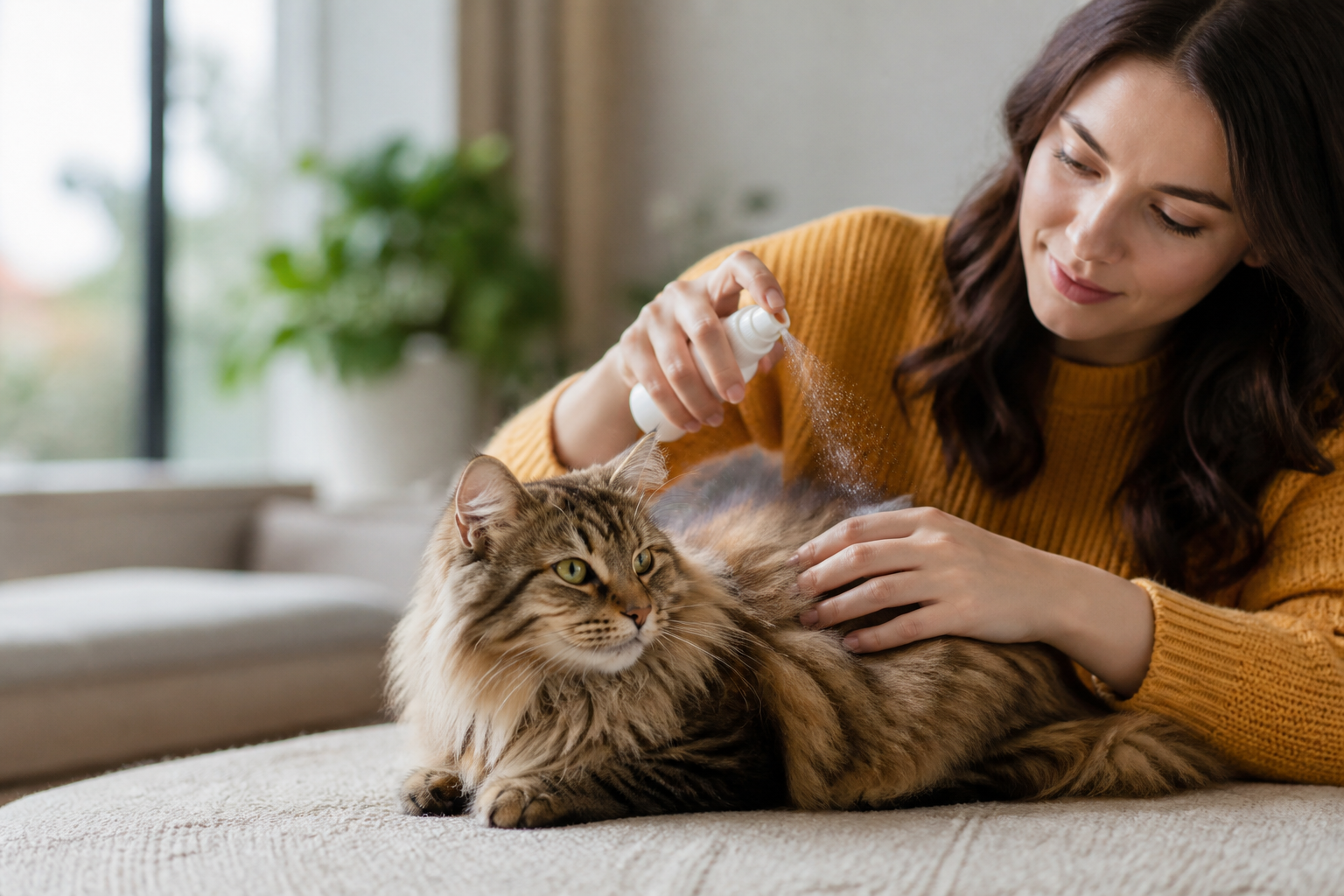
Dry shampoo for cats usually comes in three forms: foams, sprays, and powders. For dandruff specifically, foams are often the most effective. Foams allow you to massage the product down to the skin level where the flakes originate. Sprays are good for a quick refresh but often sit on top of the fur.
Waterless shampoo does not truly "wash" the cat in the way a tub of water does. It works by using mild surfactants or absorbing agents to grab onto dirt and oil. When you towel your cat off or brush them after application, you are physically removing the particles the shampoo has trapped.
It is a mistake to think of these products as just a perfume. A high-quality dry shampoo should be fragrance-free or very lightly scented. Cats are extremely sensitive to smells. A product that is too heavily scented might cause them to over-groom as they try to remove the artificial smell. This can lead to even more skin irritation and flaking.
Choosing the Right Formula
When you browse our cat grooming supplies, look for ingredients that support the skin barrier. Look for products containing aloe vera or oatmeal. These ingredients help soothe itchiness that often accompanies dandruff. Avoid products with parabens, sulfates, or heavy dyes.
- Foam formulas: Best for deep cleaning and reaching the skin.
- Spray formulas: Best for light finishing and removing surface dust.
- Powder formulas: Good for absorbing extreme oil but can be messy to apply.
Key Takeaway: Dry shampoo is a maintenance tool that works by trapping oils and dead skin so they can be brushed away. It is most effective when massaged directly into the coat.
Step-by-Step Guide to Applying Dry Shampoo
Applying dry shampoo is as much about the technique as it is about the product. If you just squirt foam on the cat's back, you will likely just end up with a sticky cat. You need a systematic approach to ensure the product actually reaches the flakes.
Step 1: Prepare the coat. / Use a high-quality brush to remove loose fur and break up large clumps of dandruff. This clears the way for the shampoo to reach the skin.
Step 2: Apply the product to your hands first. / Do not spray or pump the shampoo directly onto the cat. This can startle them. Rub the foam or spray between your palms to warm it up slightly.
Step 3: Massage into the skin. / Start at the neck and work your way down the back. Use your fingertips to get under the topcoat. Focus on the base of the tail and the lower back where dandruff is most common.
Step 4: Let it sit. / Give the product a minute or two to work. This allows the surfactants to bond with the oils and skin cells.
Step 5: Towel dry. / Use a clean, dry towel to vigorously rub the coat. This step is vital because it lifts the "dirty" shampoo off the cat.
Step 6: The final brush. / Once the coat is damp-dry, brush your cat again. This removes the remaining loosened flakes and prevents the fur from matting as it dries.
Why Some Cats Get More Dandruff Than Others
Age is a major factor in skin health. Senior cats often develop dandruff because they lose the flexibility to groom their lower back and hindquarters. If a cat cannot reach a certain spot, the oil and dead skin simply sit there. This leads to a thick, flaky layer of fur that feels greasy to the touch.
Weight is another common cause. Overweight cats face the same physical limitations as senior cats. If a cat has a "skirt" of dandruff along their spine, it is often a sign they cannot reach that area. In these cases, using a dry shampoo is a kindness. It does the work for them that they can no longer do for themselves.
Seasonal changes also affect the skin. During the transition from summer to fall, many cats shed their summer coats. This period of high hair turnover often results in more visible skin debris. Keeping up with a dry shampoo routine during these weeks can prevent the flakes from becoming overwhelming.
Vet Tip: If your cat has a sudden explosion of dandruff along with red skin or hair loss, consult your veterinarian. These symptoms can indicate a parasitic infection like Cheyletiella mites, often called "walking dandruff," which requires specific medical treatment from our cat pharmacy.
The Limits of Waterless Shampoo
While we love the convenience of dry shampoo, it is not a "forever" solution for every cat. Some cats have such high oil production that a waterless product eventually leaves a sticky residue. If the coat starts to feel gummy or tacky, it is time for a real bath or a trip to a professional groomer.
Dry shampoo also cannot fix mats. If your cat has dandruff trapped inside a mat of fur, the shampoo will only make the mat tighter. You must always brush out tangles before applying any liquid or foam product. If the mats are close to the skin, do not try to cut them out yourself. A professional groomer or a vet should handle matted skin to avoid accidental nicks.
Nutrition and the Skin Barrier
The skin is the largest organ of the body. Its health starts from the inside. If your cat's skin is chronically flaky, the issue might be their diet. High-quality fats are the building blocks of healthy skin. Without enough Omega-3 and Omega-6 fatty acids, the skin becomes brittle.
We carry several brands that focus on skin health. Farmina and Royal Canin offer specialized formulas designed to support the skin and coat. Some of these are available over the counter, while others are prescription diets. If your vet recommends a specific food for skin allergies, our pharmacy can help fulfill those needs through our partnership with Pet's Choice.
Supplements are another great option. Products like Zesty Paws supplements or Cosequin often include ingredients that support more than just joints. They provide the essential oils that keep the skin supple. Adding a skin and coat supplement to your cat's daily routine can significantly reduce the amount of dandruff you see over time.
- Omega-3 Fatty Acids: Reduces inflammation in the skin.
- Vitamin E: Protects skin cells from oxidative damage.
- Biotin: Supports keratin production for a stronger coat.
Grooming Tools to Pair with Dry Shampoo
The shampoo is only half the battle. The tools you use to remove the loosened flakes are just as important. For short-haired cats, a fine-toothed flea comb is actually an excellent dandruff tool. The teeth are close enough together to catch even small flakes.
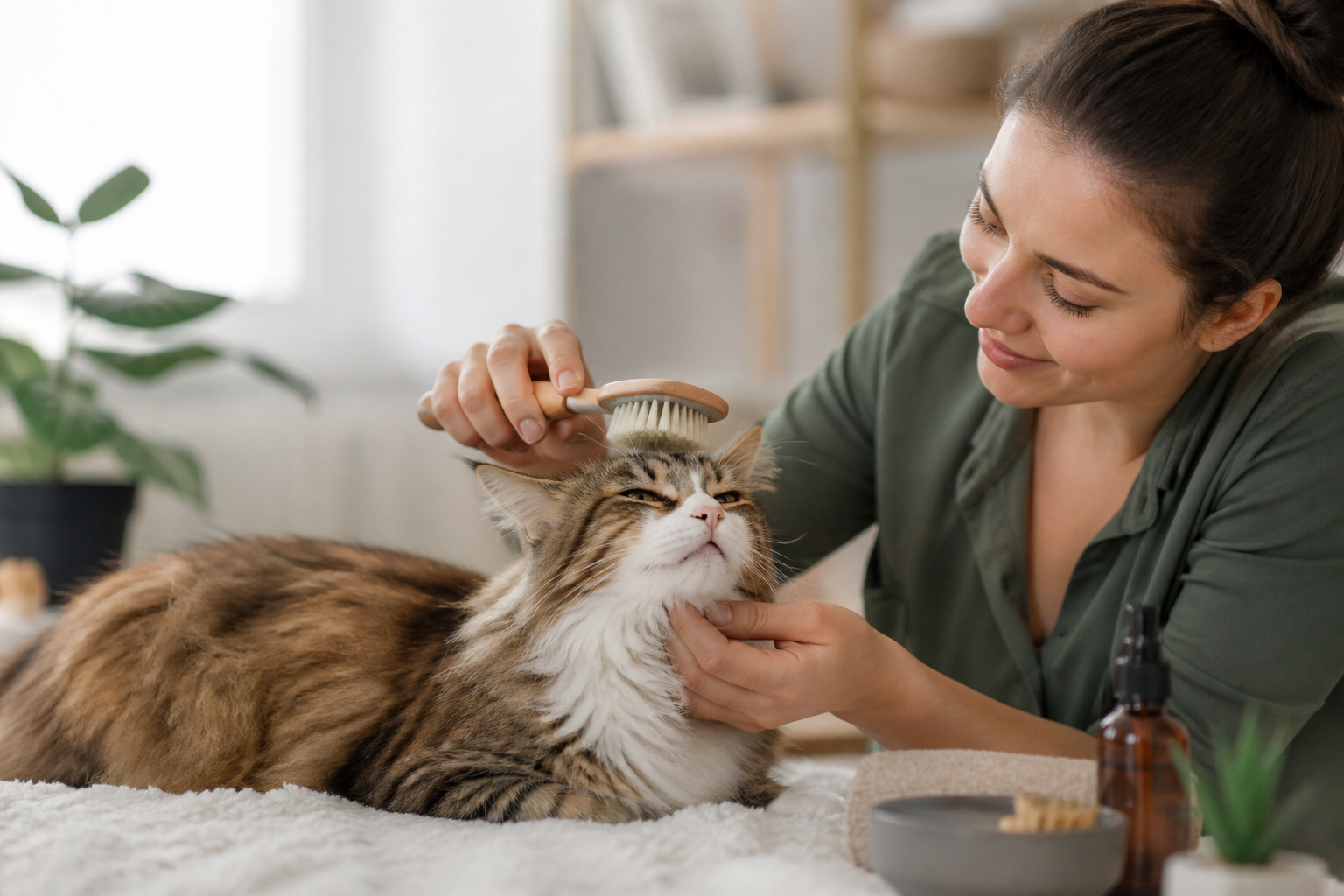
For long-haired cats, you need a slicker brush or a long-toothed comb. A Kong ZoomGroom is another favorite among our staff. It is made of soft rubber and acts like a magnet for loose hair and skin. It also provides a gentle massage that cats usually enjoy.
Regular brushing is the best way to prevent dandruff from forming in the first place. It distributes the cat's natural oils across the entire coat. Think of dry shampoo as a way to enhance your regular brushing routine rather than a replacement for it.
Bottom line: Using a dry shampoo once a week alongside daily brushing is the most effective way to manage mild cat dandruff without causing stress.
When to Seek Professional Help
Not all flakes are harmless dandruff. Sometimes, skin issues are a sign of allergies or systemic health problems. If your cat is constantly scratching or has developed small scabs, this is not just dry skin. It could be a sign of flea allergy dermatitis or a fungal infection.
If you notice a foul odor coming from the skin, this often indicates a yeast or bacterial infection. Dry shampoo will not fix an infection. In fact, adding moisture to an active infection could make it worse. This is the time to visit your vet for a proper diagnosis.
Our pharmacy carries a wide range of FDA-approved medications for skin conditions. Once your vet provides a prescription, we can help you manage your cat's health with the right medicated shampoos or oral treatments. Dealing with chronic skin issues is a marathon, not a sprint. Having a reliable source for both grooming supplies and medications makes the process much easier.
Creating a Low-Stress Grooming Routine
Most cats do not like being "worked on." To make dry shampooing successful, keep the sessions short. You do not have to do the whole cat at once. You can focus on the back one day and the belly the next.
Pair the grooming session with something your cat loves. This creates a positive association. If they get their favorite Tiki Cat treats every time the dry shampoo bottle comes out, they will eventually stop running away when they see it.
Pay attention to your cat's body language. If their tail starts lashing or their ears go back, stop the session. It is better to have a partially clean cat than a cat that is terrified of the grooming brush. Over time, your cat will become more accustomed to the sensation of the foam and the towel.
Key Takeaway: Consistency and positive reinforcement are the keys to a successful waterless grooming routine. Keep sessions short and always end on a high note with a treat.
Managing the Environment
The air inside your home affects your cat's skin. During the winter, the air is often incredibly dry. Using a humidifier can help keep your cat's skin from drying out. This is a simple change that can have a big impact on the frequency of dandruff.
Also, consider the cleanliness of your cat's bedding. Dust and allergens can settle into their favorite sleeping spots and irritate the skin. Washing their beds regularly with a pet-safe, fragrance-free detergent can reduce the external triggers for skin flaking.
If your cat spends time outdoors, they may be picking up environmental allergens like pollen. A quick wipe-down with a damp cloth or a light spray of waterless grooming products can remove these irritants before they have a chance to cause a reaction on the skin.
Summary of Benefits
Using dry shampoo for cat dandruff offers several advantages for both the pet and the owner. It eliminates the physical struggle of a water bath. It provides immediate relief from visible flakes. It also allows you to bond with your cat through gentle touch and grooming.
At BaxterBoo, we believe that grooming should be a part of your cat's overall wellness plan. It is not just about looks. A clean coat and healthy skin prevent irritation and help you spot lumps or bumps early. By combining a high-quality waterless shampoo with the right tools and a good diet, you can keep your cat comfortable and flake-free.
Check out our full collection of cat grooming supplies to find the right formula for your feline friend. If your cat’s skin needs more than just a surface clean, remember that our pharmacy is here to help with professional-grade solutions. Taking care of your cat’s skin is a daily commitment, and we are here to support you every step of the way.
Bottom line: Dry shampoo is a practical, effective, and low-stress way to manage cat dandruff when used as part of a regular grooming and nutrition routine.
FAQ
Can I use human dry shampoo on my cat?
No, you should never use human products on your cat. Human skin has a different pH balance than feline skin, and many human dry shampoos contain ingredients like alcohols or heavy fragrances that are toxic to cats. Cats also lick their fur, meaning they would ingest any chemicals left behind by a human product.
How often can I use waterless shampoo on my cat?
For most cats, using a waterless shampoo once or twice a week is perfectly safe. If your cat has very sensitive skin, you may want to start with a small patch test and wait 24 hours to check for any redness. Avoid using it more than three times a week, as even gentle formulas can cause buildup if used too frequently.
Does dry shampoo kill fleas or just remove dandruff?
Standard dry shampoos are designed for cleaning and flake removal, not for killing parasites. If your cat has dandruff caused by fleas, you need a specific flea treatment. Our pharmacy carries several FDA-approved flea and tick preventives that can address the root cause of the skin irritation.
What should I do if my cat hates the feeling of the foam?
If your cat dislikes the wet feeling of the foam, try using a very small amount on a soft brush instead of your hands. This mimics the feeling of regular brushing while still distributing the product. You can also try a powder-based waterless shampoo, though these require more thorough brushing to remove.