
 Save 15% on your 1st Autoship learn more

 Email us
 Live Chat
 FAQs
FAQs





Introduction
You might be sitting on the sofa when your dog leans in for a lick, and the smell hits you. That "dog breath" is often the first sign that plaque and tartar are building up on their teeth. When you lift their lip, you see yellow or brown deposits near the gum line. At BaxterBoo, we know that many owners want a natural way to handle this without jumping straight to a professional cleaning under anesthesia. You are likely wondering what bones clean dogs teeth effectively without causing a trip to the emergency room. This post will cover which bones act as natural toothbrushes and which ones you should avoid to keep your dog safe. Using the right raw bones can be a helpful part of a dental hygiene routine.
The Science of Chewing and Dental Health
Dogs do not have hands to brush their teeth. In the wild, they rely on the mechanical action of tearing meat and crunching through bone to keep their mouths clean. This process is more than just a hobby. It is a functional way to scrape away soft plaque before it hardens into tartar.
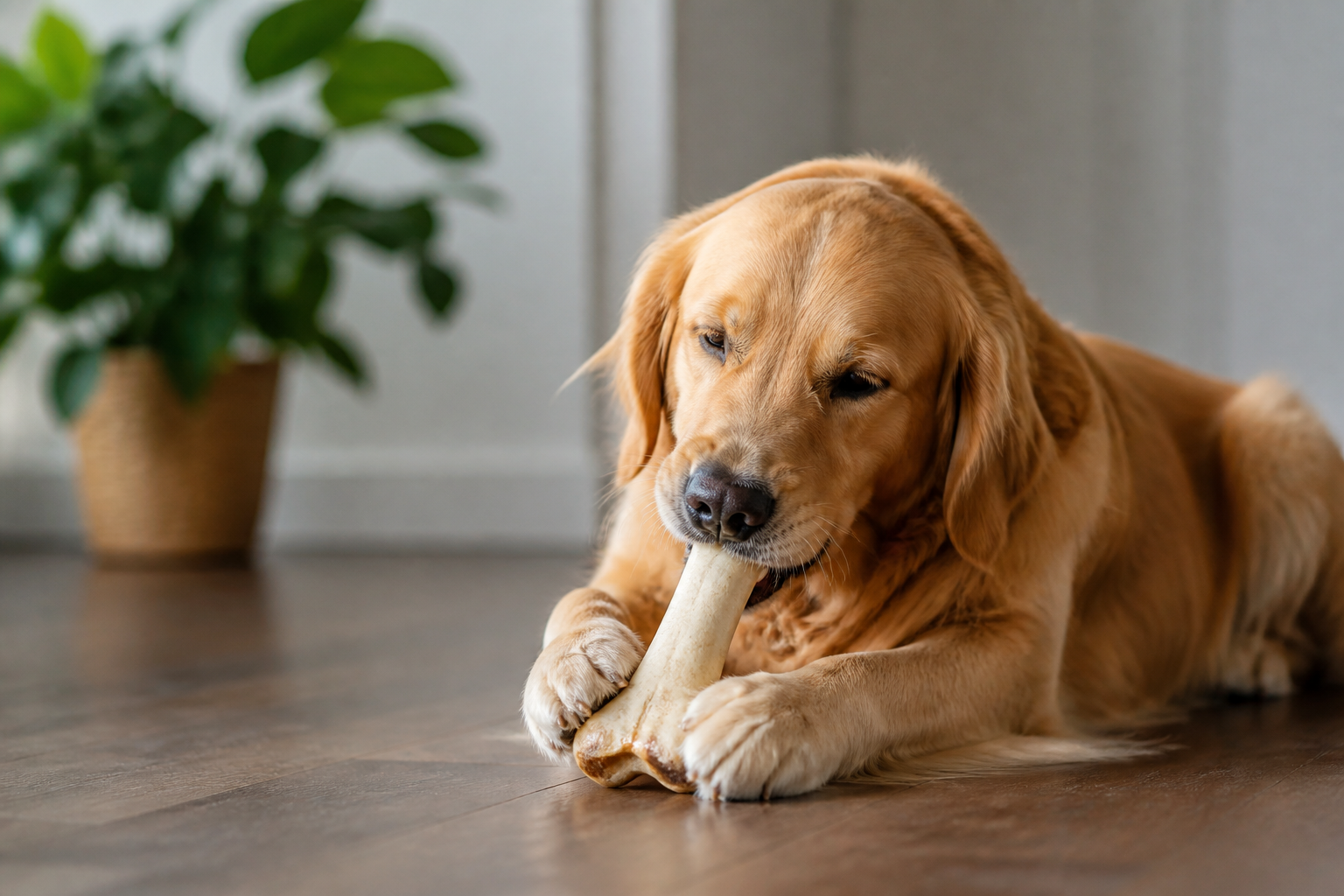
When a dog chews a bone, the surface of the bone rubs against the teeth. This acts like a mild abrasive. It is similar to how we use a toothbrush to scrub away film. The most effective cleaning happens when a dog has to work at the bone. They use their back molars to crunch and their front teeth to pull at bits of meat or gristle.
Saliva also plays a role. Chewing increases saliva production. This helps wash away food particles and contains natural enzymes that can slow down bacterial growth. However, not all bones provide the same level of cleaning. Some are too soft to scrub well. Others are so hard they cause more damage than good.
Key Takeaway: The cleaning power of a bone comes from the mechanical friction of the bone surface rubbing against the tooth enamel and the flossing action of attached connective tissue.
Raw Versus Cooked: The Essential Safety Distinction
The most important rule in pet dental care is to never feed cooked bones. This includes bones that have been boiled, baked, or smoked. Heat changes the molecular structure of the bone. It makes the bone brittle and prone to splintering.
Cooked bones can shatter into sharp shards. These shards can puncture the mouth, throat, or the lining of the stomach. They can also cause life threatening obstructions in the intestines. Raw bones are different. They are relatively soft and flexible. They tend to crunch rather than splinter.
At BaxterBoo, we always emphasize safety first. If you buy a bone at a grocery store, make sure it is completely raw. Avoid the "shrink wrapped" bones often found in the treat aisle of big box stores. These are usually smoked or dried. They are often too hard for a dog's teeth and can lead to expensive dental fractures.
Why Cooked Bones Are Dangerous
- They lose their natural moisture and flexibility.
- They can cause internal punctures or lacerations.
- They are harder for the stomach to digest.
- They often contain added salts or seasonings that are bad for dogs.
Best Types of Bones for Cleaning Teeth
Choosing the right animal source is the next step. You want a bone that is hard enough to scrape but not harder than the tooth itself. You can explore our bones, bully, and natural chews when comparing options.
Lamb and Goat Bones
Lamb and goat bones are often considered the "sweet spot" for dental health. They come from medium sized animals. These bones are abrasive enough to remove plaque but are usually not as dense as beef bones. Most dogs can work on a lamb neck or a goat rib for thirty minutes without the risk of cracking a molar.
Beef Knuckle Bones
Beef knuckles are the large, soft joints at the ends of long bones. They are covered in cartilage and connective tissue. These are excellent for "recreational" chewing. As the dog gnaws on the knuckle, the cartilage acts like floss between the teeth. The porous nature of the knuckle bone provides a great scrubbing surface.
Avoid Weight Bearing Leg Bones
You should generally avoid the leg bones of large animals like cows or bison. These are called "marrow bones" or "femur bones." These bones are designed to support thousands of pounds of weight. They are incredibly dense and hard. If a dog bites down too hard on a cow femur, the tooth is more likely to break than the bone.
Vet Tip: If you can’t indent a chew with your thumbnail or cut a bone with kitchen shears, it might be too hard for your dog. Always consult your veterinarian before introducing raw bones if your dog has a history of broken teeth or sensitive digestion.
Edible Bones Versus Recreational Bones
It is helpful to understand the difference between edible bones and recreational bones. Each serves a different purpose for your dog's health.
Edible bones are soft and do not contain marrow. These include chicken necks, turkey necks, and chicken wings. Dogs can crunch these up and swallow them entirely. While they are a great source of calcium and phosphorus, they are often too soft to provide deep cleaning. They are more of a nutritional supplement than a dental tool.
Recreational bones are meant for gnawing, not for swallowing. These are the larger bones like beef knuckles or lamb shanks. Your dog should spend time scraping their teeth against these. They should not be able to eat the entire bone in one sitting. Once the meat and gristle are gone, the bone should be taken away.
Bone Selection Checklist
- Select a bone that is larger than your dog's head to prevent swallowing.
- Look for bones with meat or gristle still attached for a flossing effect.
- Ensure the bone is 100 percent raw.
- Match the bone size to your dog's jaw strength.
When Bones Are Not Enough: Managing Dental Disease
Bones are a preventative tool. They are great for keeping healthy teeth clean. However, they cannot fix advanced dental disease. If your dog already has thick, brown tartar or red, inflamed gums, a bone will not solve the problem. In fact, chewing on hard bones with diseased gums can be very painful. It may even cause the gums to bleed or allow bacteria to enter the bloodstream.
If your pet has existing dental issues, you need professional help. We provide access to a full pet pharmacy for prescriptions and special dental needs. Our pharmacy carries prescription foods like Royal Canin Dental or Farmina Vet Life that are formulated to reduce tartar buildup through specific kibble shapes and mineral balances.
Managing chronic dental health often requires a combination of veterinary care and the right products at home. If your vet prescribes a medicated dental rinse or a specific antibiotic for a mouth infection, you can find those resources through the BaxterBoo pharmacy.
Safety Rules for Bone Chewing
Supervision is the most important part of giving your dog a bone. Never give a bone and then leave the house. You need to be there to make sure they do not choke or try to swallow a large piece.
Step 1: Set a timer. Allow your dog to chew for about 20 to 30 minutes. This is enough time for a good cleaning but prevents them from overworking their jaws.
Step 2: Check the bone. Watch for any sharp edges that might develop as the dog chews. If the bone starts to break into small pieces, take it away immediately.
Step 3: Monitor the "aftermath." Some dogs get an upset stomach from the rich marrow or the bone itself. Watch for signs of constipation or diarrhea. If your dog has a sensitive stomach, you might want to scoop out some of the fatty marrow before giving them the bone.
Key Takeaway: Proper bone chewing requires the right size, the right animal source, and constant supervision to ensure it remains a healthy activity.
Alternatives to Real Bones
Some dogs are "power chewers" who take things too far. If your dog tries to destroy everything in their mouth, a real bone might be too risky. In these cases, look for high quality alternatives that still provide dental benefits. You can browse our dental dog toys for options designed for chewing and play.
Rubber toys from brands like KONG can be stuffed with healthy treats to encourage gnawing. There are also dental chews like Greenies that are specifically designed to scrub teeth as the dog bites down. These are often easier on the stomach and have a lower risk of causing dental fractures.
Rawhide can also be a choice, but you must be picky. Flat, single layer rawhide strips are generally safer than compressed rolls. The flat strips are less likely to cause a blockage if a piece is swallowed. Always avoid rawhide with heavy flavorings or dyes that can cause digestive upset.
Promoting Long Term Oral Health
A bone once a week is a great start, but it should not be the only thing you do. The "gold standard" for dog dental care is still daily brushing with dog specific toothpaste. You can combine brushing with the use of water additives or dental wipes. For more ideas, read 10 Best Dental Chews for Dogs.
We also recommend checking out our MVP Rewards programme. It is a great way to save on the dental supplies you use every month. You can earn points on every purchase of dental treats, toothbrushes, and toys. If you find a dental chew your dog loves, setting up an Autoship order can ensure you never run out. This also gives you a discount on your first order and a free MVP Gold membership.
Quick Answer: The best bones for cleaning dog teeth are raw, meaty bones from medium sized animals like lamb or goat. Beef knuckles are also excellent recreational chews. Never feed cooked bones, as they can splinter and cause internal injuries.
Summary
Maintaining your dog's teeth is a vital part of their overall health. While professional cleanings are sometimes necessary, providing the right raw bones can significantly reduce plaque and tartar buildup. Focus on raw lamb or goat bones and beef knuckles while avoiding the hard leg bones of large cattle. Always supervise your dog while they chew and consult your vet if you notice signs of gum disease.
- Only use 100 percent raw bones.
- Avoid cooked, smoked, or dried bones.
- Choose bones larger than your dog's mouth.
- Supervise every chewing session.
- Check our pharmacy for prescription dental needs.
Our selection of dental care products and our pharmacy services are here to support you in keeping your dog's smile bright. Whether you need a new set of dental toys or a prescription diet, we have the expert curated options you need for your pet's wellness.
FAQ
Can I give my dog bones from my steak or roast? No, you should never give your dog bones that have been cooked. Cooking makes bones brittle and prone to splintering, which can lead to internal punctures or blockages. Always stick to raw bones from a butcher or a trusted pet supply source to ensure safety.
How often should I let my dog chew on a bone for dental health? For most dogs, chewing on a recreational raw bone two to three times a week is sufficient for dental maintenance. Each session should last about 20 to 30 minutes. This provides enough mechanical scraping to remove plaque without causing excessive wear on the teeth or jaw fatigue.
Are chicken bones safe for cleaning a dog's teeth? Raw chicken bones like necks or wings are safe for dogs to eat, but they are generally too soft to provide much dental cleaning. They are considered "edible bones" that provide nutrition rather than "recreational bones" that provide the necessary scrubbing action to remove tartar.
What should I do if my dog swallows a large piece of bone? If your dog swallows a large piece of bone, monitor them closely for signs of distress such as gagging, vomiting, or a bloated abdomen. Contact your veterinarian immediately for advice, as large pieces can cause obstructions in the digestive tract. It is always better to be cautious and seek professional help early.






