
 Save 15% on your 1st Autoship learn more

 Email us
 Live Chat
 FAQs
FAQs





Introduction
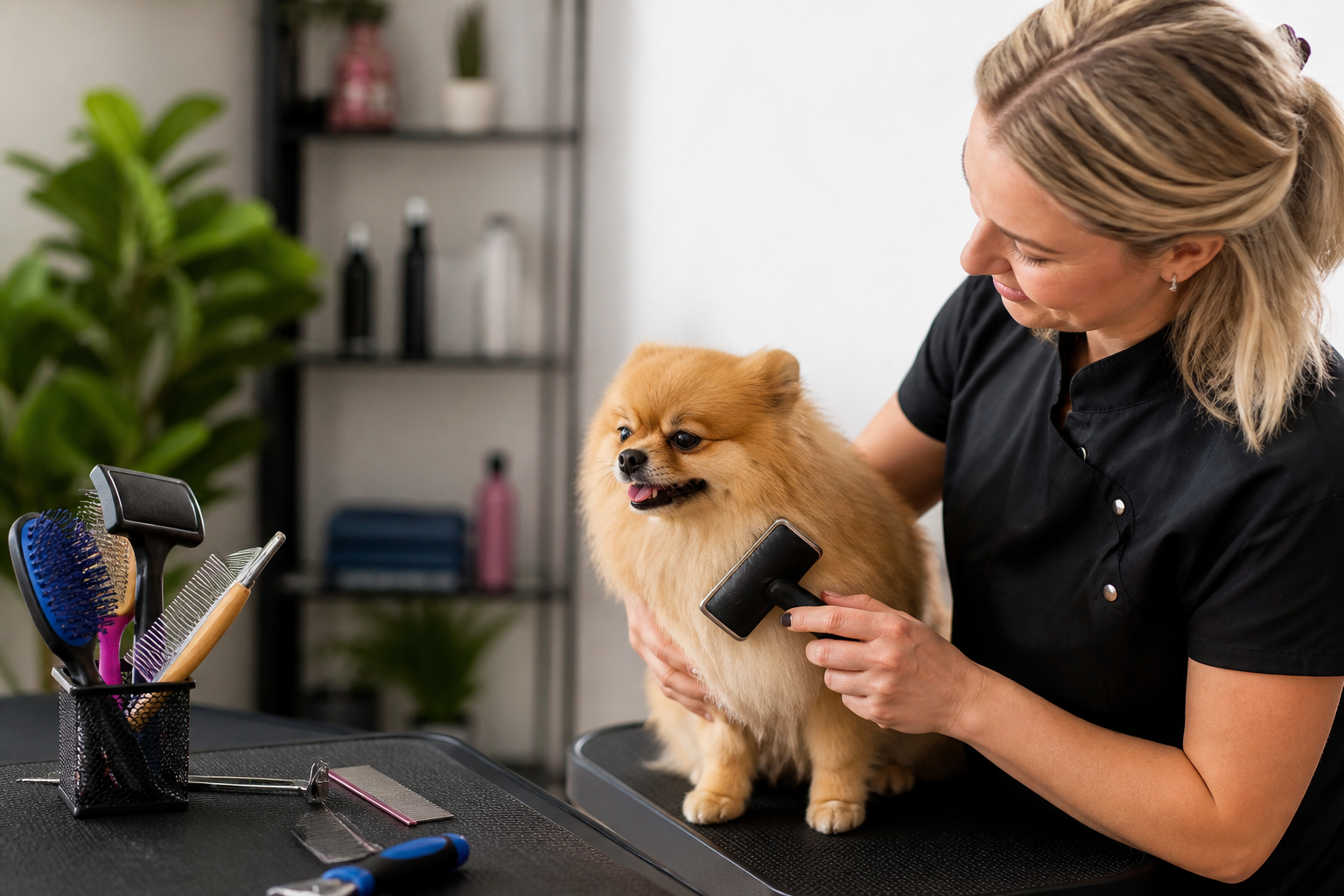
You find a small knot behind your dog's ear and try to brush it out. Your standard brush simply glides over the top without doing much. You might wonder how professional groomers make a coat look so fluffy and perfectly separated. The truth is that professionals do not rely on a single all-purpose tool. At BaxterBoo, we see how the right equipment changes the grooming experience for both you and your pet. Professionals choose specific brushes based on coat texture, thickness, and the presence of an undercoat. This post covers the essential brushes found in a professional salon and how you can use them at home. We will help you understand which tools solve specific problems like shedding, matting, and dullness.
Quick Answer: Professional groomers primarily use slicker brushes, metal greyhound combs, and undercoat rakes. They select these tools based on the dog's coat type to remove mats, clear out dead undercoat, and provide a polished finish.
The Professional Workhorse: The Slicker Brush
The slicker brush is the most common tool in any professional grooming kit. It features a flat or slightly curved head with rows of thin, hooked wire pins. These pins are designed to grab onto loose hair and pull through tangles. If you have a Poodle, a Golden Retriever, or a Doodle mix, this is your primary tool.
Groomers use slicker brushes to fluff the coat during a blow-dry. This process is called fluff drying. It separates every individual hair to give that signature salon look. At home, you can use a slicker brush to prevent mats from forming in the first place. Explore our dog brushes and combs to find tools suited to your dog's coat.
There are different levels of firmness in slicker brushes. Soft slickers are ideal for puppies or dogs with sensitive skin. Firm slickers are better for thick, dense coats where you need to penetrate deep into the fur. You must always use a light touch with these brushes. If you press too hard, the wire pins can scratch the skin. This is often called brush burn.
How to Use a Slicker Brush Properly
Professional groomers use a technique called the pat and pull method. You do not just drag the brush through the hair like you would with your own hair. Instead, you gently pat the brush into the coat and pull it away from the skin. This prevents the pins from dragging across the hide.
- Work in small sections starting at the bottom of the leg.
- Move upward toward the body.
- Check the pins frequently and remove the hair buildup.
- Always follow with a metal comb to ensure no mats remain.
A self-cleaning option such as the Master Grooming Tools Self-Cleaning Slicker Brush can make it easier to remove hair buildup between sections.
Key Takeaway: The slicker brush is essential for detangling and fluffing but requires a gentle hand to avoid skin irritation.
The Secret Tool: The Metal Greyhound Comb
If you ask a groomer which tool they cannot live without, many will say the metal comb. These are often called greyhound combs. They usually have two different tooth spacings: one side with fine teeth and one side with medium teeth.
The comb is not just for styling. It is a diagnostic tool. After you think you have finished brushing your dog with a slicker brush, you should run the metal comb through the coat. If the comb snags, you have a hidden mat. Professional groomers never consider a dog finished until a metal comb can glide from the skin to the ends of the hair without catching.
Why Every Home Needs a Metal Comb
A slicker brush often only reaches the top layer of the fur. This is a common mistake for owners of thick-coated dogs. The top looks great, but mats are forming right against the skin. The metal comb reaches all the way down to ensure the entire length of the hair is clear.
Vet Tip: If your dog has persistent skin redness or you find a lump while combing, schedule a visit with your veterinarian. Regular grooming is the best time to perform a "hand-on" health check to catch new growths or parasites early.
For additional guidance on brushing and detangling curly coats, read how to groom a dog that has curly hair.
Managing the Double Coat: Undercoat Rakes
Dogs like Huskies, German Shepherds, and Labradors have a double coat. This means they have a coarse outer layer and a soft, dense undercoat. When people complain about "blowing the coat," they are talking about the undercoat falling out in clumps.
Standard brushes often fail these breeds because they cannot reach the undercoat. Groomers use an undercoat rake to solve this. These tools have long, sturdy metal pins that are spaced widely apart. They look a bit like a garden rake or a shaving razor. Our dog brushes and combs collection includes undercoat tools for different coat types.
The rake goes past the top coat and grabs the dead, fuzzy undercoat. This is the hair that usually ends up on your sofa. Using an undercoat rake once a week can reduce the amount of hair in your home by a significant margin.
Selecting the Right Rake
You must match the length of the rake pins to the length of your dog's coat. If the pins are too short, they will not reach the undercoat. If they are too long, they might poke the skin.
- Long-pinned rakes: Best for Newfoundlands, Malamutes, and Collies.
- Short-toothed rakes: Ideal for Labradors or Corgis.
- Double-row rakes: Provide extra grabbing power for very dense coats.
For more ideas about managing a double coat and seasonal shedding, see our guide to Australian Shepherd shedding.
Bottom line: Undercoat rakes are the only effective way to remove dead fur from double-coated breeds before it sheds.
Finishing and Shine: Bristle and Pin Brushes
Not every dog needs a heavy-duty wire brush. Short-haired breeds like Boxers, Pugs, and Beagles benefit more from bristle brushes. These brushes use natural or synthetic bristles to move natural oils across the skin.
The Bristle Brush
A bristle brush removes surface dust and loose hair. It also acts as a massager. This stimulates blood flow to the skin and helps create a shiny, healthy coat. In a professional setting, a groomer might use a bristle brush as a final step to lay the hair down flat and add a polished look.
The Pin Brush
Pin brushes look very similar to human hairbrushes. They have straight metal pins with rounded tips to prevent scratching. Professional groomers use these on dogs with long, silky hair that does not have a thick undercoat. Examples include Yorkies or Maltese. The pin brush is gentle and prevents hair breakage, which is vital for maintaining a long, flowing coat. The U-Groom Combo Brush for Dogs and Cats combines rounded pins with boar bristles for everyday grooming.
Specialized Tools for Specific Problems
Sometimes a regular brush is not enough. Groomers keep a few specialized tools in their drawers for difficult situations.
Rubber Curry Combs
The rubber curry comb is a favorite for bath time. It is a palm-sized rubber tool with soft nubs. It is perfect for short-haired dogs. When used in a circular motion, it acts like a magnet for loose hair. We often recommend these for dogs that are nervous about grooming because the sensation feels like a massage rather than a traditional brushing.
De-matting Tools
When a mat is too tight for a slicker brush, groomers use de-matting combs. These have sharp, serrated blades. They are designed to cut through the knot rather than pulling it. These must be used with extreme caution. If you are not comfortable using a blade near your dog's skin, it is always safer to visit a professional.
Flea Combs
A flea comb has extremely fine, tightly packed teeth. While its primary job is removing parasites, groomers also use it for "eye goop" or fine hair on the face. It is a precise tool that every owner should have in their kit.
Note: If you find fleas while using a fine-toothed comb, you may need a prescription-strength preventive. Our pet pharmacy offers FDA-approved flea and tick medications through our partnership with Pet's Choice. You can easily manage these health needs alongside your grooming routine.
Building Your Home Grooming Kit
You do not need fifty different brushes to get professional results. You just need the right ones for your specific dog. Our warehouse at BaxterBoo is stocked with the same brands that professionals use. We recommend starting with a basic kit tailored to your pet's coat type.
For Curly and Long-Haired Dogs (Doodles, Poodles, Goldens)
Step 1: Get a high-quality slicker brush with a comfortable handle.
Step 2: Purchase a stainless steel metal comb.
Step 3: Add a detangling spray to help the brush slide through the hair.
For Double-Coated Dogs (Huskies, Shepherds, Labs)
Step 1: Choose an undercoat rake with pins that match your dog's fur length.
Step 2: Buy a slicker brush for the longer "feathers" on the legs and tail.
Step 3: Add a bristle brush for a final shine.
For Short-Haired Dogs (Boxers, Pugs, Greyhounds)
Step 1: A rubber curry comb for deep cleaning and massage.
Step 2: A soft bristle brush for daily use.
Step 3: A grooming mitt for quick touch-ups.
| Coat Type | Primary Tool | Secondary Tool | Purpose |
|---|---|---|---|
| Curly/Wavy | Slicker Brush | Metal Comb | Detangling and Fluffing |
| Double Coat | Undercoat Rake | Slicker Brush | Removing Shed Hair |
| Short/Smooth | Rubber Curry | Bristle Brush | Shine and Massage |
| Silky/Long | Pin Brush | Metal Comb | Preventing Breakage |
For brand-specific options, browse our selection of BASS Brushes products.
Tips for a Stress-Free Grooming Session
Professional groomers have the advantage of grooming tables and restraints, but they also use psychology. You can replicate this at home by making the experience rewarding.
Always start when your dog is tired. A long walk before grooming can make a big difference. Use small, high-value treats to create a positive association with the brushes. If you hit a difficult mat, do not keep pulling at it. This will cause your dog to hate the process. Work on it for a few seconds, give a treat, and move to an easier area.
If the coat is severely matted to the skin, do not try to brush it out. This is very painful and can tear the skin. In these cases, a professional groomer or a veterinarian should be consulted. They can safely shave the mats and allow the coat to regrow.
When to Contact the BaxterBoo Pharmacy
Grooming is often the first time you notice skin issues. You might see dry, flaky skin or red patches that indicate allergies. If your dog is constantly itching even after a good brushing, there may be an underlying medical issue.
Through our partnership with Pet's Choice, we provide access to prescription diets and medications for skin conditions. A veterinarian can help you determine if your dog needs a medicated shampoo or an allergy treatment. Having these items delivered through our pet pharmacy makes it easier to keep your pet comfortable.
Maintaining Your Tools
Professional tools last longer because they are well-maintained. You should clean the hair out of your brushes after every session. Hair left in the pins can trap moisture and cause the metal to rust or the bristles to degrade.
Periodically wash your brushes with mild soap and warm water. Ensure they are completely dry before storing them. Check the pins on your slicker brush and rake regularly. If a pin becomes bent or the protective tip falls off, replace the brush immediately. A damaged tool can easily scratch your dog's skin.
Conclusion
Grooming your dog at home does not have to be a struggle. When you use the same tools that professionals use, you save time and achieve better results. Using a slicker brush for tangles, a rake for shedding, and a comb for checking your work will keep your dog's coat in top condition. We invite you to explore our dog grooming supplies at BaxterBoo. Whether you need a new brush or a refill on grooming sprays, we are here to help you care for your pet like a pro. Consider signing up for the MVP Rewards programme to earn points on every grooming tool and treat purchase.
FAQ
Why does my dog hate being brushed with a slicker brush?
Your dog might be experiencing brush burn if you are applying too much pressure. Slicker brushes have sharp wire pins that can easily scratch the skin if they are dragged too hard. Try using the pat and pull method and keep the brush away from sensitive areas like the face and stomach until your dog is comfortable.
Can I use a human hairbrush on my dog?
A human hairbrush is generally not effective for most dog coats. Our hair is much thinner and less dense than a dog's fur, so human brushes cannot reach the skin or remove the undercoat. While a pin brush looks similar to a human brush, the spacing and strength of the pins are specifically designed for canine coats.
How often should I use an undercoat rake?
For most double-coated dogs, using an undercoat rake once or twice a week is sufficient for maintenance. During the heavy shedding seasons of spring and fall, you may need to use it every other day to keep up with the loose fur. Over-using a rake in the same spot for too long can cause skin irritation, so keep your sessions to about 15 minutes.
Do short-haired dogs really need professional-style brushes?
Yes, short-haired dogs benefit greatly from the right tools. A rubber curry comb or a bristle brush does more than just remove hair. These tools help distribute the skin's natural oils and remove dander. This keeps the skin healthy and can reduce the "doggy smell" that often comes from trapped dirt and oils in the coat.






