
 Save 15% on your 1st Autoship learn more

 Email us
 Live Chat
 FAQs
FAQs





Introduction
You are relaxing on the sofa when your dog leans in for a friendly lick, only to be met with a scent that stops you in your tracks. While "dog breath" is often joked about, a foul odor from your pet's mouth is usually the first sign of plaque and tartar buildup. Left unchecked, these issues can lead to painful gum disease or even systemic health problems. At BaxterBoo, we know that brushing a reluctant dog's teeth is not always easy. Fortunately, certain chews and toys can act as a supplemental cleaning tool by scraping away debris and stimulating the gums. This article covers the safest edible treats, durable rubber toys, and natural options to keep your dog's smile bright. Finding the right balance between effective cleaning and safety is the key to a healthy mouth.
The Mechanical Magic of Chewing
Chewing is a natural, instinctive behavior for dogs. From a dental perspective, it serves a very specific purpose called mechanical abrasion. As your dog gnaws on a textured surface, the material rubs against the enamel of the teeth. This friction helps to physically scrape away the soft film of plaque before it has a chance to harden into tartar. Tartar, or calculus, is much harder to remove and usually requires a professional cleaning under anesthesia.
The shape and density of the object matter significantly. If a chew is too soft, it simply crumbles without providing any resistance. If it is too hard, it can cause the teeth to fracture. Dogs actually have much thinner enamel than humans do. This makes their teeth more susceptible to chips and cracks when they bite down on rigid items like real bones or antlers. The ideal chew offers enough "give" that the tooth can slightly sink into the material, allowing the surface to clean all the way up to the gum line.
Quick Answer: Dogs can chew on VOHC-approved dental treats, durable rubber toys, and certain raw vegetables like carrots to help clean their teeth and stimulate healthy blood flow in the gums.
Edible Dental Treats and Their Benefits
Edible dental treats are one of the most popular ways to manage oral health because they double as a reward. However, not all treats are created equal. When you walk down the aisle of our warehouse or browse online, you will see many products claiming to clean teeth. The most reliable way to verify these claims is to look for the Veterinary Oral Health Council (VOHC) seal. This seal indicates that the product has undergone independent testing and met specific standards for reducing plaque or tartar. You can explore our dog dental treats to compare available options.
Many of these treats, such as Greenies or Whimzees, are designed with ridges and grooves. These shapes are not just for aesthetics. They are engineered to maximize contact with the tooth surface regardless of how the dog holds the treat. Some edible chews also incorporate enzymatic ingredients. These enzymes help break down the bacterial biofilm that leads to plaque, providing a chemical cleaning action alongside the physical scraping.
Key Takeaway: Look for the VOHC seal on edible treats to ensure they have been proven to reduce plaque and tartar through independent testing.
Choosing the Right Size
One of the biggest mistakes owners make is choosing the wrong size of dental treat. If a treat is too small, a large dog may swallow it whole, which poses a choking risk and provides zero dental benefit. If the treat is too large for a small dog, they may struggle to chew it properly or consume too many calories. Most brands provide a weight guide on the packaging to help you make the right choice.
For additional guidance on selecting dental chews by size and chewing style, read our guide to the best dental chews for dogs.
Managing Calorie Intake
It is easy to forget that dental treats are food. Some of these chews can be calorie-dense. If you are giving your dog a daily dental treat, you might need to slightly reduce their main meal portions to prevent unwanted weight gain. Maintaining a healthy weight is just as important for your dog's longevity as their dental health.
Durable Rubber Toys for Dental Support
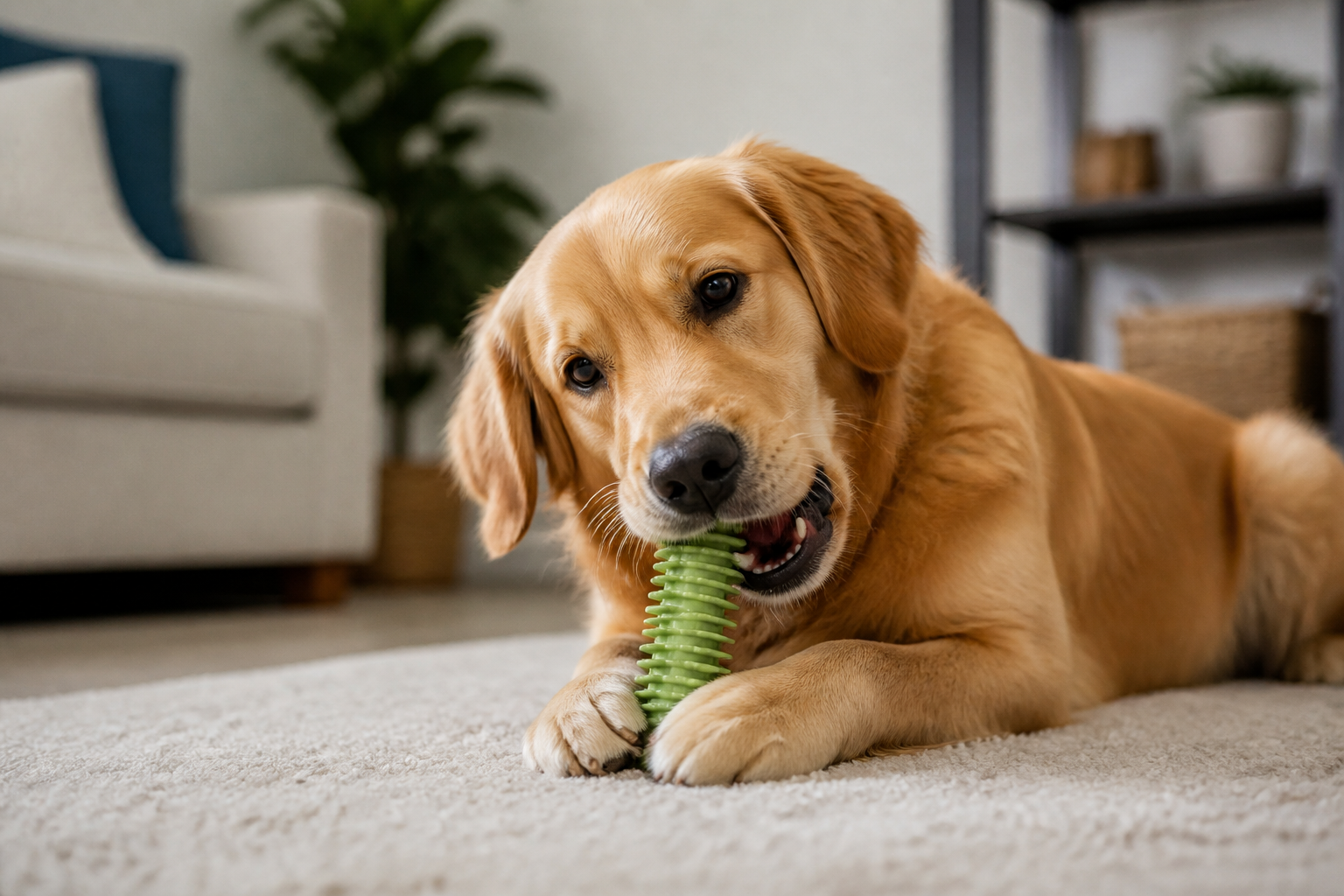
For dogs that are aggressive chewers, edible treats often disappear in seconds. This is where durable rubber toys become a vital part of the routine. Brands like Kong and West Paw create toys with specialized textures designed to massage gums and clean teeth during long play sessions. These toys are built to withstand heavy gnawing without breaking, making them a safer alternative to hard plastic bones. Browse our tough dog toys for durable play options.
You can increase the dental benefits of these toys by using them as "stuffable" puzzles. Filling a rubber toy with a small amount of dog-safe dental gel or a smear of peanut butter encourages your dog to lick and gnaw at the nooks and crannies. This prolonged interaction ensures that the rubber surface is consistently rubbing against the teeth and gums.
- Choose toys with "nubbly" or "ridged" surfaces.
- Ensure the toy is sized appropriately so it cannot be swallowed.
- Rotate toys to keep your dog interested in chewing.
- Inspect toys regularly for signs of wear and tear.
For more ideas about matching toys to your dog's chewing habits, see our definitive guide to the best dog toys.
Vet Tip: If your dog already has red, swollen gums or loose teeth, avoid hard toys and consult your veterinarian. Dental disease can make the mouth very sensitive, and aggressive chewing on hard objects may cause significant pain or further damage.
Natural Whole Food Alternatives
If you prefer a more natural approach, certain fruits and vegetables can serve as crunchy, low-calorie "toothbrushes." While these do not replace the need for regular dental care, they provide a healthy way to encourage chewing.
Carrots are a classic choice. When given raw and cold, their firm texture provides excellent resistance. As the dog bites through the carrot, the fibers help scrub the teeth. Green beans and celery are also good options. Celery is particularly interesting because its stringy fibers can act somewhat like natural dental floss. Always cut these into manageable pieces to prevent choking, especially for smaller breeds.
It is important to avoid certain "natural" items that are common but potentially dangerous. For example, cooked bones should never be given to dogs. Cooking makes bones brittle, leading them to splinter into sharp shards that can puncture the digestive tract. Similarly, very hard items like cow hooves or antlers can lead to "slab fractures," where a large piece of the tooth's side breaks off.
For more information about safer alternatives, read our guide to rawhide-free dog chews.
The Role of Prescription Dental Diets
Sometimes, standard chews are not enough, especially for breeds prone to rapid tartar buildup like Toy Poodles or Chihuahuas. In these cases, a prescription dental diet may be necessary. These foods are formulated with a specific kibble structure that does not shatter immediately when the dog bites it. Instead, the tooth sinks into the kibble, allowing the fibers to scrub the surface.
Our pharmacy at BaxterBoo offers access to these specialized diets through our partnership with Pet's Choice. If your veterinarian recommends a prescription food like Royal Canin Dental or Farmina Vet Life, you can manage those orders through us with the same convenience as your regular supplies. These diets often include minerals like sodium tripolyphosphate, which binds to calcium in the saliva to prevent it from hardening into tartar.
Key Takeaway: Prescription dental diets use specialized kibble technology and calcium-binding minerals to provide a higher level of daily oral care than standard kibble.
How to Test if a Chew is Too Hard
A simple way to protect your dog's teeth is the fingernail test. If you cannot make a small indentation in the chew with your thumbnail, it is likely too hard for your dog's teeth. This is a quick and effective rule of thumb when shopping for new toys or treats. Another common guide is the "knee test." If you would not want to be hit in the kneecap with the object, it is probably too rigid for a dog's enamel to handle safely.
For additional toy-safety guidance, explore our puppy teething toy and safety guide.
Bottom line: Safety should always come before durability when choosing a chew toy for your dog.
Building a Consistent Routine
Dental care is most effective when it is consistent. A single dental treat once a week will not make a significant dent in plaque levels. Ideally, your dog should have some form of dental activity every day. This could be a combination of a morning dental treat, an afternoon session with a rubber toy, and a crunchy carrot snack in the evening.
Step 1: Consult your vet. / Ask for an oral exam to ensure your dog does not have existing fractures or severe gingivitis.
Step 2: Start slowly. / Introduce one type of dental chew at a time to ensure it does not cause any digestive upset.
Step 3: Supervise the chewing. / Always watch your dog when they have a new chew to make sure they do not try to swallow large chunks.
Step 4: Combine with brushing. / Use chews as a supplement to, not a total replacement for, regular tooth brushing with dog-specific toothpaste.
For more at-home ideas, read our pet dental care tips.
Addressing the Needs of Senior Dogs
As dogs age, their dental needs change. Senior dogs may have missing teeth, receding gums, or existing sensitivity. For these pets, the heavy-duty rubber toys used for puppies might be too taxing. Look for "Senior" versions of popular toys, which are often made from a softer rubber formula. Soft dental sticks or enzymatic chews that require less jaw pressure are also excellent choices for older companions. We carry a variety of supplements and softer chews specifically curated for the needs of aging pets to help them stay comfortable.
The Importance of Professional Cleanings
No matter how many dental chews your dog enjoys, they cannot reach the area under the gum line. This is where the most damaging bacteria live. Professional veterinary cleanings are the only way to thoroughly remove subgingival plaque and tartar. Think of dental chews as the "brushing and flossing" of the dog world. They keep things under control between professional "dentist" visits.
If you notice your dog is dropping food, pawing at their mouth, or has excessively bloody saliva, these are signs of an urgent dental issue. In these instances, no chew toy will solve the problem. Your veterinarian may need to perform extractions or prescribe antibiotics to clear up an infection. You can then fill those prescriptions easily through our pharmacy.
For warning signs that may indicate a more serious problem, read what to do when your dog has bad teeth.
Vet Tip: Schedule a professional dental exam at least once a year. Small changes in the mouth can be hard to spot, and early intervention can save your dog from significant pain and expensive surgeries later.
Conclusion
Helping your dog maintain a clean mouth is a vital part of being a responsible pet owner. By choosing the right mix of VOHC-approved edible treats, safe rubber toys, and natural crunchy vegetables, you can significantly reduce the rate of plaque and tartar buildup. Always prioritize safety by using the fingernail test and supervising your dog during chew sessions. At BaxterBoo, we are committed to providing the tools you need for every stage of your pet's life, from puppyhood to the senior years. Whether you need a durable Kong toy or a prescription diet from our pharmacy, we are here to help you keep that tail wagging and that breath fresh. For the best results, consider setting up our Autoship programme for your favorite dental treats to ensure you never run out of your dog's daily oral care routine.
Bottom line: A proactive dental routine combining safe chews and professional veterinary care is the best way to ensure your dog's long-term health and comfort.
FAQ
Are real bones safe for my dog to chew on for clean teeth?
Real bones, especially cooked ones, are generally not recommended for dental health. Cooked bones can splinter and cause internal injuries, while raw bones are often hard enough to cause painful tooth fractures. It is much safer to use specially designed dental chews or rubber toys that provide the same cleaning action without the risk of injury.
How often should I give my dog a dental chew?
Most dental treats are designed for daily use to be effective at controlling plaque. However, you should always check the manufacturer's guidelines and monitor your dog's weight. If you provide a daily chew, ensure it fits within your dog's overall caloric needs to prevent weight gain.
Do dental chews replace the need for brushing?
While dental chews are a fantastic tool, they are most effective when used alongside regular tooth brushing. Brushing is the gold standard for removing plaque, especially around the gum line. Chews help bridge the gap for dogs that do not tolerate brushing well and provide mechanical cleaning on the chewing surfaces.
My dog swallows treats quickly; will they still clean the teeth?
If a dog gulps a treat down in one or two bites, the dental benefits are minimal because there is not enough friction against the teeth. For "gulpers," it is better to use large, durable rubber toys or long-lasting dental chews that are sized appropriately to prevent them from being swallowed whole. Always supervise your dog to ensure they are chewing safely.






