
 Save 15% on your 1st Autoship learn more

 Email us
 Live Chat
 FAQs
FAQs





Introduction
You are sitting on the couch and your dog leans in for a celebratory lick, but the smell stops you mid-breath. That "dog breath" is often the first sign that plaque and tartar are moving in. At BaxterBoo, we see many pet owners who want to help their dogs but feel overwhelmed by the process of scrubbing a reluctant mouth. Dental care does not have to be a daily struggle or a mystery. This guide covers the safest tools and methods for maintaining a bright smile, from specialized brushes and enzymatic pastes to additives that work while your dog drinks. We will explore how to choose the right products for your dog's specific needs. Our goal is to provide practical steps that fit into your busy schedule while keeping your dog healthy.
The Gold Standard: Dog-Specific Toothbrush and Paste
Brushing is the most effective way to remove plaque before it hardens into tartar. However, you cannot reach for the tube of toothpaste sitting on your bathroom sink. Most human toothpastes contain fluoride or xylitol. These ingredients are safe for you but can be highly toxic to dogs if swallowed.
Dog-specific toothpaste is designed to be eaten. It usually contains enzymes that help break down food particles and bacteria even after you stop brushing. Most brands we carry come in flavors dogs actually enjoy, such as poultry, beef, or peanut butter. This makes the experience feel more like a treat than a chore.
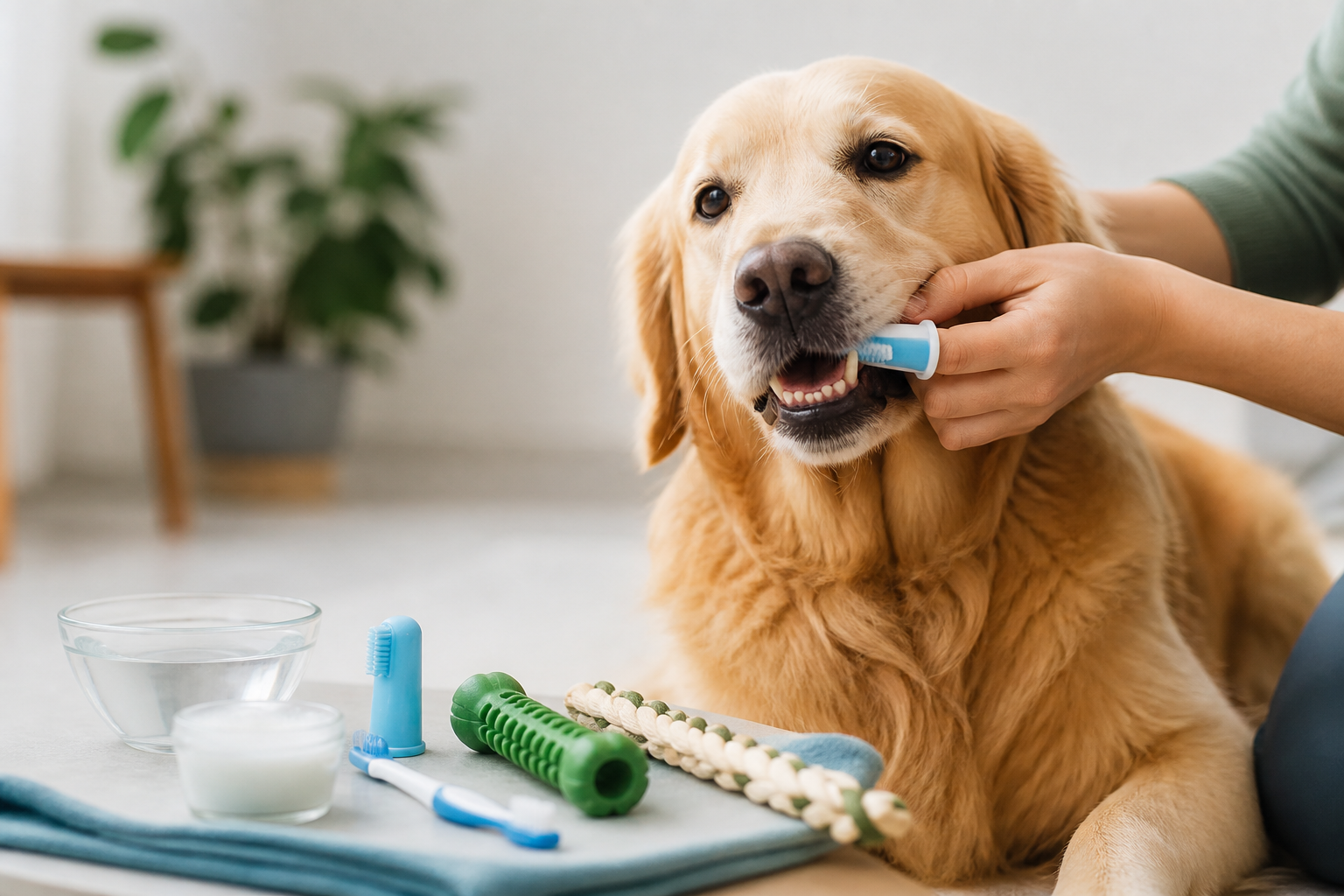
When choosing a brush, consider the size of your dog's mouth. A large handle brush works well for Labradors, but a small finger brush is often better for a Toy Poodle or a nervous puppy. Finger brushes allow you to feel exactly where you are cleaning, which helps prevent poking the gums too hard.
Quick Answer: You should clean your dog's teeth with a dog-specific enzymatic toothpaste and a soft-bristled toothbrush or finger brush. Never use human toothpaste, as ingredients like xylitol are toxic to pets.
Steps for Successful Brushing
Step 1: Introduce the paste. / Let your dog lick a small amount of flavored toothpaste off your finger to create a positive association.
Step 2: Touch the teeth. / Gently lift your dog's lip and rub your finger along the gums and teeth without a brush at first.
Step 3: Use the brush. / Apply a small amount of paste to the brush and move in circular motions, focusing on the outside of the teeth where plaque builds up most.
Effective Dental Chews and Treats
Not every dog will sit still for a toothbrush. Dental chews are a practical alternative that uses mechanical abrasion to scrub teeth as the dog chews. The texture of these treats is specifically designed to allow the tooth to sink into the chew, scraping away debris along the gum line.
When shopping for chews, look for the Veterinary Oral Health Council (VOHC) seal of approval. This seal confirms that the product has met specific standards for reducing plaque or tartar. Brands like Greenies or certain RedBarn products are favorites because they provide this cleaning action while being highly digestible.
It is important to match the size of the chew to your dog. A chew that is too small can be swallowed whole, posing a choking risk and offering no dental benefit. A chew that is too hard can actually fracture a tooth.
Vet Tip: If you can't make a dent in a chew with your fingernail, it might be too hard for your dog’s teeth. Avoid giving very hard bones or antlers to aggressive chewers, as these frequently cause painful tooth fractures that require veterinary surgery.
Water Additives and Oral Sprays
If your dog is particularly fussy about having their mouth touched, water additives and sprays are excellent tools. These products are often tasteless and odorless. You simply add a capful to your dog's water bowl each time you refill it.
The active ingredients in these additives work by altering the chemistry of the saliva. This helps prevent biofilm from sticking to the surface of the teeth. While additives are not as powerful as manual brushing, they are a fantastic "set it and forget it" option for maintaining oral hygiene between deeper cleanings.
Oral sprays work similarly but are applied directly to the teeth and gums. They are helpful for dogs that have started to develop redness along the gum line. Sprays often contain soothing ingredients like zinc or chlorhexidine to support healthy tissue.
Key Takeaway: Water additives and sprays are excellent for dogs that resist brushing, as they help prevent plaque from sticking to the teeth with minimal effort from the owner.
Dental Toys for Active Cleaning
Playtime can double as a cleaning session if you choose the right gear. Many rubber toys are designed with nubs, ridges, or rope fibers that act like a natural toothbrush. As your dog gnaws on the toy, these textures massage the gums and scrape the teeth.
Kong toys and other durable rubber options can be stuffed with dog-safe dental gels. This encourages the dog to spend more time chewing while the gel works on the plaque. For dogs that love to tug, cotton rope toys can act like floss, cleaning the tight spaces between teeth.
- Look for toys with deep grooves to hold enzymatic gel.
- Ensure the toy is made of non-toxic, BPA-free rubber.
- Discard any toys that begin to break or lose small pieces.
- Rotate toys to keep your dog interested in chewing.
Nutrition and Dietary Supplements
What your dog eats every day impacts their oral health. While the old myth that all dry kibble cleans teeth is not entirely true, some specialized diets are formulated with a specific kibble size and texture. These larger, fibrous pieces do not shatter immediately when bitten. Instead, they provide a scrubbing effect.
Fresh vegetables like raw carrots or apple slices can also provide a minor cleaning benefit. The crunchiness helps scrape the teeth, and they are low-calorie treats. However, these should only be a supplement to a regular cleaning routine, not a replacement for it.
Supplements like Zesty Paws or SeaDent often use kelp or specific probiotics to improve oral health from the inside out. Certain types of brown seaweed have been shown to reduce plaque buildup through the bloodstream and saliva.
Bottom line: While diet alone won't keep teeth spotless, using crunchy vegetables and specialized dental kibble provides extra mechanical cleaning during every meal.
Recognizing the Signs of Dental Disease
Even with the best at-home care, you need to know when it is time to call professional help. Dental disease is more than just a cosmetic issue. Bacteria from the mouth can enter the bloodstream and affect the heart, liver, and kidneys. For more guidance, read about warning signs of bad teeth in dogs.
If you notice your dog dropping food, pawing at their mouth, or if you see blood on their chew toys, these are signs of pain. Red, swollen gums or heavy brown tartar buildup mean the condition has progressed beyond what home cleaning can fix.
Our pharmacy carries a variety of FDA-approved medications and prescription diets through our partnership with Pet's Choice. If your veterinarian recommends a specific dental diet like Farmina Vet Life or Royal Canin Dental, you can fulfill those needs through us. We offer the convenience of home delivery for the specialized products your vet prescribes to manage chronic oral health issues.
Vet Tip: Schedule a professional dental exam at least once a year. Your vet can see what is happening below the gum line with x-rays, which is where the most serious infections often hide.
Choosing the Right Approach for Your Pet
Every dog is different, and their dental routine should reflect that. A young puppy might only need a quick wipe with a dental pad, while a senior dog with existing tartar might benefit more from a combination of water additives and a prescription dental diet.
Consistency is more important than perfection. Brushing three times a week is much better than brushing once a month. If your dog is stressed by one method, try another. The goal is to keep the mouth healthy without damaging the bond you have with your pet. These pet dental care tips can help you build a routine gradually.
We carry over 500 trusted brands to help you find the exact tool that works for your dog's personality. Whether you need a soft finger brush for a small mouth or a durable dental chew for a heavy chewer, our selection is handpicked by people who understand pet care.
Conclusion
Cleaning your dog's teeth is one of the most impactful things you can do for their long-term health. By combining manual brushing with dental chews, water additives, and the right toys, you can prevent many of the issues that lead to expensive veterinary surgeries. Remember that "dog breath" is a sign to take action rather than a normal part of pet ownership.
- Start slow and keep dental sessions positive with flavored pastes.
- Use VOHC-approved chews to supplement brushing.
- Monitor your dog's gums for redness or bleeding.
- Work with your veterinarian for annual professional cleanings.
The best next step is to look at our dental and breath care category to find a toothpaste flavor and brush style that fits your dog's needs. If your vet has already prescribed a specific treatment plan, our pharmacy is ready to help you manage your dog's ongoing health with ease.
FAQ
Can I use baking soda to clean my dog's teeth?
While baking soda is not immediately toxic, it has a very high alkaline content that can upset a dog's stomach if swallowed in large amounts. It also has a taste that most dogs find unpleasant, which can make them resist future teeth cleaning. It is much safer and more effective to use a flavored enzymatic toothpaste specifically formulated for pets.
How often should I clean my dog's teeth?
Ideally, you should brush your dog's teeth every day to prevent the buildup of plaque. Plaque can begin to harden into tartar in as little as 24 to 48 hours. If daily brushing is not possible, aim for at least three times a week and supplement with dental chews or water additives on the off days.
Why does my dog's breath still smell after I clean their teeth?
Persistent bad breath can indicate an infection or decay happening below the gum line where a brush cannot reach. It can also be a sign of internal health issues related to the kidneys or digestive system. If a regular cleaning routine does not improve your dog's breath, you should consult your veterinarian for a professional exam.
Are dental wipes as good as brushing?
Dental wipes are a good middle-ground option for dogs that will not tolerate a brush, as they still provide some mechanical scrubbing. However, they cannot reach the nooks and crannies between teeth or the back molars as effectively as a toothbrush. They are best used as a supplemental tool or for maintaining very small mouths where a brush is too bulky.






