
 Save 15% on your 1st Autoship learn more

 Email us
 Live Chat
 FAQs
FAQs





Introduction
You lean in for a wet kiss from your favorite pup, but instead of a sweet greeting, you get a face full of "stink breath." It is a common moment for many dog owners. We know that dental health is a huge part of overall wellness. However, not every dog is a fan of a plastic toothbrush and minty paste. At BaxterBoo, we believe in practical solutions that fit your life and your dog's preferences. This post explores natural alternatives like crunchy vegetables, specific types of chews, and simple home remedies. You can keep those pearly whites shining without relying on harsh chemicals or stressful routines. Maintaining your dog's oral hygiene can be a rewarding part of your daily bonding time.
Crunchy Fruits and Vegetables for Plaque Removal
One of the easiest ways to help clean your dog's teeth naturally is by using what is already in your crisper drawer. Certain vegetables act like natural scrubbers. When a dog bites into a firm, fibrous vegetable, the mechanical action of chewing helps scrape away soft plaque before it can harden into tartar.
Raw carrots are a top choice for many owners. They are low in calories and high in fiber. The hard texture requires significant chewing, which stimulates saliva and cleans the surface of the teeth. Sliced apples are another great option. They contain malic acid, which can help dissolve some stains. Just be sure to remove all seeds and the core, as apple seeds contain small amounts of cyanide.
While these snacks are helpful, they are not a complete solution. They work best as a supplement to a broader dental routine. Think of them as the "apple an day" for your dog's mouth.
Quick Answer: You can use raw carrots, sliced apples, and celery as natural tooth scrubbers. These crunchy snacks help scrape away plaque through mechanical chewing action while providing healthy vitamins.
The Best Natural Chews for Mechanical Cleaning
Chewing is a natural instinct for dogs. It is also one of the most effective ways to maintain oral health. When a dog gnaws on a high quality chew, it massages the gums and scrapes the teeth. We recommend focusing on single ingredient, long lasting chews that do not contain synthetic dyes or preservatives. You can explore our dog dental treats for additional options.
- Bully Sticks: These are 100 percent beef muscle. They are highly digestible and provide a lot of friction against the teeth.
- Beef Collagen Sticks: These are a great alternative to rawhide. They are tough enough to provide a deep clean but much easier on the stomach.
- Yak Cheese Chews: These are made from traditional Himalayan recipes. They are extremely hard and take a long time to break down, making them excellent for removing stubborn tartar.
Brands like Redbarn offer various natural chew options that focus on simplicity. Using these items two or three times a week can significantly reduce the buildup on the back molars where most dental issues start.
Key Takeaway: Long lasting, single ingredient chews provide the mechanical scraping needed to remove tartar from hard to reach back teeth.
DIY Natural Dog Toothpaste Recipes
If you want to brush but want to avoid commercial tubes, you can make your own paste at home. Many store bought pastes contain artificial sweeteners or thickening agents. A DIY version allows you to control every ingredient.
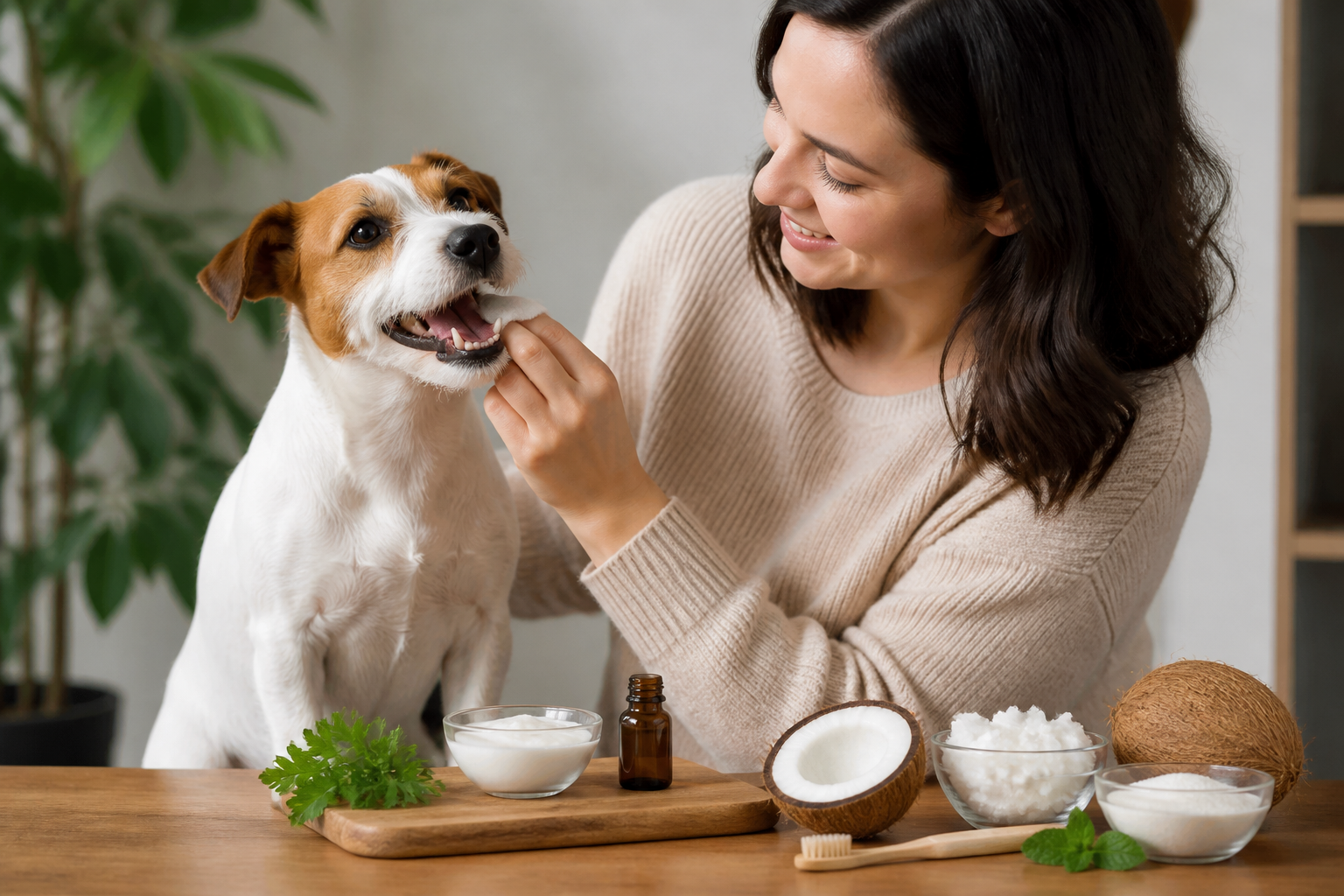
The most common base for a natural dog toothpaste is coconut oil. It has natural antimicrobial properties that help fight the bacteria responsible for bad breath. You can mix it with a small amount of baking soda to add a gentle abrasive quality.
Step-by-Step DIY Paste:
- Gather your base: Use two tablespoons of organic, unrefined coconut oil.
- Add the abrasive: Mix in one tablespoon of baking soda until it forms a smooth paste.
- Flavor it naturally: Add a pinch of dried parsley or a teaspoon of low sodium chicken broth to make it tasty for your dog.
- Apply and store: Use a finger brush or a piece of clean gauze to rub the paste onto the teeth. Store the rest in a small glass jar.
Using Coconut Oil for Oral Health
Coconut oil is a powerhouse for canine health. It contains lauric acid, which is known for its ability to kill harmful bacteria, fungi, and viruses. You do not even have to use a brush to get the benefits.
Some owners simply let their dogs lick a spoonful of coconut oil daily. As the oil melts in the mouth, it coats the teeth and gums. This helps reduce the overall bacterial load in the oral cavity. If your dog has red or inflamed gums, gently rubbing a bit of coconut oil on the area can provide a soothing effect.
Vet Tip: If you notice your dog has bleeding gums, loose teeth, or a sudden loss of appetite, consult your veterinarian immediately. While natural methods are great for prevention, active infections require professional medical care.
Supplements and Water Additives
Sometimes the best way to clean your dog's teeth is through their water bowl or their dinner. Dental water additives are designed to be tasteless and odorless. They work by changing the pH of the saliva or by using enzymes to break down plaque. Our dog dental health selection includes water additives and other oral-care options.
Kelp based supplements are also gaining popularity. Certain species of dried kelp, when ingested, actually change the composition of the dog's saliva. This prevents plaque from sticking to the teeth in the first place. You can find these in powder form to sprinkle over their regular food.
If your veterinarian suggests a specific medicated oral rinse or a prescription dental diet, we can help. Our pet pharmacy offers FDA approved medications and prescription foods through our partnership with Pet's Choice. This is a great resource for dogs who already have underlying dental conditions that require more than just a carrot stick.
The Role of Dental Toys
Not all toys are created equal when it comes to oral health. Some toys are specifically designed with ridges and nubs that act like a toothbrush. As your dog plays, these textures move against the teeth and gums.
KONG toys are famous for their durability and can be stuffed with healthy treats like mashed pumpkin or plain yogurt. This encourages your dog to spend more time licking and chewing. Rubber toys with deep grooves are especially effective if you smear a little bit of coconut oil or natural peanut butter inside the ridges. This turns playtime into a cleaning session.
Key Takeaway: Interactive toys with ridges or "nubs" turn the natural act of play into a passive teeth cleaning routine.
Recognizing When Your Dog Needs a Professional
Natural cleaning methods are phenomenal for maintenance and prevention. However, they cannot "cure" an existing dental infection or remove heavy, calcified tartar. It is important to check your dog's mouth at least once a week. For more guidance, read about warning signs of dental problems in dogs.
Look for these warning signs:
- Dark brown or yellow buildup near the gum line.
- A bright red line where the teeth meet the gums.
- Drooling more than usual or dropping food while eating.
- Persistent bad breath that does not improve with brushing.
If you see these signs, it is time for a professional dental exam. Your vet might recommend a cleaning under anesthesia to reach the areas beneath the gum line. For any ongoing health management or prescription needs following a vet visit, our pharmacy is a convenient way to get what your pet needs delivered to your door.
Bottom line: Natural methods are best for preventing new plaque, but they do not replace the need for regular veterinary checkups.
Conclusion
Cleaning your dog's teeth naturally is about building a routine that works for both of you. By combining crunchy vegetables, high quality natural chews, and simple DIY pastes, you can keep your pup's mouth fresh and healthy. At BaxterBoo, we want to help you provide the best care possible with products you can trust. Remember that consistency is the most important factor in any dental plan. Start small, keep it positive, and always follow up a cleaning session with plenty of praise.
- Try raw carrots or apple slices for a quick, crunchy clean.
- Use single ingredient chews like bully sticks or yak cheese for deep tartar removal.
- Consider coconut oil for its natural antibacterial properties.
- Schedule a yearly dental exam with your veterinarian to stay ahead of potential issues.
To find the best supplies for your dog's oral health, browse our dog healthcare category or check out our natural dog dental chews.
FAQ
Is baking soda safe for dogs' teeth?
Baking soda is generally safe in very small amounts as a gentle abrasive in DIY toothpaste. However, it should not be swallowed in large quantities because it can upset a dog's stomach or affect their electrolyte balance. Always use a small amount and ensure your dog has plenty of fresh water available.
How often should I give my dog natural dental chews?
Most dogs benefit from having a natural chew two to three times per week. Giving them more frequently can lead to extra calorie intake, so you may need to adjust their meal portions accordingly. Always supervise your dog while they are chewing to prevent them from swallowing large chunks. For more ideas, see these dental chew options for dogs.
Can I use human natural toothpaste on my dog?
No, you should never use human toothpaste on a dog, even if it is a natural variety. Human toothpastes often contain xylitol, which is a sweetener that is highly toxic to dogs. They also often contain foaming agents like SLS that can cause stomach upset if swallowed. BaxterBoo's pet dental care tips can help you build a safer routine.
Do dental water additives actually work?
Yes, water additives can be an effective part of a dental routine. They often use enzymes or natural ingredients like green tea extract to reduce the bacteria in the mouth. While they do not remove hard tartar, they are excellent at slowing down the formation of new plaque. For repeat-purchase dental supplies, consider our Autoship programme.






