
 Save 15% on your 1st Autoship learn more

 Email us
 Live Chat
 FAQs
FAQs





Introduction
You lean in for a happy morning nuzzle only to be met with a cloud of breath that smells like a forgotten gym bag. While we often joke about "dog breath," a foul odor is usually the first sign that your dog needs a dental intervention. At BaxterBoo, we have spent years helping pet parents navigate the aisles of dental care to find what actually works. Maintaining your dog's mouth is not just about fresh breath. It is about preventing painful infections that can eventually affect the heart and kidneys. This guide covers everything you can use to clean your dog's teeth, from specialized brushes and enzymatic pastes to dental chews and water additives. We will help you build a routine that keeps your dog’s smile bright and their body healthy.
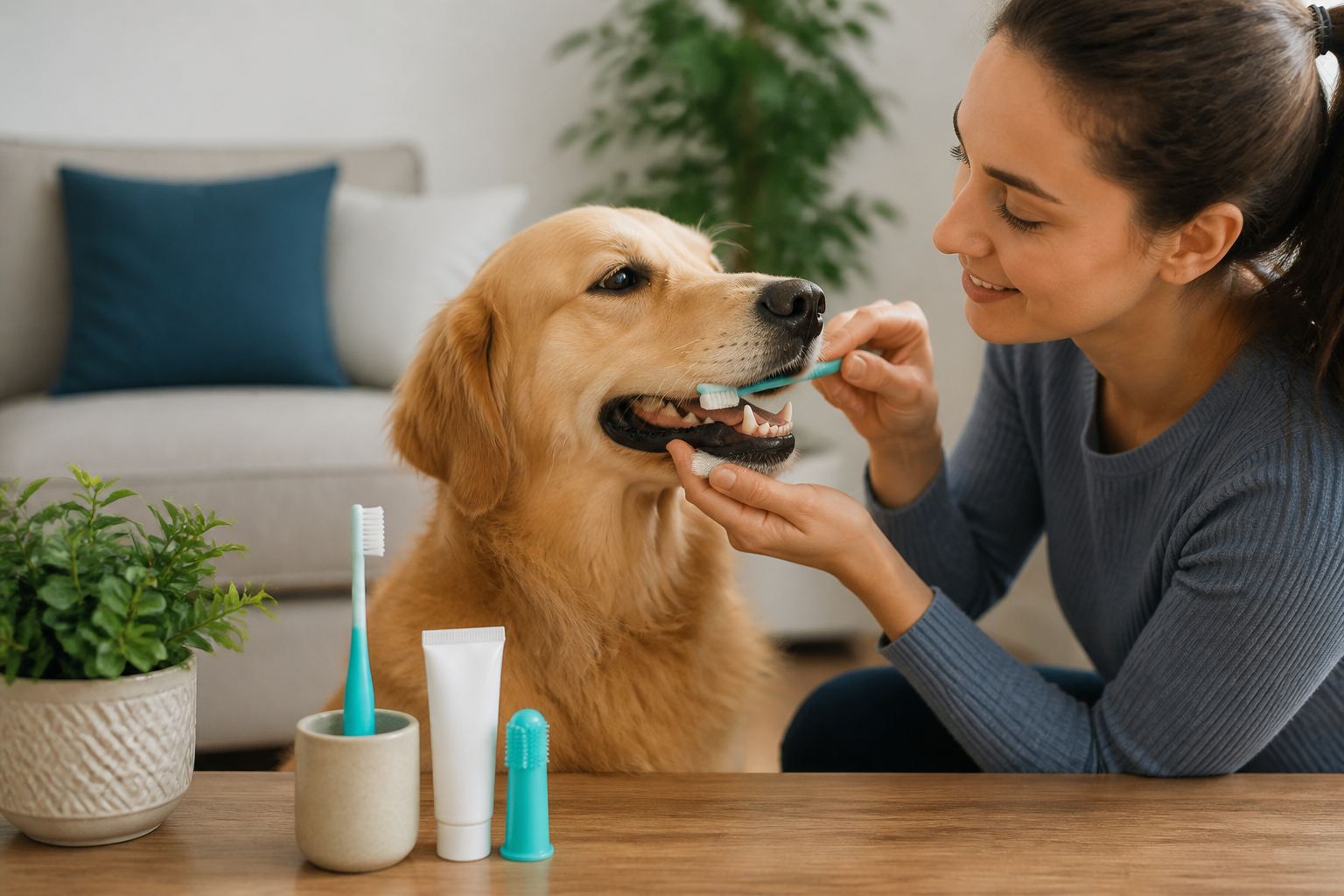
Quick Answer: The most effective tool for cleaning a dog’s teeth is a toothbrush paired with dog-safe enzymatic toothpaste. For dogs that resist brushing, you can use dental wipes, water additives, and VOHC-approved dental chews to reduce plaque and tartar buildup.
The Gold Standard: Toothbrushes and Paste
Brushing is the most effective way to remove plaque before it hardens into tartar. Plaque is a sticky film of bacteria that forms on the teeth after eating. If it is not brushed away, it mineralizes into tartar within 24 to 48 hours. Once tartar forms, you cannot remove it with a brush at home. It requires a professional cleaning by a veterinarian.
When you start looking for tools, you will find several types of brushes. Each serves a different purpose based on your dog's size and comfort level. You can explore our dog dental care category for brushes, toothpaste, wipes, and other oral-care supplies.
Finger Brushes
These are small, flexible rubber or silicone caps that slip over your pointer finger. They have soft bristles on one side. These are excellent for puppies or dogs that are nervous about having long objects in their mouths. Since you can feel exactly where your finger is, you are less likely to poke their gums uncomfortably.
Long-Handled Brushes
Standard dog toothbrushes often have long, angled handles. Many feature a large brush head on one end and a smaller one on the other. The angle helps you reach the back molars where the most significant buildup occurs. These are best for larger dogs with deep jowls.
Double-Headed Brushes
These brushes have two heads that meet at an angle to hug the tooth. They allow you to clean the front and back of the tooth simultaneously. This is a great time saver for dogs that only give you a few seconds of cooperation.
Dog-Safe Toothpaste
You must never use human toothpaste on a dog. Our toothpaste contains fluoride and often xylitol, both of which are toxic to dogs. Human paste also foams, which can irritate a dog's stomach or cause them to choke since they cannot spit.
Dog toothpaste is formulated to be swallowed. It usually contains enzymes that help break down food particles and bacteria. Most brands offer flavors like poultry, beef, or peanut butter to make the experience more like a treat than a chore. For dogs that dislike brushing, Ark Naturals Brushless Toothpaste Dog Chews offer another dental-care option.
Key Takeaway: Mechanical scrubbing with a brush is the only way to physically break up plaque before it turns into permanent tartar. Use enzymatic toothpaste to allow the ingredients to keep working even after you stop brushing.
Dental Wipes and Pads
If your dog flatly refuses a toothbrush, dental wipes are the next best thing. These are pre-moistened pads treated with cleaning agents like chlorhexidine or baking soda. You wrap the wipe around your finger and rub it over the surface of the teeth and along the gum line.
Wipes are less invasive than brushes. They do not reach the deep crevices between teeth as well as bristles do, but they are highly effective at removing the daily film of slime from the flat surfaces. They are also portable and easy to use after a messy meal. Our dog dental care supplies include wipes and other convenient alternatives to traditional brushing.
Dental Chews and Textured Toys
Many owners rely on chews as their primary method of dental care. While they are not a total replacement for brushing, they provide significant mechanical scraping. As your dog chews, the edges of the treat or toy rub against the teeth to scrape away debris.
Selecting the Right Chew
Not all chews are created equal. You should look for the Veterinary Oral Health Council (VOHC) seal of approval. This seal means the product has been scientifically tested and proven to reduce plaque or tartar by a specific percentage.
Popular options include:
- Greenies: These are designed with a texture that allows the tooth to sink in for maximum contact. You can browse our selection of Greenies products for dental chews and related items.
- Dental Sticks: Many brands make ridged sticks that help reach the gum line.
- Rawhide Alternatives: These are often made from collagen or vegetables and provide a long-lasting chew.
Dental Toys
Rubber toys with bumps, ridges, or "nubs" can also help. Brands like Kong make dental-specific toys that you can fill with dog-safe toothpaste or peanut butter. As the dog works to get the food out, their teeth rub against the textured rubber. Our KONG dental dog toys provide textured options for dogs who enjoy chewing.
Vet Tip: Always supervise your dog when they are using a dental chew or toy. If a dog swallows a large chunk of a hard chew, it can cause an intestinal blockage or a choking hazard.
Water Additives and Oral Sprays
For the busiest pet parents or the most difficult dogs, water additives are a practical solution. You simply add a capful of the liquid to your dog's water bowl every time you refill it.
These additives usually contain ingredients that alter the pH of the saliva or break down the biofilm that allows bacteria to stick to the teeth. They are generally tasteless and odorless, so most dogs do not even notice they are there.
Oral sprays work similarly but are applied directly to the teeth and gums. You just lift the lip and spray. The dog’s tongue then spreads the solution around the mouth. This is a good option for freshening breath instantly. For more ideas, read our pet dental care tips.
Natural Helpers from the Kitchen
You might already have some items in your refrigerator that can help keep your dog's mouth clean. While these are not a substitute for medical-grade products, they are healthy additions to a dental routine.
Raw Carrots
Crunchy, raw carrots act like a natural toothbrush. The hard texture requires a lot of chewing, which helps scrape the teeth. They are also low in calories and high in fiber.
Sliced Apples
Like carrots, the fibrous texture of an apple can help clean the teeth. However, you must always remove the seeds and the core, as apple seeds contain small amounts of cyanide.
Plain Yogurt
A spoonful of plain, unsweetened yogurt contains probiotics. Some studies suggest that healthy bacteria in the mouth can crowd out the bacteria that cause gum disease. Ensure it contains no xylitol or added sugars.
Signs Your Dog Needs a Professional Cleaning
Even with the best at-home care, most dogs will eventually need a professional dental cleaning. Some breeds, particularly small dogs like Yorkies or Pugs, are prone to dental issues due to crowded teeth.
You should watch for these warning signs:
- Persistent bad breath: If the smell does not go away after brushing, it could indicate an infection.
- Discolored teeth: Yellow or brown buildup near the gum line is tartar.
- Bleeding gums: You might see blood on their chew toys or in their water bowl.
- Difficulty eating: If your dog drops food or only chews on one side, they may have a painful tooth.
- Loose or missing teeth: This is a sign of advanced periodontal disease.
For a closer look at warning signs, read what to know about bad teeth in dogs.
Vet Tip: If you notice any of these symptoms, schedule an exam with your veterinarian. They may recommend a professional cleaning under anesthesia to clean under the gum line where at-home tools cannot reach.
Prescription Diets and the Pharmacy
In some cases, your vet might prescribe a specific dental diet. These kibbles are usually larger and have a fibrous matrix that does not shatter when the dog bites down. Instead, the tooth sinks into the kibble, which wipes the surface clean.
Our pharmacy at BaxterBoo offers access to these prescription diets, such as Royal Canin Dental or Farmina Vet Life options, through our partnership with Pet's Choice. If your dog has a history of rapid tartar buildup or gingivitis, a prescription food can be a powerful tool.
We also carry FDA-approved medications that your vet might prescribe after a dental procedure. These can include antibiotics for infections or pain relief for extractions. Having access to a real pharmacy ensures you get the exact medication your vet ordered for your dog’s specific recovery needs.
How to Introduce a Dental Routine
You cannot expect your dog to sit still for a full brushing on the first day. It takes time to build trust.
Step 1: Let them taste the paste. / Put a small amount of flavored dog toothpaste on your finger and let them lick it off. Do this for a few days so they associate the taste with a reward.
Step 2: Touch the teeth. / While they lick the paste, gently rub your finger along their gums and teeth. This gets them used to the sensation of having their mouth handled.
Step 3: Introduce the brush. / Put some paste on the brush and let them lick it. Gradually start using small circular motions on the front teeth.
Step 4: Reach the back. / Once they are comfortable with the front, slowly move toward the back molars. These are the most important teeth to clean.
Step 5: Reward and praise. / Always end the session with a treat or a favorite game. You want them to look forward to the routine.
For additional guidance on introducing oral care, see these pet dental care tips.
Bottom line: Consistency is more important than perfection; brushing three times a week is significantly better than once a month.
Managing Dental Care on a Budget
Dental care can become expensive if you only rely on professional cleanings. The best way to save money is through prevention. Investing in a ten-dollar toothbrush and a tube of paste now can save you hundreds or thousands of dollars in veterinary surgery later.
At BaxterBoo, we offer several ways to make these supplies more affordable.
- MVP Rewards: You can earn up to 5% back on every dental chew, toothbrush, and bottle of water additive you buy. Learn more about our MVP Rewards programme.
- Autoship: Never run out of dental chews again. You can set up recurring deliveries and save on every order. This also includes a free MVP Gold membership.
- Frequent Buyer Program: Many of the high-quality food brands we carry participate in programs where you can earn free products after a certain number of purchases.
Common Mistakes to Avoid
Many well-meaning owners accidentally make dental care harder or less effective.
One common mistake is using a brush that is too hard. A dog's gums are sensitive. If you scrub too hard or use a firm human brush, you can cause the gums to bleed, which makes the dog fear the process. Always use a soft-bristled brush designed for pets.
Another mistake is giving bones that are too hard. While bones are traditional chews, items like elk antlers or heavy marrow bones can actually fracture a dog's teeth. If a chew is so hard that you cannot dent it with your fingernail, it might be too hard for your dog's enamel.
Finally, do not rely on dry kibble alone to clean teeth. It is a common myth that kibble scrapes teeth clean. Most dogs swallow kibble whole or break it into just a few pieces. While it is better than soft canned food for some dogs, it is not a replacement for a dedicated dental routine.
Conclusion
Taking care of your dog's teeth does not have to be a stressful ordeal. By finding the right combination of tools, you can keep their mouth healthy and their breath fresh. Whether you choose the thoroughness of a toothbrush, the convenience of dental wipes, or the ease of a water additive, every little bit helps. Remember to start slowly and use plenty of positive reinforcement. Regular checkups with your vet will ensure that you are on the right track. We are here at BaxterBoo to provide the supplies and expert-curated products you need for every stage of your dog's life.
Key Takeaway: A successful dental routine combines mechanical brushing, functional chews, and regular veterinary checkups to ensure whole-body health for your dog.
Check out our full collection of dog dental care products or visit our pharmacy for prescription needs to keep your dog's smile healthy for years to come.
FAQ
Can I use baking soda to clean my dog's teeth?
While baking soda is an ingredient in some pet toothpastes, you should not use straight baking soda from your pantry. It has a high alkaline content that can upset a dog's stomach if swallowed in large amounts. It also has a bitter taste that might make your dog resist future brushing attempts.
How often should I actually brush my dog's teeth?
Ideally, you should brush your dog's teeth every single day to prevent plaque from turning into tartar. However, we know that is not always realistic for every pet owner. Aiming for at least three times a week is usually enough to maintain decent oral health and significantly reduce the risk of gum disease.
Are dental water additives safe for everyday use?
Yes, most high-quality water additives are formulated for daily, long-term use. They are designed to be diluted in water and are safe for your dog to ingest throughout the day. Just ensure you follow the dosage instructions on the bottle and choose a product with the VOHC seal for the best results.
Do certain dog breeds need more dental care than others?
Small and toy breeds, as well as flat-faced (brachycephalic) breeds like Bulldogs and Pugs, often have crowded teeth. This crowding creates more places for food and bacteria to hide, making them much more prone to dental disease. If you have a smaller dog, you should be especially diligent with daily brushing and regular vet exams.






