
 Save 15% on your 1st Autoship learn more

 Email us
 Live Chat
 FAQs
FAQs





Introduction
You drop your dog off for a spa day and see teeth cleaning on the menu of services. Maybe you have tried brushing at home but ended up with more toothpaste on your shirt than on your dog's teeth. It is natural to wonder exactly what tools the professionals use to get those pearly whites shining. At BaxterBoo, we talk to pet parents every day who want to know how the pros handle "dog breath" and plaque buildup. This guide explains the specific brushes, pastes, and high tech tools groomers use to manage oral hygiene and freshen breath. We also clarify the important line where grooming ends and veterinary medical care must begin. Our goal is to help you understand the professional process so you can better care for your pet at home.
Quick Answer: Groomers primarily use enzymatic toothpastes, specialty brushes like finger brushes or double-headed toothbrushes, and sometimes ultrasonic dental devices. These tools are designed for surface cleaning and breath freshening rather than medical tartar removal.
Standard Tools for Professional Teeth Brushing
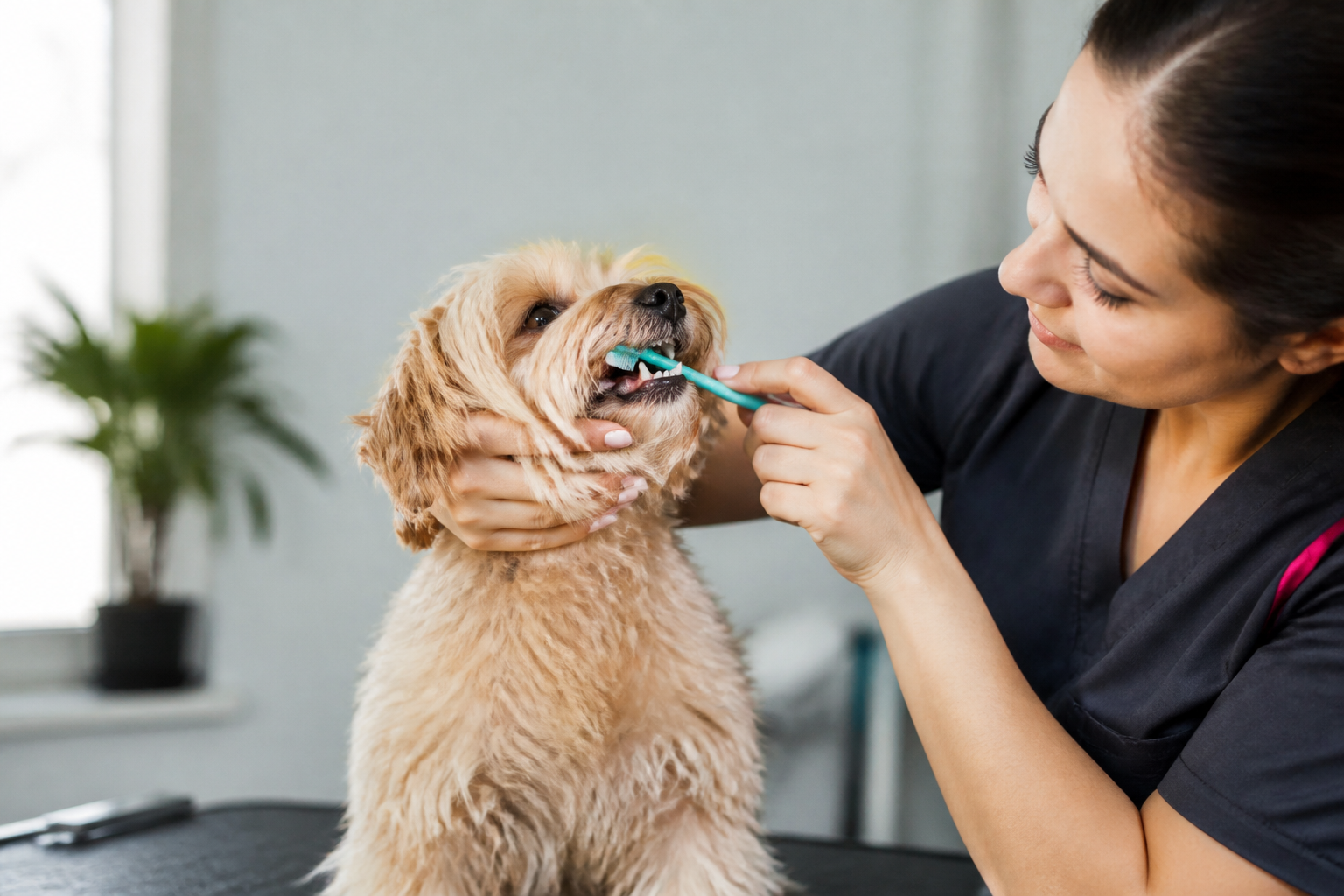
The most common dental service in a grooming salon is a basic teeth brushing. This is a manual process that targets the surfaces of the teeth and the gum line. Professionals do not use the same toothbrush you might use for yourself. They need tools that can navigate the unique angles of a dog's jaw.
Dog-Safe Enzymatic Toothpaste
Groomers almost always use enzymatic toothpaste. Unlike human toothpaste, these formulas are safe to swallow. They do not contain foaming agents like sodium lauryl sulfate, which can upset a dog's stomach. The enzymes in the paste are the real workers. They react with saliva to break down the protein film that allows plaque to stick to the teeth.
Most professional pastes come in flavors like poultry, beef, or peanut butter. This makes the experience much more pleasant for the dog. The paste continues to work for several minutes after the groomer finishes brushing. It is important that the dog does not drink water immediately after the application.
Specialty Brushes and Applicators
Groomers choose their brush based on the size and temperament of the dog.
- Double-Headed Brushes: These have two sets of bristles at different angles. They allow the groomer to clean the inside and outside of the tooth at the same time.
- Finger Brushes: These are small silicone sleeves that fit over the groomer's index finger. They are excellent for small dogs or pets who are nervous about a long plastic handle in their mouth.
- Long-Handled Brushes: These are used for large breeds like Golden Retrievers. They help the groomer reach the very back molars where most plaque accumulates.
- Dental Wipes: Some groomers use textured wipes. These are pre-moistened with dental solution. They are useful for dogs who will not tolerate a brush but still need surface debris removed.
Advanced Technology: Ultrasonic Cleaning
Some modern grooming salons have invested in ultrasonic dental technology. This is a major step up from a standard manual toothbrush. These devices use high frequency sound waves to clean the teeth.
Ultrasonic tools for groomers, like the Emmi-Pet system, are entirely silent. They do not vibrate or make a buzzing sound. This is crucial because many dogs are terrified of the high pitched whine of traditional dental tools. The device works by creating millions of tiny bubbles in a special conductive toothpaste. These bubbles implode, which creates a physical force that breaks up bacterial colonies and plaque on the tooth surface.
The groomer simply holds the device against the tooth. There is no scrubbing or scraping involved. This technology is considered a cosmetic hygiene service. It is highly effective at removing surface stains and managing oral bacteria. However, it still does not reach deep under the gum line where serious disease often hides.
Key Takeaway: Grooming dental services are cosmetic and preventative. They use enzymes and sound waves to manage surface hygiene but cannot treat deep-seated dental disease.
Why Professionals Avoid Metal Scalers on Awake Dogs
You may have seen metal scraping tools, known as scalers, in pet stores or online. While these look effective, most professional groomers avoid them on awake animals. There are several safety reasons for this choice.
First, scraping a tooth with a metal tool creates tiny, microscopic scratches in the enamel. In a veterinary office, the vet follows scaling with a professional polish to smooth these scratches out. Groomers generally do not have the equipment to polish teeth. If the enamel is left rough, plaque and tartar will actually stick to the tooth faster than before.
Second, the risk of injury is high. If a dog flinches while a sharp metal tool is near their gums, it can cause significant bleeding or trauma. Finally, scaling releases bacteria into the bloodstream. If a dog has underlying gum disease, this can be dangerous.
Vet Tip: Professional scaling and tartar removal should only be performed by a veterinarian. This procedure usually requires anesthesia to ensure the vet can clean beneath the gum line safely and thoroughly. If your dog has thick, hard brown deposits on their teeth, skip the groomer and head to the clinic.
The Difference Between Grooming and Veterinary Cleaning
It is easy to confuse a "dental package" at the groomer with a "dental cleaning" at the vet. They serve very different purposes.
| Feature | Groomer Teeth Brushing | Veterinary Dental Cleaning |
|---|---|---|
| Primary Goal | Breath freshening and surface plaque removal. | Treating dental disease and removing tartar. |
| Anesthesia | None. The dog is fully awake. | General anesthesia is required. |
| Subgingival Cleaning | No. They only work above the gum line. | Yes. They clean deep in the pockets under the gums. |
| Tools Used | Brushes, wipes, and ultrasonic waves. | Scalers, polishers, and digital X-rays. |
| Frequency | Every grooming visit (4-8 weeks). | Typically once a year or as needed. |
At-Home Maintenance Between Grooming Visits
A groomer can only do so much during a visit every few weeks. The best way to keep your dog's mouth healthy is daily care at home. We carry many of the same brands professionals use, such as Kong and Greenies, to help you maintain those results. Explore our dog dental care selection for toothpaste, gels, water additives, and dental treats.
Dental Chews and Toys
Giving your dog something to chew on is one of the easiest ways to manage plaque. Mechanical abrasion is the key. As the dog chews, the texture of the toy or treat scrapes against the side of the tooth.
- Rubber Dental Toys: Brands like Kong make toys with special ridges. When you stuff these with a little dog-safe paste, the dog cleans their own teeth while they play.
- Dental Treats: Look for treats with the VOHC (Veterinary Oral Health Council) seal. These have been tested to prove they actually reduce plaque and tartar.
- Natural Chews: Items like bully sticks or high quality dental bones provide the long-term chewing action needed to scrub the back teeth.
For dogs who enjoy chewing, our dental dog toys offer another option for adding texture to playtime.
Water Additives and Gels
If your dog is absolutely resistant to brushing, water additives are a great secondary option. You simply add a capful to their water bowl. These solutions often contain ingredients that alter the pH of the saliva, making it harder for plaque to mineralize into hard tartar. Dental gels work similarly but are applied directly to the gums. The dog's tongue moves the gel around the mouth as they lick.
For more ideas, read these pet dental care tips, including suggestions for toothpaste, dental treats, and water additives.
Managing Complex Dental Health Needs
For many dogs, simple brushing is not enough. This is especially true for small breeds like Poodles or Yorkies who are prone to crowded teeth. If your veterinarian has diagnosed your pet with periodontal disease or recurring infections, they may recommend specific medications or prescription diets.
Our BaxterBoo pharmacy offers a streamlined way to manage these medical needs. Through our partnership with Pet's Choice, we provide access to FDA-approved medications and prescription dental diets like Royal Canin Dental or Farmina Vet Life. These foods are designed with a specific kibble structure that acts like a toothbrush as the dog eats.
If your vet prescribes an oral antibiotic or a medicated rinse after a procedure, you can have those orders filled through our pet pharmacy. This ensures your pet gets the exact medical care they need alongside their regular grooming routine.
Common Signs of Dental Issues
Even with regular professional grooming, you should keep an eye out for signs of trouble. If you notice any of the following, a trip to the vet is more important than a trip to the groomer.
- Persistent Bad Breath: While "dog breath" is normal, a truly foul or rotting smell often indicates infection.
- Bleeding Gums: You might see blood on a chew toy or in their water bowl. This is a sign of gingivitis or advanced gum disease.
- Difficulty Eating: If your dog drops food, chews on only one side of their mouth, or avoids hard kibble, they may have a painful tooth.
- Visible Tartar: Hard, brown, or tan deposits near the gum line cannot be brushed away. These require professional veterinary scaling.
- Swelling: Any lumps or bumps on the gums or swelling under the eye can indicate a tooth root abscess.
This guide to warning signs of bad teeth in dogs can help you recognize when professional veterinary attention may be needed.
Step 1: Inspect the mouth. Lift the lips weekly to check for redness or new deposits. Step 2: Start a routine. Try brushing once a week and build up to daily. Step 3: Schedule professional care. Use the groomer for maintenance and the vet for annual exams.
Bottom line: Groomers use specialized brushes and enzymatic pastes to provide cosmetic surface cleaning, but they cannot replace the deep medical cleaning provided by a veterinarian.
Conclusion
Groomers play an essential role in your dog's hygiene by providing regular surface brushing and using tools like ultrasonic cleaners to manage plaque. These services keep breath fresh and can slow down the development of dental disease. However, it is important to remember that a groomer is not a dental surgeon. For hard tartar removal or treating infections, your veterinarian is the right professional to call. By combining regular grooming, daily home care with products from us, and annual veterinary checkups, you can ensure your dog stays healthy and happy.
If your dog needs specialized support, consider exploring our pharmacy for prescription options. You can also sign up for our Autoship programme to ensure you never run out of the dental chews and toothpaste your dog needs for their daily routine.
FAQ
Can a groomer remove hard brown tartar from my dog's teeth?
No, groomers should not attempt to remove hard tartar, which is also known as calculus. Removing tartar requires scaling tools that can damage the enamel if not followed by professional polishing. This procedure is a medical task that should be performed by a veterinarian while the dog is under anesthesia.
Is the teeth brushing service at the groomer worth the extra cost?
Yes, it is often a valuable add-on service for pets who do not allow their owners to brush at home. Groomers are experienced at handling dogs and can often reach back molars that owners miss. Regular brushing at the groomer, combined with home care, helps prevent plaque from turning into hard tartar.
What is the difference between enzymatic toothpaste and human toothpaste?
Enzymatic toothpaste contains specific enzymes that break down organic matter and is safe for dogs to swallow. Human toothpaste often contains xylitol, which is highly toxic to dogs, and foaming agents that can cause severe stomach upset. You should never use human dental products on your pet.
How often should my dog have their teeth cleaned by a professional?
Most dogs benefit from a professional veterinary cleaning once a year. However, you should have your dog's teeth brushed by a groomer or at home as often as possible, ideally daily. Small breeds or dogs with a history of dental issues may require more frequent veterinary visits to manage their oral health.






