
 Save 15% on your 1st Autoship learn more

 Email us
 Live Chat
 FAQs
FAQs





Introduction
You lean in for a happy morning nuzzle only to be met with a puff of breath that smells less like your best friend and more like an old gym bag. While many owners think "doggy breath" is just a part of pet ownership, veterinarians will tell you it is often the first sign of oral health issues. At BaxterBoo, we know that keeping your dog's mouth clean is about more than just fresh kisses. It is a vital part of preventing systemic health issues that can affect the heart, liver, and kidneys. This guide covers the essential tools and routines that veterinary professionals recommend to keep your dog’s smile bright. We will look at everything from professional cleanings to the best at-home habits to ensure your dog stays healthy for years to come.
Quick Answer: Vets recommend a multi-tiered approach starting with professional cleanings under anesthesia. This should be supported by daily brushing with enzymatic toothpaste and the use of VOHC-approved dental chews, diets, or water additives.
The Foundation of Professional Dental Cleanings
The single most important recommendation from veterinarians is the professional dental cleaning. You can think of this as the "deep clean" you get at your own dentist, but for dogs, it is a bit more involved. Most vets suggest a dog’s first professional cleaning should happen by age one or two, depending on the breed and size.
During these visits, your vet performs a thorough exam that is impossible to do while a dog is awake. They check for loose teeth, oral tumors, and deep pockets in the gums. They also use specialized tools to scale away tartar both above and below the gumline. This is the only way to truly address the bacteria that cause periodontal disease. For additional guidance on building a complete routine, read our top pet dental care tips.
Vet Tip: Always schedule a dental exam if you notice your dog is dropping food, pawing at their mouth, or has bleeding gums. These are often signs of pain that require professional intervention rather than just home cleaning.
Why Vets Insist on Anesthesia for Cleaning
A common question pet owners ask is whether "anesthesia-free" cleanings are a good alternative. Veterinary experts almost universally recommend against them. While they may make the teeth look white on the surface, they do not address the health of the pet.
Anesthesia allows the veterinarian to clean under the gumline where the real damage happens. It also allows for dental X-rays, which are necessary to see what is happening with the roots of the teeth. Without anesthesia, the process is stressful for the dog and often results in missed infections or painful conditions. Modern anesthesia is very safe. Your vet will perform blood work beforehand to ensure your dog is a good candidate for the procedure.
Brushing: The Gold Standard of Home Care
If you ask a vet for the best way to clean your dog’s teeth at home, the answer will always be brushing. It is the most effective way to remove plaque before it hardens into tartar. Ideally, you should brush your dog's teeth every single day. If that feels impossible, aim for at least three times a week to see a real benefit. You can find additional options in our dog dental care collection.
The tools you use matter. Never use human toothpaste because it often contains xylitol, which is toxic to dogs. Human toothpaste also contains foaming agents that are not meant to be swallowed. Dog-specific toothpastes are enzymatic, meaning they help break down plaque chemically even after you stop brushing. They also come in flavors like poultry or peanut butter that dogs actually enjoy.
How to Start a Brushing Routine
Step 1: Introduce the flavor. / Let your dog lick a small amount of dog-safe enzymatic toothpaste off your finger for several days.
Step 2: Get them used to mouth handling. / Gently rub your finger along their gums and teeth while they enjoy the taste of the paste.
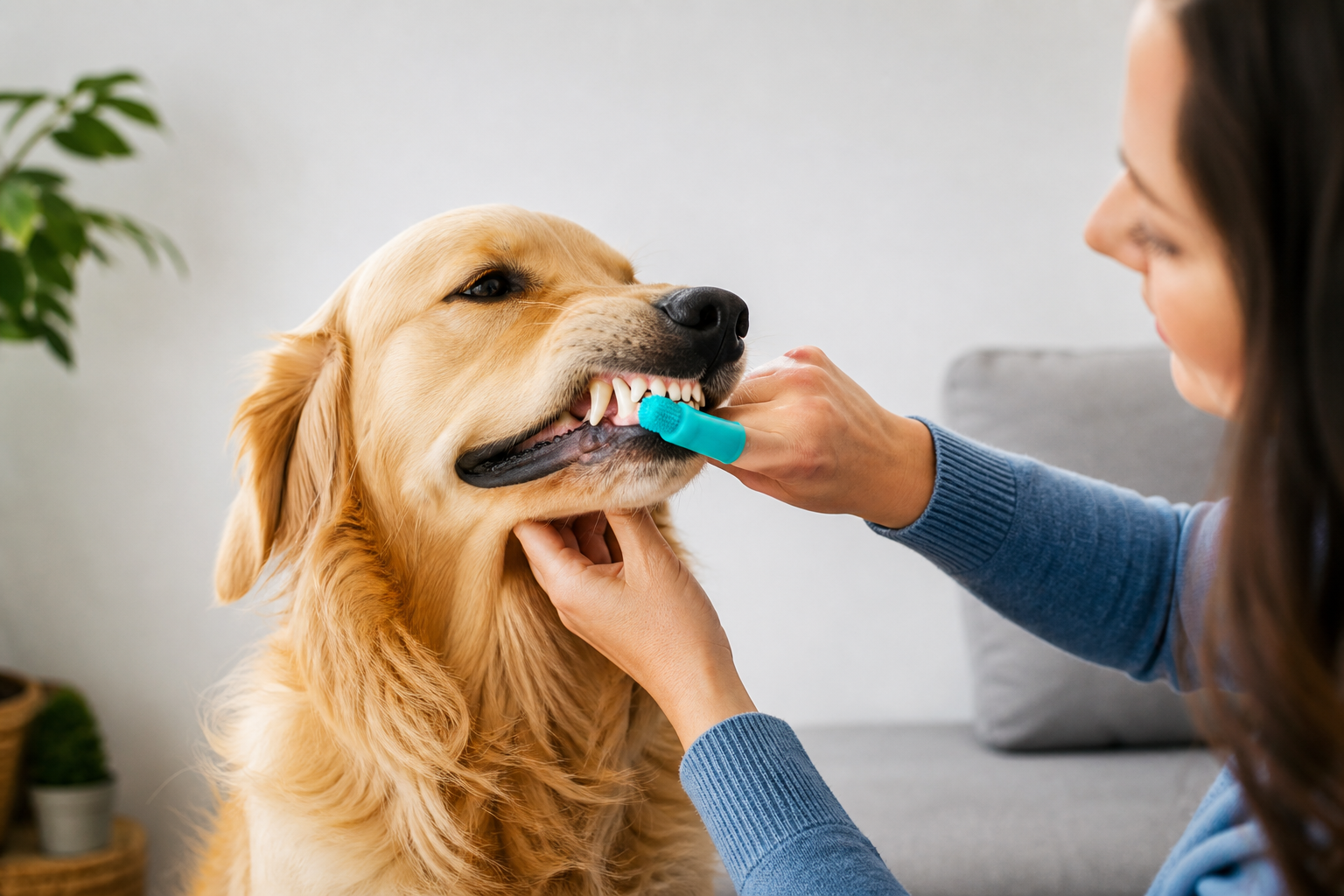
Step 3: Introduce the brush. / Use a soft-bristled dog toothbrush or a finger brush and move in small circles along the outside of the teeth.
Step 4: Focus on the back. / Most plaque builds up on the upper back molars, so spend extra time in those hard-to-reach areas.
Bottom line: Daily brushing with enzymatic toothpaste is the most effective home method to prevent plaque from turning into permanent tartar.
Understanding the VOHC Seal of Acceptance
With so many dental products on the shelves, it is hard to know which ones actually work. Vets recommend looking for the Veterinary Oral Health Council (VOHC) Seal of Acceptance. This seal is not a paid advertisement. To earn it, manufacturers must provide data from scientific trials proving the product reduces plaque or tartar by a certain percentage.
When you see this seal on a bag of treats or a bottle of water additive, you know it has been held to a rigorous standard. We carry several brands at BaxterBoo that have earned this distinction, including our selection of Greenies products and certain prescription diets. Using products with this seal ensures you are spending your money on something that truly supports your dog's health.
Dental Chews and Treats
Dental chews are a favorite for both dogs and owners because they feel like a reward. Vets recommend these as a supplement to brushing, not a replacement. These treats work through mechanical action. As the dog chews, the texture of the treat scrapes against the tooth surface to rub away plaque. Browse our dental food and treats for options that can complement your dog’s routine.
Some chews, like Greenies, are designed to be flexible and highly digestible. This is important because a chew that is too hard can actually fracture a dog's teeth. A good rule of thumb is the "knee test." If you would not want to be hit in the knee with the object, it is likely too hard for your dog’s teeth. For more ideas, explore our guide to dental chews for dogs.
Choosing the Right Size
- Always match the chew size to your dog's weight to prevent choking.
- Supervise your dog while they enjoy their chew to ensure they do not swallow large chunks.
- Monitor your dog's daily calorie intake, as dental treats add up.
- Look for chews with a porous texture that allows the tooth to sink in for maximum scraping.
Prescription and Specialized Dental Diets
For dogs prone to rapid tartar buildup, vets often recommend specialized dental diets. These are different from standard dry kibble. While people often think all dry food cleans teeth, most kibble simply shatters when a dog bites it. It provides very little cleaning benefit.
Prescription dental diets, such as those from Royal Canin or Farmina Vet Life, use a specific technology. The kibble pieces are usually much larger and have a fibrous matrix. Instead of crumbling, the tooth sinks into the kibble, and the fibers scrub the surface of the tooth. These diets also often contain minerals that bind calcium in the saliva, preventing it from hardening into tartar.
Our pharmacy carries these specialized prescription diets through our partnership with Pet's Choice. If your vet suggests a prescription diet, you can easily manage those orders through our site. This ensures your dog gets the specific nutrition they need to manage their oral health.
Key Takeaway: Standard kibble rarely cleans teeth, but specialized dental diets use a fibrous texture to mechanically scrub plaque away during every meal.
Water Additives and Oral Sprays
Not every dog is a fan of having a toothbrush in their mouth. For those pets, vets often recommend water additives or oral sprays. These products are designed to be easy to use. You simply add a measured amount to your dog’s water bowl or spray it directly onto their teeth and gums. Our dog dental and breath care options include products designed for these parts of a daily routine.
These products work by using enzymes or minerals to kill the bacteria that cause plaque. They also help freshen breath instantly. While they are not as effective as brushing, they are an excellent option for senior dogs or pets with behavioral challenges. Brands like Vetradent offer additives that are odorless and tasteless, so even picky dogs will not notice them in their water.
Dental Wipes and Finger Brushes
If a traditional toothbrush is too intimidating for your dog, dental wipes are a great middle ground. These are textured pads that you wrap around your finger. They allow you to feel exactly where you are cleaning, which gives you more control. For more help introducing oral care, review these pet dental care tips for starting slowly.
Wipes are particularly useful for cleaning the front teeth and the outside of the molars. They are pre-soaked with cleaning agents, so you do not need to worry about extra toothpaste. Finger brushes, which are small rubber caps with soft bristles, offer a similar level of control and are often better tolerated by puppies or small breeds.
Safe Toys vs. Dangerous Chews
Vets have a list of items they wish owners would stop giving their dogs. While bones, antlers, and hard nylon chews are popular, they are leading causes of fractured teeth. A dog's tooth is strong, but it is not designed to crunch through something as hard as a cow bone.
Instead, look for dental toys made of durable but flexible rubber. Brands like Kong offer toys with ridges and grooves designed to massage the gums and scrape the teeth during play. You can even smear a bit of enzymatic toothpaste inside the grooves of a rubber toy to turn playtime into a cleaning session. You can also browse our dog healthcare category for additional dental-care supplies.
Checklist for Safe Dental Toys
- The toy should have some "give" when you press it with your thumb.
- Avoid anything that does not soften when soaked in water.
- Avoid real bones, antlers, and hooves.
- Look for toys specifically labeled for dental health.
- Ensure the toy is too large to be swallowed but small enough to be carried.
Identifying Dental Problems Early
Even with the best home care, problems can arise. Vets recommend doing a "flip the lip" check once a week. Lift your dog's lips and look at the back teeth. You are looking for a few specific red flags. Our guide to warning signs of dental problems in dogs offers another way to review what to watch for.
Healthy gums should be pink, not red or purple. The teeth should be white or off-white. If you see thick brown or orange deposits, that is tartar, and it cannot be brushed away. You also want to check for any broken teeth or swellings on the gums. If your dog has a foul odor that returns quickly after brushing, there may be an infection under the gumline that needs a vet's attention.
Vet Tip: Small breeds, such as Pugs or Chihuahuas, are more prone to dental disease because their teeth are often crowded. These dogs may need professional cleanings more frequently than larger breeds.
Managing Your Dog’s Long-Term Dental Health
Consistency is the secret to a healthy mouth. Vets emphasize that a one-off cleaning or an occasional treat will not do much. You need a routine that combines several methods. For example, you might brush on Monday and Wednesday, give a dental chew on Tuesday and Thursday, and use a water additive every day.
At BaxterBoo, we aim to make this routine easier to manage. Our MVP Rewards program helps you earn points on every dental purchase, and our Autoship service ensures you never run out of your dog's favorite dental chews or toothpaste. By staying ahead of plaque and tartar, you are giving your dog a more comfortable life and potentially saving yourself thousands in future veterinary surgery costs.
Bottom line: A combination of professional care and a consistent home routine is the only way to prevent serious dental disease in dogs.
FAQ
Can I use human toothpaste on my dog?
No, you should never use human toothpaste for your pet. Many human brands contain xylitol, an artificial sweetener that is extremely toxic to dogs and can cause liver failure or seizures. Human toothpaste also contains foaming agents that can cause stomach upset since dogs cannot spit it out.
Are dental chews enough to keep my dog's teeth clean?
While dental chews are helpful, they are rarely enough on their own. They work best as part of a larger routine that includes brushing and professional veterinary cleanings. Chews primarily clean the chewing surfaces of the teeth and may miss the gumline where many infections begin.
How often should I have my dog's teeth professionally cleaned?
Most veterinarians recommend a professional cleaning once a year, starting around age two. However, small breeds or dogs with a history of dental issues may need cleanings every six months. Your vet will provide a specific schedule based on your dog's oral health during their annual wellness exam.
My dog hates the toothbrush, what can I do?
If your dog resists brushing, try starting with dental wipes or a finger brush to get them used to the sensation. You can also rely more heavily on VOHC-approved water additives, dental diets, and toys. Always make the experience positive by using flavored pet toothpaste and giving plenty of praise.






