
 Save 15% on your 1st Autoship learn more

 Email us
 Live Chat
 FAQs
FAQs





Introduction
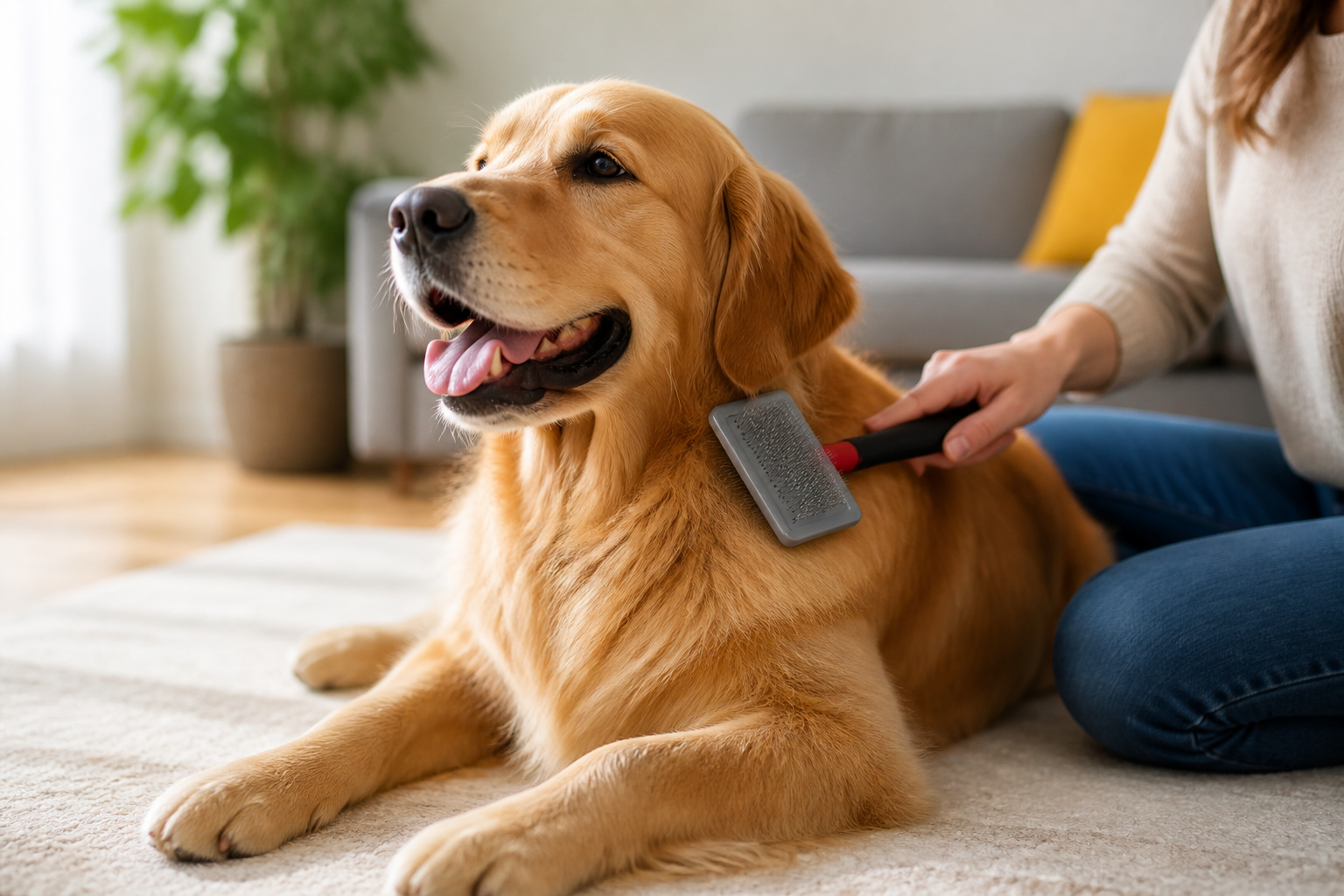
You are sitting on the floor with your dog after a long walk. As you run your hand down their side, your fingers catch on a tight, hard knot behind their ear. These small tangles can quickly turn into painful mats if they are not handled correctly. At BaxterBoo, we talk to pet owners every day who are looking for the best way to keep their dog's coat smooth and healthy. The slicker brush is often the first tool we recommend for dogs with medium to long hair. It is the workhorse of the grooming world, designed to tackle the tough jobs that a standard comb cannot manage. This article will explain exactly how a slicker brush works, why the design is so effective, and how to use one without irritating your dog's skin.
Quick Answer: A slicker brush uses fine wire pins to remove mats, tangles, and loose fur from a dog's coat. It is specifically designed for dogs with medium to long hair, curly coats, or thick undercoats to prevent matting and distribute natural skin oils.
Understanding the Design of a Slicker Brush
A slicker brush looks different from the hairbrush you might use. It typically has a flat or slightly curved rectangular head. The surface of this head is covered with hundreds of tiny, thin wire pins. These pins are usually angled or hooked at the ends. This specific shape allows the pins to grab onto loose hair and pull it away from the healthy coat. The pins are often set into a flexible rubber pad. This pad acts as a shock absorber. It allows the pins to give way when they hit a tough knot rather than pulling directly on the dog's skin.
The fine wire pins are the secret to the brush's success. Because they are so thin and closely spaced, they can penetrate deep into a thick coat. They reach past the top layer of fur to grab the loose hair trapped in the undercoat. This is why you will see professional groomers reaching for a slicker brush more often than any other tool. It is efficient at clearing out large areas of fur in a short amount of time.
There are different types of slicker brushes based on the firmness of these pins. A firm slicker brush has stiffer wires for dense, wiry, or very thick coats. A soft slicker brush has more flexible wires. These are better for dogs with finer hair or sensitive skin. Using the right firmness ensures you get the job done without causing discomfort. We carry a wide variety of these styles in our dog grooming supplies to match the specific needs of different breeds.
The Primary Function: Removing Mats and Tangles
The most important thing a slicker brush does is break up mats and tangles. A mat is more than just a knot. It is a dense clump of live and dead hair that has become tightly wound together. If left alone, these mats can pull on the skin, causing pain and even sores. The slicker brush works by picking apart these clumps bit by bit. The angled pins catch the individual hairs within the mat and gently pull them loose.
When you use a slicker brush for detangling, you are not just dragging it through the fur. You are using the pins to tease the hair apart. This process is much more effective than using a standard pin brush or a bristle brush. Those tools often slide right over the top of a mat without actually breaking it down. The slicker brush gets inside the tangle. It is particularly useful for breeds like Poodles, Goldendoodles, and Cocker Spaniels who are prone to matting in high friction areas. These areas include the armpits, behind the ears, and where their collar sits.
Key Takeaway: Slicker brushes are the most effective tool for preventing and breaking down mats because their fine, angled pins can penetrate deep into the coat to separate individual hairs.
Clearing Out the Undercoat and Reducing Shedding
Many dogs have a double coat. This means they have a soft, insulating undercoat beneath a tougher outer layer of guard hairs. When a dog sheds, that undercoat hair often gets trapped. It stays under the top coat instead of falling to the floor. This trapped hair can lead to heavy shedding inside your home and can cause the coat to look dull. A slicker brush is excellent at grabbing this loose undercoat.
When you brush your dog with a slicker, you will often see a large amount of fuzzy hair accumulate on the brush. This is the dead undercoat that would have otherwise ended up on your furniture. By removing this hair, you allow the skin to breathe. This is vital for temperature regulation. A coat clogged with dead hair cannot properly insulate the dog in the winter or keep them cool in the summer. Regular use of a slicker brush keeps the coat light and functional.
This process also helps to stimulate the skin. As the pins move through the coat, they lightly massage the surface of the skin. This increases blood flow to the hair follicles. It also helps to distribute the natural oils produced by the dog's skin. These oils are what give a dog's coat its healthy shine. Without regular brushing, these oils can sit at the base of the hair, making the skin greasy while the ends of the hair stay dry and brittle.
For more help managing loose fur and double coats, read our guide to how Australian Shepherds shed.
Choosing the Right Slicker Brush for Your Dog
Not all slicker brushes are the same. Selecting the right one depends heavily on your dog's size and coat type. A brush that is too large will be hard to maneuver around a small dog's legs or face. A brush that is too small will take forever to use on a large breed like a Great Pyrenees. We recommend looking at the following features when shopping:
- Pin Length: Long-haired dogs need longer pins to reach the skin. Short-haired dogs need shorter pins to avoid scratching the surface of the skin.
- Handle Grip: Look for an ergonomic, non-slip handle. Grooming can take time, and a comfortable grip prevents hand fatigue.
- Self-Cleaning Features: Some slicker brushes have a button that retracts the pins. This makes it very easy to slide the collected hair off the brush in one piece.
- Head Shape: Curved heads are great for following the natural contours of a dog's body. Flat heads are often better for long, straight coats.
If you have a puppy, you should start with an extra soft slicker brush. Puppies have very delicate skin and thin coats. The goal at this stage is not just to remove hair but to get them used to the sensation of being groomed. Use a light touch and offer plenty of treats. This builds a positive association with grooming that will last their whole life.
A product such as the Master Grooming Tools Ergonomic Slicker Dog and Cat Brush is designed for brush-outs, mat removal, and comfortable handling.
How to Use a Slicker Brush Without Causing Slicker Burn
The most common mistake owners make is pressing too hard. This can lead to a condition called slicker burn. This happens when the wire pins scrape against the skin, causing redness, irritation, or even small scratches. Because the pins are metal, they can be sharp if they are dragged directly across the skin with force.
To avoid this, you should always use a light hand. Think of the motion as a "pull and lift" rather than a "push and drag." You want the pins to glide through the hair. If the brush catches on a knot, do not yank it. Instead, stop and use the edge of the brush to gently pick at the knot until it loosens. You can also hold the base of the hair with your other hand. This prevents the brush from pulling on the dog's skin while you work through the tangle.
Step-by-Step Brushing Technique
Step 1: Check for sensitivity. / Run your hands over your dog to check for any sores, bumps, or tender spots before you start.
Step 2: Start at the bottom. / Begin at the dog's legs and work your way up. This ensures you do not miss any hidden mats.
Step 3: Use the line brushing method. / Part the hair with one hand and brush the hair below the part. This allows you to see the skin and ensure you are reaching the base of the coat.
Step 4: Brush in the direction of growth. / Always move the brush in the same direction the hair grows to avoid unnecessary pulling.
Step 5: Reward your dog. / Give your dog praise or a small treat after finishing each section to keep them calm.
For additional guidance on brushing curly coats and working through mats, see our guide to grooming a dog with curly hair.
Maintaining Your Grooming Tools
A slicker brush is an investment in your dog's health. To keep it working well, you must maintain it. Hair and dander will build up at the base of the pins over time. This can cause the rubber pad to degrade or the pins to lose their flexibility. If you do not have a self-cleaning model, use a metal comb to rake the hair out of the pins after every grooming session.
You should also check the pins regularly for damage. If the pins become bent or if the protective tips wear off, the brush can become scratchy. A damaged brush should be replaced immediately. At BaxterBoo, we carry durable brands like Chris Christensen and Safari that are known for holding their shape even with daily use. Keeping your tools clean also prevents the spread of bacteria or skin irritants from one part of the coat to another.
Bottom line: Regular cleaning and inspection of your slicker brush ensure it remains a safe and effective tool for your dog's skin and coat.
When Grooming Reveals Skin Issues
One of the hidden benefits of using a slicker brush is that it forces you to look closely at your dog's skin. As you part the hair and move the brush, you might notice things that are hidden by a thick coat. This includes fleas, ticks, redness, or dry, flaky skin. Brushing is your first line of defense in identifying health problems before they become serious.
If you notice that your dog is constantly itchy or has developed red, inflamed patches of skin, it is important to address it. Sometimes these issues are caused by allergies or environmental irritants. While regular brushing helps, some conditions require professional medical support.
Vet Tip: If you find persistent skin irritation, bald spots, or signs of parasites while brushing, consult your veterinarian for a diagnosis. Our pet pharmacy offers FDA-approved flea and tick preventatives and prescription skin treatments through our partnership with Pet's Choice.
Managing these conditions early can prevent the "itch-scratch cycle" that leads to even worse matting. A dog who is constantly scratching will tangle their hair faster than you can brush it. Combining a solid grooming routine with the right medications from our pharmacy ensures your dog stays comfortable and their coat remains manageable.
Slicker Brushes vs. Other Grooming Tools
It is helpful to know where the slicker brush fits into a complete grooming kit. While it is a versatile tool, it is not the only one you might need. Understanding the differences helps you avoid using the wrong tool for the job.
A bristle brush is much softer than a slicker brush. It is best for short-haired breeds like Labradors or Boxers. It does not penetrate deep coats and is mostly used for adding shine. A pin brush looks like a human brush with long metal pins that have rounded tips. These are great for daily maintenance on long, silky coats like a Maltese, but they are not strong enough to remove deep mats.
Undercoat rakes are another common tool. These have long, heavy metal teeth. They are designed specifically for "blowing the coat" on heavy shedders like Huskies. While they are great for removing bulk, they do not have the fine-tuned detangling power of a slicker brush. Many owners find that a combination of a slicker brush for detangling and a metal comb for finishing provides the best results.
| Tool Type | Best For | Primary Action |
|---|---|---|
| Slicker Brush | Medium/Long/Curly Coats | Removing mats and undercoat |
| Bristle Brush | Short/Smooth Coats | Surface cleaning and shine |
| Pin Brush | Long/Silky Coats | Daily detangling without breakage |
| Undercoat Rake | Double/Thick Coats | Removing large amounts of dead undercoat |
Training Your Dog to Enjoy the Slicker Brush
Some dogs are naturally nervous about grooming tools. The sound of the wire pins or the feeling of the brush can be intimidating. If your dog runs away when they see the brush, you need to go back to basics. Start by just leaving the brush on the floor near their food bowl. Let them sniff it and get used to its presence.
Once they are comfortable, touch them with the back of the brush first. This lets them feel the pressure without the pins touching their skin. Gradually move to very short, light strokes on their shoulder or back. Avoid sensitive areas like the belly or tail until they are fully relaxed. If you stay consistent, most dogs will eventually find the process relaxing. It becomes a dedicated bonding time between you and your pet.
Our MVP Rewards program is a great way to save on treats and grooming supplies as you work through this training. You can earn points on every purchase of brushes, combs, and calming aids. This makes it easier to keep your grooming kit fully stocked with the high-quality tools we handpick for our warehouse.
The Relationship Between Diet and Coat Quality
A slicker brush can do wonders for the appearance of a coat, but true coat health starts from within. If a dog's coat is extremely brittle or their skin is excessively dry, brushing alone might not solve the problem. High-quality nutrition plays a massive role in how easy it is to groom your dog.
Foods rich in Omega-3 and Omega-6 fatty acids help to keep the skin supple and the hair strong. We carry premium brands like Farmina, Orijen, and Open Farm that focus on these essential nutrients. When a dog has a healthy diet, their hair is less likely to break and form the "velcro" texture that leads to severe matting. If you find yourself struggling with constant mats despite regular brushing, it might be time to look at your dog's food or consider a skin and coat supplement.
For dogs with severe food sensitivities that manifest as skin problems, we also offer prescription diets through our pharmacy. These specialized formulas are designed to reduce inflammation and support the skin barrier. Working with your vet to find the right balance of nutrition and grooming will make your sessions with the slicker brush much more effective.
Browse our dog skin and coat care selection for products that complement a regular grooming routine.
Conclusion
A slicker brush is an essential tool for any dog owner dealing with medium to long hair or thick undercoats. By using fine, angled wire pins, it effectively removes the dead hair and tangles that lead to painful mats. Beyond just aesthetics, regular brushing with a slicker brush stimulates the skin, improves circulation, and allows you to monitor your dog's overall skin health. We are proud to offer a wide selection of expertly curated grooming tools at BaxterBoo to help you keep your pet looking and feeling their best.
- Use a light touch to avoid skin irritation.
- Brush in the direction of hair growth using the line brushing method.
- Regularly clean and inspect your brush for damaged pins.
- Combine grooming with high-quality nutrition for the best results.
Key Takeaway: The slicker brush is the most effective tool for deep coat maintenance, helping to prevent mats and reduce household shedding when used correctly and consistently.
To find the perfect match for your dog's coat type, browse our full collection of grooming supplies and brushes.
FAQ
Can I use a slicker brush on a short-haired dog?
It is generally not recommended to use a slicker brush on very short-haired breeds like Pugs or Greyhounds. The wire pins are designed to penetrate through thick fur, and on a short-coated dog, they can easily scratch or irritate the skin. A soft bristle brush or a rubber grooming mitt is a much safer and more effective choice for these coat types.
How often should I use a slicker brush on my dog?
For most dogs with medium to long hair, brushing two to three times a week is sufficient to prevent mats. However, for breeds with curly hair or very thick undercoats, daily brushing may be necessary, especially during shedding season. Regular sessions are much easier than trying to tackle a week's worth of tangles all at once.
Will a slicker brush hurt my dog?
A slicker brush will not hurt your dog if it is used with the correct technique and the right level of pin firmness. You must use a light hand and avoid pressing the metal pins directly into the skin. If your dog has sensitive skin, look for a soft-finned slicker brush or one with protective plastic tips on the ends of the wires.
What is the best way to clean a slicker brush?
If you have a self-cleaning slicker brush, you simply press a button to retract the pins and wipe the hair away. For standard brushes, you can use a fine-toothed metal comb to reach between the pins and lift the hair out. It is also a good idea to occasionally wipe the pins with a cloth dipped in rubbing alcohol to remove oils and dander buildup.






