
 Save 15% on your 1st Autoship learn more

 Email us
 Live Chat
 FAQs
FAQs





Introduction
You are standing in the grooming aisle or scrolling through endless pages of pet supplies. Your dog is currently shedding all over your favorite rug, or perhaps you just found a stubborn knot behind their ears. You know you need a tool to fix the mess, but the sheer variety of metal pins, soft bristles, and hooked rakes is overwhelming. Choosing the wrong tool can lead to skin irritation or a coat that remains tangled despite your best efforts.
At BaxterBoo, we believe that the right brush turns a chore into a bonding moment. Whether you have a silky-coated lap dog or a thick-furred mountain dog, the goal is the same: a healthy skin and a shiny coat. This guide covers every major brush type and explains exactly which one fits your pet. We will help you identify your dog's specific needs so you can groom with confidence.
Quick Answer: The brush you need depends entirely on your dog’s coat type. Short-haired dogs require bristle or rubber brushes to remove surface hair. Long-haired and curly breeds need slicker or pin brushes to manage tangles, while double-coated dogs require an undercoat rake to reach deep fur layers.
Identify Your Dog’s Coat Type
Before you select a tool, you must understand the hair you are working with. Not all fur behaves the same way. A Beagle’s coat is nothing like a Poodle’s, and a Golden Retriever has layers that a Greyhound lacks. Using a tool meant for long hair on a short-haired dog might scrape their skin. Conversely, a soft brush will barely touch the surface of a thick double coat.
Short and Smooth Coats
These dogs have hair that lies close to the body. It is often firm to the touch and does not tangle. Think of breeds like Boxers, Labradors, or Dalmatians. These dogs do not need detangling, but they do shed. Your goal here is to remove dead hair and distribute skin oils for a glossy finish.
Double Coats
Double-coated dogs have two distinct layers. The topcoat consists of longer "guard hairs," while the undercoat is soft, dense, and fuzzy. This undercoat is what sheds in large clumps during the spring and fall. Breeds like Siberian Huskies, German Shepherds, and Great Pyrenees fall into this category. You need a tool that can reach through the top layer to grab the loose fluff underneath.
Long and Silky Coats
Dogs like Yorkshire Terriers, Maltese, or Afghan Hounds have hair that is more similar to human hair. It grows continuously and can tangle easily. These coats require frequent brushing to prevent knots from turning into solid mats. The tools for these dogs must be gentle enough to avoid breaking the delicate hair shafts.
Curly or Wooly Coats
Poodles, Goldendoodles, and Bichon Frise dogs have hair that traps shed fur within the curls. This means they do not leave much hair on your furniture, but they are highly prone to matting. If you do not brush them down to the skin, the trapped hair will form a thick felt-like layer.
Key Takeaway: Identify your dog's coat texture and layers before buying a brush. The primary goal for short coats is shine and skin health, while long or curly coats require deep detangling.
The Slicker Brush: The All-Purpose Detangler
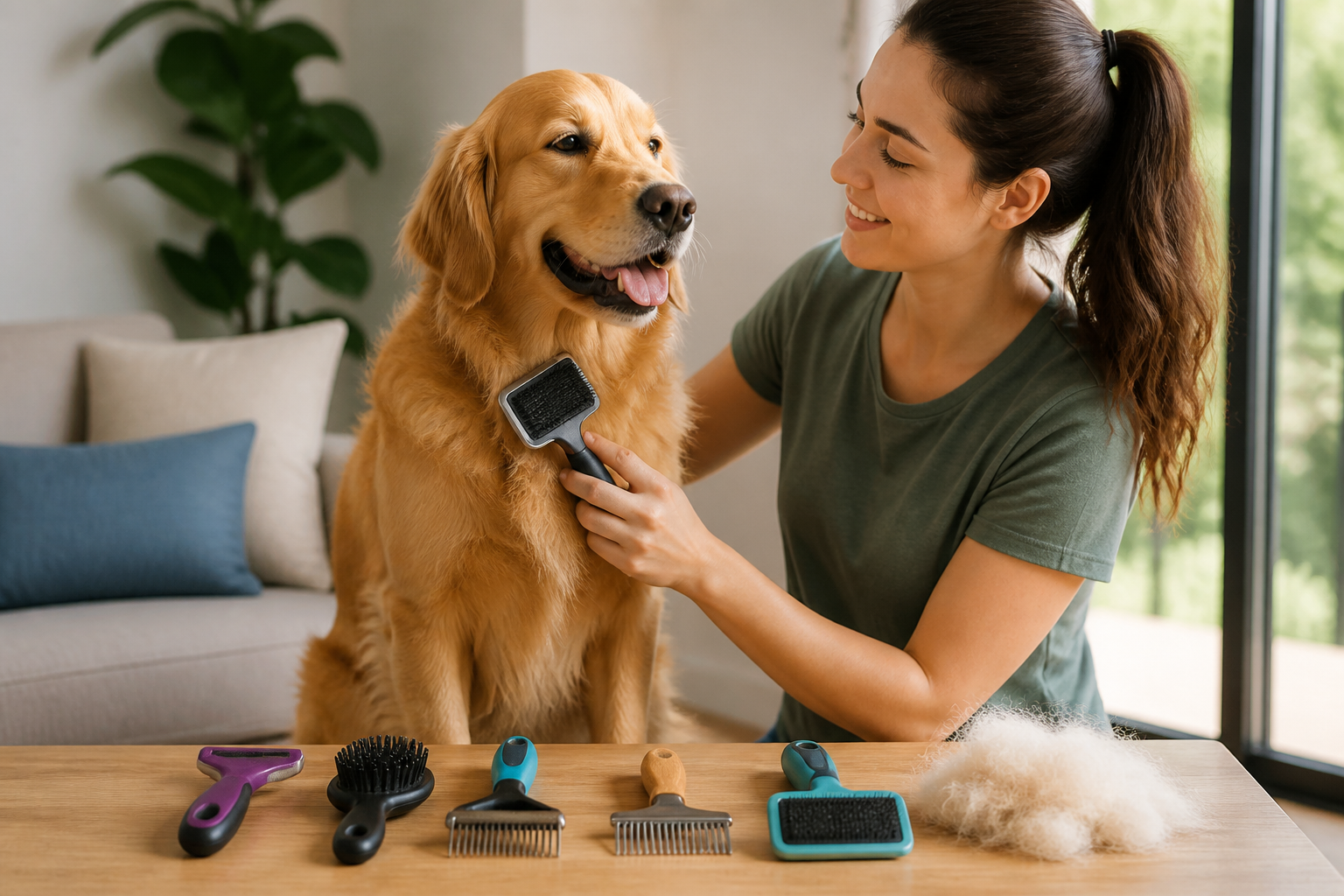
The slicker brush is perhaps the most common tool in any grooming kit. It features a flat or slightly curved head covered in tiny, fine wire pins. These pins are usually angled to help catch loose hair and pull through minor tangles.
Who Should Use It?
If you have a medium to long-haired dog or a dog with curly fur, a slicker brush is essential. It is excellent for Golden Retrievers, Cocker Spaniels, and St. Bernards. It works by grabbing the dead hair that is stuck in the coat and pulling it free. A Master Grooming Tools Self-Cleaning Slicker Brush can also make it easier to remove collected fur from the brush itself.
How to Use It Safely
Because the pins are made of wire, you must use a light touch. Pressing too hard can cause "slicker burn," which is a form of skin irritation. Always brush in the direction of hair growth. If you encounter a mat, do not yank. Instead, use short, gentle strokes to pick the knot apart.
- Step 1: Start at the ends of the hair and work your way toward the skin.
- Step 2: Use a "pat and pull" motion rather than a long, sweeping stroke.
- Step 3: Check the brush frequently and remove the collected fur.
Bristle Brushes for Shine and Smoothness
Bristle brushes are the traditional choice for dogs with short hair. They consist of clusters of natural or synthetic bristles packed tightly together. These brushes do not reach deep into thick coats. Instead, they work on the surface.
Benefits for Short-Haired Breeds
For dogs like Pugs or Greyhounds, a bristle brush is often the only tool you need. The bristles stimulate the skin, which encourages the production of natural oils. As you brush, you spread these oils across the hair, creating a natural shine. It also helps remove dander and loose surface hair before it ends up on your clothes.
Choosing the Right Bristle
- Soft bristles: Best for puppies or dogs with very thin hair and sensitive skin.
- Medium bristles: Great for most short-haired breeds with standard coat density.
- Firm bristles: Needed for wire-haired dogs like Terriers to help smooth the coarse topcoat.
Bottom line: Use a bristle brush as a finishing tool for long coats or as a primary grooming tool for short, smooth-coated breeds.
Undercoat Rakes for Heavy Shedders
When shedding season arrives for a double-coated dog, a standard brush is not enough. You need an undercoat rake. This tool looks like a small gardening rake with long, widely spaced metal teeth. These teeth are designed to bypass the guard hairs and reach the dense undercoat. You can compare options in our dog brushes and combs collection.
Why the Rake is Essential
Breeds like Huskies and Malamutes have a "blow-out" twice a year where they lose vast amounts of undercoat. If this dead hair stays trapped, it can cause the dog to overheat or lead to skin infections. An undercoat rake pulls out the dead fur without damaging the healthy topcoat. For additional seasonal shedding guidance, read our guide to Australian Shepherd shedding.
Safety and Skin Health
While using a rake, be mindful of the dog's bony areas, such as the hips and spine. The long teeth can be uncomfortable if they hit the bone directly. If you notice your dog has red patches, flaky skin, or signs of fleas while you are grooming, it is time for a closer look.
Vet Tip: Regular grooming is the best time to check for skin issues. If you find fleas, hot spots, or unusual lumps, consult your veterinarian. Our pharmacy carries FDA-approved flea and tick preventives through our partnership with Pet's Choice to help keep your pet's skin healthy and clear.
Pin Brushes: Gentle Finishing
A pin brush looks very similar to a human hairbrush. It has a wooden or plastic base with straight metal pins. These pins often have rounded tips or rubber caps to protect the skin.
Best Uses for Pin Brushes
Pin brushes are the preferred choice for dogs with long, silky hair that is already mostly free of mats. They provide a gentle touch that won't break the hair. They are also great for "fluffing" a coat after a bath. If you have an Afghan Hound or a Silky Terrier, this is your go-to finishing tool.
When to Skip the Pin Brush
Do not rely on a pin brush to remove heavy mats or thick undercoat. The pins are too far apart to catch the fine hairs of an undercoat. If you try to use it on a matted Poodle, the pins will simply glide over the top of the knots rather than resolving them.
Rubber Brushes and Curry Combs
Rubber brushes are often overlooked, but they are incredibly useful for specific situations. These tools are usually made of soft, flexible rubber with short nubs instead of pins.
The Ideal Bath Time Tool
Rubber brushes are perfect for use in the bathtub. When the coat is wet and soapy, you can use the rubber nubs to massage the shampoo down to the skin. This helps loosen dead hair that is ready to shed. The BASS Bathing Dog Brush is designed for wet or dry use.
Gentle for Sensitive Dogs
If you have a dog that is terrified of metal brushes, a rubber curry comb is a great way to introduce them to grooming. It feels like a massage and is impossible to scratch the skin with. It is highly effective for short-haired dogs like Beagles and Pit Bulls.
- Massage effect: Increases circulation to the skin.
- Wet/Dry use: Equally effective during a bath or a quick dry session.
- Easy cleaning: Simply rinse with water.
Specialized Tools for Difficult Jobs
Sometimes a standard brush isn't enough for the task at hand. You may need specialty tools for specific problems like fleas or severe matting.
Flea Combs
A flea comb has extremely fine teeth that are set very close together. It is designed to trap fleas, their eggs, and flea dirt (feces). Even if you use a monthly preventive, having a flea comb on hand is useful for checking your dog after a hike in the woods.
De-matting Rakes
These are different from undercoat rakes. De-matting tools have sharp, serrated blades. They are designed to cut through a solid mat of fur that cannot be brushed out. These must be used with extreme caution. If a mat is too close to the skin, it is often safer to have a professional groomer or a vet shave it rather than risking a cut with a de-matting tool.
Grooming Mitts
For dogs that hate the sight of a brush, a grooming mitt is a clever solution. It is a glove with rubber nubs on the palm. Your dog thinks they are just getting a long petting session, while you are actually collecting shed hair.
How to Build a Complete Grooming Kit
Most pet owners need more than one tool. A single brush rarely handles every stage of grooming. Here is a basic checklist for a well-rounded kit:
- A primary brush: Based on coat type (Slicker for long, Bristle for short).
- A comb: A metal "Greyhound" comb with fine and wide teeth for checking your work.
- A shedding tool: An undercoat rake or rubber brush depending on the coat.
- A health tool: A flea comb and ear cleaning supplies.
- Maintenance supplies: Scissors for trimming paw hair and nail clippers.
At BaxterBoo, we offer a wide range of grooming supplies from trusted brands like Jackson Galaxy and BASS Brushes. Having the right tools on hand makes it much easier to keep up with a routine.
Tips for a Stress-Free Grooming Session
Many dogs view the brush as an enemy. To make the process easier, you should start slow and use plenty of positive reinforcement.
Start Young
If you have a puppy, start brushing them immediately. Even if they don't have much hair yet, getting them used to the sensation of the tool is vital. Keep sessions short, perhaps only two or three minutes, and follow up with a high-value treat.
Create a Routine
Dogs thrive on predictability. Try to brush your dog at the same time and in the same place. This helps them understand that grooming is a normal part of their day, not a surprise event.
Watch for Signs of Stress
If your dog is panting heavily, trying to hide, or growling, stop the session. Forcing a dog through grooming can lead to a lifelong fear. If your pet is consistently anxious about grooming, you might consider calming supplements. We carry options like Zesty Paws and Honest Paws that can help take the edge off during grooming time.
Key Takeaway: Patience and the correct tool are the two most important factors in successful home grooming. Never rush the process, and always reward your dog for their cooperation.
Maintaining Your Brushes
A dirty brush is less effective and can harbor bacteria. You should clean your brushes after every use. Remove the hair by hand or use a comb to lift it out of the pins. Once a month, wash your metal and plastic brushes with warm water and a mild soap. Ensure they are completely dry before storing them to prevent the metal pins from rusting.
Conclusion
Finding the right dog brush is a simple step that makes a huge difference in your pet's comfort. By matching the tool to your dog’s coat type, you reduce shedding, prevent painful mats, and keep their skin healthy. Remember to choose a slicker brush for curls and long hair, a rake for double coats, and a bristle brush for smooth coats.
Regular grooming sessions are also the perfect time to monitor your pet's overall health. If you notice any issues with their skin or coat that require a professional touch, remember that our pharmacy offers prescription solutions through Pet's Choice. We have been helping pet owners care for their animals since 2006, and we are here to support you with the best gear and guidance.
Key Takeaway: The right grooming tools protect your dog's skin and keep your home cleaner. Match the tool to the coat and make grooming a rewarding routine for both you and your pet.
For more specialized grooming gear or to stock up on treats for your next session, visit our dog grooming category.
FAQ
How often should I brush my dog?
For most dogs, once or twice a week is enough to keep the coat healthy. However, if you have a high-shedding breed or a dog with long, silky hair, you may need to brush them every day. Consistent brushing prevents mats from forming and keeps shed hair off your furniture.
What is the difference between a pin brush and a slicker brush?
A slicker brush has many fine, angled wire pins that are close together, making it ideal for removing mats and loose undercoat. A pin brush has straight pins that are spaced further apart, which is better for gentle finishing and fluffing long hair without causing breakage.
Can I use a human hairbrush on my dog?
It is not recommended to use human brushes on dogs. Dog brushes are designed to handle the specific textures of fur, which are often much denser than human hair. Human brushes may not be strong enough to reach the skin or may cause static and breakage in a dog’s coat.
How do I know if I am brushing too hard?
Always check your dog's skin during and after a grooming session. If you see redness, scratches, or if your dog flinches when the brush touches them, you are likely applying too much pressure. Use a lighter hand and ensure the pins of your brush are in good condition without sharp, broken tips.






