
 Save 15% on your 1st Autoship learn more

 Email us
 Live Chat
 FAQs





Introduction
You are petting your cat and notice small white flakes scattered across their glossy fur. It often happens right along the base of the tail or down the middle of the back. While it looks like a simple dusting of flour, this is actually cat dandruff. It is a common issue that many pet owners face. At BaxterBoo, we know that these tiny flakes are often more than just a grooming nuisance. They can be a window into your cat’s overall health and comfort. This post covers the common causes of feline skin flakes and provides practical steps to restore your cat's skin health. We will look at everything from dietary changes to grooming habits. Our goal is to help you understand what helps cat dandruff so your feline friend can feel their best again.
Understanding Feline Skin Flakes
It is important to start by defining what you are seeing. All cats shed skin cells as a natural part of their biology. However, there is a big difference between normal shedding and dandruff.
Dandruff vs. Dander
Many people use these terms interchangeably, but they are not the same thing. Dander consists of microscopic skin cells. You cannot see dander with the naked eye. Every cat has dander, and it is a normal part of their skin renewal process. Dandruff consists of larger, visible flakes of dead skin. These flakes clump together and become trapped in the fur. If you can see white specks on your cat, you are dealing with dandruff.
Identifying Flea Dirt
Sometimes, owners mistake other debris for dandruff. If you see black specks that look like ground pepper, that is not dandruff. This is often flea dirt, which is actually flea waste. You can test this by placing the black specks on a wet white paper towel. If they turn red, it is flea dirt. While dandruff is white or gray, flea dirt is dark. Both indicate that your cat’s skin needs attention.
Quick Answer: Cat dandruff is most often helped by increasing hydration through wet food, regular brushing to distribute natural oils, and adding Omega-3 fatty acids to the diet. For persistent cases, a veterinary exam is necessary to rule out parasites or underlying health conditions.
Cat Skin & Coat Care













Why Your Cat Has Dandruff
Before you can fix the problem, you have to know why it is happening. Feline skin is a sensitive organ. It reacts quickly to changes in the environment or the body.
Environmental Dryness
During the winter, many homes have very low humidity. Central heating systems strip moisture from the air. This causes a cat’s skin to dry out and flake. This is one of the most common causes of seasonal dandruff. If your cat only has flakes when the heater is running, the environment is likely the culprit.
Obesity and Grooming Access
Cats are famous for their grooming habits. They spend a large portion of their day cleaning themselves. However, if a cat is overweight, they cannot reach every part of their body. The lower back and the base of the tail are common "blind spots" for heavier cats. When a cat cannot reach these areas, dead skin cells and natural oils build up. This leads to heavy flaking and even matting.
Senior Health and Mobility
As cats age, they may develop arthritis or joint stiffness. This makes the twisting and turning required for grooming very painful. If a senior cat suddenly develops dandruff, it might be because they have stopped grooming. This is not laziness. It is often a sign of physical discomfort.
Vet Tip: If your senior cat has stopped grooming and developed dandruff, consult your veterinarian about joint support. They may recommend supplements or medications to help your cat move more comfortably, which will allow them to resume their self-care routine.
Nutrition and Hydration
What goes into your cat’s body shows up on their skin. Feline skin requires specific nutrients to stay elastic and hydrated.
The Role of Moisture
Cats have a low thirst drive. In the wild, they get most of their water from their prey. Many indoor cats live on a diet of strictly dry kibble. This can lead to chronic, mild dehydration. Dehydrated skin loses its barrier function and begins to flake.
You can help by introducing more moisture into their day. Adding wet food from brands like Tiki Cat or Fussie Cat can make a huge difference. Explore our cat food selection for moisture-rich options. If your cat refuses wet food, try adding a splash of water or plain bone broth to their dry kibble.
Essential Fatty Acids
Skin cells need fats to stay healthy. Specifically, Omega-3 and Omega-6 fatty acids are vital. These healthy fats help maintain the skin’s moisture barrier. If a cat's diet is too low in fat, their skin will become dry and brittle.
At BaxterBoo, we carry a variety of supplements that provide these essential oils. Brands like Zesty Paws or Honest Paws offer salmon oil or flaxseed supplements designed for cats. These are easy to pump directly onto their food. Over time, these oils help the skin stay supple and reduce the production of flakes.
High-Quality Proteins
The skin and coat use up a large portion of a cat's daily protein intake. If their food is full of fillers, the coat is often the first thing to suffer. Look for foods that list a specific animal protein, like chicken or salmon, as the first ingredient. Brands like The Honest Kitchen or Stella and Chewy’s focus on high-quality, whole-food ingredients that support overall coat health.
Key Takeaway: Proper hydration and a diet rich in Omega-3 fatty acids are the foundations of flake-free skin. Moving from a dry-only diet to a moisture-rich diet often resolves mild dandruff within a few weeks.
Practical Grooming Steps
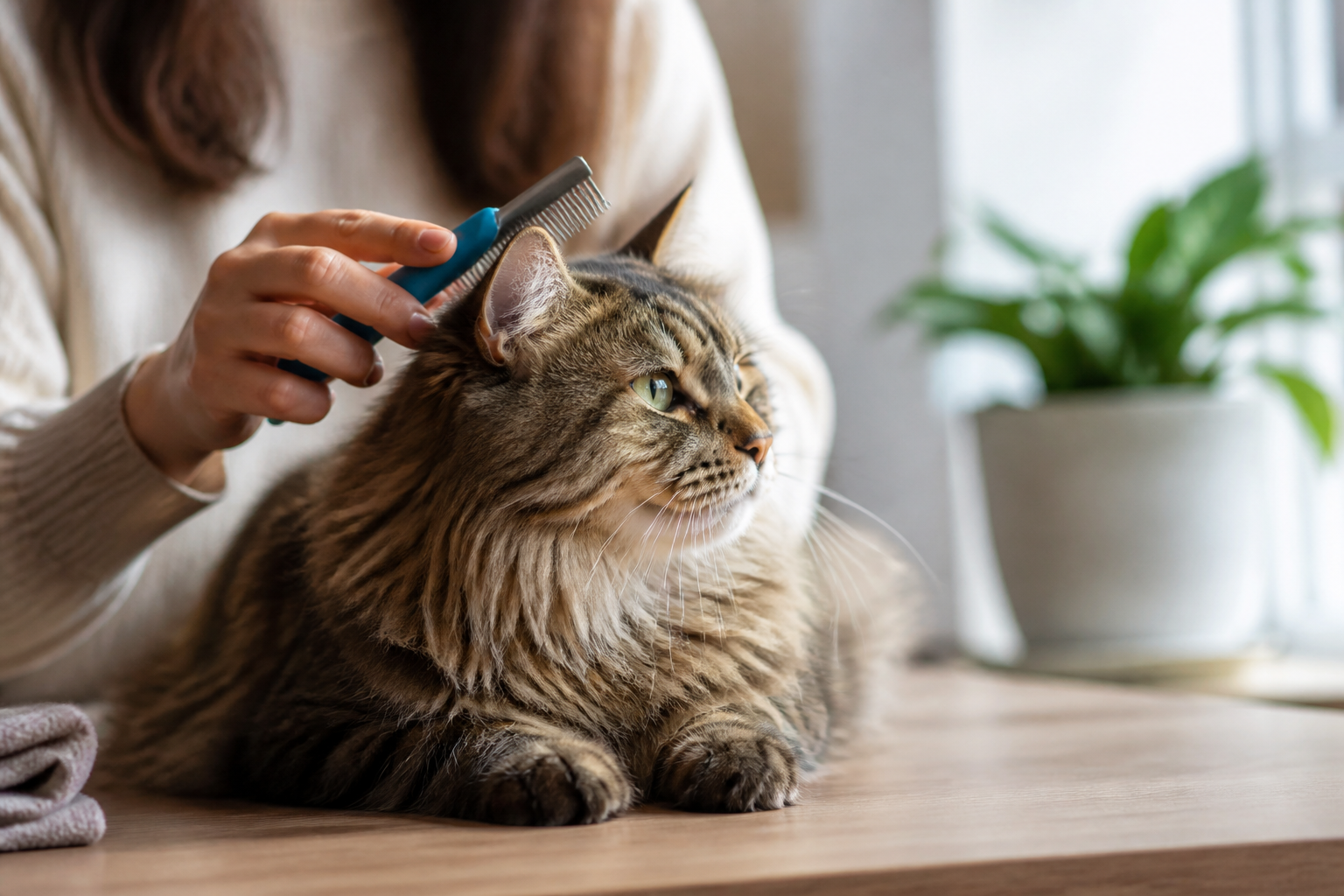
If your cat cannot manage their own grooming, you must step in. Regular grooming does more than just remove flakes. It stimulates blood flow to the skin and distributes natural oils. For additional grooming ideas, read about maintaining a healthy cat coat.
Choosing the Right Brush
Not all brushes are created equal. For dandruff, you want a tool that can reach through the fur to the skin without being abrasive.
- Slicker Brushes: These have fine wire bristles. They are great for removing loose hair and debris from the undercoat.
- Rubber Brushes: Tools like the Kong ZoomGroom are excellent for cats with sensitive skin. The rubber fingers massage the skin and pull away loose flakes.
- Soft Bristle Brushes: These are best for finishing. They smooth the top layer of fur and help spread the skin's natural oils.
How to Brush for Dandruff Relief
Don't just brush the surface. Use a gentle, systematic approach to help your cat's skin.
Step 1: Start at the head and move toward the tail. / Use gentle, short strokes to get your cat comfortable.
Step 2: Focus on the problem areas. / Spend extra time on the lower back and base of the tail where flakes congregate.
Step 3: Brush against the grain of the fur. / This lifts the hair and allows you to see the skin. It helps loosen flakes that are stuck near the roots.
Step 4: Finish by brushing in the direction of hair growth. / This lays the fur flat and distributes the oils you just loosened.
To Bathe or Not to Bathe?
Most cats do not need regular baths. In fact, bathing a cat too often can strip their skin of essential oils and make dandruff worse. However, if your cat is very greasy or has a massive buildup of flakes, a one-time bath with a soothing shampoo might help. Use a formula specifically for cats, like those from Earthbath or Burt's Bees. Never use human dandruff shampoo on a cat, as it can be toxic. You can also browse our cat care products for grooming and wellness items.
Bottom line: Daily brushing is the most effective way to manually remove dandruff and prevent new flakes from forming.
Health Conditions That Cause Flakes
Sometimes, dandruff is a symptom of a medical issue that needs professional help. If home remedies like brushing and diet changes do not work, it is time to look deeper.
Parasites and Mites
External parasites are a major cause of skin irritation. Fleas are the most common, but there is also a specific mite called Cheyletiella. This is often nicknamed "walking dandruff" because the mites are large enough to see. They look like white flakes that are moving. This condition is highly contagious and requires specific medication.
Allergies
Cats can have allergies just like humans. They might be allergic to something in their food or something in their environment, like dust or pollen. Allergic reactions in cats often manifest as skin problems. This includes redness, itching, and heavy dandruff.
Internal Health Issues
Chronic conditions can affect the skin's appearance. Diabetes and hyperthyroidism are two common feline diseases that often cause a dull, flaky coat. When the body is struggling with an internal imbalance, it stops prioritizing skin and fur health.
The BaxterBoo Pharmacy Connection
When a health condition is the root cause, you will need help from your veterinarian. They may prescribe medicated shampoos, allergy medications, or prescription diets. Our cat pharmacy offers prescription medications and veterinary products through our pharmacy services.
Whether your vet recommends a specific flea preventive like Frontline or NexGard, or a prescription diet from Farmina Vet Life, we can help fulfill those needs. Using a pharmacy you trust ensures you are getting genuine products that are safe for your pet.
Vet Tip: If your cat's dandruff is accompanied by hair loss, red sores, or excessive itching, skip the home remedies and head to the vet. These symptoms often indicate an infection or parasite that needs medical treatment.
Improving the Home Environment
A few small changes to your home can make your cat’s skin much more comfortable. These steps are especially helpful during the dry winter months.
Using a Humidifier
If you notice your own skin is dry or you are getting static shocks, the air is too dry for your cat. Placing a humidifier in the room where your cat spends the most time can help. Keeping the humidity level between 40 and 50 percent is ideal for both humans and felines.
Clean Bedding and Low-Dust Litter
Irritants in the home can make skin sensitivity worse. Wash your cat’s bedding regularly using a fragrance-free, hypoallergenic detergent. Additionally, consider the type of litter you use. Very dusty clay litters can settle on a cat's skin and cause dryness. Switching to a low-dust or natural litter might reduce skin irritation.
Stress Management
Believe it or not, stress can cause a cat to develop dandruff. When a cat is stressed, their body produces cortisol, which can affect skin health. Furthermore, stressed cats often over-groom or stop grooming entirely. If there have been big changes in your home, like a new pet or a move, focus on making your cat feel secure. Feliway diffusers or calming treats from brands like Zesty Paws can help lower their anxiety levels.
| Remedy Type | Action | Expected Result |
|---|---|---|
| Dietary | Add wet food and Omega-3s | Hydrates skin from the inside out |
| Grooming | Daily brushing with a rubber brush | Removes dead skin and spreads oils |
| Environmental | Run a humidifier in winter | Prevents skin from drying out due to heat |
| Medical | Prescription flea/tick or allergy meds | Treats the root cause of inflammation |
Managing Weight for Better Skin
Since obesity is a leading cause of dandruff, weight management is a powerful tool for skin health. If a cat is too heavy to reach their back, the dandruff will never truly go away until they lose weight.
Controlled Feeding
Avoid "free-feeding" where food is left out all day. Instead, use measured meals. This allows you to track exactly how many calories your cat is eating. Brands like Royal Canin or Farmina offer weight management formulas that help cats feel full while consuming fewer calories. Our cat food category includes options for different dietary needs.
Interactive Play
Increase your cat's activity level through play. Even ten minutes of chasing a feather wand or a laser can help burn extra calories. Increased movement also improves circulation, which is great for skin health. As your cat becomes more limber, they will be better able to handle their own grooming.
Key Takeaway: A cat that can reach their own back is a cat that can manage their own dandruff. Weight loss is a long-term solution for many chronic skin issues.
Summary of Relief Strategies
Dealing with cat dandruff requires a multi-pronged approach. You cannot simply brush the flakes away and expect them to stay gone if the air is dry and the diet is poor.
- Hydrate: Switch to wet food or add water to kibble.
- Supplement: Add fish oil to support the skin's moisture barrier.
- Brush: Commit to five minutes of brushing every day.
- Humidify: Add moisture to your home during the winter.
- Consult: Visit the vet if the skin looks red, sore, or if the flakes persist.
Feline skin is resilient, but it needs the right building blocks to stay healthy. By focusing on nutrition, grooming, and a comfortable environment, you can clear up those white flakes and get your cat's coat back to its soft, shiny self. If you find that you need specialized help, the BaxterBoo pharmacy and our wide selection of premium foods are here to support your cat's journey to better health.
Bottom line: Most cat dandruff is a sign of dry skin or poor grooming access, both of which are easily managed with the right home care routine and high-quality nutrition.
FAQ
Is cat dandruff the same as human dandruff?
No, they are different. While both involve shedding skin cells, the causes and biological processes differ between species. Human dandruff is often linked to a specific fungus, while cat dandruff is more frequently tied to hydration, grooming habits, or environmental factors. You should never use human dandruff shampoos on your cat as they contain ingredients that are toxic to felines.
Can I use coconut oil on my cat for dandruff?
While coconut oil is safe in small amounts, it is often better to give it as a food supplement rather than rubbing it on the fur. Applying oil directly to the coat can make the fur greasy and may cause your cat to over-groom the area. Giving a specific feline Omega-3 supplement is usually more effective for long-term skin health.
Why does my cat only have dandruff on their lower back?
This is usually due to a lack of reach. If a cat is overweight, has arthritis, or is simply getting older, they may struggle to twist around to groom their lower back and tail area. Because they cannot clean this spot, dead skin and oils build up, leading to concentrated dandruff in that specific area.
When should I worry about my cat’s dandruff?
You should schedule a vet visit if the dandruff is accompanied by other symptoms. Look for red or inflamed skin, bald patches, or sores. If your cat is scratching constantly or seems lethargic, the dandruff may be a sign of a larger health issue like parasites or an internal condition. A quick check-up can rule out these concerns.






- Site & Contents BaxterBoo.com. BaxterBoo is located in the United States.
- Privacy & Security
- Terms of Use
- Accessibility Statement
