
 Save 15% on your 1st Autoship learn more

 Email us
 Live Chat
 FAQs
FAQs





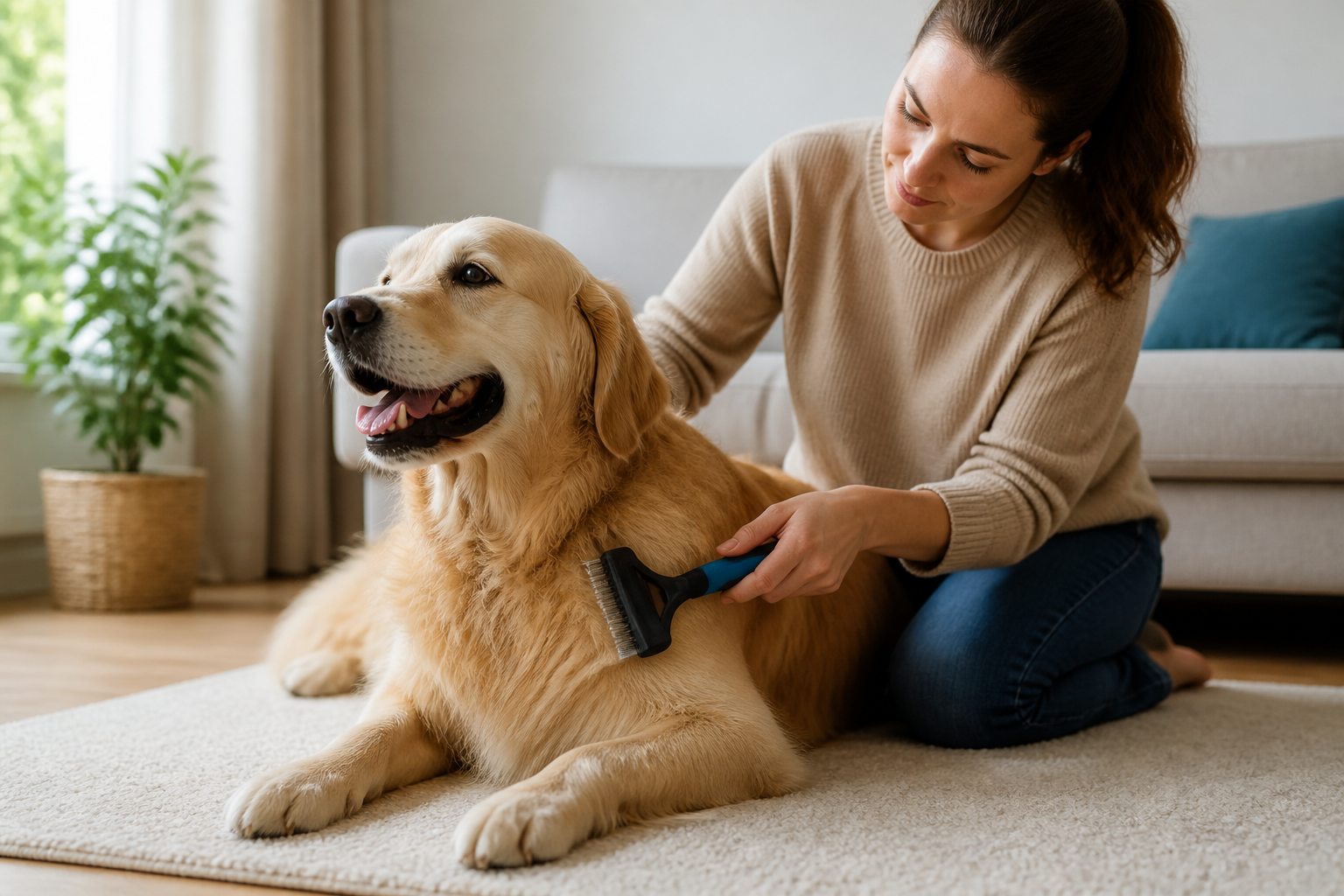
Introduction
If you have ever watched "tumbleweeds" of dog hair roll across your hardwood floors, you know the struggle of owning a double-coated breed. Standard brushes often just skim the surface, leaving the thick, shedding undercoat trapped against your dog’s skin. This is where a rake brush becomes the most important tool in your grooming kit. At BaxterBoo, we see many pet owners who are frustrated by constant shedding and stubborn mats that regular combs cannot reach. This post covers exactly what a rake brush is, how it differs from other grooming tools, and the best way to use it for a healthier coat. Understanding the mechanics of these tools helps you manage heavy shedding seasons without causing discomfort to your pet.
Defining the Dog Grooming Rake
A dog grooming rake is a specialized tool designed to reach past the top coat and into the thick underlayer of fur. Most rakes feature a T-shaped design that looks similar to a garden tool but on a much smaller, handheld scale. The handle is usually perpendicular to the head, which contains one or two rows of sturdy metal pins. These pins are designed to sink deeply into heavy, long, or dense coats to pull out dead hair and debris.
Unlike a slicker brush that uses fine, short wires to grab loose surface hair, a rake has longer teeth. These teeth are spaced out to allow the tool to pass through the top coat without getting stuck. This makes them the primary choice for "deshedding" because they target the source of the mess before the hair falls off onto your furniture. We carry several varieties in our dog grooming collection that cater to different coat depths and thicknesses.
Quick Answer: A rake brush is a grooming tool with long, widely spaced pins designed to penetrate thick double coats. It removes dead undercoat and loose fur that standard brushes cannot reach, helping to prevent mats and reduce household shedding.
The Two Main Types of Rakes
Not all rakes are built the same way. While the names are often used interchangeably in casual conversation, there are two distinct designs you will encounter. Choosing the right one depends on whether you are simply removing loose fur or trying to break through actual tangles.
Pin Rakes
Pin rakes usually have straight or slightly tapered metal teeth with rounded tips. These rounded ends are vital because they protect your dog’s skin from scratches as the tool moves through the fur. Pin rakes do not cut the hair. Instead, they work like a heavy-duty comb to pull out "dead" fur that has already detached from the follicle but is trapped in the coat. They are excellent for general maintenance on breeds like Golden Retrievers or Great Pyrenees.
Undercoat Rakes with Blades
These tools look similar but have curved, sharpened blades instead of round pins. The inner curve of the blade is sharp, while the outer edge is dull and rounded. These are designed to cut through mats and thin out a very dense undercoat. They are particularly helpful for "rustic" coats or dogs that develop thick clumps of fur behind the ears or along the flanks. Because these tools involve a cutting edge, they require more care during use to ensure you do not remove too much of the healthy top coat.
| Feature | Pin Rake | Bladed Undercoat Rake |
|---|---|---|
| Primary Goal | Remove loose, dead undercoat | Cut through mats and thin thick fur |
| Blade Type | Rounded metal pins | Curved, sharpened steel |
| Cutting Action | None; pulls loose hair only | Cuts through knots and tangles |
| Best For | Routine deshedding | Removing mats and heavy thinning |
Key Takeaway: Use a pin rake for regular weekly grooming to manage shedding. Save the bladed undercoat rake for times when your dog has developed stubborn mats or an overgrown, unruly undercoat.
Which Breeds Benefit Most from a Rake?
Rakes are not universal tools for every dog. If you have a short-haired breed like a Boxer or a Beagle, a rake will likely be too aggressive and could scrape their skin. These tools are specifically engineered for dogs with significant "bulk" to their fur.
Double-Coated Breeds
Dogs with a harsh outer coat and a soft, downy undercoat are the primary candidates. This includes:
- Siberian Huskies and Malamutes
- German Shepherds
- Akitas
- Labrador Retrievers (especially during seasonal sheds)
- Bernese Mountain Dogs
Long-Haired and Heavy-Coated Breeds
Dogs with long, flowing hair that is prone to matting also benefit from the deep reach of a rake. Breeds like Collies, Old English Sheepdogs, and Newfoundlands require a rake to ensure the skin can "breathe" through the heavy layers of fur. Without this deep grooming, the undercoat can become "impacted," leading to skin infections or overheating because the coat can no longer regulate temperature properly.
How to Use a Rake Brush Safely
Using a rake requires a different technique than a standard hairbrush. Because the pins are long and made of metal, you must be mindful of the pressure you apply. If you press too hard, you can cause "brush burn" or even nick the skin, especially in sensitive areas.
The Right Technique
Always move the rake in the direction of the hair growth. Start at the shoulders and work your way back toward the tail. Use long, smooth strokes. If you feel the rake catch on a knot, do not yank it. Instead, lift the tool and start again at the edge of the knot, slowly working it loose.
Handling Sensitive Areas
Be extra cautious when grooming near the hocks, armpits, and the area behind the ears. The skin in these spots is very thin and easily caught between the teeth of the rake. Many professional groomers suggest using your free hand to hold the skin taut while you rake. This creates a flat surface and prevents the rake from grabbing the skin.
Vet Tip: If you notice your dog has red, inflamed skin or "hot spots" beneath their thick fur, consult your veterinarian before continuing with a rake brush. Mats can sometimes hide underlying skin infections that require medical treatment or prescription salves from a professional pharmacy.
Step-by-Step Deshedding Routine
- Check for mats. / Before using a rake, run your hands through your dog's coat to find any large clumps or hard mats.
- Start with the wide side. / If you have a dual-sided rake, use the side with fewer teeth first to loosen the bulk of the hair.
- Use light pressure. / Hold the rake by the handle and let the weight of the tool do most of the work as you pull it through the coat.
- Clear the tool frequently. / A good rake will pull out a surprising amount of fur. Remove the hair from the pins often so the tool can continue to penetrate deeply.
- Finish with the fine side. / Use the side with more teeth to pick up the remaining loose "lint" and smooth out the coat.
Bottom line: A slow and steady approach with light pressure prevents skin irritation while maximizing the amount of dead fur you remove.
The Benefits of Regular Raking
Using a rake brush is about more than just keeping your house clean. It is a vital part of your dog's overall health and comfort. When a double coat is left unmaintained, the dead fur gets trapped. This prevents air from reaching the skin, which can lead to moisture buildup and bacterial growth.
Improved Temperature Regulation
Many owners believe that shaving a double-coated dog in the summer helps them stay cool. However, the undercoat actually acts as insulation against both heat and cold. By using a rake to remove only the dead, shedding fur, you allow the coat to function exactly as nature intended. This keeps your dog cooler in the summer than a matted coat or a shaved coat would.
Skin Health and Circulation
The massaging action of the rounded pins helps stimulate blood flow to the skin surface. This encourages the production of natural oils, which the rake then helps distribute along the hair shafts. This results in a shinier, healthier-looking coat and less dry, itchy skin for your pet.
Reducing Allergens
For families with mild pet allergies, regular raking can be a lifesaver. By capturing the dander and loose fur in a controlled grooming session, you prevent those allergens from floating through the air or settling into your carpets. For additional home cleanup, explore our hair removal and lint roller supplies.
Maintaining Your Grooming Tools
To keep your rake brush effective, you need to care for the tool itself. Most high-quality rakes, like those we stock at BaxterBoo, feature stainless steel pins. While these are rust-resistant, they are not rust-proof if left wet.
- Cleaning: After every session, remove all hair from the pins. You can use a small comb to flick out any stubborn fluff trapped at the base of the teeth.
- Washing: If the rake gets greasy or dirty, wash it with warm water and a mild dish soap. Dry it immediately with a soft towel.
- Inspection: Periodically check the pins to ensure they are still straight and the rounded tips are intact. If a pin becomes sharp or bent, it is time to replace the tool to avoid injuring your dog.
Troubleshooting Common Raking Issues
If you find that the rake is not pulling out much hair, it might be the wrong tool for the season. Some dogs "blow" their coats twice a year, while others shed steadily year-round. If the coat is currently in its growing phase, a pin rake will glide right through without grabbing much. For more seasonal shedding guidance, read how Australian Shepherds shed and how grooming can help.
Another common issue is a dog that becomes restless or fearful during grooming. Rakes can feel different than other brushes because they pull slightly as they remove the undercoat. If your dog is sensitive, keep sessions short. Offer high-value treats to create a positive association with the tool. We always recommend starting grooming routines early in a puppy's life to get them used to the sensation of deep undercoat work.
Key Takeaway: Consistency is more effective than intensity. Raking for ten minutes twice a week is better for the coat and your dog's patience than a single marathon session once a month.
Choosing the Right Handle and Grip
When you are working through a thick coat, your hand can get tired quickly. Look for a rake with an ergonomic handle. Many modern designs feature rubberized grips or thumb rests that prevent your hand from slipping. This is not just about your comfort; a secure grip ensures you do not lose control of the tool and accidentally poke your dog. The Master Grooming Tools Ergonomic Undercoat Rakes are designed with an ergonomic handle and steel teeth for reaching loose undercoat.
The width of the rake head also matters. A wide head is great for the broad areas of the back and sides of a large dog like a Saint Bernard. However, if you have a smaller double-coated breed like a Pomeranian or a Shetland Sheepdog, a narrower rake will be much easier to maneuver around their smaller frame and legs.
Signs You Should See a Groomer
While a rake brush allows you to do professional-level work at home, there are times when a pro is necessary. If your dog’s coat has become "pelted"—where the mats are tight against the skin across large areas—do not try to rake them out. Raking through a pelted coat is extremely painful and can tear the skin.
A professional groomer has specialized tools and techniques to safely remove severe matting. Once the coat is clear, you can go back to using your rake for weekly maintenance to prevent the mats from returning. Regular use of our grooming supplies helps keep those professional appointments focused on styling rather than emergency dematting.
Final Thoughts on Dog Rakes
A rake brush is the secret weapon for any owner of a fluffy, double-coated dog. By reaching deep into the fur to remove dead hair and debris, you stop shedding at the source and keep your pet's skin healthy. Whether you choose a simple pin rake for daily maintenance or a bladed undercoat rake for tougher jobs, the result is a more comfortable dog and a cleaner home.
To keep your grooming routine consistent:
- Identify if your dog has a double coat or a thick single coat.
- Select a rake with rounded pins for safety.
- Establish a weekly schedule to stay ahead of shedding seasons.
- Always follow up with a treat to reward your dog for their patience.
If you are managing a dog with skin sensitivities or chronic coat issues, our dog healthcare collection provides access to products that work alongside your grooming routine. You can find everything you need to keep your dog's coat in peak condition in our grooming and medical collections. To make regular grooming purchases more rewarding, explore the MVP Rewards programme.
FAQ
Can I use a rake brush on a short-haired dog?
It is generally not recommended to use a rake on short-haired breeds like Pugs or Boxers. The long metal pins are designed to pass through thick fur, and on a short-haired dog, they would likely scrape and irritate the skin. For those breeds, a rubber curry brush or a soft bristle brush is a much safer and more effective choice for removing loose hair.
Should I rake my dog's fur when it is wet or dry?
Standard pin rakes are best used on a completely dry coat, as wet hair can stretch and break more easily. However, some bladed undercoat rakes are effective when used during the bathing process to help pull out loose fur while the conditioner is still in the coat. If you are unsure, stick to dry grooming to avoid accidentally damaging the hair shafts or causing painful tugging.
How often should I use a rake brush on my dog?
For most double-coated breeds, using a rake once or twice a week is sufficient to keep shedding under control. During the heavy shedding seasons in the spring and fall, you may find it helpful to use the rake every other day. Always monitor your dog's skin for any signs of redness or irritation, and reduce the frequency if the skin looks sensitive.
Will a rake brush cut my dog's hair?
A standard pin rake with rounded teeth will not cut the hair; it only pulls out fur that has already shed from the follicle. However, an undercoat rake with sharpened, curved blades is designed to cut through mats and thin out the coat. If you want to avoid cutting the top coat, stick to a pin rake or use a bladed rake very sparingly only on specific tangled areas.






