
 Save 15% on your 1st Autoship learn more

 Email us
 Live Chat
 FAQs
FAQs





Introduction
You might have just returned from a long hike to find your dog’s coat filled with burrs and dried mud. Perhaps you are noticing small, tight clumps of fur forming behind your dog's ears that a standard comb cannot budge. These common grooming frustrations are exactly why the slicker brush was designed. At BaxterBoo, we believe that having the right tools makes the difference between a stressful grooming session and a productive bonding moment. This guide explains what a slicker brush is, how it functions, and which dogs benefit most from its unique design. We will also cover the proper technique to ensure your pet stays comfortable and mat-free. Understanding this essential tool is the first step toward maintaining a healthy, professional-looking coat at home.
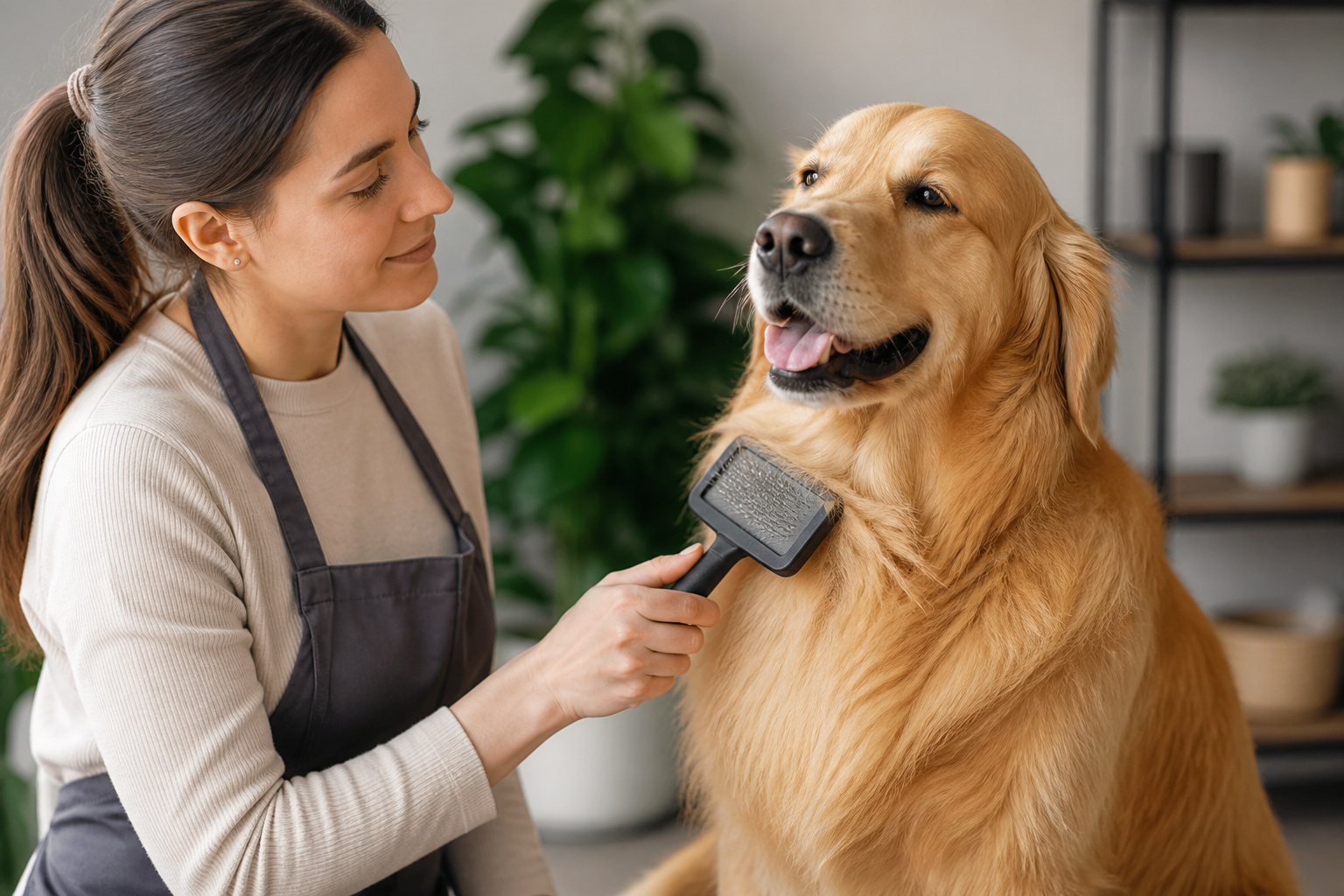
Quick Answer: A slicker brush is a grooming tool featuring a wide head populated with fine, short wire pins that are slightly angled. It is designed to penetrate thick fur to remove tangles, mats, and loose undercoat hair while smoothing the topcoat.
Anatomy of a Slicker Brush
A slicker brush is easily recognizable by its flat or slightly curved rectangular head. The surface is covered in hundreds of tiny wire pins. These pins are not straight. They have a slight bend or hook at the end. This angle allows the pins to grab onto loose hair and debris without poking the skin when used with the correct technique.
The base of the brush is often cushioned. This flexibility allows the pins to move with the contours of your dog's body. Some models feature a self-cleaning mechanism. With the press of a button, the base plates slide forward to push the collected hair off the pins. This makes the cleanup process much faster for owners with heavy-shedding breeds.
The handles are typically ergonomic and made from rubber or wood. Since grooming a large or thick-coated dog can take thirty minutes or more, a comfortable grip is vital. We have seen many owners struggle with hand fatigue when using poorly designed tools. A high-quality handle ensures you can maintain a light, controlled touch throughout the process.
Why Your Dog Needs a Slicker Brush
The primary job of a slicker brush is to manage the undercoat and remove tangles before they become severe. Unlike a bristle brush that mostly moves surface oils, the slicker brush reaches deep into the fur. This is essential for preventing painful mats. Mats occur when loose hair gets trapped in the coat and twists around live hairs. If left alone, these mats tighten and can eventually irritate the skin or restrict movement.
Slicker brushes are also exceptional at removing environmental debris. If your dog enjoys running through tall grass or woods, they likely bring home seeds, stickers, and dirt. The fine pins of a slicker brush hook onto these items and pull them out more effectively than a standard comb.
Key Takeaway: Regular use of a slicker brush prevents the formation of mats and keeps the coat free of debris that can cause skin irritation or infections.
Choosing the Right Slicker Brush for Your Dog
Not all slicker brushes are the same. The pins vary in length, thickness, and stiffness. Choosing the wrong one can lead to "brush burn," which is a form of skin irritation caused by the wires scraping the skin. You must match the brush to your dog's specific coat type. Browse our dog brushes and combs to compare grooming tools for different coats and grooming needs.
Soft vs. Firm Pins
Soft slicker brushes have very thin, flexible pins. These are ideal for dogs with thin coats, puppies with sensitive skin, or breeds with silky hair like Yorkies. Firm slicker brushes have thicker, more rigid wires. These are necessary for "power grooming" through dense, double coats or thick, curly fur. If you use a firm brush on a thin-coated dog, you risk scratching them. If you use a soft brush on a thick coat, the pins will simply bend and fail to reach the undercoat.
Pin Length
The length of the wire pins determines how deep the brush can go. If you have a dog with a massive coat, such as a Great Pyrenees or a Saint Bernard, you need long pins. Short pins will only groom the top layer, leaving the undercoat to mat against the skin. For shorter-haired breeds with double coats, like Labradors, shorter pins are more appropriate and easier to control.
Brush Head Size
A large brush head covers more surface area, which is great for the back and sides of a big dog. However, a large brush is difficult to use around the legs, armpits, and face. Many owners find it helpful to have two sizes. Use a large brush for the body and a small "mini" slicker for the sensitive, tight areas where mats often hide.
Which Coat Types Benefit Most?
While many dogs can use a slicker brush, it is a "must-have" tool for specific coat categories. If your dog falls into one of these groups, a slicker brush should be your primary grooming tool.
- Curly and Woolly Coats: Poodles, Goldendoodles, and Bichon Frises have hair that grows constantly. Their curls trap loose fur, leading to instant matting. A slicker brush fluff-dries these coats and keeps the curls from tangling.
- Double Coats: Breeds like German Shepherds, Huskies, and Golden Retrievers have a soft undercoat and a tougher topcoat. The slicker brush is perfect for "raking" out the dead undercoat during shedding season.
- Wire Coats: Terriers often have a rough, wiry outer layer. A slicker brush helps remove dead hair and maintains the texture of the coat.
- Long, Silky Coats: Afghan Hounds or Cocker Spaniels need the fine pins of a slicker brush to keep their long tresses separated and flowing.
For additional guidance on brushing curly coats, see our guide to grooming curly-haired dogs.
The Proper Slicker Brushing Technique
Using a slicker brush requires a specific motion. You should never use it like you would a human hairbrush. Dragging it across the skin in long, heavy strokes will cause discomfort. Instead, use the "pat and pull" method.
Step 1: Partition the hair. / Use your free hand to pull the hair up so you can see the skin. This ensures you are starting at the base of the coat.
Step 2: Pat the brush. / Gently place the pins into the fur near the skin. Do not press hard.
Step 3: Pull away. / Move the brush away from the skin in a short, flicking motion. The pins should catch the tangles and pull them outward.
Step 4: Overlap your strokes. / Work in small sections, moving systematically across the dog's body. This ensures you do not miss any hidden spots.
Vet Tip: Always check your dog's skin for redness or scratches after grooming. If you see signs of irritation, you may be pressing too hard or using pins that are too firm for your dog's skin sensitivity.
Managing Mats and Tangles
If you encounter a mat while using your slicker brush, do not try to pull through it with force. This will hurt your dog and make them fear grooming. Instead, hold the base of the mat with your fingers to prevent pulling on the skin. Use the corner of the slicker brush to pick at the edges of the mat.
Slowly work the hairs loose from the outside in. If the mat is too tight, you may need to apply a detangling spray. Never use scissors to cut out a mat close to the skin. Dog skin is very thin and can easily be caught in the blades. If a mat is too close to the skin to safely remove, it is time to visit a professional groomer. For additional tools, explore our selection of dematting and detangling products.
Training Your Dog to Love the Brush
Many dogs are wary of grooming tools, especially if they have had a painful experience with a mat in the past. It is important to build a positive association with the slicker brush. Start when your pet is a puppy if possible.
Begin by letting your dog sniff the brush while giving them high-value treats. We carry several types of healthy treats at BaxterBoo that are perfect for reward-based training. Touch the back of the brush to their side without using the pins. Once they are relaxed, try one or two gentle strokes on a non-sensitive area like the shoulder.
Keep the first few sessions very short. Five minutes is plenty. Always end on a positive note with a treat or a game. Over time, your dog will learn that the slicker brush means they get extra attention and rewards. You can find suitable rewards in our dog treats collection.
Health Inspections During Brushing
Grooming is about more than just looking good. It is the best time to perform a "wellness check" on your dog. As you move the slicker brush through the fur, you are essentially scanning their entire body. Use this time to look for abnormalities.
- Lumps and Bumps: Feel for new growths under the skin.
- Parasites: Look for fleas, flea dirt, or ticks that may be hiding in the undercoat.
- Skin Condition: Check for dry, flaky skin, hot spots, or redness.
- Ear and Paw Health: Inspect for grass seeds or debris caught in the paw pads or ears.
Our pharmacy offers a wide range of FDA-approved flea and tick preventives and skin treatments through our partnership with Pet's Choice. If you notice signs of pests or skin irritation during your grooming session, you can find the necessary medications through our dog flea and tick pharmacy with a valid prescription from your veterinarian.
Bottom line: A slicker brush is a multi-functional tool that manages shedding, prevents mats, and allows for regular health monitoring.
Common Mistakes to Avoid
Even experienced owners can make mistakes with a slicker brush. The most common error is "brush burn." This happens when the owner brushes the same spot repeatedly with too much pressure. To avoid this, always keep the brush moving and check the skin frequently.
Another mistake is only brushing the topcoat. If you only glide the brush over the surface, the fur underneath will continue to mat. You must get the pins down into the hair, near the skin, to be effective. Finally, avoid using a slicker brush on wet hair unless you are blow-drying at the same time. Wet hair is more prone to breaking and tangles are harder to remove when saturated.
Cleaning and Maintaining Your Brush
To keep your slicker brush working effectively, you must clean it after every use. Hair left in the pins will prevent them from reaching deep into the coat the next time you groom. If you have a standard brush, use a comb to pull the hair out of the pins.
Wash the brush occasionally with mild soap and warm water to remove skin oils and dander. Ensure it dries completely, pins facing down, to prevent any wooden handles from warping or metal pins from corroding. A well-maintained brush can last for years.
Comparing Slicker Brushes to Other Tools
It is helpful to understand how the slicker brush differs from other items in your grooming kit. A pin brush looks similar but has longer, straight pins with rounded tips. Pin brushes are better for general fluffing of long hair but are not as good at removing mats as a slicker.
A bristle brush is best for short-haired dogs like Boxers or Beagles. It does not penetrate deep fur but is excellent for removing surface dust and spreading natural oils for a shiny finish. Undercoat rakes are heavy-duty tools specifically for "blowing the coat" in double-coated breeds. While a slicker brush can handle some shedding, a rake is more efficient for the heaviest shedding seasons.
For a different approach to removing loose hair and dander, consider the KONG Zoom Groom Natural Rubber Dog Grooming Brush.
| Brush Type | Best For | Main Purpose |
|---|---|---|
| Slicker Brush | Medium to long, curly, or double coats | Removing mats, tangles, and loose undercoat |
| Pin Brush | Long, silky coats | Finishing and fluffing without breakage |
| Bristle Brush | Short-haired breeds | Removing surface debris and adding shine |
| Undercoat Rake | Thick, double-coated breeds | Removing large amounts of dead undercoat |
Conclusion
The slicker brush is one of the most versatile and essential tools for any dog owner with a medium-to-long-haired pet. By removing dead hair and preventing mats, you are not just keeping your dog pretty. You are protecting their skin and ensuring they stay comfortable. Remember to choose the correct pin firmness for your dog's coat and use the gentle "pat and pull" technique to avoid skin irritation. Regular grooming sessions are also the perfect time to check for health issues or parasites. At BaxterBoo, we are committed to providing the gear you need to keep your pet healthy and happy. For all your grooming needs, from brushes to specialized skin care, we invite you to explore our full dog grooming collection.
FAQ
How often should I use a slicker brush on my dog?
For most dogs with medium or long hair, we recommend using a slicker brush at least two to three times a week. Dogs with curly coats or those prone to heavy matting may require daily brushing to keep the coat manageable. Regular sessions prevent small tangles from turning into large, painful mats that require professional clipping.
Can a slicker brush hurt my dog's skin?
Yes, if used incorrectly, the wire pins can cause "brush burn," which is a painful scraping of the skin. To prevent this, always use a light touch and avoid pressing the pins directly into the skin with force. Use the "pat and pull" motion and check the skin frequently for any signs of redness or irritation.
Is a slicker brush good for short-haired dogs?
A slicker brush is generally not the best choice for very short-haired breeds like Greyhounds or Pugs. The pins are designed to reach through layers of fur, and on a short-haired dog, they may simply scratch the skin. For these breeds, a rubber grooming mitt or a soft bristle brush is usually more effective and comfortable.
What is the difference between a soft and firm slicker brush?
The difference lies in the thickness and flexibility of the wire pins. Soft slicker brushes have very fine, highly flexible pins suitable for thin coats or sensitive skin. Firm slicker brushes have thicker, stiffer pins designed to penetrate dense undercoats or coarse, curly fur that a soft brush cannot effectively detangle.






