
 Save 15% on your 1st Autoship learn more

 Email us
 Live Chat
 FAQs
FAQs





Introduction
You are sitting on the rug with your dog after a long afternoon at the park. As you run your hand along their side, your fingers catch on a thick, hard clump of fur near the skin. You try to smooth it out with a standard comb, but the knot will not budge. This is the exact moment when a slicker brush becomes the most important tool in your kit. At BaxterBoo, we understand that choosing the right grooming gear can feel overwhelming with so many options on the shelf. A slicker brush is a specific type of tool designed to handle those stubborn tangles and deep debris that other brushes miss. This guide explains the purpose of the slicker brush, how it helps maintain your dog's skin health, and the best way to use it without causing discomfort. We want to help you turn a stressful grooming chore into a simple part of your routine.
Quick Answer: A slicker brush is used to remove mats, tangles, and loose hair from dogs with medium to long or curly coats. Its fine wire pins reach through the topcoat to pull out trapped debris and thinning undercoat fur before they form painful knots.
Understanding the Design of a Slicker Brush
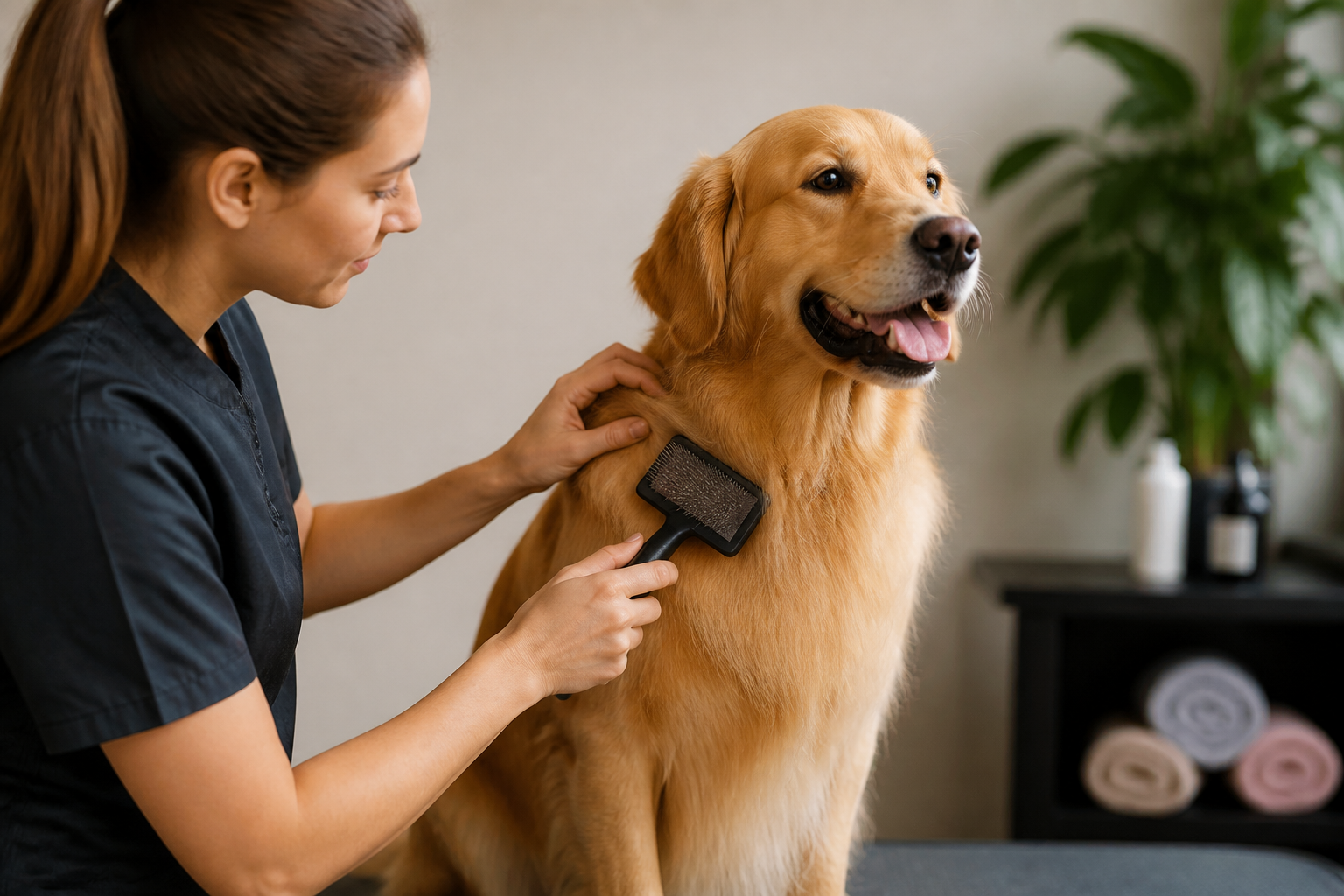
A slicker brush is easy to recognize because of its unique head. It usually has a rectangular or slightly curved shape. The surface of the brush is covered in hundreds of fine wire pins. These pins are often angled or slightly bent. This design allows the brush to hook into loose hair and pull it away from the body.
The pins are set into a flexible, cushioned base. This cushion acts as a shock absorber. When you apply pressure, the base gives way so the pins do not scratch the skin. You will find these brushes in various sizes. Small ones work best for the legs and face. Large ones help you cover more ground on a big dog's back and sides.
Some versions have protective tips on the ends of the pins. These are often called ball-tip slickers. They are generally softer and better for dogs with sensitive skin or puppies who are just getting used to being groomed. Professional-grade slicker brushes may have bare wire tips. These are more effective at breaking up tough mats but require a very gentle hand to avoid "slicker burn" or skin irritation.
The Primary Uses of a Slicker Brush
The most common reason to reach for a slicker brush is to tackle mats and tangles. Mats are not just an aesthetic issue. They pull on the skin and can cause significant pain for your pet. If left alone, they can trap moisture and lead to skin infections. You can compare different options in our dog brushes and combs collection.
Removing Difficult Mats
The bent pins of a slicker brush are perfect for breaking up a knot. Instead of pulling the whole knot out at once, the brush catches small sections of the hair. This allows the mat to separate slowly. We recommend using a pat and pull motion. You pat the brush into the mat and then gently pull it away from the skin.
De-Shedding and Undercoat Care
If you have a double-coated dog like a Golden Retriever or a Husky, the slicker brush is your best friend. These dogs have a soft undercoat that sheds constantly. If that loose hair stays trapped under the topcoat, it creates a "packed" coat. This prevents air from reaching the skin. The slicker brush reaches deep to pull that dead hair out. This keeps your dog cooler in the summer and reduces the amount of fur on your furniture. For more ideas about managing seasonal shedding, read our guide to whether Australian Shepherds shed.
Clearing Debris
Dogs that spend time outdoors often bring the woods home with them. Burrs, seeds, and dried mud get stuck deep in long fur. A slicker brush is incredibly efficient at grabbing these items. Because the pins are so close together, they act like a fine-toothed rake to clear the coat.
Key Takeaway: The slicker brush is a multi-purpose tool that excels at removing knots, managing heavy shedding, and clearing out outdoor debris before it causes skin problems.
Identifying Which Dogs Benefit Most
Not every dog needs a slicker brush. If you have a short-haired breed like a Boxer or a Beagle, this brush might be too harsh. The pins could scratch their skin because there is no thick fur to act as a buffer. However, for many other breeds, it is a daily necessity.
- Curly Coated Breeds: Poodles and Doodles have hair that grows constantly. It does not shed out like other breeds. Instead, the loose hair gets caught in the curls. A slicker brush keeps these curls from turning into a solid sheet of felt.
- Long Haired Breeds: Dogs like Shih Tzus or Maltese have silky hair that tangles easily. Daily use of a soft slicker brush keeps their coat flowing and free of snags.
- Wire-Haired Breeds: Many Terriers have a coarse, wiry topcoat. The slicker brush helps remove the dead "blown" coat and keeps the texture of the fur correct.
- Double-Coated Breeds: Collies, Newfoundlands, and Shepherds have dense fur that requires deep penetration to keep the skin healthy.
When we look at the 500+ brands we carry, we look for tools that match these specific coat needs. It is important to match the firmness of the brush to the density of your dog's fur. A firm slicker is great for a thick-coated Akita. A soft slicker is better for a fine-haired Yorkie.
Promoting Skin Health and Circulation
Beyond just making your dog look good, the slicker brush plays a role in their physical wellness. Each time you brush, the pins provide a light massage to the skin. This action helps move blood to the surface. Better circulation can lead to a healthier, shinier coat over time.
Brushing also helps distribute natural oils. Dogs produce sebum, which is a natural oil that protects the skin and hair. In long-haired dogs, these oils often get stuck at the roots. The slicker brush helps pull those oils down the length of the hair shaft. This provides a natural shine and helps keep the hair strong.
Vet Tip: If your dog has deep mats that are tight against the skin, do not try to pull them out with a slicker brush. This can cause skin tears or extreme pain. Consult a professional groomer or your veterinarian. For any skin irritation or infections caused by mats, our pet pharmacy offers treatments that may be prescribed by your veterinarian.
How to Use a Slicker Brush Correctly
Using this tool requires a bit more technique than a standard human hairbrush. Because the pins are sharp, you must be mindful of your pressure. Follow these steps to ensure a safe and effective grooming session.
Step 1: Section the hair.
Work on one small area at a time. This is especially important for dogs with very thick fur. Start at the bottom of the leg or the rear of the dog and move upward.
Step 2: Use the pat and pull method.
Instead of long, sweeping strokes, use short motions. Pat the brush into the fur. Then pull it out and away. This prevents the pins from dragging across the skin repeatedly in the same spot.
Step 3: Check the skin frequently.
Every few minutes, part the hair to look at the skin. It should look pink or white. If it looks bright red or irritated, you are using too much pressure or staying in one spot too long.
Step 4: Use a detangling spray.
If you find a tough spot, do not force the brush through it. Spray the area with a conditioning or detangling spray. This lubricates the hair and allows the pins to slide through more easily.
Step 5: Reward your pet.
Grooming should be a positive experience. Give your dog treats throughout the process. This helps them stay still and look forward to the next session.
Bottom line: Proper technique involves working in small sections and using a gentle pat and pull motion to avoid skin irritation.
Comparing the Slicker Brush to Other Tools
Many pet owners wonder if they can just use one brush for everything. While a slicker brush is versatile, it works best when paired with other tools. Understanding the differences helps you build a better grooming routine.
| Brush Type | Best For | Main Benefit |
|---|---|---|
| Slicker Brush | Medium to long coats | Removing mats and undercoat |
| Pin Brush | Silky, long coats | Finishing and smoothing |
| Bristle Brush | Short, smooth coats | Adding shine and removing surface dust |
| Undercoat Rake | Thick double coats | Pulling out large amounts of seasonal shed |
| Rubber Curry | Short-haired dogs | Massaging skin and removing loose hair |
A pin brush has longer, straighter pins with rounded ends. It is much gentler than a slicker brush but is not very good at removing mats. Most owners use the slicker brush first to get the knots out. Then they follow up with a pin brush or a comb to make the coat look smooth and polished. For a specific product option, consider the U-Groom Slicker Brush for Dogs and Cats.
Managing Matting and Skin Issues
If your dog has not been brushed in a while, you might find that the matting has become severe. Tight mats can hide many problems. They can mask the presence of fleas, ticks, or hot spots. When a mat is very close to the skin, it restricts airflow. This creates a warm, damp environment where bacteria can thrive.
In some cases, removing a mat reveals a skin infection or a wound that needs medical attention. This is where our pharmacy services become a vital resource. We provide access to prescription medications for skin conditions and allergies. If you notice your dog is constantly scratching or has red, weepy skin after you remove a mat, a visit to the vet is necessary. You can then fulfill any needed prescriptions through us with the convenience of home delivery.
We have been operating since 2006, and we have seen how regular grooming prevents these health crises. Staying on top of the tangles with a quality slicker brush is the best way to avoid a trip to the vet for skin issues.
Training Your Dog to Accept Brushing
Some dogs are very sensitive about their paws, tail, or ears being touched. If you introduce a slicker brush too quickly, they might become fearful. It is important to move slowly, especially with puppies. If your dog has a lot of anxiety during grooming, explore our dog anxiety and calming collection for additional options.
Start by letting the dog sniff the brush while it is on the floor. Give them a treat just for being near it. Next, touch the flat back of the brush to their side without using the pins. Once they are comfortable with that, try one or two very light strokes on a fleshy area like the shoulder.
Avoid sensitive areas like the face, belly, and "armpits" until the dog is completely relaxed. These areas have thinner skin and are more prone to irritation.
Cleaning and Caring for Your Slicker Brush
A dirty brush will not work as well and can actually redeposit dirt back onto your dog. You should clear the hair out of the pins after every use. Many modern slicker brushes have a "self-cleaning" feature. This is a button that pushes a plastic plate forward, stripping the hair off the pins instantly.
If your brush does not have this feature, you can use a fine-toothed comb to rake the hair out. Once a month, you should give the brush a deeper clean.
- Remove all visible hair.
- Mix a small amount of pet-safe shampoo with warm water.
- Use an old toothbrush to gently scrub the pins and the base.
- Rinse the brush with the pins facing down to prevent water from getting trapped inside the cushion.
- Pat it dry and let it air dry completely before using it again.
If you notice the wire pins are bent out of shape, broken, or missing, it is time to replace the brush. Damaged pins can scratch the skin or pull hair painfully.
The Role of Professional Tools in Home Care
While professional groomers have expensive high-velocity dryers and specialty tables, the brushes they use are often the same types available to you. We curate our selection to include professional-grade tools that are easy for owners to handle.
Using a high-quality slicker brush makes the job significantly faster. Cheaper brushes often have pins that are too sharp or bases that are too stiff. This makes the dog uncomfortable and makes you want to skip grooming. Investing in a good tool means you will likely groom more often. This leads to a happier pet and a cleaner home.
Our MVP Rewards program is a great way to save on these essential tools. You can earn up to 5% back on your grooming supplies and food. This makes it easier to keep a variety of brushes on hand for different seasons or different parts of your dog's body.
Summary of Best Practices
Maintaining your dog's coat is about more than just looks. It is an essential part of their health and comfort. A slicker brush is the most effective tool for preventing the painful mats that lead to skin problems.
- Choose a brush size and firmness that matches your dog's coat type.
- Work in small sections starting from the bottom of the dog.
- Use a gentle pat and pull motion to protect the skin.
- Check the skin regularly for redness or irritation.
- Clean your tools often to ensure they remain effective.
Our team at BaxterBoo is committed to providing you with the knowledge and tools you need to care for your pets. Whether you are dealing with a new puppy's first tangles or managing a senior dog's thick winter coat, the right slicker brush makes all the difference. Remember to check out our pet pharmacy for any skin care needs and consider setting up our Autoship programme for your grooming sprays to save on every order.
Bottom line: A slicker brush is the primary defense against mats and skin irritation for dogs with medium to long coats, provided it is used with the correct technique and regular maintenance.
FAQ
Can I use a slicker brush on a short-haired dog?
It is generally not recommended for very short-haired breeds like Pugs or Boxers. The wire pins can be too harsh for their thin coats and may scratch the skin. A rubber curry brush or a soft bristle brush is usually a better choice for smoothing short hair and removing surface dust.
How often should I use a slicker brush on my dog?
For dogs with long or curly hair, daily brushing is ideal to prevent small tangles from turning into large mats. For dogs with thick double coats, brushing two to three times a week is usually enough to manage shedding. During the heavy shedding seasons of spring and fall, you may need to use it every day to keep up with the loose fur.
Does a slicker brush hurt the dog's skin?
If used correctly with a gentle touch, a slicker brush should be comfortable and even relaxing for your dog. However, if you apply too much pressure or stay in one spot for too long, the wire pins can cause "slicker burn." Always part the hair to check for skin redness and use a pat and pull motion rather than a heavy scrubbing motion.
What is the difference between a pin brush and a slicker brush?
A slicker brush has hundreds of fine, bent wire pins set close together, making it ideal for grabbing loose undercoat and breaking up mats. A pin brush has longer, straighter pins that are spaced further apart and usually have rounded tips. Pin brushes are better for finishing a coat and adding a smooth look, but they are not strong enough to remove serious tangles or heavy shedding.






