
 Save 15% on your 1st Autoship learn more

 Email us
 Live Chat
 FAQs
FAQs





Introduction
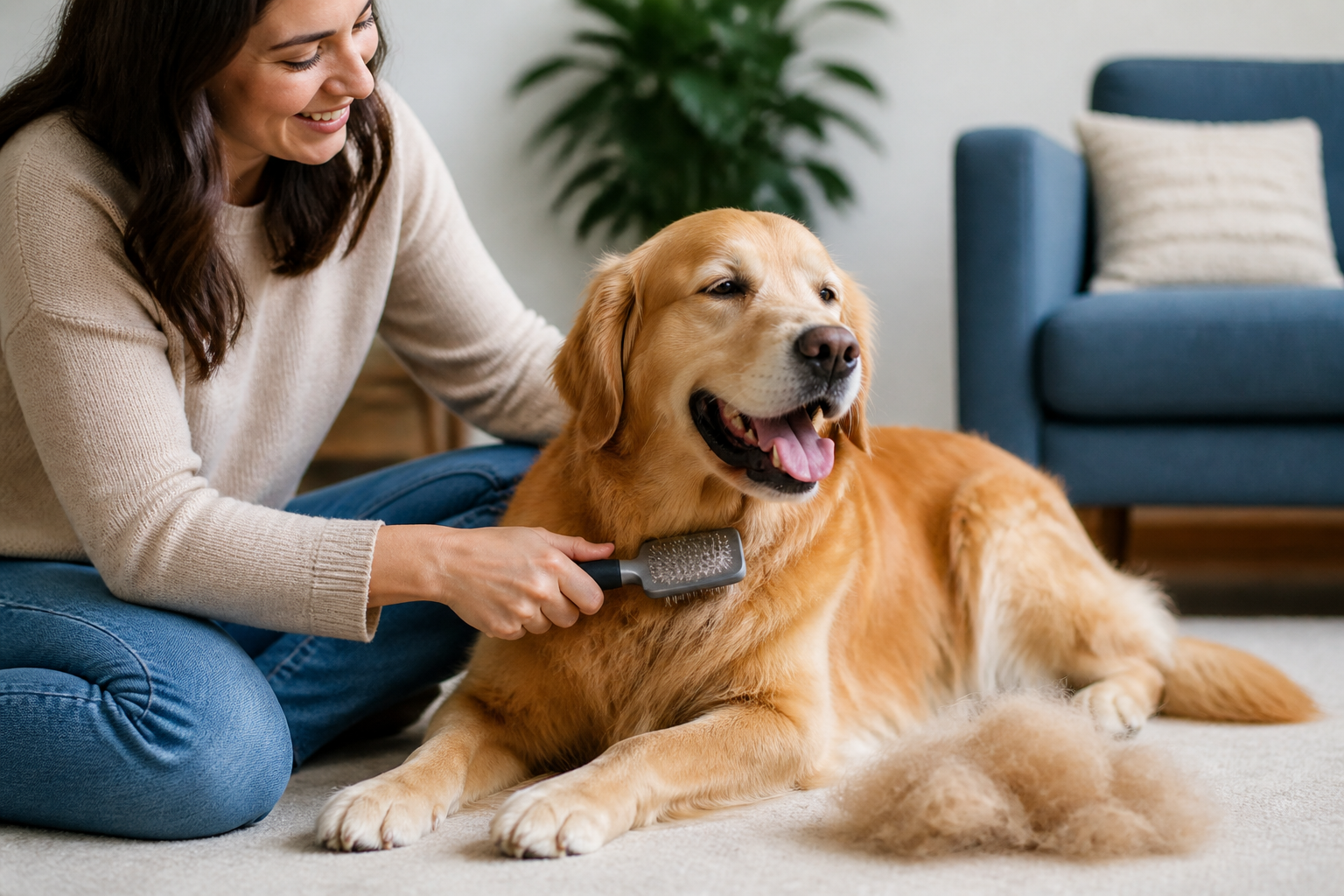
You finally finish vacuuming the living room only to spot a fresh "tumbleweed" of fur drifting across the hardwood five minutes later. If you live with a heavy shedder, you know the struggle of finding hair in your coffee, on your clothes, and woven into your rugs. Managing this mess starts with the right tool. At BaxterBoo, we have spent years helping pet parents navigate the overwhelming world of grooming gear. The best brush is not a one-size-fits-all solution. It depends entirely on your dog's coat type and the season. This guide will break down which tools actually work for different breeds and how to use them safely. Our goal is to help you spend less time cleaning your floors and more time bonding with your dog.
Quick Answer: The best brush depends on the coat. Use a de-shedding tool like the Furminator for thick undercoats, a slicker brush for long or curly hair, and a rubber curry comb for short-haired breeds.
Understanding Your Dog's Coat Type
Before you grab a brush, you must know what you are trying to remove. Most shedding comes from the undercoat. This is the soft, fuzzy layer of hair that regulates a dog's temperature. When the weather changes, this hair releases, which is why your dog seems to "blow" their coat twice a year.
Dogs with a single coat, like Greyhounds or Poodles, do not have this fuzzy undercoat. Their shedding is much lighter and more like human hair. Dogs with a double coat, like Labs, Huskies, and Shepherds, have a dense underlayer that requires specialized tools. If you use a surface brush on a double-coated dog, you will never reach the hair that is actually falling out.
Smooth and Short Coats
Short-haired dogs like Boxers, Beagles, and Dalmatians shed frequently, but the hairs are stiff and short. These dogs do not get mats. Instead, they drop thousands of tiny needles that stick to fabric. A heavy metal rake is too much for these dogs. You need a tool that grips the hair at the surface level.
Double Coats
Breeds like Golden Retrievers, Newfoundlands, and Great Pyrenees have a "topcoat" of guard hairs and a thick "undercoat." When the undercoat sheds, it often gets trapped under the topcoat. This creates heat and can lead to painful mats. You need a tool that can reach deep without scratching the skin.
Wire and Curly Coats
Wire-haired terriers have a rough texture that needs regular "stripping" or thinning. Curly coats, like Poodles or Doodles, do not shed in the traditional sense. The loose hair gets caught in the curls. If you do not brush it out, it forms a solid felted mat against the skin.
The Top Tools for Heavy Shedding
We carry over 500 brands, and we have seen which tools stand the test of time. Here is a breakdown of the categories that actually make a difference in your home's hair levels. Explore our dog grooming collection for brushes, combs, and other coat-care supplies.
De-Shedding Tools
Tools like the Furminator are famous for a reason. They feature a stainless steel edge with tiny teeth that reach through the topcoat. This allows them to pull out loose undercoat hair before it falls off your dog. Many models now include a FURejector button. This allows you to clear the hair from the tool with one click. One available alternative is the Warren London Long Hair De-Shedding Pet Brush, which is designed for longer coats.
Undercoat Rakes
An undercoat rake looks like a tiny garden tool. It has long, widely spaced metal teeth. This is the best choice for dogs with very thick, "arctic" style coats like Samoyeds or Huskies. It glides through the guard hairs to pull out the dead fluff underneath.
Slicker Brushes
A slicker brush has a flat or curved head with rows of thin, wire pins. These pins are usually angled. They are excellent for removing tangles and surface shedding. We often recommend the Chris Christensen Big K or Big G slicker brushes for owners of Doodles or long-haired breeds. For another option, consider the Master Grooming Tools Ergonomic Slicker Dog and Cat Brush.
Rubber Curry Combs
The Kong ZoomGroom is a classic example of this tool. It is a rubber brush with thick, flexible nubs. As you move it in a circular motion, the rubber creates friction. This pulls out loose hair on short-coated dogs. It also massages the skin and stimulates natural oil production. The KONG Zoom Groom Natural Rubber Dog Grooming Brush can be used wet or dry.
Comparing the Best Brushes for Shedding
| Brush Type | Best For | Main Benefit | Use Case |
|---|---|---|---|
| De-Shedding Tool | Double coats, short hair | Removes deep undercoat | Use 1-2 times a week |
| Slicker Brush | Long hair, curly hair | Removes tangles and fluff | Daily maintenance |
| Undercoat Rake | Thick, heavy double coats | Reaches through dense fur | During "blowing" season |
| Rubber Curry | Short, smooth coats | Massages skin, lifts hair | During bath time |
| Pin Brush | Silky, single coats | Gentle daily brushing | Light shedding only |
Key Takeaway: Match the tool to the hair length and density. A tool that is too aggressive can cause "brush burn," while one that is too gentle will leave the undercoat trapped.
How to Brush for Maximum Hair Removal
Using the right brush is only half the battle. Your technique determines how much hair you actually capture. Most people brush too quickly or apply too much pressure.
Step 1: Inspect the skin. / Before you start, check for any lumps, bumps, or sores. If you find red, irritated skin, stop and consult your veterinarian.
Step 2: Start with a clean, dry dog. / Brushing a wet dog can cause the hair to stretch and break. It also makes de-shedding tools less effective. Wash your dog and make sure they are 100 percent dry before you begin.
Step 3: Follow the grain. / Always brush in the direction the hair grows. Moving against the grain can be uncomfortable and may pull the hair out painfully.
Step 4: Use long, gentle strokes. / Avoid short, scrubbing motions. Use a light hand. If the brush hits a snag, stop and work it out gently with your fingers or a wide-toothed comb.
Step 5: Focus on the "high-shed" areas. / Pay extra attention to the neck, "pants" (the back of the thighs), and the base of the tail. These areas tend to hold the most undercoat.
Vet Tip: If your dog is shedding excessively, losing hair in patches, or scratching constantly, it might be more than a seasonal change. These can be signs of allergies or skin infections. Our pet pharmacy carries treatments for skin conditions. Always consult your vet for a diagnosis before starting a medical routine.
Maintenance and Safety Tips
Brushes are an investment. If you take care of them, they will last for years. We have seen tools from 2006 that are still in use today because they were cleaned properly.
- Clean the teeth: Remove hair from the brush after every session. For slicker brushes, you can use a fine-tooth comb to pull hair out from the base of the pins.
- Disinfect: Periodically wipe down metal tools with rubbing alcohol. This prevents the buildup of bacteria and skin oils.
- Watch for wear: If the pins on a slicker brush become bent or sharp, replace the brush. Damaged pins can scratch your dog's skin.
- Check for rust: Always dry metal tools thoroughly if they get wet. Rust can cause skin irritation.
Bottom line: A clean brush is a safe brush. Maintenance prevents skin irritation and ensures the tool pulls hair efficiently.
Beyond Brushing: The Role of Nutrition and Care
A high-quality diet plays a massive role in how much your dog sheds. If a dog's skin is dry, the hair follicles become weak. This leads to more shedding than normal. Look for foods rich in Omega-3 and Omega-6 fatty acids. Brands like Farmina and The Honest Kitchen focus on high-quality ingredients that support skin health.
If your dog has a chronic skin condition, your vet might recommend a prescription diet. Our pharmacy handles these orders through pharmacy partners, making it easy to get the right nutrition delivered to your door. You can even set these up on our Autoship programme to ensure you never run out and to save on every order.
Supplements for Shedding
Adding a fish oil supplement can significantly reduce non-seasonal shedding. Zesty Paws and Honest Paws offer great options that can be added directly to your dog's food. These supplements help "lock" the hair into the follicle by keeping the skin hydrated.
- Omega-3 Fatty Acids: Reduces inflammation.
- Biotin: Supports coat strength.
- Vitamin E: Protects skin cells.
When to Seek Professional Help
Sometimes the shedding is more than you can handle at home. If your dog has severe mats that are tight against the skin, do not try to cut them out with scissors. It is very easy to accidentally cut a dog's thin skin. A professional groomer has the equipment to safely shave or thin out these areas.
You should also see a professional if your dog is highly anxious about grooming. We offer many calming aids in our Training and Behavior section, but a pro can often handle a nervous dog with specialized restraints and techniques.
Why Quality Matters
At BaxterBoo, we handpick every product we carry. We avoid flimsy, low-quality brushes that break or hurt your pet. When you invest in a professional-grade tool like a Chris Christensen brush or a Furminator, you are buying a tool that will work for the life of your dog.
Our customers often tell us that switching to a high-quality brush reduced their vacuuming time by half. By joining the MVP Rewards programme, you can earn points on these grooming essentials to use toward future purchases of food or treats.
Summary of the Best Brushes
Choosing the best brush is about matching the tool to the coat.
- Use a Furminator or de-shedding tool for double-coated breeds to remove the deep undercoat.
- Choose a slicker brush for long-haired or curly dogs to prevent mats and tangles.
- Pick up a rubber curry comb for short-haired dogs to lift surface hair and shine the coat.
- Invest in an undercoat rake for dogs with exceptionally thick, heavy fur.
If you are ready to tackle the hair in your home, browse our dog brushes and combs. Whether you need a simple comb or a professional de-shedding kit, we have the expert-vetted gear to help.
FAQ
How often should I use a de-shedding tool on my dog?
For most double-coated dogs, using a de-shedding tool once or twice a week is plenty. Over-using these tools can lead to skin irritation or "brush burn" if you apply too much pressure. During the peak shedding seasons in spring and fall, you might increase this frequency, but always monitor the skin for redness.
Can I use a de-shedding brush on a wet dog?
It is best to wait until your dog is completely dry before using a de-shedding tool or a slicker brush. Wet hair is more prone to stretching and breaking, which can be painful for your pet. Additionally, de-shedding tools like the Furminator are designed to grab dry, loose hair much more effectively than clumps of wet fur.
Will a de-shedding brush cut my dog's hair?
True de-shedding tools are designed to pull out loose, dead hair from the undercoat rather than cutting the healthy topcoat. However, if you use them with too much force or in short, rapid strokes, they can occasionally snap hair. Using long, gentle strokes in the direction of hair growth will prevent damage to the coat.
My dog sheds all year long. Is that normal?
While most dogs have "shedding seasons," many indoor dogs shed lightly all year due to artificial lighting and temperature control. However, if the shedding is excessive or accompanied by bald spots, you should consult your veterinarian. Our pet pharmacy provides prescription diets and medications that can help if the shedding is caused by an underlying health issue or allergy.






