
 Save 15% on your 1st Autoship learn more

 Email us
 Live Chat
 FAQs
FAQs





Introduction
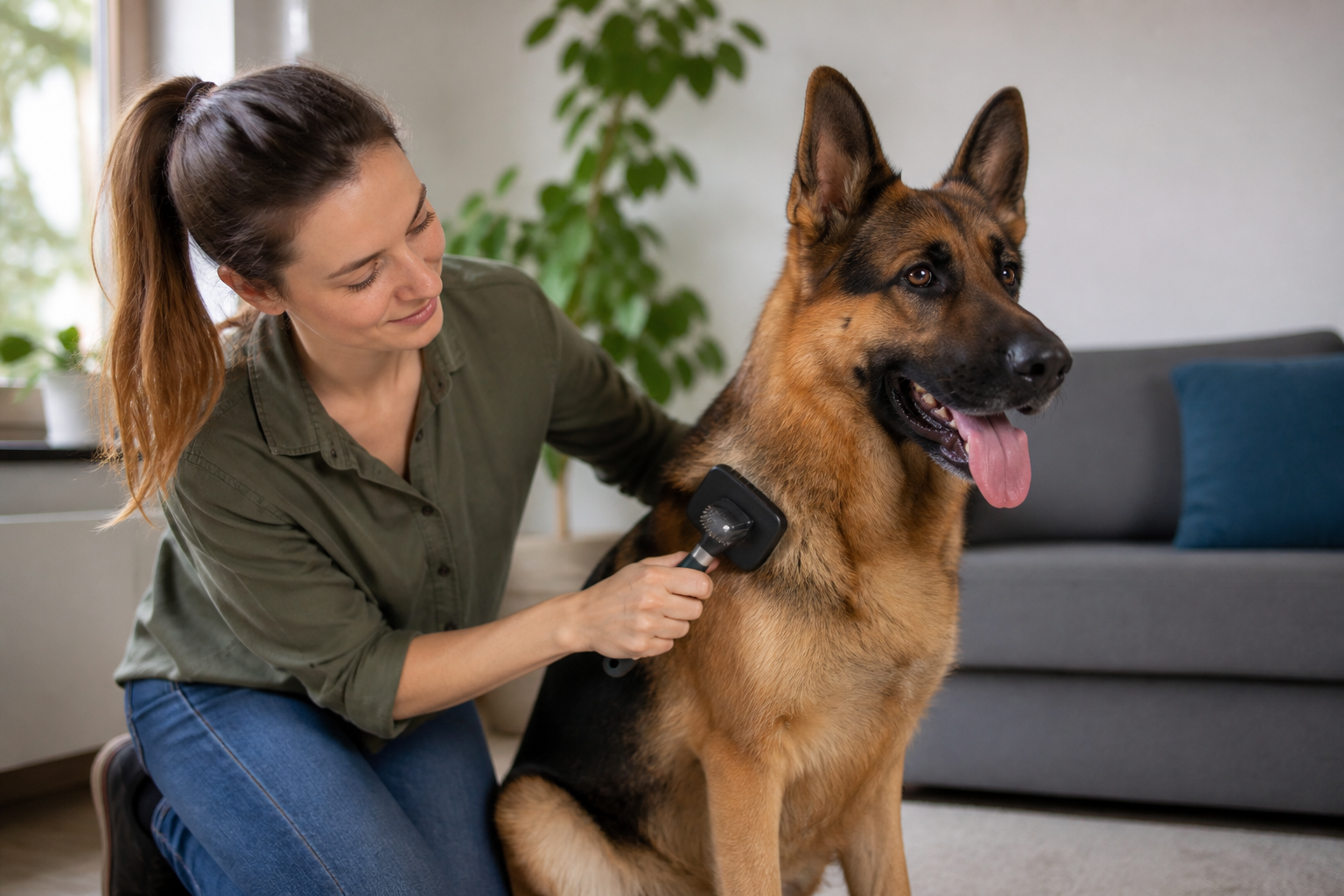
If you share your home with a German Shepherd, you are likely very familiar with the "tumbleweeds" of tan and black fur that drift across your hardwood floors. These loyal companions are famous for their intelligence and courage, but they are equally famous for their relentless shedding. Keeping that thick coat under control is a major part of life with this breed. At BaxterBoo, we know that the right tools make the difference between a house covered in hair and a well-groomed pet.
The German Shepherd has a unique double coat that requires specific types of brushes to maintain health and reduce the mess. Using a standard brush often barely scratches the surface. This guide covers the specific tools you need to reach the deep undercoat and keep the skin healthy. We will look at why certain brushes work better than others and how to build a routine that actually works for your dog.
The German Shepherd Double Coat
Understanding the anatomy of your dog's coat is the first step in choosing the right tool. German Shepherds are a double-coated breed. This means they have two distinct layers of fur that serve different purposes.
The Protective Topcoat
The outer layer is called the guard hair or topcoat. These hairs are usually coarser and longer. They are designed to repel water and protect the skin from dirt and debris. When you look at your dog, this is the layer you see. While it sheds, it is not the primary source of those massive piles of fur you find around the house.
The Insulating Undercoat
The undercoat is the real culprit behind the shedding. This layer is soft, dense, and fuzzy. It sits close to the skin to provide insulation. In the winter, it keeps the dog warm. In the summer, it helps regulate their temperature by trapping a layer of air.
Twice a year, German Shepherds "blow" their coats. This is a massive seasonal shed where the undercoat falls out in clumps to make room for a new layer suited for the upcoming season. During these times, a standard pin brush will not be enough. You need tools that can penetrate the topcoat to reach that loose undercoat before it ends up on your furniture.
Quick Answer: The best dog brush for a German Shepherd is a combination of an undercoat rake for deep de-shedding and a slicker brush for daily topcoat maintenance. During heavy shedding seasons, a specialized de-shedding tool like the Furminator is highly effective for removing the dead undercoat.
The Undercoat Rake: The Heavy Hitter
The undercoat rake is perhaps the most important tool for any German Shepherd owner. Unlike a standard brush, a rake has long, sturdy metal tines. These tines are designed to slide through the topcoat without cutting it. They reach deep down into the undercoat to pull out loose, dead hair.
When you use a rake, you will notice it catches the fuzzy undercoat that other brushes miss. It is especially useful for the thick fur around the neck and the "trousers" on the back of the legs. Using this tool once or twice a week can drastically reduce the amount of hair in your home. You can compare different options in our dog brushes and combs collection.
Why It Works
The spacing of the teeth on a rake is key. If the teeth are too close together, they will pull and tug on the healthy hair. If they are too far apart, they won't catch the loose fur. A good rake for a German Shepherd has a single or double row of metal pins that are often rounded at the tips. This prevents the tool from scratching the sensitive skin beneath the coat.
Choosing a Rake
Look for a rake with an ergonomic handle. Since German Shepherds are large dogs, grooming can take 15 to 20 minutes. A comfortable grip will prevent hand fatigue. Some rakes also have rotating pins. These are excellent because they move with the contours of the dog's body and reduce the chance of pulling on tangles.
For dogs with stubborn knots beneath the coat, an undercoat dematting rake can be a practical addition to your grooming kit.
Key Takeaway: An undercoat rake is the only tool that can effectively reach the bottom layer of a German Shepherd's coat to remove dead fur before it sheds.
The Slicker Brush: For Daily Maintenance
While the rake does the heavy lifting, the slicker brush is your best friend for daily upkeep. A slicker brush has a flat or slightly curved head with rows of thin, wire bristles. These bristles are often angled to help grab loose hair and debris from the topcoat.
Daily Debris and Tangles
German Shepherds love to explore. They often come back from walks with burrs, dried mud, or grass stuck in their fur. A slicker brush is perfect for flicking these away. It also helps to smooth out the topcoat and give it a polished look. A Master Grooming Tools ergonomic slicker brush is designed for detangling and undercoat removal.
Because the bristles are fine, they are great at catching the very thin hairs that the rake might miss. We recommend using a slicker brush every other day to keep the coat looking neat and to prevent small mats from forming in areas where the fur is thinner, like behind the ears.
Managing Sensitivity
Some German Shepherds can be sensitive to the feel of wire bristles. Always choose a slicker brush with protective tips on the wires if your dog has sensitive skin. Start with very light pressure. The goal is to glide over the topcoat, not to scrub the skin.
The De-Shedding Tool: For Seasonal Blowouts
When the seasons change, you might feel like you are losing the battle against the fur. This is when a dedicated de-shedding tool becomes necessary. Brands like Furminator make tools specifically designed for long-haired, double-coated dogs.
How De-Shedding Tools Differ
These tools feature a fine-toothed metal blade that reaches through the topcoat. They are incredibly efficient at grabbing the dead undercoat. During a "coat blow," you might find yourself filling several grocery bags with fur in a single session.
A long-hair option such as the Warren London Long Hair De-Shedding Pet Brush is made for dogs with hair longer than one inch.
Use with Caution
Because these tools are so effective, it is easy to overdo it. You should only use a de-shedding tool about once a week, even during heavy shedding. Using it too frequently or with too much pressure can damage the guard hairs of the topcoat.
Vet Tip: Never shave a German Shepherd. Their double coat is vital for temperature regulation in both heat and cold. Shaving can lead to skin issues and permanent damage to the coat's texture. Use de-shedding tools instead to manage the volume of fur safely.
Rubber Grooming Brushes: For Bath Time and Massage
Rubber brushes, like the Kong Zoom Groom, are another great addition to your kit. These do not have metal teeth or wires. Instead, they have soft rubber nubs. While they are not the best for deep de-shedding, they serve a specific and useful purpose. For more options, explore our dog grooming supplies.
The Power of Massage
The rubber nubs massage the skin, which stimulates blood flow and the production of natural oils. This helps keep the coat shiny. Many dogs find the sensation very relaxing, making it a great way to end a grooming session.
Bath Time Success
A rubber brush is the best tool to use during a bath. It helps work the shampoo deep into the thick coat to ensure a thorough clean. As you scrub, the rubber nubs grab onto loose hairs, allowing you to wash the shedding fur down the drain rather than finding it on your carpet later. A BASS bathing dog brush is one option designed for use during bathing.
How to Brush Your German Shepherd Correctly
Having the best brush is only half the battle. You also need the right technique to ensure you are removing as much fur as possible without hurting your dog.
Step 1: Inspect for mats and skin issues.
Before you start brushing, run your hands over your dog. Look for any matted fur, especially around the neck, ears, and back legs. Check for any bumps, red spots, or ticks that might need attention.
Step 2: Start with the undercoat rake.
Use long, gentle strokes in the direction of the hair growth. Work in sections, starting from the neck and moving toward the tail. Do not forget the chest and the thick fur on the thighs.
Step 3: Use the slicker brush for the topcoat.
After you have addressed the undercoat, go over the entire dog with the slicker brush. This will pick up the loose hairs the rake brought to the surface. It also smooths the coat and removes any surface dirt.
Step 4: Use a de-shedding tool, if needed.
If it is shedding season, use your de-shedding tool on the heaviest areas. Be careful around the spine and hips where the bone is close to the skin.
Step 5: Finish with a reward.
Grooming should be a positive experience. Always give your German Shepherd a treat or praise when you finish. This makes them more likely to stand still the next time.
Bottom line: A consistent routine using multiple tools is the most effective way to manage German Shepherd shedding.
Diet, Skin Health, and the Pharmacy Connection
The quality of your dog's coat starts from the inside. If your German Shepherd has dry, flaky skin or a dull coat, it might be more than just a grooming issue. Proper nutrition is essential for maintaining the skin barrier and minimizing excessive shedding caused by poor health.
The Role of Nutrition
High quality proteins and healthy fats, like Omega-3 and Omega-6 fatty acids, are the building blocks of a healthy coat. If your dog is constantly itchy or losing more hair than usual, they may have underlying allergies. Some dogs require specialized diets to manage these conditions. You can browse our dog skin and coat care selection for products related to this area.
Medical and Mobility Needs
German Shepherds are also prone to joint issues as they age. When a dog is in pain from hip or joint stiffness, they may stop grooming themselves effectively. They might also find it difficult to stand for long grooming sessions.
Our pharmacy carries a wide range of FDA-approved medications and prescription pet foods through our partnership with Pet's Choice. If your veterinarian recommends a prescription diet for skin allergies or a specific medication for joint support, you can fulfill those needs through our pet pharmacy. Taking care of their internal health often makes the external grooming process much easier.
Brushes and Mistakes to Avoid
Not all brushes are safe or effective for this breed. Using the wrong tool can cause pain or damage the coat.
- Human hair brushes: These are not strong enough to get through the topcoat and will do nothing for the undercoat.
- Fine-toothed combs: These often pull too hard on the thick fur and can cause "comb burn" on the skin.
- Stiff bristle brushes: While okay for short-haired dogs, they won't reach the undercoat of a GSD.
- Skipping the undercoat: Only brushing the topcoat leaves dead fur trapped against the skin, which can lead to painful mats and hot spots.
If your dog has already developed severe matting, do not try to pull the mats out with a brush. This is painful and can tear the skin. Instead, use a dedicated de-matting tool or consult a professional groomer.
Conclusion
Managing a German Shepherd's coat is a commitment, but the right tools make it manageable. By using an undercoat rake for the deep layers and a slicker brush for daily maintenance, you can keep shedding to a minimum. Remember to keep grooming sessions positive and monitor your dog's skin and coat health closely.
If you notice persistent skin issues or if your dog seems uncomfortable during grooming, a visit to the vet is a good idea. You can find all the grooming supplies, supplements, and prescription items you need at BaxterBoo. Consider signing up for our Autoship program to save on the high-quality food and treats that keep your dog's coat shining from the inside out.
FAQ
How often should I brush my German Shepherd?
For most of the year, you should aim to brush your German Shepherd at least three times a week. This keeps the topcoat clean and manages moderate shedding. During the spring and fall shedding seasons, you may need to brush them daily to keep up with the amount of fur they are losing.
Why is my German Shepherd shedding so much in clumps?
This is likely a sign that your dog is "blowing their coat," which happens twice a year as they transition between their summer and winter undercoats. The old undercoat falls out in large, fuzzy clumps. Regular use of an undercoat rake and a de-shedding tool will help remove these clumps safely and quickly.
Can I use a Furminator on a German Shepherd every day?
No, you should not use a de-shedding tool like a Furminator every day. These tools are very powerful and can damage the protective topcoat or irritate the skin if overused. It is best to use them once a week at most, focusing on the areas with the densest fur.
Should I bathe my German Shepherd to stop the shedding?
Bathing can help loosen dead hair, but doing it too often can strip the coat of natural oils and cause dry, itchy skin. Limit baths to once every few months unless your dog gets particularly dirty. Always brush your dog thoroughly before the bath to remove as much loose hair as possible, as wet fur is much harder to brush out.






