
 Save 15% on your 1st Autoship learn more

 Email us
 Live Chat
 FAQs
FAQs





Introduction
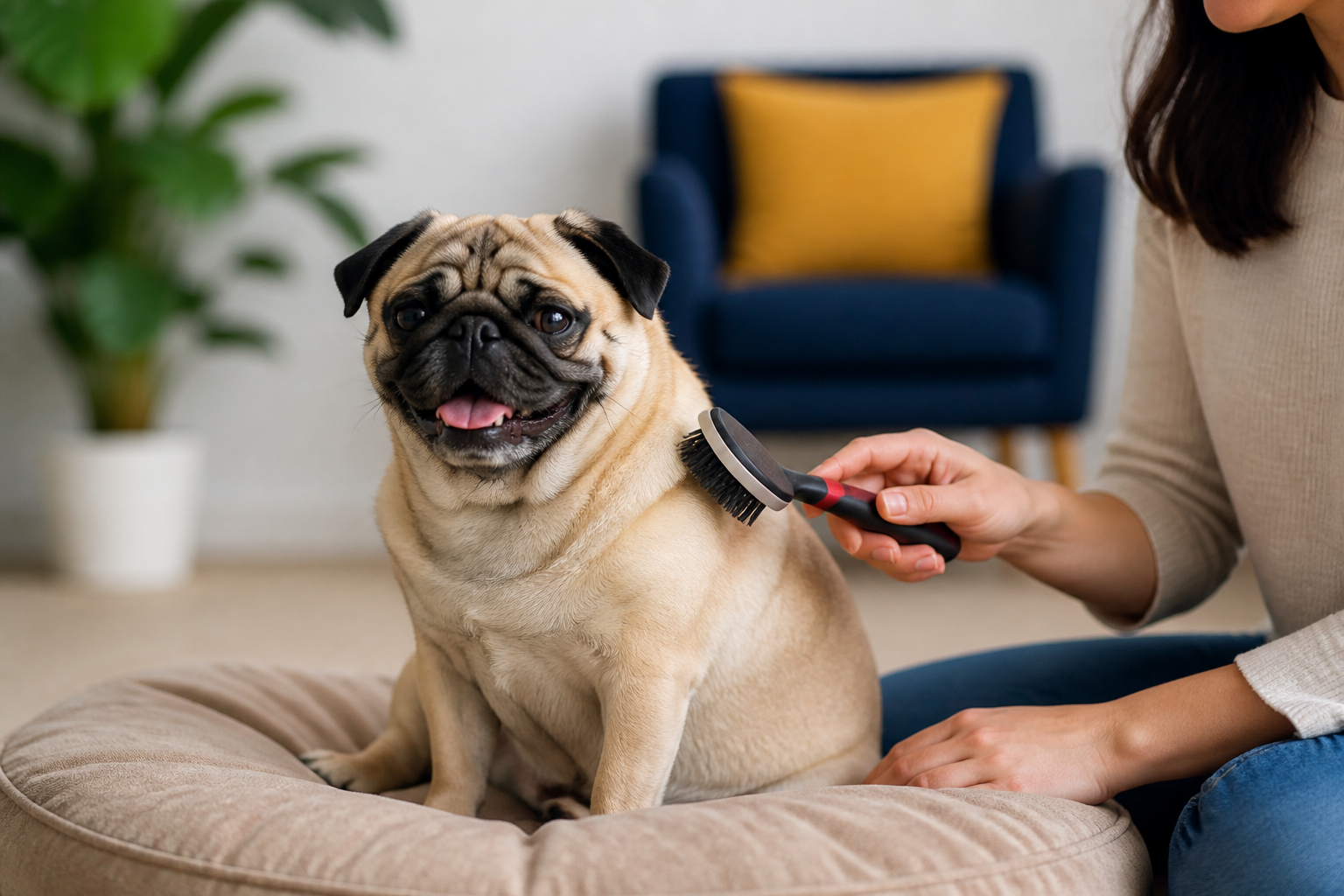
If you have ever petted a Pug, you know the soft, velvety feel of those ears. You also know that a five minute cuddle session often leaves your clothes covered in what Pug owners affectionately call dog glitter. Despite their short hair, these dogs are world class shedders. Choosing the right grooming tool is the difference between managing the mess and feeling like you are losing a battle against the fur. At BaxterBoo, we see many owners surprised by how much hair a small dog can produce. This guide covers the best brushes for the unique Pug coat and how to use them effectively. Understanding the specific needs of their dense double coat will help you keep your home cleaner and your dog more comfortable.
Quick Answer: The best daily brush for a Pug is a rubber curry brush. These tools use soft rubber nubs to grab loose fur from the dense undercoat while massaging the skin to distribute natural oils.
Understanding the Pug Coat
Most people look at a Pug and assume they are a low maintenance breed because they have short hair. The reality is quite different. Most Pugs, especially those with fawn, apricot, or silver coats, have a double coat. This means they have a soft, insulating undercoat protected by a coarser outer layer. Black Pugs are sometimes single coated, but many still possess that dense undercoat.
This double layer is why they shed so much. Pugs have a very high hair follicle density. They can have up to 600 hairs per square inch. When those hairs reach the end of their life cycle, they fall out. Because there are so many of them, the shedding feels constant. This cycle often speeds up during the spring and fall. These periods are known as blowing the coat. During these times, your choice of brush becomes even more critical.
The Rubber Curry Brush: The Daily Essential
If we had to recommend just one tool for a Pug owner, it would be the rubber curry brush. The Kong ZoomGroom is a classic example of this style. It does not look like a traditional brush with long metal pins. Instead, it features thick rubber fingers. This design is perfect for the short, stiff hair of a Pug.
The rubber creates a light static charge and a physical grip that pulls loose hair out of the coat easily. Because the nubs are soft, you can use a fair amount of pressure without hurting the dog. This is important because Pugs have sensitive skin under all that fur. The massaging action also stimulates blood flow to the skin and helps spread natural oils. This results in a shinier, healthier coat.
Why Rubber Brushes Work for Pugs
- They grab short hairs that metal pins often miss.
- The soft material is safe to use around bony areas like the hips and shoulders.
- They are easy to clean by simply rinsing them under a tap.
- Most Pugs enjoy the feeling, which turns grooming into a bonding session rather than a chore.
Key Takeaway: A rubber curry brush is the most effective tool for daily Pug grooming because it removes hair from the undercoat without scratching the skin.
Deshedding Tools for Heavy Shedders
While a rubber brush is great for every day, you might need something more robust during heavy shedding seasons. Our dog brushes and combs include deshedding tools that use a fine-toothed metal edge to reach deep into the undercoat. These tools are designed to pull out the dead, loose hair before it ends up on your sofa.
You must use these tools with caution. Because the teeth are metal and very close together, they can cause brush burn if you stay in one spot for too long. For a Pug, you should only use a deshedding tool once a week or once every two weeks. Focus on the areas where the fur is thickest, such as the neck and the back of the thighs.
Vet Tip: Always check your Pug's skin for redness or irritation after using a metal deshedding tool. If your dog has a history of skin allergies or thinning hair, consult your veterinarian before using heavy duty grooming tools.
Grooming Mitts for Sensitive Dogs
Some Pugs are nervous about grooming tools. If your dog runs away when they see a brush, a grooming mitt is an excellent alternative. These are gloves with rubberized palms that have small nubs similar to a curry brush.
Using a mitt feels like a normal petting session to the dog. It allows you to reach difficult areas like the belly, chest, and legs with more precision. While a mitt might not pull as much hair as a dedicated brush, it is much better than not brushing at all. It is a fantastic starter tool for puppies to get them used to the sensation of being groomed.
The Role of the Bristle Brush
A soft bristle brush is not meant for heavy deshedding. It will not reach the undercoat of a fawn Pug. However, it serves an important purpose in a grooming routine. Use a bristle brush as a finishing tool. After you have removed the bulk of the loose hair with a rubber brush, a quick pass with soft bristles will smooth the coat.
This step removes any lingering surface dust or dander. It also helps to lay the hair flat and give it a polished look. If you want your Pug to look like they just stepped out of a professional grooming salon, the bristle brush is your secret weapon.
How to Brush a Pug for Best Results
The technique you use matters as much as the tool. For a short haired dog with a dense coat, a two step process usually works best. This ensures you are reaching both the surface hair and the deep undercoat.
Step 1: Brush against the grain. / Use your rubber curry brush to move against the direction of hair growth. This lifts the hair and loosens the dead fur trapped near the skin.
Step 2: Brush with the grain. / Once you have loosened the fur, brush in the direction the hair naturally grows. This sweeps away the loose hair you just freed up and smooths the coat back down.
Step 3: Wipe down the coat. / Use a damp cloth or a grooming wipe to pick up any tiny hairs left on the surface. This final step significantly reduces the amount of hair that ends up on your furniture.
Managing Skin Folds and Facial Grooming
Grooming a Pug is about more than just their back and sides. Their iconic facial wrinkles require specialized care. These folds can trap moisture, heat, and debris, which leads to irritation or infections. Brushes are not appropriate for this sensitive area.
Instead, use soft wipes or a damp cloth to clean inside the folds at least a few times a week. If you notice a foul odor or redness in the folds, it may be a sign of a skin infection. Our dog grooming supplies include wipes and other products for regular cleaning and coat care.
Vet Tip: Never leave the skin folds damp after cleaning. Moisture trapped in the wrinkles is the primary cause of yeast and bacterial growth. Always pat the area dry with a soft, clean towel.
The Connection Between Nutrition and Shedding
If your Pug is shedding excessively even with regular brushing, the problem might be internal. Skin and coat health are directly tied to nutrition. Diets low in essential fatty acids often result in brittle hair that falls out more easily.
Adding a supplement like Zesty Paws salmon oil can make a visible difference. Omega-3 and Omega-6 fatty acids support the skin barrier and keep the hair follicles strong. We recommend checking with your vet to see if a supplement or a specific prescription diet is right for your dog. Our dog healthcare collection includes vitamins, supplements, and skin and coat care products.
For more guidance on choosing nutritional support, read our pet supplement guide.
Bathing and Brushing
Bathing a Pug can actually trigger a heavy shed. This is because the warm water and the massaging action of the shampoo loosen hairs that were ready to fall out. To manage this, always brush your dog thoroughly before the bath. This removes the bulk of the loose fur so it does not clog your drain.
Once the dog is dry, brush them again. You will be amazed at how much more hair comes out after a bath. Using a de-shedding shampoo can also help. These products often contain ingredients that help "release" the undercoat during the wash.
Using Autoship for Grooming Supplies
Grooming is a lifetime commitment for a Pug owner. Brushes eventually wear out, and grooming wipes or shampoos are items you will use constantly. To make sure you never run out, we offer our Autoship programme. This allows you to set up recurring deliveries of your favorite grooming supplies.
When you sign up for your first Autoship order, you get an immediate discount. It also includes a free MVP Gold membership, which gives you even more ways to save on the 500+ brands we carry. It is a simple way to keep your grooming kit stocked without having to remember to reorder every month.
Skin Health and the Pharmacy
Pugs are prone to several health conditions that can affect their coat. Allergies to environmental factors or food often manifest as itchy skin and hair loss. If your dog is scratching constantly or has bald patches, a brush will not solve the problem.
In these cases, a veterinary visit is necessary. Your vet may prescribe specialized shampoos, antihistamines, or even prescription diets like Farmina Vet Life. We facilitate these orders through our pet pharmacy. By working with Pet's Choice, we ensure you have easy access to the medications your Pug needs to stay healthy and comfortable.
Professional Grooming vs. Home Care
Most Pug owners can handle grooming at home. Because they do not require complicated haircuts, you can save a lot of money by doing it yourself. However, a professional groomer can be helpful for things like "the works" during a seasonal coat blow.
Professional groomers often have high-velocity dryers. These powerful tools literally blow the loose undercoat off the dog after a bath. If you find the shedding in your house has become unmanageable, one trip to the groomer followed by regular home brushing can reset the situation.
Essential Pug Grooming Kit Checklist
- One rubber curry brush for daily use.
- One grooming mitt for sensitive areas and legs.
- One soft bristle brush for finishing and shine.
- Unscented grooming wipes for facial folds.
- High-quality Omega fatty acid supplements.
Seasonal Shedding Triggers
While Pugs shed year-round, you will notice peaks in the spring and autumn. This is not just about temperature. It is actually triggered by the change in daylight hours. As the days get shorter in the fall, the dog's body gets the signal to grow a thicker coat, pushing out the old summer hair.
During these weeks, you may need to increase brushing from three times a week to every single day. Staying ahead of the shed during these transitions is the only way to keep the fur from taking over your home. If the shedding seems extreme or if you notice skin changes, it is always worth a quick call to your vet to rule out hormonal issues.
For another look at seasonal coat changes, read how shedding can increase during spring and fall.
Training Your Pug to Love Grooming
Pugs are generally food-motivated, which makes grooming training much easier. Start by letting your dog sniff the brush. Give them a small treat every time they interact with the tool. Gradually move to doing one or two strokes with the brush, followed by a treat.
Keep the sessions short and positive. If the dog gets restless, stop and try again later. The goal is for your Pug to see the brush and think of it as a "treat session." This makes the process much more relaxed for both of you. Since you will be brushing your Pug for the next 12 to 15 years, investing time in this training early on pays off significantly.
Summary of Best Brushes for Pugs
Choosing the right tool depends on your dog's specific coat type and their tolerance for grooming. A rubber brush remains the top choice for nearly every Pug. It is effective, safe, and affordable. Metal deshedding tools have their place during heavy moulting but should be used sparingly.
| Brush Type | Best For | Frequency |
|---|---|---|
| Rubber Curry Brush | Deep undercoat removal and massage | 3-5 times per week |
| Grooming Mitt | Nervous dogs and sensitive areas | Daily |
| Bristle Brush | Smoothing and shine | After every session |
| Deshedding Tool | Heavy seasonal shedding | Once weekly (max) |
Bottom line: Managing Pug shedding requires a consistent routine using a rubber curry brush to reach the dense undercoat.
Conclusion
Owning a Pug means accepting that dog hair is now a permanent part of your life. However, with the right tools and a bit of consistency, you can keep the shedding under control. A high-quality rubber brush, a dedicated skin fold routine, and proper nutrition are the pillars of Pug grooming. At BaxterBoo, we are committed to helping you find the right supplies to keep your pet healthy and your home tidy. Whether you are dealing with a seasonal coat blow or just regular daily maintenance, we have the expert-curated products you need.
Key Takeaway: Consistent brushing with a rubber tool not only reduces shedding in your home but also promotes better skin health for your Pug.
If you are ready to upgrade your grooming kit, check out our dog grooming collection. For those managing skin sensitivities or allergies alongside shedding, visit our dog pharmacy to see how we can help with prescription care.
FAQ
Why does my Pug shed so much even though their hair is short?
Pugs have a very high hair density and most possess a double coat. This means they have a soft undercoat and a coarser outer coat, resulting in more individual hairs that can fall out compared to many other breeds.
Can I shave my Pug to stop the shedding?
No, you should never shave a double-coated dog like a Pug. Their coat acts as insulation against both heat and cold, and shaving can permanently damage the texture of the fur and lead to skin issues.
How often should I clean my Pug's facial wrinkles?
You should check and clean your Pug's skin folds at least two to three times a week. Some Pugs with deeper folds may require daily cleaning to prevent moisture buildup and potential infections.
Will a supplement really help with my dog's shedding?
Supplements containing Omega-3 and Omega-6 fatty acids can improve skin health and strengthen hair follicles. While this will not stop natural shedding, it can reduce excessive hair loss caused by dry skin or brittle fur.






