
 Save 15% on your 1st Autoship learn more

 Email us
 Live Chat
 FAQs
FAQs





Introduction
It usually starts with a single tumbleweed of fur drifting across your hardwood floor. Soon, you notice a layer of "glitter" on your favorite black leggings or a sudden mat behind your dog's ears. Picking the right tool is the difference between a frustrating chore and a bonding session that keeps your home clean. At BaxterBoo, we have spent years helping pet parents navigate the overwhelming world of grooming supplies. We have seen every coat type come through our doors, from the silkiest Yorkies to the densest Huskies. This guide will help you identify your dog's specific coat needs and select the professional-grade tools that make grooming easier. Finding the best brush is not about the highest price tag. It is about understanding the unique texture and growth cycle of your dog's fur.
Quick Answer: The best grooming brush depends on your dog's coat type. Slicker brushes are the best all-around choice for most breeds. Undercoat rakes and de-shedding tools are essential for double-coated dogs.
The Importance of Matching the Brush to the Coat
Brushing is about more than just removing loose hair. It is a vital part of your dog's overall health routine. A good grooming session distributes natural oils across the skin. It prevents painful mats that can pull on the skin and cause sores. It also gives you a weekly opportunity to check for ticks, fleas, lumps, or hidden irritations.
Every dog has a specific coat "fabric." A brush that works on a Boxer will be useless on a Poodle. Using the wrong tool can even be counterproductive. For example, a harsh de-shedding blade can damage the delicate topcoat of a silky-haired breed. We recommend looking at your dog's coat in three ways: length, density, and whether they have a single or double coat.
Single-coated dogs have one layer of hair that grows continuously or sheds lightly. Double-coated dogs have a harsh outer layer and a soft, thick undercoat. The undercoat is usually what ends up on your furniture. Identifying this distinction is the first step in building your grooming kit.
Key Takeaway: Always choose a brush based on the hair texture and skin sensitivity of your dog rather than just the breed name.
The Slicker Brush: The Universal Grooming Tool
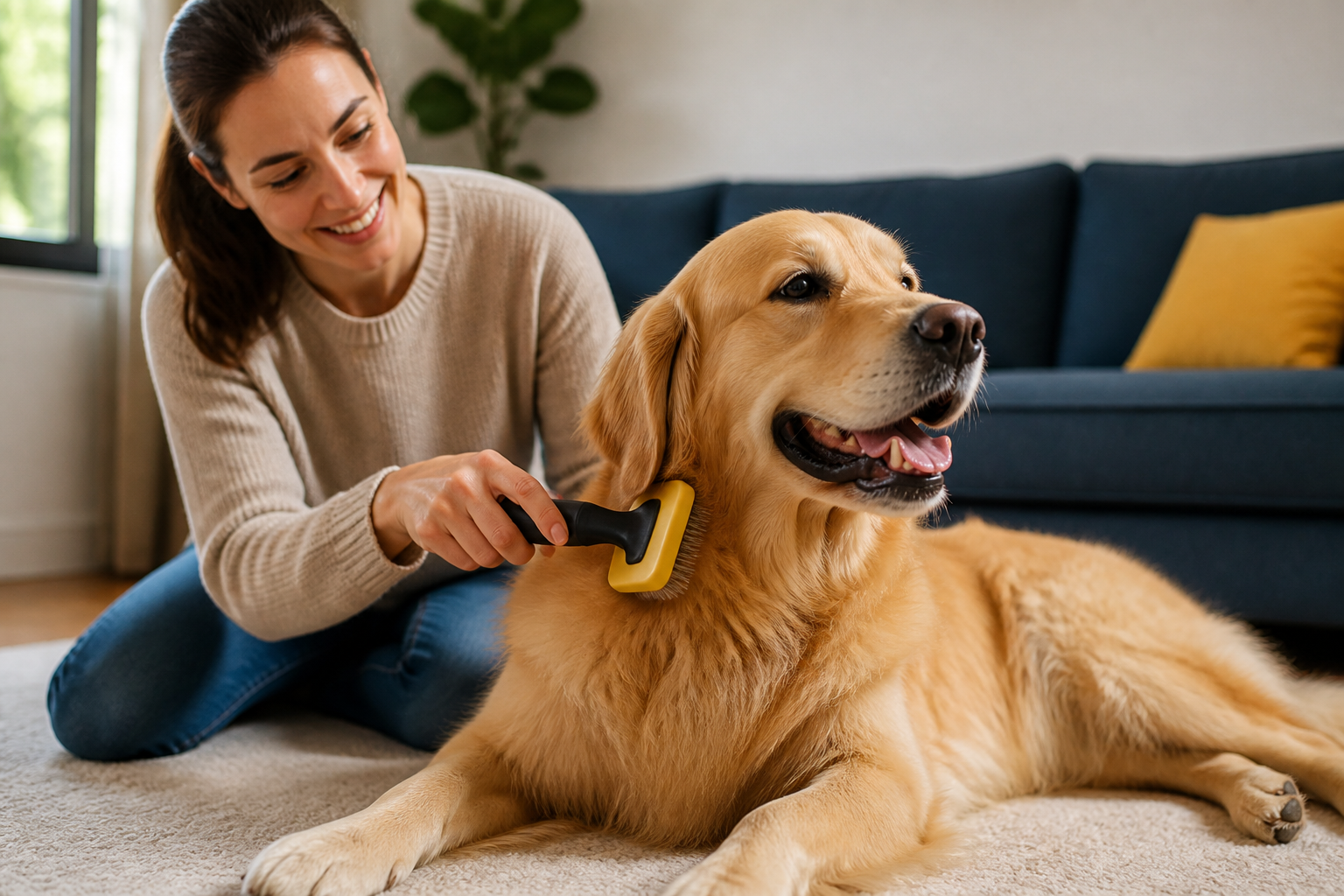
The slicker brush is the most common tool in professional grooming salons. It features a flat or slightly curved head with rows of thin, angled wire pins. These pins are designed to reach through the topcoat to grab loose hair and break up small tangles.
Who Should Use a Slicker Brush?
This is the best choice for dogs with medium to long hair or curly coats. This includes popular breeds like Golden Retrievers, Cocker Spaniels, and various Doodle mixes. The fine wire pins are excellent at catching "flyaway" hairs before they drop.
For curly-coated dogs, our guide to grooming dogs with curly hair offers additional brushing and detangling guidance.
How to Use It Safely
Because the pins are thin and made of metal, you must use a light hand. Never press the brush directly into the skin. Use short, gentle strokes. If you encounter a mat, do not pull. Instead, use the edge of the slicker brush to gently pick at the fibers until they loosen.
Many modern slicker brushes come with a self-cleaning feature. You press a button, the pins retract, and you can simply wipe the fur away. This saves a significant amount of time during a long grooming session.
Managing Heavy Shedders with Undercoat Rakes
If you own a German Shepherd, a Husky, or a Labrador, you know that shedding is a year-round reality. These dogs have a dense undercoat that "blows" twice a year during seasonal changes. A standard brush only slides over the top of this hair. You need an undercoat rake to get deep into the fur.
Undercoat rakes have long, widely spaced metal teeth. They look a bit like a garden rake but are designed to glide through the topcoat without cutting it. They reach down to the skin to pull out the dead, fuzzy undercoat.
For more information about seasonal shedding and double coats, read what to know about Australian Shepherd shedding.
Vet Tip: If your dog is shedding excessively and has bald spots or red skin, consult your veterinarian. These can be signs of allergies or thyroid issues. Our dog pharmacy offers prescription skin support and allergy medications through our pharmacy partnership.
The Benefits of Raking
- It reduces the amount of hair in your home by up to 90 percent.
- It helps regulate your dog's body temperature by removing the "winter coat" insulation.
- It prevents "impacted" fur, which happens when dead hair gets trapped against the skin and causes irritation.
De-Shedding Tools and the Furminator
De-shedding tools like those from Furminator are designed for a very specific job. They feature a fine-toothed metal edge that reaches through the topcoat to remove loose undercoat hair. This is often the most satisfying tool for a pet owner to use because of the sheer volume of fur it removes in a single pass.
However, these tools require caution. The edge is essentially a series of very fine, recessed blades. If you use too much pressure or go over the same spot too many times, you can cause "brush burn." This is a painful skin irritation.
Best Practices for De-Shedding
- Ensure the coat is completely dry and free of mats before starting.
- Use long, gentle strokes in the direction of hair growth.
- Avoid sensitive areas like the stomach, legs, and genitals.
- Limit use to once or twice a week for about 10 to 15 minutes.
For another perspective on managing heavy shedding, see this guide to Golden Retriever shedding and coat care.
Bottom line: De-shedding tools are powerful allies for double-coated breeds but should be used sparingly and with a gentle touch.
Bristle and Pin Brushes for Smooth and Silky Coats
For dogs with short, smooth hair or very long, silky hair, the heavy-duty tools mentioned above are often too much. A Beagle or a Boxer does not need a rake. They need a bristle brush.
Bristle Brushes
These brushes use natural or synthetic bristles packed tightly together. They are perfect for removing surface dust and dirt. Most importantly, they stimulate the skin and distribute natural oils. This is what gives a short-coated dog that healthy, mirror-like shine.
Pin Brushes
A pin brush looks similar to a human hairbrush. It has tipped metal or plastic pins that are widely spaced. These are ideal for long-haired breeds like Yorkies or Maltese dogs. The pins provide a gentle touch that does not create static or break the long, delicate hair shafts.
You can compare different brush styles in our dog brushes and combs collection.
Rubber Curry Brushes for Bath Time and Short Hair
One of our favorite recommendations at BaxterBoo is the rubber curry brush, such as the Kong ZoomGroom. These tools are made entirely of flexible rubber with large, blunt "fingers." They are the most versatile tool for dogs with very short hair.
The Power of Massage
The rubber fingers act like a magnet for loose hair. As you move the brush in a circular motion, it pulls out dead fur while giving your dog a deep tissue massage. Most dogs absolutely love the feeling. It is an excellent choice for puppies who are still learning to enjoy being handled.
Use in the Bath
Rubber brushes are the best tool to use during a bath. You can use them to work the shampoo deep into the coat. This ensures the skin is getting cleaned, not just the surface of the fur. It also helps the shampoo rinse out more effectively.
For bath-time brushes and other grooming accessories, explore our grooming tools.
Specialized Tools: Combs and De-matting Rakes
No grooming kit is complete without a high-quality metal comb. Often called a "greyhound comb," these have a fine-toothed side and a medium-toothed side.
The "Line Brushing" Technique
After you finish with a slicker brush, always run a comb through the fur. If the comb snags, you have a hidden mat. This is the only way to ensure the coat is truly tangle-free down to the skin.
If you do find a stubborn mat, a de-matting rake is the next step. These tools have sharp, serrated blades that cut through the center of a mat. This allows you to brush it out without having to shave the dog. Be extremely careful when using these near the skin.
Key Takeaway: A metal comb is the ultimate "truth-teller" in grooming. If it can't pass through the coat, your dog isn't fully brushed.
Building a Basic Grooming Kit
You do not need every tool on the market. Start with a kit tailored to your dog's specific coat. This ensures you have exactly what you need without wasting money on ineffective products.
Short-Haired Kit (Boxer, Beagle, Lab)
- Rubber curry brush for de-shedding and baths.
- Natural bristle brush for shine.
- Flea comb to check for pests.
Double-Coated Kit (Husky, Shepherd, Golden)
- Undercoat rake for deep de-shedding.
- Large slicker brush for everyday maintenance.
- Metal comb for finishing the tail and legs.
Curly/Long-Haired Kit (Poodle, Yorkie, Doodle)
- High-quality slicker brush.
- Metal greyhound comb.
- De-matting rake for "emergency" tangles.
- Detangling spray to reduce hair breakage.
For everyday brushing, bathing, and combing options, browse our full dog grooming category.
How to Introduce Brushing to Your Dog
Many dogs are wary of grooming tools, especially if they have had a bad experience with pulling or skin irritation. It is important to make the process positive.
Step 1: Let them investigate. Place the brush on the floor and put a few small treats around it. Let your dog sniff the tool on their own terms.
Step 2: Start small. Use the back of the brush first. Run the smooth side over their body so they get used to the pressure without the pins touching them. Give a treat for staying calm.
Step 3: One stroke at a time. Move to the bristle or pin side. Give a treat after every single stroke. Focus on areas they like being pet, such as the chest or shoulders.
Step 4: Gradually increase the time. Slowly move toward more sensitive areas like the paws or the back of the legs. If your dog shows signs of stress, stop and try again later.
When Grooming Becomes a Health Check
Regular brushing is the best way to monitor your dog's skin health. As you move through the fur, look for any changes. This includes red patches, dry flakes, or small bumps.
Skin health starts from within. If your dog's coat is dull or brittle, they may need additional support. We carry a wide range of supplements, including Cosequin for joint health in seniors who struggle to stand for grooming, and Omega-3 oils for skin support.
If you notice persistent itching, it may be time for a veterinary visit. Our pharmacy partnership with Pet's Choice allows you to easily fill prescriptions for medicated shampoos, flea and tick preventatives, and allergy medications. Having these items on Autoship ensures you never run out of the supplies your dog needs to stay comfortable.
Vet Tip: Check the ears and paws during every grooming session. These are hotspots for yeast infections and grass seeds. If you notice a "corn chip" smell or excessive licking, consult your vet for a professional diagnosis.
Maintaining Your Grooming Tools
To get the most out of your brushes, you must keep them clean. Hair left in a brush can trap bacteria, skin oils, and dander. Over time, this can lead to skin irritation when you reuse the tool.
Cleaning Steps
- Remove hair after every session. Use a comb to pull the fur out of the pins of your slicker brush.
- Wash the tools once a month. Use a bowl of warm water and a drop of gentle dish soap or pet shampoo.
- Sanitize if necessary. If you are treating a skin infection or fleas, use a pet-safe disinfectant on your tools.
- Dry thoroughly. Metal pins can rust if left damp. Lay brushes pin-side down on a towel to air dry.
Summary of Best Brushes by Need
| Need | Best Tool | Why It Works |
|---|---|---|
| Everyday Shine | Bristle Brush | Distributes natural skin oils. |
| Loose Undercoat | Undercoat Rake | Reaches deep through the topcoat. |
| Curly Hair Mats | Slicker Brush | Fine pins break up tangles. |
| Short Hair Shedding | Rubber Curry | Massages skin and grabs loose fur. |
| Finishing/Checking | Metal Comb | Finds hidden knots near the skin. |
Conclusion
Choosing the right grooming brush is an investment in your dog's comfort and your home's cleanliness. While the Furminator is a powerhouse for heavy shedders, a simple slicker brush or rubber curry is often the best choice for daily maintenance. Remember that grooming should be a low-stress experience. By matching the tool to your dog's coat and using a gentle technique, you turn a chore into a rewarding routine.
Explore our full collection of grooming supplies to find the perfect match for your pup. Whether you are stocking up on everyday essentials or need prescription skin support from our pet pharmacy, we are here to help you provide the best care possible.
Key Takeaway: Consistency is more important than the specific brand of brush. Five minutes of brushing every other day is more effective than an hour-long session once a month.
FAQ
How often should I brush my dog?
It depends on the coat type, but most dogs benefit from brushing at least two to three times a week. Short-haired breeds like Beagles may only need a weekly session to remove dust and shine the coat. Long-haired or double-coated breeds often require daily brushing to prevent mats and manage shedding.
What is the difference between a pin brush and a slicker brush?
A pin brush has straight, widely spaced pins that are usually tipped with plastic or rubber to protect the skin. It is best for long, silky hair that needs gentle detangling. A slicker brush has fine, bent wire pins packed closely together, making it more effective at grabbing loose undercoat and breaking up stubborn tangles in thick or curly hair.
Can I use a human hairbrush on my dog?
It is not recommended to use human brushes because dog skin is much thinner and more sensitive than human skin. Human brushes often lack the specific pin spacing and angles needed to penetrate a dog's fur without pulling. Investing in a tool designed for pets ensures you do not cause accidental skin irritation or hair breakage.
Why is my dog still shedding so much after brushing?
If you are brushing regularly and still seeing lots of hair, you may be using the wrong tool for your dog's coat. A standard brush only cleans the top layer, while the shedding usually happens in the undercoat. Using an undercoat rake or a dedicated de-shedding tool can help reach that trapped fur and significantly reduce the amount of hair in your home.






