
 Save 15% on your 1st Autoship learn more

 Email us
 Live Chat
 FAQs
FAQs





Introduction
You lean in for a snuggle with your dog and notice something. Their breath is much more than just a little doggy. It smells sharp or even sour. This is a common moment for many pet owners. It often signals that it is time to look closely at their oral hygiene. At BaxterBoo, we know that keeping those pearly whites clean is about more than just fresh kisses. It is a fundamental part of their overall health and longevity. This guide covers the most effective methods for cleaning your dog's teeth at home. We also discuss when it is time to bring in the professionals. A consistent routine that combines daily brushing with high quality chews is the best way to ensure your dog stays healthy and pain free.
Quick Answer: The best way to clean a dog's teeth is a daily combination of mechanical brushing and vet approved dental chews. Brushing remains the gold standard because it physically removes plaque before it can harden into tartar.
Why Dental Care Is Vital for Dogs
Many owners assume that bad breath is just a normal part of having a dog. In reality, persistent bad breath is often the first sign of periodontal disease. This condition begins when bacteria and food particles form plaque on the teeth. If you do not remove this plaque within 48 hours, it minerals into tartar. Tartar is much harder to remove and provides a home for even more bacteria.
This bacteria does not stay in the mouth. It can enter the bloodstream through the gums. From there, it can travel to the heart, liver, and kidneys. This can lead to serious infections and long term organ damage. Regular cleaning helps prevent these systemic issues. It also saves your dog from the pain of loose teeth and infected gums. For additional warning signs, read what to do when your dog has damaged teeth.
Vet Tip: If you notice your dog dropping food, bleeding from the mouth, or pawing at their face, consult your veterinarian immediately. These are often signs of advanced dental disease or a painful abscess that requires professional medical attention rather than just a routine cleaning.
The Gold Standard: Daily Tooth Brushing
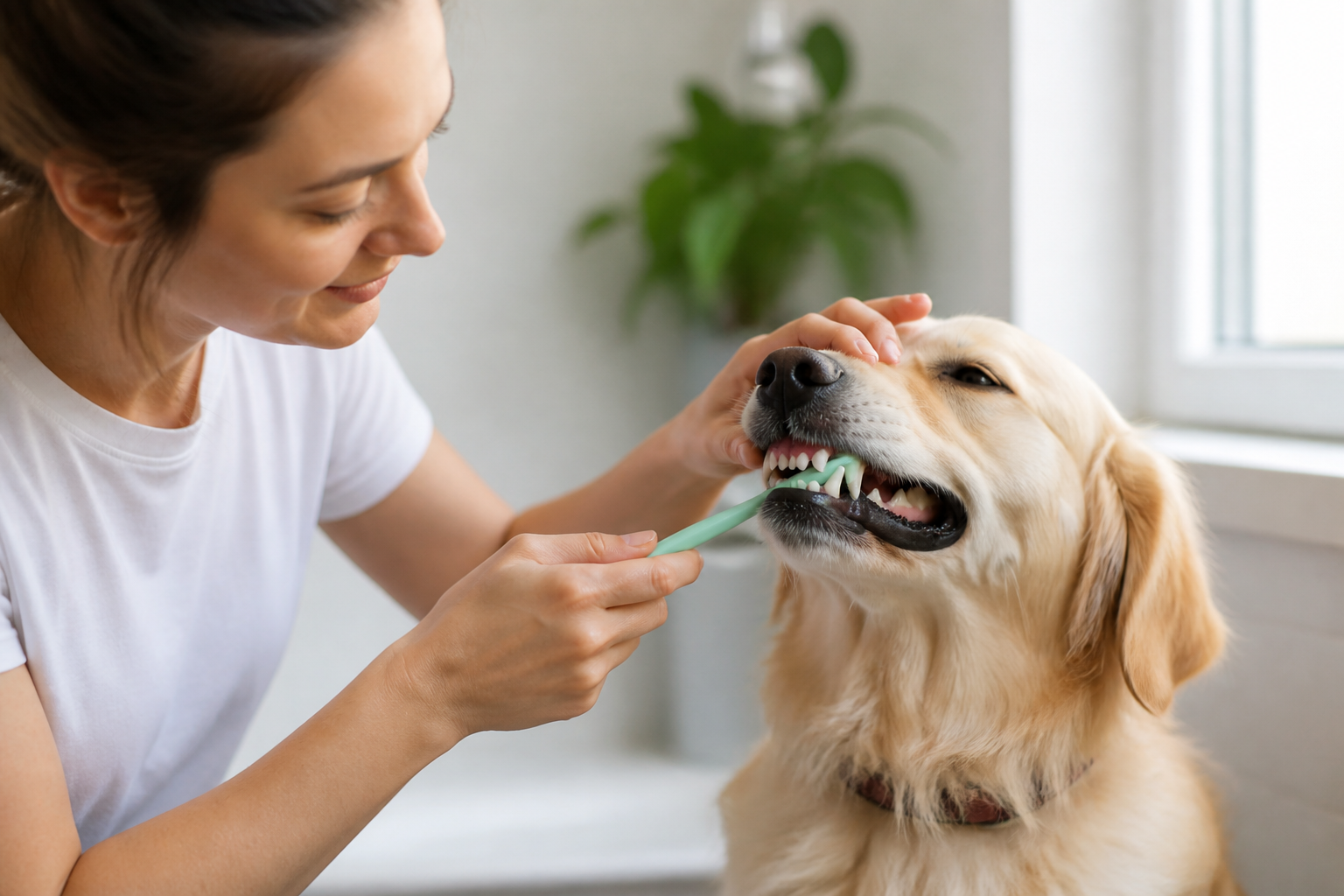
Brushing your dog's teeth is the most effective way to maintain their oral health. It might seem daunting at first. However, most dogs can learn to accept or even enjoy the process if you start slowly. You should aim to brush their teeth every single day. If that is not possible, three times a week is the minimum for effective plaque control. You can also review these pet dental care tips for help building a routine.
Choosing the Right Tools
Never use human toothpaste for your dog. Our toothpaste contains ingredients like xylitol and fluoride that are toxic to pets. Dogs also do not know how to spit, so they swallow everything you put in their mouth. Pet specific toothpaste comes in flavors like poultry, beef, or peanut butter. This makes the experience much more pleasant for them. Our dog dental care products include toothpaste, brushes, gels, and other oral hygiene supplies.
You have a few options for brushes:
- Standard pet toothbrushes with long, angled handles to reach the back molars.
- Finger brushes that slip over your fingertip for better control.
- Small, soft bristled baby toothbrushes for tiny breeds.
The Brushing Process
Start by letting your dog lick some toothpaste off your finger. Once they like the taste, gently rub your finger along their gums. This gets them used to the sensation.
Step 1: Lift the upper lip to expose the teeth and gums. / Use a calm, soothing voice to keep your dog relaxed. Step 2: Apply a small amount of pet toothpaste to the brush. / Angle the bristles at a 45 degree angle toward the gum line. Step 3: Move the brush in small circular motions. / Focus on the outside surfaces of the teeth where plaque accumulates most. Step 4: Reward your dog with praise or a small treat. / Make the experience a positive part of their daily routine.
Key Takeaway: Focus your brushing efforts on the outside of the teeth. A dog's tongue actually does a decent job of cleaning the inside surfaces on its own.
The Role of Dental Chews and Treats
Not every dog will sit still for a toothbrush. This is where dental chews become very helpful. Brands like Greenies are designed with a specific texture that helps scrub the teeth as the dog chews. This mechanical action works to scrape away plaque. You can explore our selection of Greenies products for dental chew options.
When shopping for chews, look for the Veterinary Oral Health Council seal. This seal means the product has been tested and proven to reduce plaque or tartar by a significant amount. We carry a variety of these trusted options to help make dental care easier for you. For more ideas, browse these best dental chews for dogs.
How to Use Chews Safely
Size matters when it comes to dental treats. If the chew is too small, your dog might swallow it whole. This creates a choking hazard or a blockage risk. If it is too hard, they could fracture a tooth. Always supervise your dog when they are working on a chew.
- Select a chew appropriate for your dog's weight.
- Look for chews that are flexible enough to give slightly under pressure.
- Limit treats to once a day to avoid unnecessary calorie intake.
Bottom line: Dental chews are a fantastic supplement to brushing but should not be the only method you use.
Water Additives and Oral Rinses
If your dog is very resistant to handling, you might consider water additives. These are liquid solutions that you pour directly into your dog's water bowl. They typically contain enzymes or chemicals that help kill bacteria in the mouth. This can reduce the rate at which plaque forms.
These are often tasteless and odorless, so most dogs do not even notice them. While they help with bad breath, they do not provide the mechanical scrubbing that a brush or chew offers. Think of them as a mouthwash for dogs. They are best used as part of a multi layered approach.
Dental Toys for Active Cleaning
Toys can also serve as a tool for cleaning. Durable rubber toys like those from Kong often have ridges or grooves. As your dog chews and plays, these textures rub against the teeth. You can even smear a little pet toothpaste inside the grooves of a toy to encourage more focused chewing.
Rope toys can also act like dental floss. As the fibers slide between the teeth, they can help dislodge food particles. However, you must monitor rope toys for fraying. If a dog swallows the long strings, it can lead to serious digestive issues. You can find additional ideas in this guide to dental chews and toys for dogs.
Note: Always inspect your dog's toys for wear and tear. Replace any toys that are starting to break apart to prevent accidental ingestion.
Professional Veterinary Cleanings
Home care is essential, but it is not always enough. Even with diligent brushing, tartar can still build up in hard to reach places. Most dogs will eventually need a professional dental cleaning. This is similar to the deep cleaning you get at the dentist.
Why Anesthesia Is Necessary
You may see advertisements for anesthesia free dental cleanings. While these might make the teeth look white, they are often purely cosmetic. A thorough cleaning requires scaling under the gum line. This is where the most dangerous bacteria live.
A dog will not sit still for a deep cleaning under the gums while they are awake. Anesthesia allows the veterinarian to perform a full exam and take X rays. X rays are vital because a large percentage of dental disease happens below the visible surface. Without them, a vet might miss a rotting root or a painful infection.
Frequency of Cleanings
The frequency of professional cleanings depends on several factors. These include the dog's breed, age, and genetics. Smaller breeds often have crowded teeth, which makes them more prone to dental issues. They may need a professional cleaning every year. Larger breeds might be able to go two or three years between visits if their home care is excellent.
Prescription Diets and Specialized Food
For dogs with a history of rapid tartar buildup, a specialized diet may be necessary. Certain brands like Royal Canin and Farmina Vet Life offer formulas designed specifically for dental health. These kibbles are often larger and have a fibrous texture. Instead of crumbling immediately, the kibble stays together longer. This forces the dog to chew, which provides a scrubbing effect on the tooth surface.
These diets often require a prescription from your veterinarian. Our pet pharmacy offers prescription products through our pharmacy service. If your vet recommends a specific dental food, you can easily fulfill that need through us. These foods also contain minerals that help bind calcium in the saliva. This prevents the calcium from turning plaque into hard tartar.
Key Takeaway: Prescription dental diets can significantly slow down the return of tartar after a professional cleaning.
Supplements for Oral Health
Beyond food and chews, certain supplements can support a healthy mouth. Some powders contain probiotics specifically for the oral cavity. These help maintain a balance of good bacteria, which crowds out the bacteria that cause bad breath and decay.
Other supplements contain sea kelp. Studies have shown that certain types of kelp can change the chemistry of a dog's saliva. This makes plaque softer and easier to remove. Always check with your vet before adding new supplements to your dog's diet, especially if they have thyroid issues.
Tips for Success with Senior Dogs
Senior dogs often have more sensitive mouths. If they have already lost some teeth or have gum recession, you must be extra gentle. Use a very soft brush or a piece of clean gauze wrapped around your finger.
You should also be careful with very hard chews for seniors. Their teeth may be more brittle, making them prone to fractures. For older pets, focus more on water additives and soft brushing. Regular vet checkups are even more important at this stage of life. Dental pain can cause a senior dog to stop eating, which quickly leads to other health complications.
Vet Tip: Before starting a new dental routine with a senior dog, have your vet check for existing fractures or loose teeth. Brushing a tooth that is already painful can cause your dog to become fearful of the process.
Building a Dental Care Routine
Consistency is the most important factor in dog dental care. It is better to do a quick 30 second brush every day than a 10 minute session once a month. Try to link the dental routine to something else you already do. For example, you could brush their teeth right after your own morning routine or just before their evening walk.
Step 1: Check your dog's mouth weekly for redness or swelling. / Early detection makes treatment much easier. Step 2: Brush daily using a pet safe toothpaste. / Focus on the back molars where most buildup occurs. Step 3: Provide a VOHC approved dental chew. / This helps with mechanical cleaning on days you cannot brush. Step 4: Schedule an annual wellness exam with your vet. / Ensure they include a thorough oral inspection in the visit.
Conclusion
Caring for your dog's teeth is one of the best things you can do for their long term wellness. While brushing is the most effective way to clean their teeth, a combination of chews, toys, and professional care provides the best protection. We are here to support your journey with the right supplies and expert guidance. Our pharmacy can help with prescription needs, and our wide selection of brands like Greenies and Kong makes finding the right tools easy. By staying consistent with your at home routine, you can keep your dog's smile bright and their body healthy for years to come.
Check out our full collection of dog dental care products to get started on a better routine today. You can even set up an Autoship order for your favorite dental chews so you never run out of supplies.
FAQ
How often should I brush my dog's teeth?
Ideally, you should brush your dog's teeth every day to prevent plaque from hardening into tartar. If a daily schedule is not possible, aim for at least three times a week. Consistent brushing is the most effective way to reduce the risk of periodontal disease and expensive veterinary procedures.
Can I use human toothpaste for my dog?
No, you should never use human toothpaste for dogs because it contains ingredients like xylitol and fluoride that are toxic to them. Dogs swallow the paste rather than spitting it out, which can lead to serious health issues. Pet specific toothpaste is safe to swallow and comes in flavors that dogs enjoy.
Do dental chews actually work?
Dental chews can be very effective at reducing plaque and tartar if they have a texture that encourages mechanical scrubbing. Look for products with the VOHC seal of approval to ensure they have been tested for efficacy. While chews are helpful, they work best when used alongside regular brushing rather than as a total replacement.
What are the signs that my dog needs a professional cleaning?
Signs that your dog needs professional help include persistent bad breath, yellow or brown buildup on the teeth, and red or bleeding gums. You might also notice your dog hesitating to eat hard kibble or pawing at their mouth. A veterinarian can determine if a deep cleaning under anesthesia is necessary to protect your dog's health.






