
 Save 15% on your 1st Autoship learn more

 Email us
 Live Chat
 FAQs
FAQs





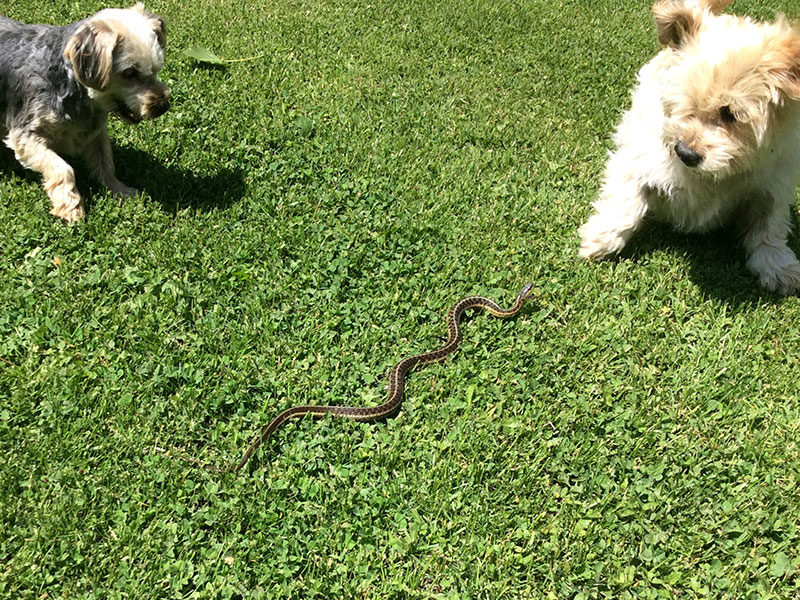
There is nothing scarier than enjoying a game of fetch in your backyard or going on a hike with your dog only to have him come face to face with a snake. When your pet is bitten by a snake, your first reaction may be to panic. However, snake bites can be preventable and are usually non-venomous. Knowing how to keep snakes at bay and what to do for a bite will ensure your dog's health and safety.
Do What You Can To Prevent Snakes on Your Property
Check your home's foundation. Look for areas that are unsealed, such as where pipes go into your home, and place mesh over them to prevent snakes from climbing into the pipes. Next, look to see that your basement's doors and windows are properly sealed and not easy for any animals to get into. Another place to check around the home is your deck and its stairs. If your porch has an area underneath it, use mesh or something else to close it off. This not only makes it harder for snakes to get underneath of it but prevents your pup from crawling under as well.
Don't forget about the rest of your property. Keep your grass cut and clear away any brush around the edges of the property. If you have woodpiles, large rocks, or other debris piles around the property, remove them. Finally, check any storage sheds or detached garages and repair any cracks or openings near the ground to prevent snakes from turning them into homes.
Know What Snakes You May Encounter
Most snakes in the United States aren't venomous, so a bite will not require an antivenom. The following quick guide will help you with identification but don't worry if you aren't sure what your dog was bitten by. There are only two types of venoms in American snakes. Your veterinarian will be able to determine which antivenom is needed based on symptoms.
-
Copperhead – Copperheads are red and brown with a copper-colored head (hence the name) and an hourglass marking. They can be up to four feet long and are often found in woodpiles or leaves.
-
Coral Snake – Coral snakes have small heads and black noses. Their banded bodies feature vivid shades of white, black, red, and yellow, with the red and yellow bands always next to each other. Kingsnakes look similar but do not have red and yellow colors beside each other, which is how you can tell the difference.
-
Cottonmouth – Cottonmouth snakes are also known as water moccasins. They are 4-6 feet long and often found near swamps or streams. These snakes are black or dark brown and have white inside the mouth.
-
Rattlesnake – Rattlesnakes are often the easiest to recognize given their rattles on the tail. They are reddish-brown and often have patterns on the back. Their eyes often resemble cat eyes and they tend to have rough scales and arrow-shaped heads.
Don't Panic if Your Dog Encounters a Snake
The best thing you can do for your dog if he's been bitten by a snake is to avoid panicking. If you aren't calm, you'll have trouble reacting immediately and rationally, which can further the damage the bite does to your dog. Additionally, if you're showing signs of nervousness, your dog will as well, which can cause him to become nervous. If he begins moving around too much or if his heartbeat gets too much faster, it will spread venom more quickly. Do your best to keep your wits about you while you work to treat the bite.
Remove Your Dog From the Area
As soon as a bite occurs, remove your dog from the area to prevent him from going after the snake. A dog's natural instinct is to protect himself by attacking his attacker. The problem is this puts him at risk of receiving another bite and getting more venom into his system. Even if he doesn't get a second bite, moving around too much will speed up the venom he does have in his system. Do your best to move your dog away from the situation and never try to catch or kill the snake. This puts you in danger of being bitten as well.
Look for These Important Symptoms
Knowing the symptoms of a snake bite in your dog is essential. Keep in mind that symptoms may not show up for 24 hours, so keep a close eye on your pup if you suspect he may have been bitten. Symptoms can vary depending on the breed of snake, your dog, and where he was bitten. Look for the following.
-
Bleeding
-
Bloody urine
-
Bruising
-
Diarrhea
-
Dilated pupils
-
Paralysis
-
Puncture wounds
-
Sudden weakness or collapsing
-
Swollen areas
-
Twitching or trembling
-
Vomiting
Take Your Dog To The Vet as Soon as Possible
Even if you don't notice any signs of the bite being venomous, it's important to take your dog to the vet. Even a non-venomous bite has the potential to become infected if left untreated. The veterinarian may treat a snake bite in several ways. He or she will clip and clean the bite wounds first. From there, options vary depending on the circumstances.
Common options include antivenom and Benadryl, which prevents an allergic reaction to the antivenom. If your dog has a lot of tissue damage, he may also receive antibiotics. IV fluids help your pet stay hydrated and recover and colloid fluids can help with hypotension. In some cases, anti-inflammatory drugs, opioid pain medication, and supplemental oxygen may be necessary. Your veterinarian may also suggest a snake bite vaccine to protect your pet from future venomous bites.
Diligence helps to ensure your dog's safety. Always keep an eye out for snakes in your yard and on hiking trails. Keep your dog on a leash when in the woods to help keep him from potentially dangerous situations. Being smart about your outings means you'll have more fun and less stress.






- Site & Contents BaxterBoo.com. BaxterBoo is located in the United States.
- Privacy & Security
- Terms of Use
- Accessibility Statement
