
 Save 15% on your 1st Autoship learn more

 Email us
 Live Chat
 FAQs
FAQs





Introduction
You lean in for a wet kiss from your dog and suddenly catch a whiff of something less than fresh. It is a common moment for many pet owners. Bad breath is often the first sign that your dog needs a better dental routine. At BaxterBoo, we know that keeping those pearly whites clean is about more than just fresh breath. It is a vital part of their overall health and longevity. Ignoring oral hygiene can lead to plaque buildup, gum disease, and even issues with the heart or kidneys. This guide covers the most effective tools and methods for cleaning your dog's teeth at home. We will look at everything from enzymatic toothpastes to dental chews. Our goal is to help you build a routine that works for your lifestyle and your dog's personality.
Quick Answer: The most effective way to clean your dog’s teeth is by using an enzymatic pet toothpaste and a soft-bristled toothbrush. You can also supplement this with VOHC-approved dental chews, water additives, and textured rubber toys to help reduce plaque buildup between brushings.
The Gold Standard: Toothbrushes and Pet Toothpaste
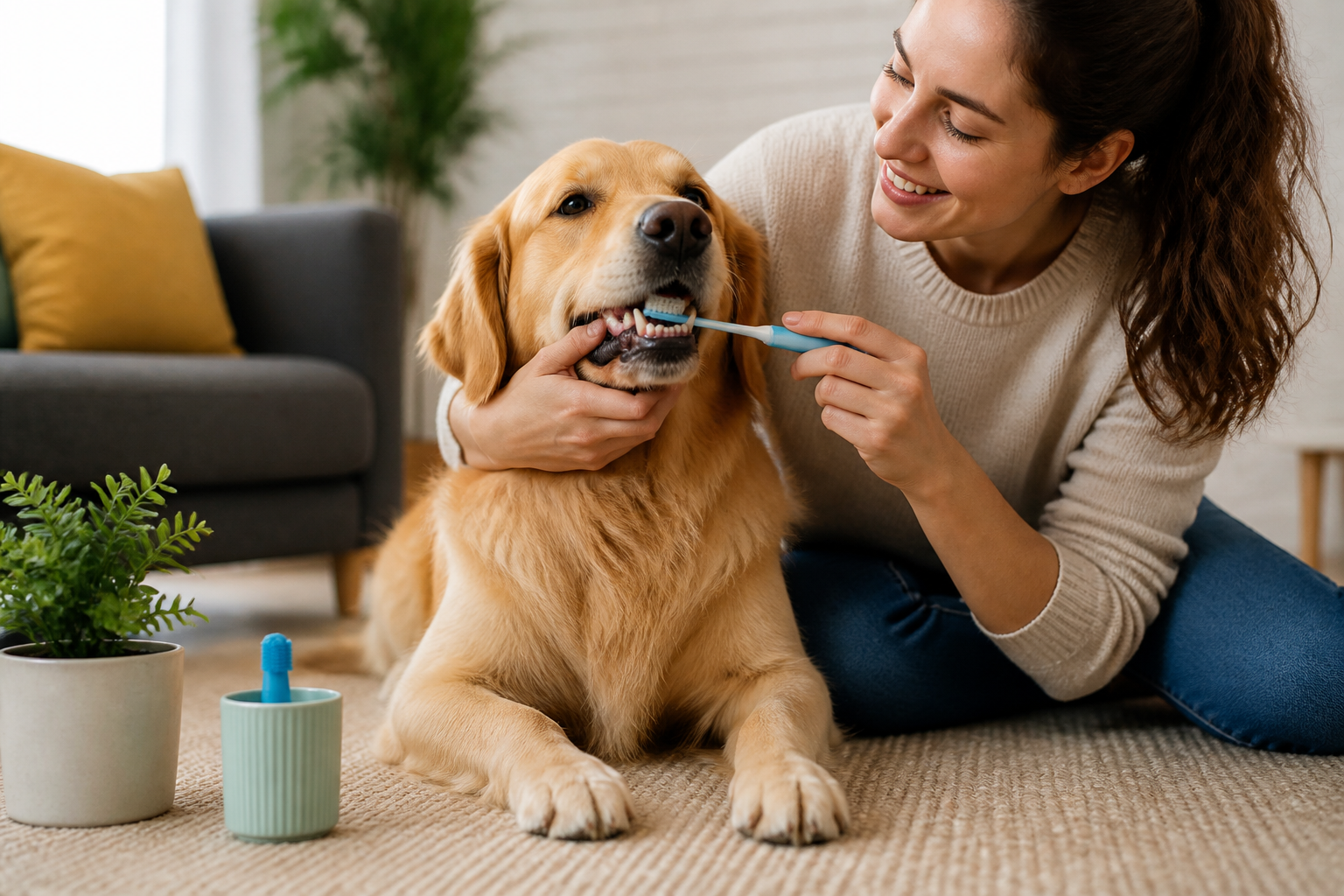
The single most effective tool for oral hygiene is a toothbrush. Brushing physically removes plaque before it has a chance to harden into tartar. Tartar is much harder to remove and usually requires a professional cleaning. If you can brush your dog's teeth every day, you are doing them a massive favor. Even three times a week makes a significant difference in their long-term health.
When choosing a toothbrush, consider the size of your dog's mouth. A large dog may need a long-handled brush to reach the back molars. A small dog or a puppy might be more comfortable with a finger brush. Finger brushes are made of soft silicone and slip over your pointer finger. They give you more control and feel less intimidating to a nervous dog. You can also use a soft-bristled baby toothbrush if you are in a pinch.
The toothpaste you choose is even more important than the brush. Never use human toothpaste for your dog. Human pastes often contain fluoride or Xylitol. Xylitol is a sweetener that is highly toxic to dogs. Pet toothpastes are formulated to be swallowed safely. They also come in flavors dogs actually enjoy, such as poultry, beef, or peanut butter.
Most pet toothpastes are enzymatic. This means they contain enzymes that continue to break down bacteria and plaque even after you stop brushing. This chemical action is a great backup if your dog only lets you brush for a short time. Explore our dog dental care category for toothbrushes, toothpastes, gels, and other oral-care supplies.
How to Introduce Brushing
Step 1: Let them taste it. / Put a small amount of poultry or beef-flavored toothpaste on your finger and let your dog lick it off.
Step 2: Get them used to touch. / Gently lift your dog's lip and rub your finger along their gums to get them comfortable with the sensation.
Step 3: Introduce the brush. / Apply paste to the brush and move in small circular motions along the outer surfaces of the teeth.
Step 4: Reward and repeat. / Give them praise or a healthy treat immediately after you finish to create a positive association.
Key Takeaway: Brushing is the only way to manually remove plaque from the gum line. Always use enzymatic pet-specific toothpaste to ensure the process is safe and effective.
For more guidance on building a routine, read these pet dental care tips.
Dental Chews and Their Benefits
Not every dog will sit still for a toothbrush. If your dog treats a toothbrush like a mortal enemy, dental chews are an excellent alternative. These treats are designed to be hard enough to scrape away plaque as the dog chews. They also tend to be very palatable, so your dog thinks they are just getting a snack.
When shopping for dental chews, look for the Veterinary Oral Health Council (VOHC) seal. This seal means the product has been tested and proven to reduce plaque or tartar. We carry several brands at our BaxterBoo warehouse that meet these high standards, such as Greenies and certain RedBarn products.
The texture of the chew is what does the work. As the dog’s teeth sink into the treat, the material rubs against the tooth surface. This mechanical action mimics the scraping of a toothbrush. It is especially effective for the premolars and molars that dogs use for heavy chewing. Browse our dental food and treats for options designed to support your dog’s oral-care routine.
Choosing the Right Size Chew
- Weight matching: Always pick a chew that matches your dog's current weight.
- Supervision: Watch your dog while they eat a dental chew to ensure they do not swallow large chunks.
- Calorie count: Remember that dental chews have calories. Adjust their daily food intake to avoid weight gain.
- Hardness test: You should be able to indent a chew with your thumbnail. If it is as hard as a rock, it could fracture a tooth.
Vet Tip: If your dog has loose teeth, red gums, or signs of pain, do not give them hard dental chews. Consult your veterinarian first to ensure they do not have an underlying infection that makes chewing painful.
For additional ideas, see our guide to dental chews for dogs.
Water Additives and Oral Sprays
Water additives are a low-effort way to support your dog’s dental health. These are liquid solutions that you pour directly into your dog’s water bowl. They usually contain enzymes or mild antiseptic ingredients that help kill the bacteria that cause plaque. This is a great "passive" cleaning method. It works every time your dog takes a drink.
Oral sprays work in a similar way but are applied directly to the teeth and gums. These are useful for dogs who are sensitive to changes in their water taste. You simply lift the lip and spray the solution onto the side of the mouth. The dog’s saliva then spreads the active ingredients around.
While these products are helpful, they are best used as a supplement to other methods. They do not provide the mechanical scraping action of a brush or a chew. However, for senior dogs or pets with crowded teeth, they can be a helpful part of a multi-pronged approach.
Bottom line: Water additives are perfect for busy owners or difficult pets, but they work best when paired with mechanical cleaning.
Specialized Dental Toys
Toys can be more than just a way to play fetch. Many rubber and nylon toys are designed specifically to clean teeth. These toys often have nubs, ridges, or deep grooves. When a dog chews on these surfaces, the nubs rub against the teeth and gums.
Kong makes several rubber toys with "dental ridges" that are excellent for this purpose. You can even smear a little bit of pet toothpaste or peanut butter inside the ridges to encourage your dog to chew on them longer. The longer they chew, the more cleaning action occurs.
Avoid toys that are too hard. Items like real animal bones, antlers, and heavy nylon bones are popular but can be dangerous. Many veterinarians see dogs with "slab fractures." This is when a dog bites down on something harder than their tooth, causing the tooth to split. Stick to firm rubber or softer dental toys to keep their mouth safe.
Dental Toy Checklist
- Check for "give" in the material when you squeeze it.
- Look for textured surfaces like bumps or bristles.
- Ensure the toy is too large to be swallowed.
- Replace toys once they start to break or lose pieces.
Prescription Dental Diets and the Pharmacy
Sometimes, standard kibble and treats are not enough. If your dog is prone to rapid tartar buildup, your vet might recommend a prescription dental diet. These are different from standard maintenance foods. The kibble in a dental diet is usually much larger and has a specific fiber structure.
Instead of crumbling immediately when a dog bites it, the kibble stays intact longer. This allows the tooth to sink into the kibble, providing a deep cleaning right down to the gum line. These foods often contain minerals that bind to calcium in the saliva. This prevents the calcium from hardening into tartar on the teeth.
Our pharmacy at BaxterBoo offers these specialized diets through our partnership with Pet's Choice. Brands like Royal Canin and Farmina Vet Life have formulas specifically designed for oral health. Since these are therapeutic diets, you will need a prescription from your veterinarian to order them.
Key Takeaway: Prescription dental diets provide a daily mechanical cleaning that standard kibble cannot match. Talk to your vet to see if your dog is a candidate for these specialized formulas.
Signs of Dental Disease in Dogs
It is important to know when home cleaning is no longer enough. If your dog already has significant tartar or gum inflammation, a toothbrush will not fix the problem. In fact, brushing over infected gums can be very painful for your dog. You should regularly check your dog's mouth for warning signs.
Healthy gums should be a soft pink color. If the gums are bright red or bleeding, this is a sign of gingivitis. You should also look for "calculus," which is the hard, brown or yellow crust that forms on the teeth. If you see this, it is time for a professional veterinary cleaning.
Other signs of trouble include:
- Dropping food while eating
- Pawing at the mouth
- Extreme bad breath that smells like rot
- Loose or missing teeth
- Swelling under the eye (which can indicate a tooth root abscess)
Vet Tip: If you notice any of these symptoms, schedule an appointment with your veterinarian immediately. Dental infections can be painful and may lead to more serious systemic health issues if left untreated.
Learn more about warning signs of dental problems in dogs.
Natural Options: Fruits and Vegetables
Some owners prefer a more natural approach to dental care. While no vegetable can replace a toothbrush, certain crunchy snacks can help. Raw carrots and apple slices (without the seeds or core) provide a satisfying crunch. The mechanical action of chewing these hard fibers can help rub away some surface debris.
However, be mindful of the sugar content. Apples contain natural sugars that can actually contribute to bacteria growth if they sit on the teeth. Also, while carrots are healthy, they do not contain the enzymes found in pet toothpaste. Use these as occasional treats rather than a primary cleaning method.
Professional Cleanings and Ongoing Care
No matter how well you brush at home, most dogs will eventually need a professional cleaning. This is similar to how humans go to the dental hygienist. A vet will put your dog under general anesthesia to perform a deep clean. This allows them to scale away tartar from under the gum line where a toothbrush cannot reach.
Anesthesia is necessary because it allows the vet to take X-rays. Many dental problems happen below the surface. A tooth might look fine from the outside but have a rotting root. X-rays are the only way to catch these hidden issues before they cause your dog intense pain.
After a professional cleaning, your home care routine becomes even more important. You are starting with a clean slate. Maintaining that cleanliness with brushes, chews, and water additives will help extend the time between professional visits.
Bottom line: Home care is about prevention. Professional care is about treatment. You need both to ensure your dog lives a long, pain-free life.
Conclusion
Cleaning your dog's teeth is one of the best things you can do for their long-term wellness. Whether you choose to brush their teeth daily or rely on a combination of dental chews and toys, consistency is the secret to success. Start slowly and keep the experience positive with plenty of rewards. If you have a dog with a history of dental issues, consider asking your vet about a prescription diet.
Our pharmacy carries FDA-approved medications and prescription diets through our partnership with Pet's Choice to help manage chronic dental health needs. We also have a wide selection of brushes, pastes, and VOHC-approved treats in our dental care section. Keeping up with your dog's oral health now can prevent expensive and painful procedures in the future.
- Brush at least three times a week with enzymatic paste.
- Use VOHC-approved chews for mechanical cleaning.
- Monitor for red gums or bad breath.
- Schedule annual dental exams with your veterinarian.
If you are ready to start a new routine, visit our dental care category to find the right tools for your dog’s specific needs. You can also save on recurring orders of dental treats by using our Autoship program.
FAQ
Can I use baking soda to clean my dog's teeth?
While baking soda is not toxic, it has a very high salt content that can upset a dog's stomach if swallowed. It also has a bitter taste that might make your dog hate the brushing process. It is much better to use a flavored pet toothpaste that contains beneficial enzymes and is designed to be swallowed.
How often should I clean my dog's teeth?
Ideally, you should brush your dog's teeth every single day to remove plaque before it turns into tartar. If daily brushing is not possible, aim for at least three times a week. Supplementing with dental chews and water additives on the days you do not brush can also help maintain their oral health.
Why does my dog's breath smell so bad even after brushing?
Persistent bad breath, even with regular brushing, usually indicates an underlying issue like a deep infection or a rotting tooth. It can also be a sign of internal health problems related to the kidneys or liver. If brushing does not improve the smell, you should take your dog to the vet for a thorough oral examination.
Are dental chews enough to keep teeth clean without brushing?
While dental chews are helpful, they are rarely enough on their own. Chews primarily clean the chewing surfaces of the back teeth but often miss the canines and the gum line. Brushing remains the most effective way to ensure the entire mouth is cleaned, so it is best to use both methods together.






