
 Save 15% on your 1st Autoship learn more

 Email us
 Live Chat
 FAQs
FAQs





Introduction
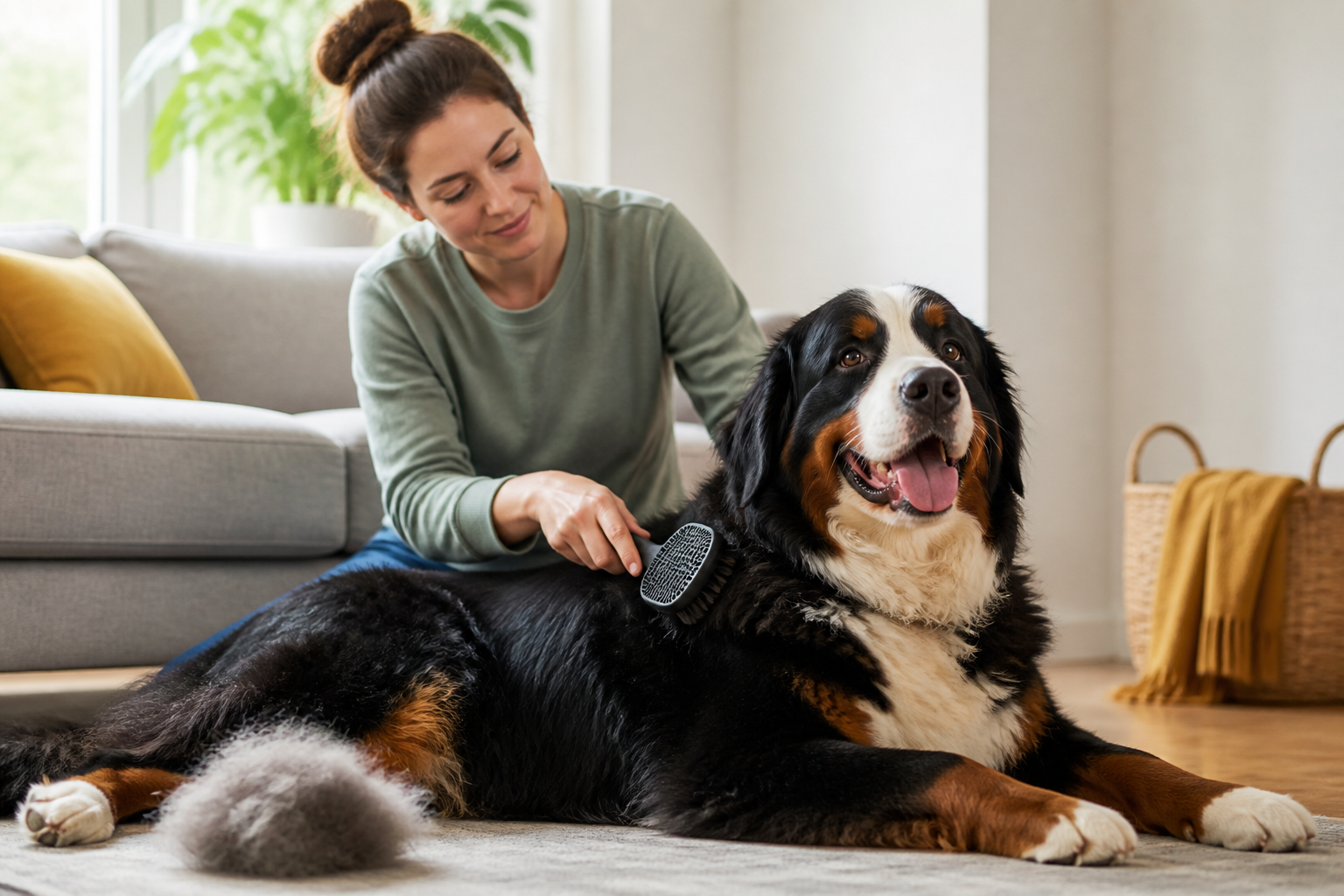
Walking through your living room and seeing tumbleweeds of tri-color fur is the standard experience for any Bernese Mountain Dog owner. These dogs are famous for their sweet temperaments and their massive, thick double coats. Because they originated in the Swiss Alps, their fur is designed to handle extreme cold and moisture. While that coat is beautiful, it also acts like a magnet for dirt, burrs, and tangles. At BaxterBoo, we know that the right tools make the difference between a quick grooming session and a multi-hour struggle. This guide covers the specific brushes you need to manage that heavy undercoat and keep the topcoat glossy. We will look at undercoat rakes, slicker brushes, and steel combs to help you build a professional-grade grooming kit at home.
Understanding the Bernese Mountain Dog Coat
Before picking up a tool, you must understand what you are brushing. The Bernese Mountain Dog has a double coat. The outer coat is long, thick, and slightly wavy or straight. Underneath that lies a soft, woolly undercoat that provides insulation.
This undercoat is the source of most your shedding problems. It dies and falls out throughout the year, but it often gets trapped under the long guard hairs. If you do not remove this dead hair, it creates mats. These mats sit close to the skin and can cause irritation or even infections.
Quick Answer: The best grooming kit for a Bernese Mountain Dog includes a long-toothed undercoat rake, a firm slicker brush with long pins, and a stainless steel finishing comb. Using these three tools in sequence allows you to reach the skin and remove dead fur effectively.
The Seasonal Blow
Twice a year, your Berner will "blow" their coat. This usually happens in the spring and autumn. During these times, the shedding increases significantly. You might find that a standard brush just skims the surface without touching the loose wool underneath. This is why having specialized tools is non-negotiable for this breed.
The Undercoat Rake: Your Heavy Lifter
The undercoat rake is the most important tool in your arsenal. Unlike a standard hairbrush, a rake has long, widely spaced metal teeth. These teeth reach through the thick outer coat to grab the loose, dead fluff in the undercoat.
When shopping at BaxterBoo, look for a rake with rounded pins. You want the tool to be effective but gentle on the skin. A rake with a double row of teeth can be even more efficient for the dense "pants" or thigh area of a Berner. You can find additional options in our dog brushes and combs collection.
How to Use the Rake
Do not just drag the rake across the top of the dog. You should use a technique called line brushing. Start at the bottom of the leg or the base of the tail. Lift the hair with one hand and brush the hair underneath in the direction of growth.
Step 1: Part the hair. / Use your hand to expose the skin so you can see where you are working.
Step 2: Pull the rake. / Use short, gentle strokes to pull the rake through the hair from the skin outward.
Step 3: Move upward. / Work your way up the body, section by section, until you have covered the whole dog.
Key Takeaway: An undercoat rake is designed to pull out dead hair before it mats, making it the most effective tool for managing seasonal shedding.
The Slicker Brush for Daily Maintenance
A slicker brush is a flat or curved head with many fine wire pins. For a Bernese Mountain Dog, you need a firm slicker brush with long pins. Short-pinned slickers are for thin-coated breeds and will not reach the base of a Berner's coat.
The slicker brush is excellent for smoothing the coat and removing surface debris. It is also the best tool for "fluffing" the hair after a bath or a long walk. Many owners use the slicker brush daily to keep the dog looking tidy between deeper grooming sessions. One option is the Master Grooming Tools Ergonomic Slicker Dog and Cat Brush, which features stainless steel pins and a cushioned design.
Avoiding "Pin Heads"
One common mistake is buying a slicker brush with tiny plastic balls on the ends of the pins. While these seem like they would be gentler, they actually cause problems for Berners. The balls can snag and split the thick hair. They also make it harder for the brush to penetrate the dense undercoat. Choose a brush with high-quality, rounded stainless steel pins instead.
Vet Tip: Check your dog's skin for redness or "brush burn" after using a firm slicker. If the skin looks irritated, you may be using too much pressure or the pins may be too sharp.
The Stainless Steel Comb: The Truth Teller
The steel comb is often overlooked, but it is the "truth teller" of grooming. After you think you are finished brushing with the rake and slicker, run a long-toothed steel comb through the coat. If the comb snags, there is still a mat or a tangle that needs attention.
A good comb for a Bernese Mountain Dog should have two sides. One side should have widely spaced teeth for initial detangling. The other side should have finer teeth for finishing. A long-hair shedding comb is another option within our dog brushes and combs category.
Common Matting Areas
Berners tend to mat in specific spots. You should pay extra attention to these areas with your comb:
- Behind the ears (the "fro" hair is very fine and mats easily)
- The "pants" or back of the thighs
- Under the front armpits
- The tail base
- Between the toes
Bottom line: If a steel comb cannot pass through the coat from skin to tip, your dog is not fully brushed.
Essential Grooming Tool Comparison
| Tool Type | Primary Purpose | Best Used For |
|---|---|---|
| Undercoat Rake | Removing dead undercoat | Heavy shedding seasons and thick "pants" area |
| Firm Slicker Brush | Daily maintenance and fluffing | Removing surface dirt and smoothing the topcoat |
| Steel Comb | Finding hidden mats | Finishing the groom and checking behind ears |
| Thinning Shears | Hygiene and shaping | Trimming foot hair and ear edges |
Hygiene Trimming and Specialty Tools
While we generally do not shave Bernese Mountain Dogs, some light trimming is helpful for hygiene. The hair on the bottom of the feet can grow quite long. This hair traps mud and ice, which can be uncomfortable. It also makes the dog more likely to slip on hardwood floors.
Scissors and Thinning Shears
A pair of regular grooming scissors is useful for clearing out the hair between the paw pads. Thinning shears are even better for the tops of the feet. They allow you to thin out the "Grinch feet" look without leaving harsh scissor lines. You can also use thinning shears to tidy up the messy hair around the edges of the ears.
The High-Velocity Dryer
If you bathe your Berner at home, a standard human hairdryer will not work. It takes hours to dry a double coat with a hand dryer, and the heat can damage the skin. A high-velocity dryer uses air pressure to blast water and loose fur out of the coat.
This tool is a favorite among professional groomers. It helps to separate the hair and allows you to see the skin clearly. Using a high-velocity dryer once a week can actually blow out loose undercoat before it even has a chance to fall on your floor.
Skin Health and the Pharmacy Connection
Regular brushing is not just about looks. It is a health check. When you are deep in the coat with your rake, you can see the skin. Look for lumps, bumps, or red spots. Bernese Mountain Dogs are prone to hot spots, which are areas of skin that become inflamed and infected very quickly.
Hot spots often happen when moisture is trapped against the skin by a mat or thick fur. If your dog is constantly licking or scratching a specific spot, it is time to investigate. Our pharmacy carries FDA-approved medications through our partnership with Pet's Choice. If your veterinarian identifies a skin infection or persistent allergy, you can manage their care easily through our pet pharmacy.
Vet Tip: If you notice a foul smell, oozing skin, or extreme sensitivity during brushing, stop and consult your vet. These can be signs of a hot spot or a fungal infection that requires medical treatment.
Managing Floppy Ears
The floppy ears of a Berner are adorable, but they trap moisture and heat. This creates the perfect environment for bacteria and yeast. During your weekly grooming session, always flip the ears over. They should be pale pink and smell clean.
If you notice a brown discharge or a "yeasty" smell, your dog might have an ear infection. We provide a range of ear cleaners and medicated drops through our pharmacy. Regular cleaning with a vet-approved solution can prevent these issues from becoming chronic. For routine supplies, explore our dog ear care selection.
Brushing Routine Step-by-Step
To keep your Berner's coat in top shape without spending four hours on it every weekend, follow this routine. Consistency is more important than duration.
Step 1: Quick slicker pass. / Every day, spend five minutes running a slicker brush over the main body to remove surface dirt.
Step 2: Weekly rake session. / Once a week, use your undercoat rake to do a full line-brushing of the entire dog.
Step 3: The comb check. / Follow the rake session by running your steel comb through the high-friction areas behind the ears and legs.
Step 4: Hygiene check. / Check the paw pads for long hair and the ears for any signs of redness or odor.
Key Takeaway: Regular maintenance prevents the need for "rescue grooming," which is often painful for the dog and exhausting for the owner.
The Importance of Professional Grooming
Even with the best tools at home, a professional groomer can be a great partner. They have access to industrial tubs and heavy-duty dryers that make the job easier. Most Bernese Mountain Dogs benefit from a professional groom every 8 to 12 weeks.
The professional can handle the heavy de-shedding and the precise trimming around the feet and hocks. Between these appointments, your BaxterBoo tools will keep the coat from matting.
Training Your Berner to Enjoy Brushing
Because Berners are large dogs, you cannot force them to stay still if they really want to leave. You must make grooming a positive experience. Start when they are puppies. If you have an adult dog who hates the brush, take it slow.
- Let them sniff the tools.
- Give a high-value treat for just sitting near the brush.
- Brush for thirty seconds, then stop and give a treat.
- Gradually increase the time.
Grooming should be a bonding activity. Many Berners grow to love the feeling of the rake because it relieves the itch of the trapped undercoat.
Maintaining Your Tools
High-quality brushes are an investment. To keep them working well, you must maintain them.
- Remove hair from the slicker brush and rake after every use. You can use your steel comb to pull the hair out of the pins.
- Wash your brushes occasionally with warm water and a mild soap.
- Ensure the metal teeth are completely dry to prevent rusting.
- Check for bent pins. A bent pin can scratch the skin and should be straightened or the brush replaced.
Seasonal Considerations
During the winter, your Berner's coat will be at its thickest. You might think they need less brushing because it is cold, but the opposite is true. Snow and moisture can lead to mats very quickly.
In the summer, the double coat actually helps insulate the dog against the heat. Never shave a Bernese Mountain Dog down to the skin. This destroys the coat's ability to regulate temperature and exposes their sensitive skin to sunburn. Focus on removing the dead undercoat to allow air to circulate through the guard hairs instead.
Conclusion
Managing a Bernese Mountain Dog's coat is a significant commitment, but the right tools make it manageable. By using an undercoat rake for the heavy lifting, a slicker brush for daily smoothing, and a steel comb for detail work, you can keep your dog comfortable and your home cleaner. Remember that grooming is also an essential part of monitoring your pet's health. If you notice any skin issues or ear problems during your routine, talk to your veterinarian about the prescription options available through the BaxterBoo pharmacy. For all your daily grooming needs, from brushes to specialty shampoos, our dog grooming supplies have you covered.
Bottom line: Invest in high-quality tools with long pins and no protective heads to effectively reach the undercoat of your Bernese Mountain Dog.
FAQ
How often should I brush my Bernese Mountain Dog?
You should aim for a thorough brushing at least once a week. However, a quick five-minute daily session with a slicker brush will significantly reduce the amount of hair in your home and prevent small tangles from turning into large mats. During the heavy shedding seasons in spring and fall, you may need to use an undercoat rake every two or three days.
Can I use a Furminator on my Bernese Mountain Dog?
While some owners use bladed de-shedding tools, you must be very careful. These tools can sometimes cut the healthy topcoat instead of just removing the dead undercoat. A traditional undercoat rake with rounded pins is generally safer for a Berner's coat because it pulls out the loose fur without damaging the protective guard hairs.
Why does my Berner get mats behind the ears?
The hair behind a Bernese Mountain Dog's ears is much finer and softer than the hair on the rest of the body. This "fro" hair tangles easily with the slightest friction from scratching or head shaking. Using a steel comb in this area every few days is the best way to prevent these painful mats from forming.
Should I shave my Bernese Mountain Dog in the summer?
No, you should never shave a double-coated breed like a Bernese Mountain Dog unless it is medically necessary. Their coat provides insulation that keeps them cool in the summer and protects them from UV rays. Shaving can permanently damage the coat texture and leads to a higher risk of heatstroke and skin cancer.






