
 Save 15% on your 1st Autoship learn more

 Email us
 Live Chat
 FAQs
FAQs





Introduction
Quick Answer: The right brush depends entirely on your dog's coat type and length. Short-haired dogs benefit from bristle or rubber brushes, while long-haired and double-coated breeds require slicker brushes and undercoat rakes to prevent painful mats and manage heavy shedding.
You might be standing in the grooming aisle or scrolling through dozens of options online, wondering why there are so many different shapes and styles of brushes. Perhaps you have noticed more fur on your rug than usual, or you found a small knot behind your dog's ear that a standard comb just will not budge. At BaxterBoo, we understand that a brush is not just a tool for vanity. It is a vital piece of health equipment for your dog. This guide will help you identify your dog's specific coat type and match it to the correct grooming tools. Choosing the right brush makes grooming a bonding experience rather than a chore.
Why the Right Brush Matters
Using the wrong brush is like trying to use a fine-tooth comb on a thick, curly wig. It can pull on the skin, cause pain, and fail to reach the layers of hair that actually need attention. When you use a brush designed for your dog's specific hair texture, you do more than just remove loose fur.
Regular brushing distributes natural skin oils across the hair shaft. This process keeps the coat shiny and provides a natural barrier against moisture and dirt. It also allows you to feel for lumps, bumps, or skin irritations that might be hidden under a thick coat. If you use a tool that is too harsh, you risk "brush burn," which is a skin irritation caused by repetitive scraping from stiff bristles or pins.
Proper grooming also helps manage environmental allergens. By removing loose fur and dander regularly, you keep your home cleaner and may even reduce your own seasonal allergy symptoms. It is a proactive way to maintain your dog's comfort and your home's cleanliness.
Identifying Your Dog's Coat Type
Before you pick a tool, you must accurately categorize your dog's coat. Most dogs fall into one of five categories.
Smooth and Short Coats
These dogs have hair that lies close to the body. Think of breeds like Beagles, Boxers, and Greyhounds. The hair is often firm to the touch and does not tangle, but these dogs can still shed a surprising amount of fine hair.
Double Coats
Double-coated dogs have a soft, insulating undercoat and a tougher outer coat called guard hairs. Breeds like Labradors, Huskies, and German Shepherds fall here. These dogs "blow" their coats twice a year, resulting in massive amounts of shed fur.
Long or Silky Coats
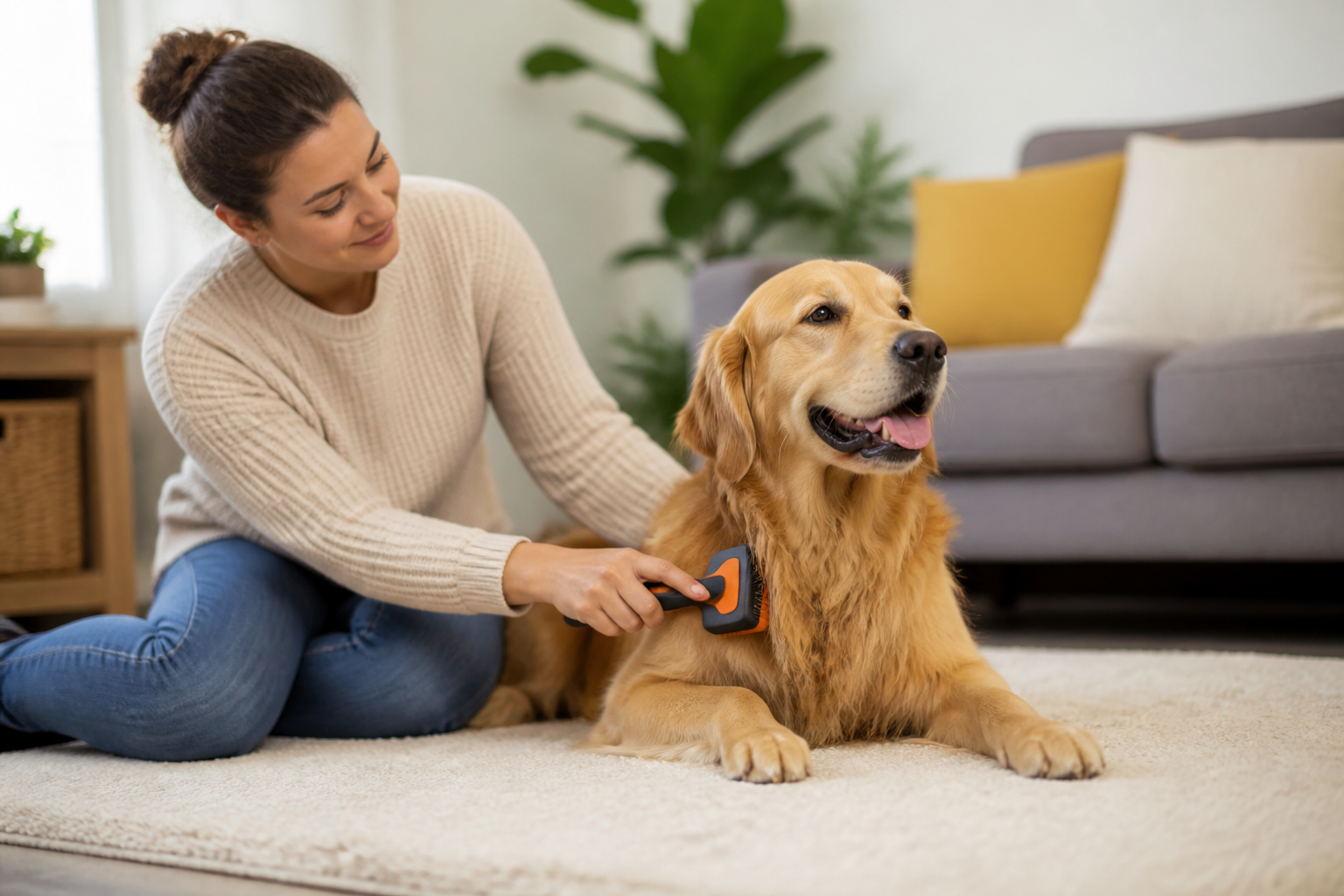
Breeds like Yorkshire Terriers, Maltese, and Golden Retrievers have hair that grows long and can be prone to tangling. This coat type requires frequent maintenance to prevent the hair from knotting into tight mats, especially around the ears and legs.
Curly or Wool Coats
Poodles and Poodle mixes often have hair that continues to grow rather than shedding out. This hair traps loose fur within the curls, which quickly leads to matting if not brushed down to the skin regularly.
Wire Coats
Breeds like Border Terriers or Wire Fox Terriers have a rough, bristly outer coat. This coat type is unique because the hair does not shed easily on its own and often needs specific tools to remove dead growth.
Key Takeaway: Always match the brush to the hair texture rather than just the breed name. Some mixed breeds may have different coat types than their parentage suggests.
The Slicker Brush: The Multi-Tasking Tool
The slicker brush is perhaps the most common tool in the grooming world. It features a flat or slightly curved head with rows of thin, wire pins. These pins are usually angled to help them grab loose hair and break up small tangles without scratching the skin.
Slicker brushes are the go-to choice for medium-to-long-haired dogs and those with curly coats. They are excellent for removing debris and loose fur that has become trapped deep within the coat. If you have a Golden Retriever or a Doodle, the slicker brush will likely be your most used tool. You can explore our dog brushes and combs to compare options for different coat types.
When using a slicker brush, use short, gentle strokes. Because the pins are metal, applying too much pressure can irritate the dog's skin. You should always check the pins for any sharp edges or bent wires before you start a grooming session.
Vet Tip: If you notice your dog flinching or if the skin looks red after brushing, you may be using too much pressure. Always test the brush on the back of your own hand first. If it feels scratchy or painful to you, it is too hard for your dog.
The Bristle Brush: For Shine and Short Hair
A bristle brush is a simple tool that uses clusters of natural or synthetic bristles. These bristles are packed tightly together and vary in stiffness. This brush does not reach deep into thick coats, so it is best for dogs with short or smooth hair.
For a Boxer or a Great Dane, a firm bristle brush is perfect. It removes surface dust and loose hair while stimulating the skin to produce oils. This is the best tool for finishing a grooming session on any dog to give them that "show-ring" shine.
If your dog has very sensitive skin or is a puppy just learning to enjoy grooming, a soft bristle brush is an excellent starting point. It feels more like a massage than a grooming session. This helps build a positive association with being handled and brushed.
Pin Brushes: The Gentle Finisher
Pin brushes look very similar to the brushes humans use. They have longer, flexible wires with protective tips on the ends to prevent scratching. While they are common, they are actually not the best for removing mats or heavy undercoat.
Instead, pin brushes are "finishing" brushes. They are ideal for dogs with long, silky hair, like an Afghan Hound or a Shih Tzu. The long pins go through the hair to separate strands and provide a fluffy, finished look. They are also useful for dogs with single coats that do not have a lot of undercoat to manage.
Bottom line: Use a pin brush to fluff and style long hair, but do not rely on it to remove deep tangles or heavy shedding.
Undercoat Rakes: For the Heavy Shedders
If you own a Husky, a Shepherd, or a Malamute, an undercoat rake is a non-negotiable tool. These tools look like a small garden rake or a razor with long, widely spaced metal teeth. They are designed to bypass the top layer of hair and reach deep into the undercoat.
During shedding season, a rake pulls out the dead, fuzzy undercoat before it can fall off onto your couch. This is essential for preventing "impacted" coats, where dead hair becomes trapped and prevents air from reaching the skin. An impacted coat can cause your dog to overheat and may lead to skin infections.
At BaxterBoo, we carry a variety of rakes with different tooth lengths. You must choose a rake that matches the length of your dog's coat. If the teeth are too short, they will not reach the undercoat. If they are too long, they might scrape the skin.
For more information about managing a heavy-shedding coat, read our guide to Australian Shepherd shedding.
Rubber Brushes and Grooming Mitts
Rubber brushes and grooming mitts are fantastic for short-haired dogs and for use during bath time. These tools have soft rubber nubs that act like a magnet for loose, short hair.
As you rub the brush in a circular motion over your dog's coat, the rubber nubs pull away dead hair and massage the skin. This is often the most enjoyable brush for dogs that are normally nervous about grooming. Because there are no sharp edges or metal pins, there is almost no risk of causing discomfort.
These are also highly effective during a bath. You can use a rubber brush to work shampoo deep into the coat, which helps clean the skin and loosen even more hair while the coat is wet. The BASS Brushes collection includes bathing and grooming brush options.
Essential Metal Combs
No grooming kit is complete without a high-quality metal comb. Often called "greyhound combs," these have two different teeth spacings on one tool. One half usually has widely spaced teeth, while the other half is more fine.
You should use the comb after you have finished brushing with a slicker or pin brush. The comb acts as a "tangle checker." If the comb can slide through the hair from the skin to the tips without snagging, your dog is truly tangle-free. This is especially important for curly-coated breeds and Doodles.
The Flea Comb
A flea comb is a specialized tool with extremely fine, tightly packed teeth. While its primary job is to find and remove fleas and their eggs, it is also useful for cleaning the delicate hair around a dog's eyes. It can gently remove "sleepy" or dried tear stains without pulling on the sensitive skin near the face.
Comparison of Dog Brush Types
| Brush Type | Best Coat Type | Primary Purpose |
|---|---|---|
| Slicker Brush | Medium, Long, Curly | Removing mats and tangles |
| Bristle Brush | Short, Smooth | Removing surface dirt, adding shine |
| Pin Brush | Long, Silky | Finishing and fluffing hair |
| Undercoat Rake | Double Coats | Removing dead undercoat during shedding |
| Rubber Brush | Short, All (for bath) | Massaging skin, removing loose short hair |
| Metal Comb | All Medium to Long | Checking for hidden tangles and mats |
Step-by-Step: Transitioning to a New Grooming Routine
If your dog is not used to being brushed, or if you are introducing a new tool like an undercoat rake, follow these steps to ensure they stay comfortable.
Step 1: Introduce the tool visually. / Let your dog sniff the brush while it is not in use and offer a small treat.
Step 2: Start with a "test" stroke. / Use the brush on a flat area of the body, like the back or shoulder, for just a few seconds.
Step 3: Gradually increase the duration. / Brush for a few minutes each day, slowly moving toward more sensitive areas like the belly, ears, and tail.
Step 4: End on a high note. / Always stop the session before your dog becomes restless and follow up with a favorite treat or a short play session.
Handling Grooming Anxiety
Many dogs develop anxiety surrounding grooming, especially if they have had a painful experience with a mat being pulled in the past. To make the process easier, try to groom your dog when they are naturally tired, such as after a long walk.
If your dog is particularly stressed, you might consider calming aids. Our dog anxiety and calming collection includes several options that can help take the edge off before a grooming session. Always ensure the environment is quiet and free of distractions. Using a licking mat with some peanut butter can also keep a dog distracted while you work through their coat.
When Grooming Reveals Health Issues
Regular brushing often reveals issues that need medical attention. You might find a localized patch of hair loss, extreme redness, or a strange bump. Sometimes, you may find "flea dirt," which looks like small specks of black pepper.
If you discover signs of skin irritation, hot spots, or parasites, a visit to your veterinarian is the best next step. For chronic skin conditions or allergies that lead to poor coat health, your vet may prescribe specific medicated shampoos or diets.
Our pharmacy carries a wide range of FDA-approved medications and prescription pet foods through our partnership with Pet's Choice. Whether your dog needs prescription flea and tick protection or a specialized diet for skin sensitivities, we provide a convenient way to manage these ongoing health needs. Having these items delivered through our Autoship program ensures you never run out of the supplies your dog needs for their health and comfort.
Building Your Home Grooming Kit
You do not need every tool on the market, but a well-curated kit will save you time and money. For most owners, a kit should include:
- A primary brush matched to the coat (slicker, bristle, or rake)
- A metal finishing comb
- A high-quality dog shampoo
- Nail clippers and styptic powder
- A detangling spray (essential for long hair)
We carry over 500 trusted brands at BaxterBoo, and our team handpicks every grooming tool we stock. We focus on ergonomic handles and durable materials because we know that grooming a large dog or a thick-coated breed can be a workout for your hands.
You can find additional supplies in our grooming tools category.
Bottom line: Investing in a few high-quality tools is more effective and more comfortable for your dog than buying a multi-pack of low-quality brushes.
Conclusion
The right brush is the foundation of a healthy coat and a comfortable dog. By matching your tool choice to your dog's hair type, you prevent painful matting and reduce the amount of fur that ends up on your furniture. Whether you are managing the heavy shedding of a German Shepherd with an undercoat rake or keeping a Boxer's coat shiny with a bristle brush, consistency is the most important factor.
Remember to check your dog's skin regularly during these sessions. If you find anything concerning, consult your veterinarian to rule out underlying issues. Once you have a plan, we are here to help with everything from grooming tools to prescription care.
- Check your dog's coat type before buying a new tool.
- Use a metal comb to ensure you have reached all the way to the skin.
- Join the MVP Rewards programme to earn back on your grooming essentials.
- Consider Autoship for recurring needs like shampoos and skin supplements.
FAQ
How often should I brush my dog?
Most dogs benefit from being brushed at least two or three times a week. However, if you have a long-haired or curly-coated breed, daily brushing is often necessary to prevent small tangles from turning into tight mats. During seasonal shedding periods, double-coated dogs may also require daily sessions to manage the volume of loose undercoat.
Can I use a human hairbrush on my dog?
While a human pin brush might look similar to a dog brush, it is usually not the best choice. Human brushes are often not sturdy enough to reach through thick dog fur and may not have the correctly angled pins to remove loose undercoat. Using a tool specifically designed for pets ensures the pins are safe for canine skin and effective for their specific hair density.
What should I do if I find a mat that will not come out?
Never try to pull or yank a mat out with a brush, as this can tear the dog's skin. You can try applying a detangling spray and gently picking at the mat with a metal comb, starting from the outside and moving inward. If the mat is tight against the skin, it is safest to have a professional groomer or vet remove it with clippers to avoid accidental cuts.
My dog hates being brushed. What can I do?
Start with very short sessions and use high-value treats to create a positive association. Use a soft brush, like a rubber curry brush or a soft bristle brush, which feels more like petting. If your dog is extremely fearful, consult a trainer or veterinarian to ensure there isn't an underlying pain issue or severe anxiety that needs to be addressed first.






