
 Save 15% on your 1st Autoship learn more

 Email us
 Live Chat
 FAQs
FAQs





Introduction
You are standing in the grooming aisle or scrolling through dozens of options online, trying to figure out why there are so many different shapes and materials. Your dog might have a thick coat that seems to trap every leaf in the yard, or perhaps they have short hair that ends up all over your sofa. At BaxterBoo, we know that the right tool makes the difference between a stressful chore and a relaxing bonding session. This guide covers exactly what type of dog brush to use based on your pet's specific coat type and grooming needs. Whether you are managing a heavy-shedding Husky or a silky Yorkie, using the correct brush keeps their skin healthy and their coat looking its best. Choosing the right tool ensures you reach the layers of fur where mats and debris actually hide.
Quick Answer: The best brush for your dog depends on their coat length and density. Slicker brushes work for most medium-to-long coats, while bristle brushes and rubber mitts are ideal for short, smooth hair. Double-coated breeds require an undercoat rake to reach the dense inner layer.
Understanding Your Dog's Coat Type
Before you pick a tool, you must identify what kind of hair your dog has. Not all fur is created equal, and using a tool designed for a short-haired Lab on a curly-coated Poodle will not get the job done.
- Short, Smooth Coats: These dogs have hair that lies close to the body. Think of Boxers, Pugs, or Beagles. They shed, but they rarely get mats.
- Double Coats: These dogs have a harsh outer coat and a soft, wooly undercoat. German Shepherds, Huskies, and Golden Retrievers fall into this category. They need tools that can reach through the top layer.
- Long, Silky Coats: These coats grow continuously and feel more like human hair. Examples include Yorkshire Terriers and Maltese. They tangle easily and require daily attention.
- Curly or Wooly Coats: Poodles and many "Doodle" mixes have hair that traps loose fur instead of letting it fall to the ground. This leads to heavy matting if not brushed correctly.
- Wire Coats: These dogs have a rough, bristly outer layer. Terriers like the Jack Russell or Wire Fox Terrier are common examples.
The Slicker Brush: A Versatile Essential
The slicker brush is perhaps the most common tool in a groomer's kit. It features a flat or slightly curved head with rows of thin, wire pins. These pins are usually angled slightly to help grab loose hair and break up small tangles without pulling too hard on the skin.
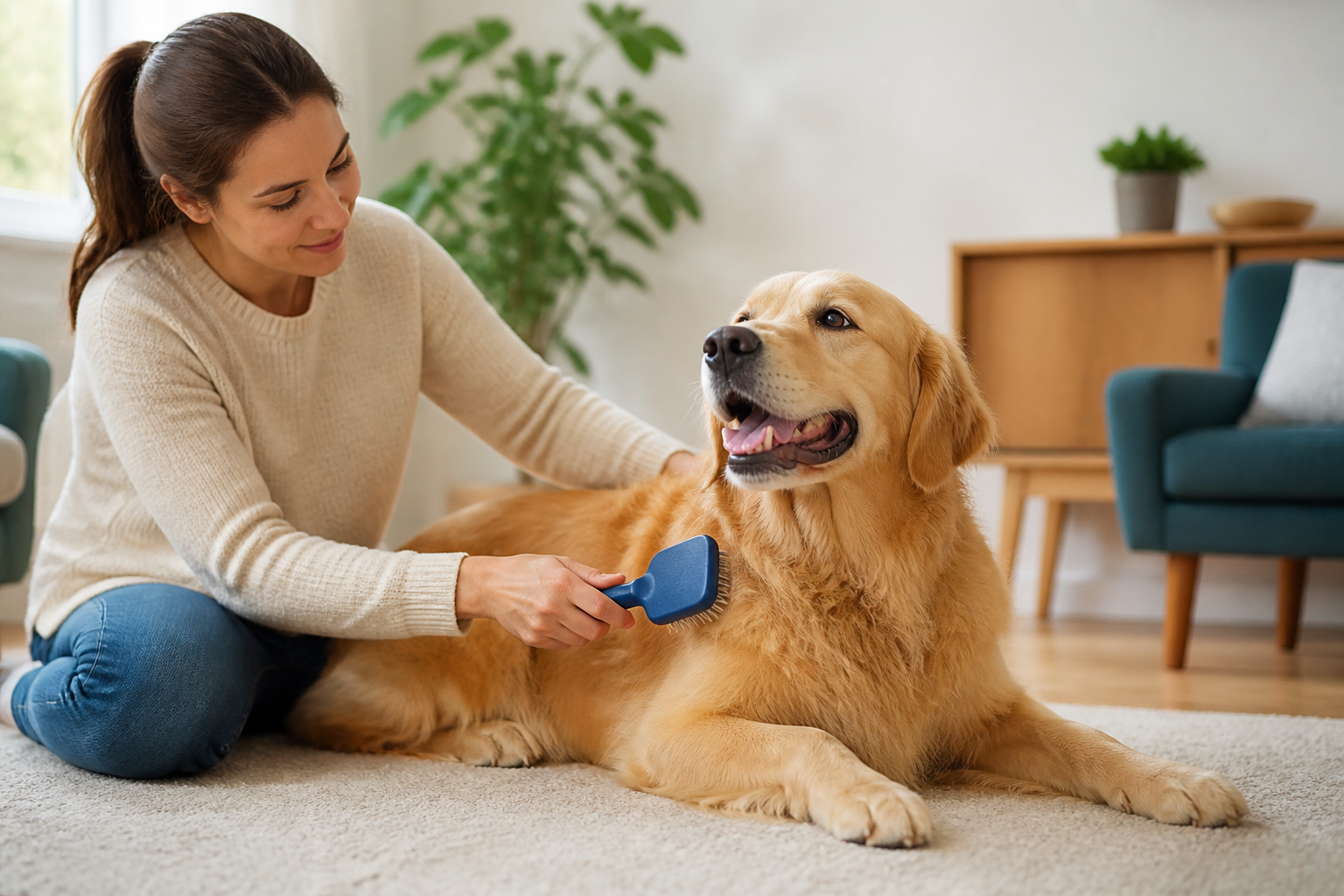
We recommend our dog brushes and combs for dogs with medium to long hair or curly coats. They are excellent for removing surface mats and pulling out loose fur before it ends up on your carpet. If you have a Golden Retriever or a Cocker Spaniel, this is likely your daily go-to tool.
When using a slicker brush, always use a light touch. The wire pins can be sharp. If you press too hard, you may cause "brush burn," which is a painful skin irritation. Always brush in the direction of hair growth and check the skin frequently for any redness.
Vet Tip: If your dog has sensitive skin or a very thin coat, look for a slicker brush with protective tips on the pins. If you notice persistent skin redness or if your dog is constantly scratching, consult your veterinarian to rule out allergies or skin infections. Our pharmacy carries treatments for skin conditions.
Bristle Brushes for Shine and Smoothness
Bristle brushes are the simplest tools and are perfect for dogs with short, smooth coats. They use clusters of natural or synthetic bristles to remove surface dust and loose hair. Because the bristles are soft, they also massage the skin and help distribute natural oils throughout the coat.
For a dog like a Boston Terrier or an Italian Greyhound, a bristle brush is often all you need. It won't reach deep into a thick coat, but it is perfect for adding a finishing shine. These brushes are also a great way to get a new puppy used to the sensation of being groomed because they are so gentle.
How to Use a Bristle Brush
Step 1: Start at the head and work your way toward the tail.
Step 2: Use long, sweeping strokes in the direction of the fur.
Step 3: Pay extra attention to the back and sides where loose hair tends to accumulate.
Rakes and De-shedding Tools for Double Coats
If you own a dog that "blows" its coat twice a year, you know the struggle of keeping up with the mess. A standard brush just won't cut it for these breeds. You need an undercoat rake.
A rake looks like a small T-shaped tool with one or two rows of sturdy metal pins. These pins are designed to bypass the outer guard hairs and dive deep into the thick undercoat. This is where the dead, itchy fur lives. Removing this hair is vital for your dog's comfort and helps them regulate their body temperature.
We carry 500+ trusted brands at BaxterBoo, and many offer specialized de-shedding tools like the FURminator or specific rakes from Kong. You can also explore Master Grooming Tools undercoat rakes. These tools use a fine-toothed edge to grab the loose undercoat. They are incredibly effective but should be used with caution. Never use them on a dog with a single coat or a very thin coat, as the metal edge can scratch the skin.
Key Takeaway: Undercoat rakes are necessary for double-coated dogs to prevent "impaction." This happens when dead fur gets trapped against the skin, leading to hotspots or overheating.
Pin Brushes for Long, Silky Hair
Pin brushes look very similar to the brushes humans use. They have flexible wire pins that are spaced further apart than those on a slicker brush. Most pin brushes have rounded tips to ensure they don't scratch the skin.
These are best for dogs with long, fine hair, such as Afghan Hounds or Shih Tzus. They provide a gentle way to detangle long strands without causing significant breakage. However, they are not very effective at removing a thick undercoat. They are primarily used as a finishing tool to fluff the coat and remove minor tangles after a more thorough brushing session.
Bottom line: Pin brushes are for maintenance and finishing on long-haired breeds, not for heavy de-shedding or mat removal.
Rubber Brushes and Curry Combs
Rubber brushes are underrated gems in the grooming world. They are usually made of a single piece of flexible rubber with soft nubs or "teeth." These are the best tools for dogs with very short hair that shed frequently, like Labradors or Pugs.
The rubber creates a magnetic-like effect that pulls loose hair right out of the coat. They are also fantastic for use during bath time. You can use the rubber brush to work shampoo deep into the fur while giving your dog a soothing massage. Since they have no sharp edges, they are the safest option for dogs who are nervous about grooming.
Dealing with Tangles and Mats
Mats are more than just an eyesore. They can pull on the skin, cause pain, and trap moisture that leads to bacterial infections. If you find a mat, do not reach for the scissors first. Cutting mats out can easily lead to accidentally cutting your dog's skin.
Instead, use a metal comb and a detangling spray. Hold the mat at the base, close to the skin, so you aren't pulling on the dog's body. Use the end of the comb to slowly pick the mat apart from the outside in. If the mat is too tight, you may need a specialized de-matting tool with serrated blades, but use these with extreme caution.
For more guidance on curly coats, read how to groom a dog with curly hair.
- Mat Checklist:
- Check behind the ears and in the "armpits" where friction is high.
- Always detangle before giving your dog a bath, as water can make mats tighter.
- Use a high-quality detangling spray to provide "slip" to the hair.
- If a mat is tight against the skin, it is safer to see a professional groomer.
Health and Hygiene Beyond the Brush
Brushing is the perfect time to perform a "wellness check" on your pet. As you move through the coat, look for signs of fleas, ticks, or unusual lumps. If you see tiny black specks that look like pepper, that is likely flea dirt.
If you discover a flea or tick infestation, brushing alone won't solve the problem. Our pharmacy at BaxterBoo offers a variety of flea and tick preventives. You can also browse the flea and tick collection for additional options.
We also carry supplements like Cosequin or Senilife for senior pets who might find it difficult to stand still for a long grooming session. If your dog has stiff joints, keep your grooming sessions short and provide a comfortable, non-slip surface for them to stand or lie on.
Key Takeaway: Regular grooming is a preventative health measure. It allows you to spot skin issues, parasites, or new growths long before they become emergencies.
Building Your Home Grooming Kit
You don't need every brush on the market. A well-curated kit should match your specific dog's needs. Most owners find that a combination of two tools works best.
For example, a Golden Retriever owner might need a slicker brush for daily use and an undercoat rake for the spring and fall shedding seasons. A Poodle owner might need a slicker brush and a high-quality metal comb to ensure they are getting all the way down to the skin.
- Grooming Essentials Checklist:
- A primary brush (Slicker, Bristle, or Rubber).
- A metal "Greyhound" style comb for checking your work.
- A flea comb for regular parasite checks.
- Styptic powder (like Kwik Stop) for nail trimming accidents.
- Dog-safe detangling spray.
Keeping Grooming Stress-Free
Many dogs develop a fear of the brush because of past experiences with pulling or pinching. To avoid this, make the brush a source of rewards. Let your dog sniff the tool and give them a high-quality treat like those from Stella and Chewy's or Zesty Paws.
Start with very short sessions. Even one minute of brushing followed by a treat is a win. Gradually increase the time as your dog becomes more comfortable. If your dog is particularly anxious, consider a calming supplement or a licking mat smeared with peanut butter to keep them distracted while you work.
Vet Tip: If your dog becomes aggressive or shows extreme fear during grooming, do not force the issue. This can lead to injury for both you and your pet. Speak with your veterinarian about behavioral support or professional grooming options that use sedation if necessary.
Conclusion
Choosing the right type of dog brush is one of the best things you can do for your pet's comfort and your home's cleanliness. From the versatile slicker brush for long-haired breeds to the gentle rubber curry comb for short-haired pups, having the correct tool saves time and prevents skin irritation. At BaxterBoo, we have been helping pet owners find the perfect gear since 2006. Our experts handpick every product to ensure your pet gets the best care possible. To make sure you never run out of grooming sprays, shampoos, or flea preventives, consider signing up for our Autoship programme. You will save on your orders and earn rewards through the MVP Rewards programme while keeping your dog looking like they just left the spa.
FAQ
Can I use a human hairbrush on my dog?
While a human brush might look similar to a pin brush, it is generally not recommended for regular use. Human brushes are designed for human hair density and may not reach the skin or remove the undercoat effectively on a dog. Additionally, the bristles on human brushes can sometimes be too stiff or poorly spaced, leading to tangles or skin irritation for your pet.
How often should I brush my dog?
The frequency depends on your dog's coat type, but most dogs benefit from brushing at least once or twice a week. Long-haired or curly-coated breeds often require daily brushing to prevent painful mats from forming. Dogs with double coats may need daily attention during shedding season to manage the high volume of loose fur and prevent it from clogging their coat.
What should I do if my dog has sensitive skin?
If your dog has sensitive skin, look for brushes with soft bristles or rubber nubs that provide a massage rather than a scratch. Avoid metal slicker brushes or rakes with sharp pins. You should also consult your vet if the sensitivity is accompanied by redness or itching, as our pharmacy can provide prescription diets and medications for skin allergies.
How do I know if I am brushing too hard?
You should always check the skin underneath the fur as you brush. If you see the skin turning pink or red, you are likely applying too much pressure or using a tool that is too abrasive for your dog's coat. A good rule of thumb is to test the brush on your own forearm first; if it feels scratchy or painful to you, it will likely feel the same to your dog.






