Save 15% on your 1st Autoship learn more

 Email us
 Live Chat
 FAQs
FAQs





Introduction
You lean in for a happy morning nuzzle only to be met with a cloud of "dog breath" that makes you recoil. It is a common moment for many owners. You notice a yellow film building up near the gumline or perhaps your dog has started dropping kibble while eating. These are the first signs that oral hygiene needs a bit more attention. At BaxterBoo, we know that keeping those pearly whites clean is about more than just a fresh-smelling greeting. It is a fundamental part of their long-term health and comfort. This post covers the most effective tools for home care including brushing techniques, dental chews, and professional solutions. Finding the right combination of these methods is the best way to ensure your dog stays happy and pain-free.
Quick Answer: The best way to clean a dog's teeth is a daily combination of mechanical brushing with pet-safe toothpaste and high-quality dental chews. While brushing is the gold standard for removing plaque, adding dental toys and water additives helps manage bacteria in dogs that resist the toothbrush.
Brushing: The Gold Standard for Dental Health
Most experts agree that manual brushing is the single most effective way to keep a dog’s mouth healthy. It works just like it does for us. The physical action of the bristles breaks up plaque before it has a chance to harden into tartar. Once plaque turns into tartar, which usually happens within 48 to 72 hours, it cannot be brushed away at home. You need a professional scaling to remove it.
When you start a brushing routine, you must use products designed specifically for dogs. Human toothpaste often contains xylitol or high levels of fluoride. Both of these ingredients are toxic to dogs if swallowed. Dog-specific pastes come in flavors like poultry or peanut butter to make the experience more like a treat. We carry several dog toothpaste options that continue working to break down bacteria even after you finish brushing.
Choosing the Right Tools
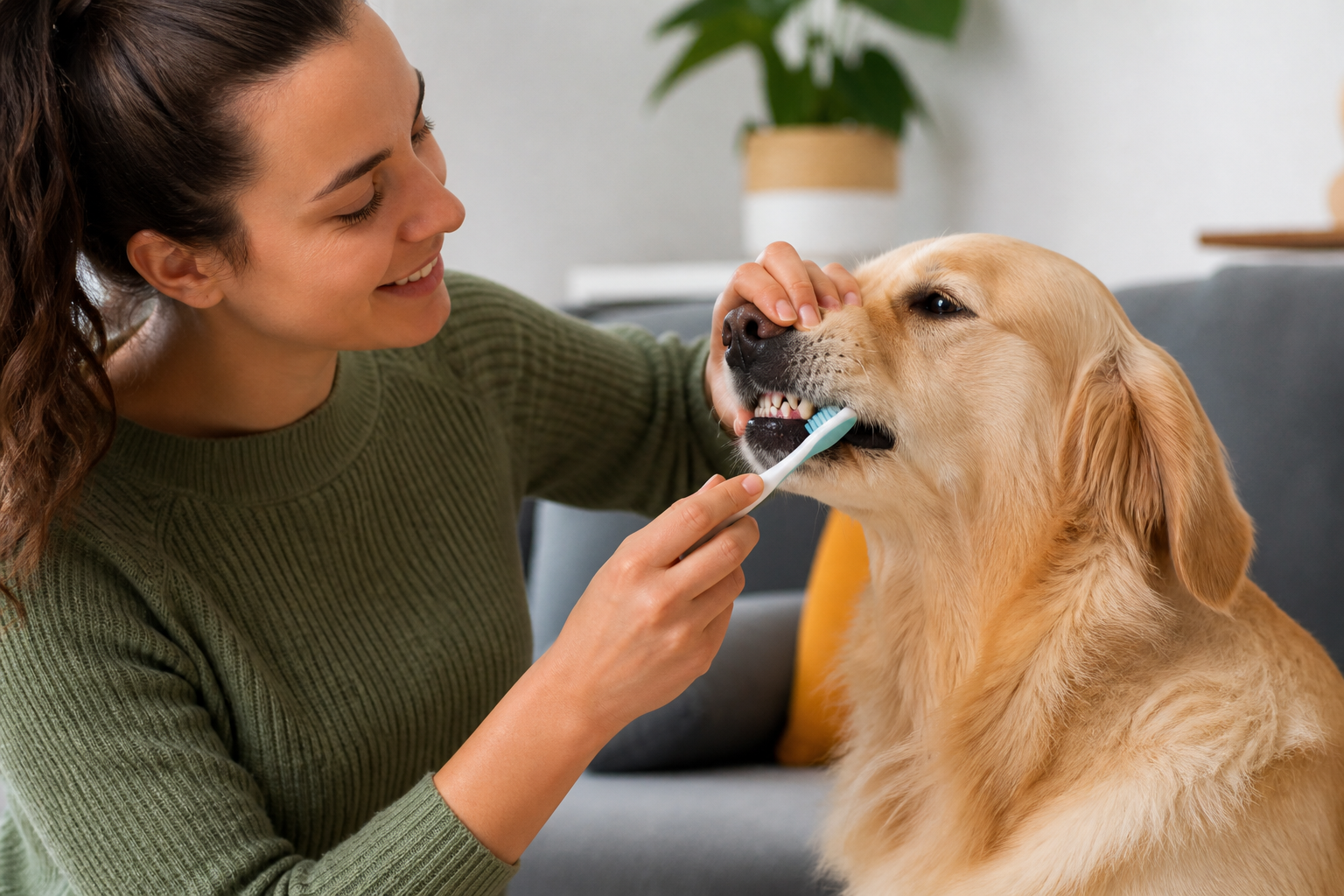
A standard human toothbrush is often too hard for a dog’s sensitive gums. Look for a brush with soft, rounded bristles. If you have a small breed or a puppy, a finger brush is a great starting point. These small silicone caps fit over your pointer finger. They allow you to feel exactly where you are cleaning and are much less intimidating for a nervous dog. For larger dogs, a long-handled brush with an angled head helps you reach the back molars where most buildup occurs.
Step 1: Introduce the paste / Let your dog lick a small amount of poultry-flavored toothpaste off your finger to create a positive association.
Step 2: Touch the teeth / Gently lift the lip and rub your finger along the gums and teeth without a brush to get them used to the sensation.
Step 3: Introduce the brush / Add a small amount of paste to the brush and use gentle circular motions on the outside surfaces of the teeth.
Step 4: Focus on the back / Spend extra time on the upper back molars as these teeth tend to collect the most tartar.
Key Takeaway: Daily brushing is the only home method that physically removes plaque from the gumline before it mineralizes into permanent tartar.
The Role of Dental Chews and Treats
Not every dog is a willing participant in a brushing routine. This is where dental chews become a vital part of your toolkit. These treats are engineered with specific textures that scrape the teeth as the dog chews. Many high-quality options like Greenies dental chews are designed to be flexible. This allows the tooth to sink into the chew, cleaning all the way down to the gumline.
It is important to look for the Veterinary Oral Health Council (VOHC) seal on the packaging. This seal means the product has undergone testing to prove it effectively reduces plaque or tartar. While these treats are helpful, they are also a source of calories. You should always account for dental treats in your dog's daily food allowance to prevent weight gain.
Mechanical vs. Enzymatic Chews
Some chews work purely through mechanical action. They are hard or fibrous and act like a loofah for the teeth. Others are enzymatic. These contain proteins that help break down the biofilm of bacteria in the mouth. Using a variety of these can provide a more comprehensive clean. For example, a firm dental bone might be great for a heavy chewer, while a softer enzymatic treat might be better for a senior dog with sensitive gums.
Vet Tip: Always supervise your dog when they are enjoying a dental chew to prevent choking and the swallowing of large pieces. If your dog tends to "gulp" their treats rather than chewing them thoroughly, a dental chew may not be the safest or most effective option for them.
Dental Toys for Daily Maintenance
Toys are an excellent way to turn dental hygiene into a game. Certain materials are better than others for cleaning teeth. Solid rubber toys with ridges or "nubs" are designed to massage the gums and scrape away soft debris. Rope toys can also be effective as the cotton fibers act like a natural floss between the teeth. However, you must inspect rope toys regularly. Frayed strings can be swallowed and cause intestinal blockages.
Brands like Kong offer toys specifically designed to be stuffed with dental-friendly pastes. This encourages prolonged chewing. As the dog works to get the treat out, the textured surface of the toy rubs against their teeth. This is particularly useful for high-energy dogs that need a mental challenge along with their dental care.
Avoiding Damage
While you want a toy that is durable, it should not be harder than the tooth itself. A good rule of thumb is the "fingernail test." If you cannot make a small indent in the toy with your fingernail, it might be too hard. Very hard items like natural bones, antlers, or thick nylon bones can actually cause tooth fractures. These fractures are painful and often require an expensive extraction.
Bottom line: Interactive dental toys provide passive cleaning through play, making them a low-stress addition to a dog's oral care routine.
Water Additives and Dental Sprays
For the truly difficult brushers, water additives and sprays offer a hands-off approach. These products are formulated to kill odor-causing bacteria and prevent plaque from sticking to the teeth. Most additives are odorless and tasteless. You simply add a capful to your dog’s fresh water bowl each morning. The OxyFresh Pet Dental Water Additive is one brushless option designed for daily use.
Dental sprays work similarly but are applied directly to the teeth and gums. They are often more concentrated than water additives. If your dog allows you to lift their lip for a quick spray, this can be a very effective way to freshen breath instantly. These products are best used as a supplement to other methods rather than a standalone solution. They do not provide the mechanical scrubbing that brushing or chewing offers.
When to Use Additives
Additives are particularly helpful for senior dogs or those with existing health conditions that make frequent handling stressful. They are also a great bridge between professional cleanings. By reducing the overall bacterial load in the mouth, you can help slow down the progression of periodontal disease.
Note: Never use a water additive that contains xylitol, as this sweetener is life-threatening for dogs. Always choose products specifically labeled for pet use.
Dietary Choices and Dental Health
What your dog eats every day has a significant impact on their oral health. There is a long-standing belief that all dry kibble cleans teeth simply because it is crunchy. However, most standard kibble crumbles too quickly to provide real cleaning benefits. For dogs with significant dental needs, a prescription dental diet may be the best choice.
Prescription dental foods have a specific kibble structure. The pieces are often larger and do not shatter when bitten. Instead, the tooth sinks into the kibble, which creates a scrubbing effect. Some formulas also include a coating that binds calcium in the saliva, preventing it from turning plaque into hard tartar.
The BaxterBoo Pharmacy Connection
If your veterinarian recommends a specific dental diet or a medicated oral rinse, our pet pharmacy can help. Through our partnership with Pet's Choice, we offer FDA-approved medications and prescription pet foods. This includes top brands like Royal Canin and Farmina Vet Life. Having access to a real pharmacy means you can get exactly what your vet prescribed delivered right to your door alongside your favorite treats and toys.
We understand that managing a chronic health condition or recovering from a dental procedure can be stressful. Our goal is to make the process as simple as possible. By using our Autoship programme, you can ensure that your dog's specialized food or medication never runs out, while also saving on every order.
Vet Tip: If you notice your dog has bleeding gums, loose teeth, or is only chewing on one side of their mouth, skip the home remedies and see a veterinarian immediately. These are signs of advanced dental disease that require professional intervention and cannot be fixed with brushing alone.
Recognizing the Signs of Dental Disease
Being able to spot trouble early can save your dog from a lot of pain. It can also save you from a very large veterinary bill. You should make a habit of checking your dog's mouth at least once a week. Lift the jowls and look at the molars in the very back. These are usually the first places where you will see thick, brown tartar.
Common signs of dental issues include:
- Persistent bad breath that does not go away after eating.
- A yellowish or brownish crust on the teeth.
- Red, swollen, or bleeding gums.
- Excessive drooling.
- Loss of appetite or reluctance to eat hard kibble.
- Pawing at the mouth or face.
The Importance of Professional Cleaning
Even with the best home care, most dogs will eventually need a professional cleaning. This procedure is performed under anesthesia. This allows the veterinarian to clean deep under the gumline where the most damaging bacteria live. They can also take dental X-rays to check for abscesses or bone loss that are invisible to the naked eye.
Think of home care as daily maintenance and professional visits as the "deep clean" that keeps the foundation strong. Most dogs benefit from a professional check-up once a year. Small breeds, such as Chihuahuas or Yorkies, may need them more often because their teeth are crowded together, making them more prone to disease.
Key Takeaway: Home dental care is about prevention and maintenance, but it cannot replace the deep cleaning and diagnostic power of a professional veterinary dental exam.
Creating a Sustainable Routine
The "best" way to clean your dog's teeth is the one you can actually stick to. If you work long hours and cannot brush every day, do not feel guilty. Start with a goal of brushing twice a week and use dental chews or water additives on the other days. Consistency is more important than perfection.
Try to link dental care to an existing habit. For example, you could brush your dog's teeth right after you brush your own at night. Or, give them their dental chew every morning after their walk. This makes it a part of the daily flow rather than another chore to remember.
Tips for Success
- Keep the toothbrush and paste somewhere visible so you don't forget.
- Always reward your dog with praise or a small (non-dental) treat after a brushing session.
- Start slow. Even ten seconds of brushing is better than none.
- Watch for wear and tear on dental toys and replace them before they become hazards.
Bottom line: A multi-layered approach that includes brushing, toys, and the right diet is the most effective strategy for lifelong canine dental health.
Conclusion
Caring for your dog’s teeth is one of the most impactful things you can do for their overall well-being. By combining regular brushing with effective chews and high-quality toys, you can prevent the pain and complications of dental disease. Remember that every dog is different. What works for a heavy-chewing Labrador might not be right for a senior Maltese. At BaxterBoo, we are here to provide the expertly curated products you need to build the perfect routine. Whether you are looking for an enzymatic toothpaste or a prescription diet through our pharmacy, we have you covered. Start small, be consistent, and keep that tail wagging with a healthy, happy smile.
Check out our full collection of dog dental care products today and join the MVP Rewards programme to earn points on every purchase.
FAQ
Can I use human baking soda toothpaste on my dog?
You should avoid using human toothpaste entirely because it often contains ingredients that are not safe for dogs to swallow. Baking soda specifically can upset a dog’s stomach and has a taste that many dogs find unpleasant, which may make them resist future brushing. It is always better to use a flavored, pet-safe enzymatic toothpaste that encourages your dog to enjoy the process.
How often should I give my dog a dental chew?
Most dental chews are designed to be given once a day for maximum effectiveness. However, because these chews contain calories, you should check the feeding guidelines on the package and adjust your dog's main meals accordingly. If your dog is prone to weight gain, you might choose to give a chew every other day and rely more on brushing and dental toys.
Are natural bones better for cleaning teeth than dental treats?
While natural bones can scrape away plaque, they come with significant risks like broken teeth or internal blockages if they splinter. Cooked bones are especially dangerous as they become brittle and can pierce the digestive tract. VOHC-approved dental treats are specifically engineered to be safe and effective, making them a much more reliable option for most pet owners.
My dog hates the toothbrush. What is the next best thing?
If brushing is not an option, the next best thing is a combination of a VOHC-approved dental chew and a water additive. You should also incorporate textured dental toys that the dog can chew on independently. While these methods are not as thorough as brushing, they work together to reduce the bacterial load in the mouth and slow down the buildup of tartar.