
 Save 15% on your 1st Autoship learn more

 Email us
 Live Chat
 FAQs
FAQs





Introduction
You lean in for a happy morning nuzzle and your dog greets you with a lick. Instead of a sweet moment, you are met with a scent that makes you recoil. Many owners think bad breath is just a normal part of being a dog. In reality, that smell is often the first sign of dental disease. We see this frequently at BaxterBoo when pet parents ask how to manage stubborn tartar. Keeping your dog’s mouth healthy is about much more than just fresh breath. It is a vital part of their systemic health. This article covers everything from daily brushing techniques to the role of professional cleanings. Our goal is to help you build a routine that keeps those pearly whites shining for years.
Why Dental Health Matters for Your Dog
Dental care is one of the most overlooked aspects of pet ownership. Statistics from the American Veterinary Dental College show that most dogs show signs of periodontal disease by age three. It starts with plaque. This is a sticky film of bacteria that forms on the teeth after eating. If it is not removed through cleaning, it hardens into tartar within 48 hours. Once tartar forms, you cannot simply brush it away at home.
When bacteria sit on the teeth and under the gum line, they do not stay put. They can enter the bloodstream through the sensitive gum tissue. From there, the bacteria can travel to major organs. This often leads to issues with the heart, liver, and kidneys. Maintaining a clean mouth is a proactive way to protect your dog’s entire body. It also prevents the chronic pain associated with tooth decay and gum infections.
Key Takeaway: Oral bacteria can travel from the mouth to the bloodstream. This potentially causes serious damage to the heart and kidneys over time.
Brushing: The Most Effective Home Care
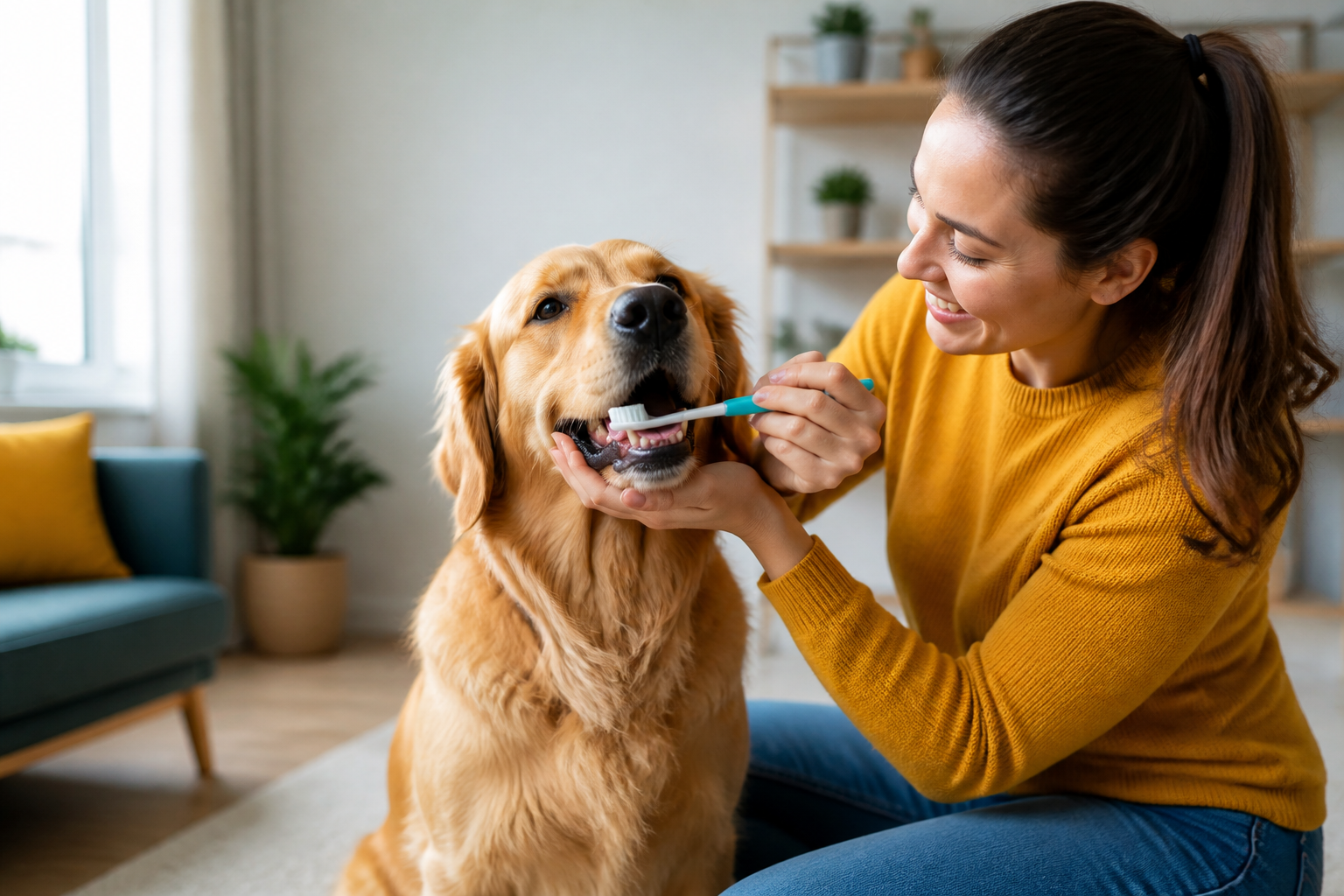
Brushing is the gold standard for canine dental hygiene. Nothing else removes plaque quite as effectively as the mechanical action of a toothbrush. We recommend trying to brush your dog's teeth every day. If that is not possible, three times a week is the minimum to make a real difference. You can find tools for regular home care in our dog dental care category.
You should never use human toothpaste for your dog. It often contains xylitol, which is a sweetener that is highly toxic to dogs. Human toothpaste also contains foaming agents that are meant to be spit out. Since dogs swallow everything, these ingredients can upset their stomachs. Canine toothpaste comes in flavors dogs actually like, such as poultry, beef, or peanut butter. This makes the experience feel more like a treat than a chore.
Choosing the Right Brushing Tools
The tools you choose depend on your dog’s size and comfort level. A standard dog toothbrush has a long handle and angled bristles. This helps you reach the back molars where tartar likes to hide. For smaller dogs or puppies, a finger brush is often a better start. These are silicone sleeves that fit over your pointer finger. They give you more control and feel less intimidating to a dog that is not used to the process. A starter option is the Virbac C.E.T. Pet Oral Hygiene Kit, which includes brushes and enzymatic toothpaste.
How to Start a Brushing Routine
Do not expect to brush every tooth on the first day. It is a process that requires patience. Start by letting your dog lick some toothpaste off your finger. This builds a positive association with the flavor. For more gradual introductions, read these pet dental care tips.
Step 1: Rub your finger along their gums. / Do this for a few days until they are comfortable with you touching their mouth.
Step 2: Introduce the brush. / Let them sniff it and lick toothpaste off the bristles without moving it around.
Step 3: Start with the front teeth. / Gently lift the lip and brush the outside surfaces of the incisors.
Step 4: Move to the back teeth. / Gradually work your way toward the molars over several sessions.
Step 5: Reward with praise. / Always end the session with a favorite activity or a dental-safe treat.
Vet Tip: Focus your brushing efforts on the outside of the teeth near the cheeks. This is where the most plaque accumulates. Most dogs use their tongues to keep the inside surfaces relatively clean.
Dental Chews and Treats
Not every dog is a willing participant in a brushing routine. This is where dental chews and treats provide a helping hand. These products are designed to be hard enough that the dog must gnaw on them. As they chew, the texture of the treat scrapes against the tooth surface. This mechanical action helps rub away soft plaque before it hardens. One option is Greenies Original Dental Dog Chews, available in a size for dogs weighing 25–50 pounds.
At BaxterBoo, we always suggest looking for the Veterinary Oral Health Council (VOHC) seal. This seal means the product has been through rigorous testing. It proves the chew effectively reduces plaque or tartar by at least 20 percent. Without this seal, a treat might just be a tasty snack without any real dental benefits.
Understanding the VOHC Seal
The VOHC does not test products themselves. Instead, they review data from clinical trials provided by manufacturers. When you see that seal on a bag of treats, you know the claims are backed by science. Many of these treats also contain ingredients like hexametaphosphate. This is a common dental agent that helps prevent minerals in saliva from turning plaque into hard tartar.
Using Chews Safely
While chews are helpful, they are not a replacement for brushing. They also add calories to your dog's daily intake. Always monitor your dog while they are enjoying a chew to prevent choking. If your dog is a "gulper" who swallows treats whole, dental chews might not be the best fit for them. The benefit comes from the act of chewing, not the swallowing. You can explore our selection of Ark Naturals products for additional dental chew options.
The Role of Dental Toys
Toys can be a fun and effortless way to support oral health. Many rubber and nylon toys are designed with ridges, nubs, or rope fibers. These textures act like a very mild toothbrush while your dog plays. As the dog bites down, the nubs massage the gums and increase blood flow to the tissue.
Rope toys can be particularly effective because the cotton fibers act like dental floss. As the dog's teeth sink into the rope, the fibers scrub between the teeth. However, you must inspect these toys regularly. If the rope starts to fray, your dog might swallow the strings, which can cause intestinal blockages.
Bottom line: Choose toys with varied textures to help clean hard-to-reach areas during independent play sessions.
Water Additives and Food Powders
If your dog's mouth is sensitive or they are highly resistant to handling, additives are a great alternative. These are often tasteless and odorless liquids that you pour into their water bowl. They contain enzymes or minerals that help break down the biofilm of bacteria in the mouth. The Zymox Oratene water additive is one product designed for simple water-bowl use.
Food powders work in a similar way. You sprinkle them over your dog's kibble or wet food. Some of these powders contain specific types of probiotics. These "good" bacteria help crowd out the harmful bacteria that cause bad breath and decay. This is a very low-effort way to improve oral hygiene, though it is generally less effective than brushing or chews.
Diet and Prescription Nutrition
What your dog eats every day has a direct impact on their dental health. There is a common belief that all dry kibble cleans teeth because it is crunchy. This is mostly a myth. Most standard kibble is small and brittle. It shatters the moment a dog's tooth hits it, providing very little scrubbing action.
However, specific dental diets are different. These are often prescription foods available through our pharmacy partnership with Pet's Choice. Brands like Royal Canin, Hill's, and Purina Pro Plan Veterinary Diets make specialized formulas. These kibbles are much larger and have a fibrous matrix. Instead of shattering, the tooth sinks into the kibble, and the fibers scrub the surface.
Vet Tip: If your dog has existing dental disease or is a breed prone to tooth issues, ask your veterinarian about a prescription dental diet. Our pharmacy carries these FDA-approved foods through our partnership with Pet's Choice once you have a valid prescription.
Recognizing Signs of Dental Disease
As a pet owner, you should perform a "flip the lip" check once a week. This helps you catch problems before they become painful or expensive to treat. Healthy gums should be a vibrant pink color. They should not be red, swollen, or bleeding. For a closer look at warning signs, read how to spot bad teeth in dogs.
Look for these warning signs:
- Persistent bad breath that does not go away after eating.
- Yellow or brown crust near the gum line (tartar).
- Redness or bleeding where the tooth meets the gum.
- Loose or missing teeth.
- Dropping food or hesitating to eat hard kibble.
- Pawing at the face or mouth.
If you notice any of these symptoms, a trip to the vet is necessary. Home care can prevent disease, but it cannot cure an active infection or remove thick tartar.
Professional Veterinary Cleanings
No matter how well you brush at home, most dogs will eventually need a professional cleaning. This is just like when we go to the dentist for a deep clean. A veterinarian performs this procedure under general anesthesia. This is the only way to safely and thoroughly clean beneath the gum line.
During a professional cleaning, the vet will:
- Perform X-rays to check for hidden bone loss or abscesses.
- Use ultrasonic scalers to remove hard tartar.
- Polish the teeth to smooth out microscopic scratches.
- Extract any teeth that are dead or causing pain.
Some owners worry about anesthesia, but for most dogs, the risk is very low compared to the risk of untreated infection. Your vet will perform blood work beforehand to ensure your dog is a good candidate for the procedure.
Key Takeaway: Home dental care slows down the progression of disease, but professional cleanings are the only way to treat the areas you cannot see.
Conclusion
The best way to keep your dog's teeth clean is through a multi-layered approach. Brushing remains the most powerful tool in your kit. When you combine it with VOHC-approved treats, dental toys, and a high-quality diet, you give your dog the best chance at a long, pain-free life. We are proud to offer a wide selection of dental care products at BaxterBoo to help you succeed. Remember that consistency is more important than perfection. Even brushing a few times a week is significantly better than not brushing at all. For dogs with advanced needs, our pharmacy is ready to help with prescription diets and medications through our Pet's Choice partnership. To make repeat dental purchases easier, consider our Autoship programme.
Quick Answer: The most effective method is daily brushing with canine-specific toothpaste. Combine this with VOHC-approved dental chews and annual veterinary exams for the best results.
FAQ
Can I use a human toothbrush on my dog?
You can use a soft-bristled human toothbrush, especially for medium or large dogs. However, you must ensure it is soft to avoid irritating their gums. For very small dogs, a baby toothbrush or a specialized pet finger brush is usually a better fit for their mouth size.
How often should my dog get a professional cleaning?
Most dogs benefit from a professional cleaning every one to two years. Some small breeds may need them more frequently because their teeth are crowded, which traps more plaque. Your veterinarian will check your dog's dental status during their annual wellness exam and make a recommendation.
Is it too late to start brushing my adult dog's teeth?
It is never too late to start a dental routine, though you must be gentle. If your adult dog already has significant tartar or red gums, see a vet first. Brushing over an active infection can be painful for the dog and may cause them to become fearful of the brush.
Do dental water additives actually work?
Water additives are effective at reducing the bacteria count in the mouth and freshening breath. They are a great supplemental tool, especially for dogs that do not tolerate brushing. However, they are not strong enough to remove existing tartar and should be used as part of a larger dental plan.






